
StoryBrand Marketing Agency
Is Your Marketing Message So Confusing Even Your Own Mom Doesn’t Get It?
We're an award-winning StoryBrand Marketing Agency that helps Service Businesses clarify their messaging so everyone wants to work with you!
✓ Build trust and authority in your industry
✓ Connect with CLIENTS WHO ACTUALLY GET IT
✓ MARKETING THAT FEELS NATURAL
WATCH THIS VIDEO
If your message isn’t landing—and the right clients aren’t showing up—it’s not your fault. Most service business owners are great at what they do. They just struggle to talk about it clearly.
In this video, I’ll walk you through how we fix that using the StoryBrand Framework, plus how to get started with either DIY or done-for-you options.


WHAT HAPPENS WHEN YOUR MESSAGE ISN’T CLEAR
Can your mom explain what you do?
Can you easily explain what you do?
Can anyone?
If not, that's the problem we fix.
Because when people don’t understand what you do, they move on. You end up working harder just to stay in the game.
You’re always re-explaining yourself
Your website doesn’t convert visitors into clients
Your leads aren’t the right fit
Referrals become scarce
Marketing is frustrating as all hell
But it doesn’t have to be this way. A clear message makes all of that easier. It’s the difference between chasing leads—and attracting the right ones.
You might not believe it yet, but marketing can actually be the opposite of frustrating when you're doing it right.
MAKE YOUR MARKETING Simpler
Whether you want to learn the system or hand it over completely, the goal is the same: clear messaging that brings in better clients with less effort.

A DIY SYSTEM THAT’S SIMPLE TO FOLLOW

for weekly group coaching, templates, and a proven system that fits seamlessly into your week—without taking over your life.
.

COACHING THAT MEETS YOU WHERE YOU ARE
Want someone to walk you through it? Get 1:1 or team coaching to clarify your message and apply the StoryBrand Framework to your business in real time.
.

DONE-FOR-YOU MARKETING
Too busy to do it yourself? We’ll build your messaging, write your copy, create the assets you need, and handle your StoryBrand marketing—so you can stay focused on running your business.
HI, I'm Vicky Sidler
And I’VE BEEN WHERE YOU ARE

I know how it feels to stare at your marketing and think, “Why isn’t this working?” That's why I created a StoryBrand Marketing Agency.
All in all, your business isn’t just another brick in the wall—it’s something special. Your story matters, and I’m here to help you share it in a way that feels real, connects with people, and gets results.
As a certified StoryBrand Guide, I specialize in turning complicated ideas into clear, compelling messages that resonate with your audience.
With a background in journalism, I’ve spent decades telling stories that matter and crafting content people want to read.
I’ve developed a proven system to help businesses like yours cut through all the AI trash that's out there and build genuine connections with their audience.
Your story isn’t just important—it’s the reason people will choose your business. Let’s make sure it’s heard loud and clear by the people who need it most.
And sorry if I got Pink Floyd stuck in your head just now...
Hear Directly from DONALD MILLER
In this short clip, StoryBrand’s founder Donald Miller explains why clear messaging and a simple marketing plan change everything.
Donald shares why newsletters are back, what a full StoryBrand campaign includes, and how a certified guide helps you focus on what actually works—without wasting money or time.
Watch to see how working with a StoryBrand Certified Guide can make a measurable difference for your business.
EVERYTHING STORYBRAND, ALL IN ONE PLACE
Whether you need help with strategy, websites, content, or SEO, I offer the full range of StoryBrand marketing services—done with you or done for you.
StoryBrand Framework
StoryBrand Wireframe
StoryBrand Websites
StoryBrand SEO
StoryBrand Video
StoryBrand Copywriting
StoryBrand Email Sequences
StoryBrand Marketing Funnels
StoryBrand Workshops
StoryBrand Consulting
StoryBrand PPC
StoryBrand Lead Generation
StoryBrand
Social Media
StoryBrand Strategy
StoryBrand Content Marketing
StoryBrand Local Service
StoryBrand Coaching
MARKETING THAT DOESN’T TAKE OVER YOUR LIFE
Whether you want to build it yourself or hand it off completely, as a StoryBrand Marketing Agency, we’ll give you a clear message and a simple system that actually works.

1
BOOK A COFFEE CHAT
This is a no-pressure, non-sales call where we discuss what’s working, what’s not, and where you want to go.
.
2
CHOOSE YOUR PATH
Get hands-on support through the StoryBrand Course, 1:1 or team coaching, or let me build the entire marketing system for you—messaging, website, emails, and more.
.
.

3
FIX YOUR MARKETING
Walk away with a message that resonates, a plan that’s easy to follow, and marketing that works while you sleep and finally delivers results.
COFFEE’S ON US (OK, NOT REALLY)
But we’re serious about helping you connect with your audience. Let’s grab a coffee (on Zoom) and chat about your marketing goals.
Wondering how to simplify your message? Let’s talk.
Ready to stand out in an AI-saturated world? We’ve got ideas.
Just need clarity? We’ll help you see the big picture.
This isn’t a sales call – just a friendly, low-pressure chat. At the very least, you’ll walk away with some cool ideas you can try on your own.
SCHEDULE YOUR COFFEE CHAT WITH US TODAY
FIXING YOUR MARKETING SHOULDN’T FEEL IMPOSSIBLE
Most small business owners aren’t marketers—they just want to explain what they do in a way that makes people care.
But when the message isn’t clear, everything else gets harder: websites don’t convert, leads go cold, and social posts fall flat.
You might worry that getting it right will take too much time, cost too much money, or feel like just another online course you’ll never finish.
That’s why I offer three simple paths: do-it-together support through the StoryBrand Course, 1:1 and team coaching, or done-for-you services where I build your full funnel myself.
You’ll get clear messaging, practical templates, and real support—so your marketing finally works and your business actually grows.
YOUR QUESTIONS, ANSWERED
We know marketing can feel overwhelming, and you probably have questions. That’s why we’ve put together answers to the things people ask us most.
What makes Strategic Marketing Tribe different from other StoryBrand marketing agencies?
We’re the StoryBrand marketing agency that skips the boring "corporate speak." We blend the power of StoryBrand with strategic marketing solutions to craft content that feels human, genuine, and impossible to ignore.
How can your strategic marketing solutions benefit my business?
Our strategic marketing solutions simplify your message, clarify your brand story, and help you connect with your ideal customers. It’s marketing that makes sense and gets results – no jargon, no gimmicks, just growth.
What is StoryBrand, and why does it matter?
Think of StoryBrand as a cheat sheet for marketing clarity. It helps you explain what you do in a way that makes people stop, listen, and say, “Oh, I get it.” We use it to create marketing that feels human and that your audience will actually enjoy reading.
Do I need to be familiar with StoryBrand to work with you?
Not at all! Whether you’re a StoryBrand superfan (like us!) or have no idea what it is, we’ll walk you through everything. We’re here to make the process simple, clear, and (dare we say) fun.
How do I know if this is right for my business?
If people keep saying “I don’t really get what you do,” or you’re getting the wrong kind of leads, it’s a sign your message needs work. That’s what we fix.
What if I don’t have time to take a course?
The course is built for time-strapped business owners. You get short lessons, plug-and-play templates, and live support so you’re never stuck or overwhelmed.
What’s the difference between the course and the done-for-you service?
The course gives you training, tools, and weekly support so you can do it yourself. The done-for-you option means I build your whole funnel for you.
How long does it take to see results?
Most people see clearer messaging and better engagement within a week of applying the one-liner. Bigger results (like leads and conversions) follow as you apply it across your marketing.
What if I’ve already tried StoryBrand and it didn’t work?
Many people try to apply StoryBrand on their own and miss key parts. This course walks you through it step-by-step, with real examples and live feedback from a Certified Guide.
STORY, MEET STRATEGY
Let’s make marketing feel less robotic and more real. Find resources from a StoryBrand Marketing Agency that bring your message—and your business—to life.

AI White-Collar Job Loss Could Hit 50% in 5 Years
By Vicky Sidler | Published 2 March 2026 at 12:00 GMT+2
For years we have been entertained by dramatic warnings about robots taking over the planet, usually involving glowing red eyes and a dramatic soundtrack. Meanwhile, the quieter story has been unfolding in office parks, call centers, and accounting firms, where the real shift is not about domination but substitution.
According to the Daily Maverick, Anthropic CEO Dario Amodei predicts that 50 percent of entry-level white-collar jobs could disappear within the next five years. Not gradually. Not politely. Within a single planning cycle.
Five years ago we were adjusting to a global pandemic. Five years from now, we may be adjusting to an employment landscape that looks unrecognizable.
TL;DR:
A leading AI CEO predicts 50 percent of entry-level white-collar jobs could disappear within five years
Advanced AI systems now perform complex professional tasks once reserved for trained staff
Software subscriptions may be replaced by AI that does the same work more cheaply
Roles in payroll, accounting, admin, journalism and call centres are especially vulnerable
Small businesses must rethink positioning, skills and value before markets force the issue
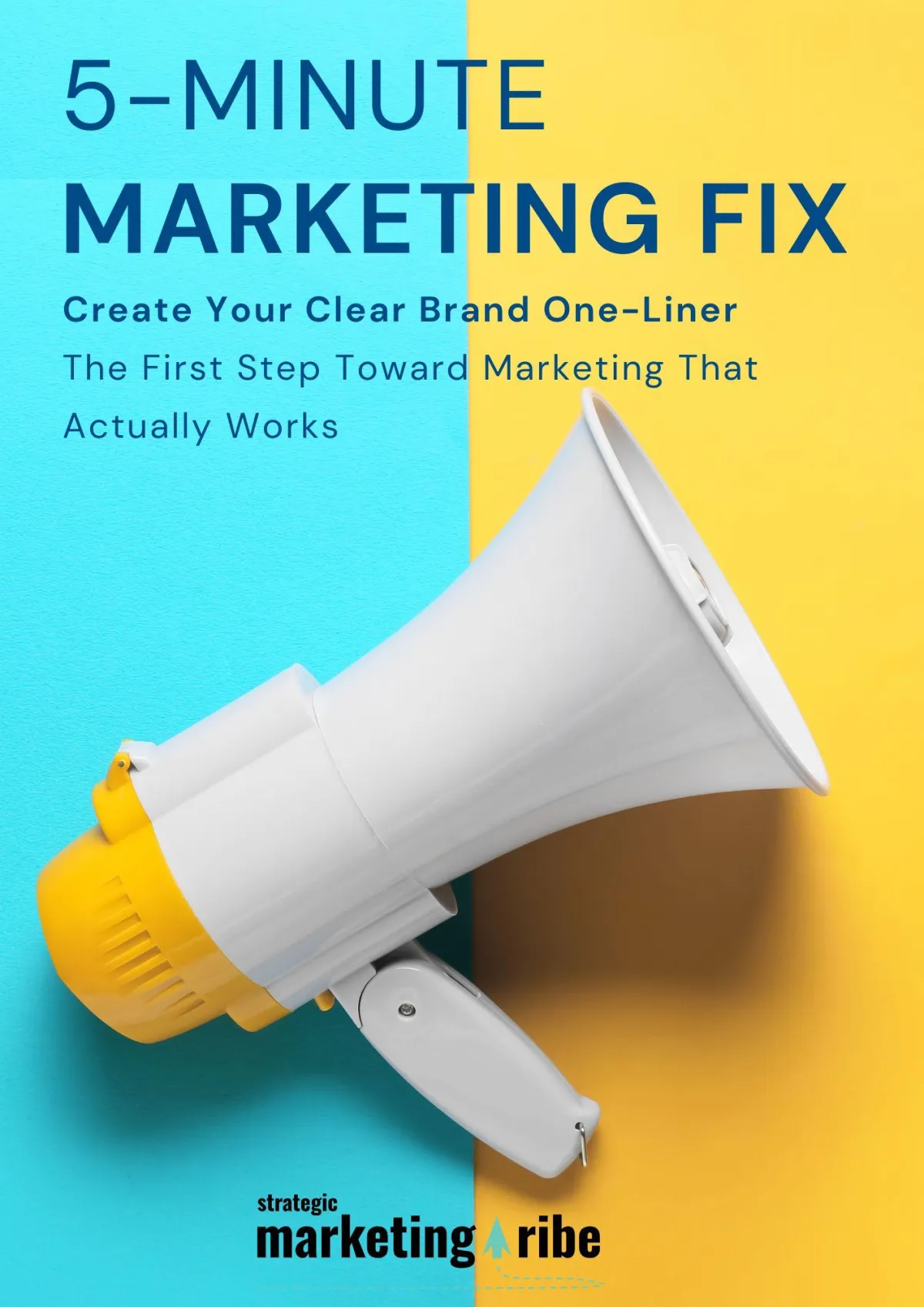
👉 Need help getting your message right? Download the 5-Minute Marketing Fix.
Table of Contents:
AI White-Collar Job Loss Could Hit 50% in 5 Years
The AI You Tried Last Year Is Not the AI Being Built Today:
First It Replaced Departments. Now It Replaces Software:
What This Means for Service-Based Businesses:
1. Gmail AI Could Save You Hours. Here's the Catch
2. Massive Microsoft AI Loss: What Small Businesses Should Learn
3. OpenAI Financial Trouble—What Small Businesses Should Learn
4. AI Marketing for Small Business: What Actually Helps (2025)
5. Risks and Artificial Intelligence: What Small Businesses Must Know
Frequently Asked Questions About AI and White Collar Job Loss
1. Will AI really replace 50 percent of white collar jobs in five years?
2. Which white collar jobs are most at risk from AI?
3. Are small business owners at risk or just employees?
4. Should I stop hiring junior staff because of AI?
5. How can I protect my business from AI disruption?
6. Is AI going to replace accountants and lawyers completely?
7. What skills will still be valuable in an AI-driven economy?
8. Should I invest in AI tools now or wait?
The temptation is to shrug and say that AI still needs a human. That response made sense when we were experimenting with early chatbots that occasionally confused basic facts. It makes less sense now.
The AI You Tried Last Year Is Not the AI Being Built Today:
Most business owners are judging the future based on the free tools they tested eighteen months ago. Those tools were impressive but limited. The systems now being trained are different in scale and ambition.
A large language model, in plain English, is software trained on enormous volumes of text so it can recognize patterns and generate human-like responses. When trained on specialized data such as legal databases or financial regulations, it does more than summarize. It performs professional tasks.
A professor recently described how a major South African legal publisher was experimenting with training an AI model on its entire legal database. Imagine a digital associate that has read every case and statute and does not require sleep, salary, or supervision. At that point, the economic question becomes uncomfortable. Why hire a junior associate for research if a subscription can deliver answers instantly?
And law is only one example.
First It Replaced Departments. Now It Replaces Software:
A few years ago, cloud-based payroll systems disrupted internal payroll departments. Instead of employing a full-time clerk, businesses subscribed to a service that handled calculations, tax compliance, and payslips for a monthly fee. It was efficient and widely adopted.
Now imagine the next logical step. Why subscribe to payroll software at all if an AI system can interpret regulations, calculate deductions, and generate reports directly, at an even lower cost?
Investors in certain software companies have already begun reacting to this possibility. The concern is straightforward. If AI can replicate what software platforms do, then even those platforms are vulnerable.
The pattern is clear. First, AI supports professionals. Then it competes with them. Eventually, it competes with the tools that replaced them.
Who Is Most at Risk:
The list of vulnerable roles is longer than many expect:
Accountants focused on routine reporting.
Administrative staff handling repetitive documentation.
Journalists producing standardized news summaries.
Data capturers entering structured information.
Translators and proofreaders working on predictable content.
Sales agents responding to common objections.
Even programming is shifting. If someone without formal coding training can use AI to build a working application, the barrier to entry changes dramatically. That does not eliminate developers, but it does change what businesses expect to pay for.
Call centers provide a particularly sharp example. For years, companies moved customer support to countries with lower labor costs. The reasoning was simple. Why pay someone in pounds when you can pay someone in rands or rupees?
Now the logic extends further. Why pay someone in rands when an AI system can respond instantly for a fraction of the cost? Investors do not debate fairness. They calculate margins.
The Five-Year Shock:
Five years does not sound dramatic until you remember that the Covid pandemic was six years ago. Entire industries were reshaped in less time than that.
Meanwhile, heavily funded companies are racing to build advanced robotics and digital human emulation, which refers to machines replicating human behavior and reasoning. Whether it is Elon Musk or another founder leading the charge, the direction of travel is unmistakable.
Humanoid robots do not require sick leave. They do not negotiate salaries. They can operate continuously. For factory owners, the financial comparison becomes difficult to ignore.
This is not about panic. It is about incentives.
What This Means for Service-Based Businesses:
If you run a service-based business, this conversation should not feel abstract. It should feel strategic.
Ask yourself a direct question. What part of my value is based on repetitive tasks, and what part is based on judgment, accountability, and trust?
In my work as a StoryBrand Certified Guide and Duct Tape Marketing Consultant, I often see businesses describing their services in terms of tasks. We manage payroll. We write blog posts. We handle compliance. Tasks are easy to compare and easy to automate.
Outcomes are different. Financial strategy based on insight is harder to automate than data entry. Messaging clarity tied to brand positioning is harder to replace than generic content production. Relationship-based advisory work carries weight that software cannot easily replicate.
AI excels at processing information quickly. It does not take responsibility for decisions. It does not build long-term trust. It does not sit across from a nervous client and read the room.
That distinction matters more than ever.
Agility Is Your Advantage:
Waiting for governments to regulate AI or protect employment is unlikely to be a reliable business strategy. Policymakers tend to move slowly. Technology does not.
Small businesses, however, can adapt faster than institutions. You can redesign roles around higher-value thinking. You can train staff to use AI tools to increase efficiency before competitors do. You can reposition your offer around outcomes rather than hours.
Most importantly, you can clarify your message.
When markets shift quickly, confused businesses struggle first because customers default to the clearest option. If AI provides a clear, low-cost answer, your business must provide a clearer, higher-value one.
If you would like a practical starting point, download the 5-Minute Marketing Fix.
Clarity will not stop technological change, but it will position you to navigate it with intention rather than surprise.
Related Articles:
1. Gmail AI Could Save You Hours. Here's the Catch
If disappearing white-collar roles feel abstract, this article brings it into your inbox. It shows how AI embedded in everyday email tools can quietly automate admin work while introducing new risks around privacy and over delegation.
2. Massive Microsoft AI Loss: What Small Businesses Should Learn
If AI can reshape whole job categories, what happens when big bets on AI go wrong? This piece translates a major tech loss into practical lessons about where small businesses should be cautious and where strategic investment still makes sense.
3. OpenAI Financial Trouble—What Small Businesses Should Learn
If core AI providers hit turbulence, small businesses feel it. This article helps you think beyond automation and consider platform risk, vendor stability, and how to build a strategy that survives both hype and instability.
4. AI Marketing for Small Business: What Actually Helps (2025)
After reading about jobs under threat, the obvious question is where AI genuinely helps today. This guide shows practical ways to use AI for testing, planning, and efficiency without sacrificing your voice or strategic positioning.
5. Risks and Artificial Intelligence: What Small Businesses Must Know
If the scale of disruption feels overwhelming, this article offers structure. It breaks down regulatory exposure, governance, and trust so you can adopt AI responsibly without eroding customer confidence or inviting compliance problems.
Frequently Asked Questions About AI and White Collar Job Loss
1. Will AI really replace 50 percent of white collar jobs in five years?
Some AI leaders predict that up to 50 percent of entry level white collar roles could disappear within five years. That does not mean every office job vanishes, but it does suggest rapid automation of repetitive, rules based work. Roles built around routine admin, reporting or basic analysis are most exposed.
2. Which white collar jobs are most at risk from AI?
Jobs that rely on structured data and predictable processes are most vulnerable. This includes payroll clerks, data capturers, junior legal researchers, basic bookkeeping roles, call center agents, and some content production roles. Positions built around strategy, judgment, and relationship management are harder to automate.
3. Are small business owners at risk or just employees?
Both. Employees may face job changes or redundancy, but business owners face pricing pressure and new competition. If AI can deliver similar services faster and cheaper, businesses that compete on tasks rather than outcomes will struggle. Owners must rethink their value proposition, not just staffing.
4. Should I stop hiring junior staff because of AI?
Not necessarily. Instead of avoiding junior hires, consider redesigning roles. Train team members to use AI tools to increase efficiency while shifting their focus toward higher-value work such as client communication, analysis, and decision support.
5. How can I protect my business from AI disruption?
Start by identifying which parts of your service are repetitive and automatable. Then reposition your offer around insight, strategy, and measurable outcomes. Strengthen your brand clarity so clients understand why your expertise matters beyond the task itself.
6. Is AI going to replace accountants and lawyers completely?
AI is more likely to replace routine tasks within those professions rather than eliminate them entirely. Basic research, document drafting, and data processing are already being automated. Complex advisory work, ethical judgment, and client strategy remain dependent on human expertise.
7. What skills will still be valuable in an AI-driven economy?
Critical thinking, strategic planning, communication, negotiation, and relationship building will become more valuable. The ability to interpret AI output, make responsible decisions, and take accountability will also be in high demand.
8. Should I invest in AI tools now or wait?
Waiting carries its own risk. Businesses that experiment responsibly with AI now are more likely to adapt successfully. The key is to use AI to enhance productivity and insight, not to remove human oversight entirely.
9. How do I know if my industry is about to be disrupted?
Look for tasks in your industry that follow clear rules, use structured data, or rely on standardized outputs. If software can already assist with those tasks, full automation may not be far behind. Monitor how competitors are using AI and how pricing models are shifting.
10. What is the first practical step I should take today?
Clarify what makes your business valuable beyond the task you perform. If your marketing focuses only on services delivered, it may be time to sharpen your positioning around outcomes and expertise. A clear message helps you compete on value rather than price as automation increases.

Is your Marketing Message so confusing even your own mom doesn’t get it? Let's clarify your message—so everyone wants to work with you!




Created with clarity (and coffee)