
StoryBrand Marketing Agency
Is Your Marketing Message So Confusing Even Your Own Mom Doesn’t Get It?
We're an award-winning StoryBrand Marketing Agency that helps Service Businesses clarify their messaging so everyone wants to work with you!
✓ Build trust and authority in your industry
✓ Connect with CLIENTS WHO ACTUALLY GET IT
✓ MARKETING THAT FEELS NATURAL
WATCH THIS VIDEO
If your message isn’t landing—and the right clients aren’t showing up—it’s not your fault. Most service business owners are great at what they do. They just struggle to talk about it clearly.
In this video, I’ll walk you through how we fix that using the StoryBrand Framework, plus how to get started with either DIY or done-for-you options.

WHAT HAPPENS WHEN YOUR MESSAGE ISN’T CLEAR
Can your mom explain what you do?
Can you easily explain what you do?
Can anyone?
If not, that's the problem we fix.
Because when people don’t understand what you do, they move on. You end up working harder just to stay in the game.
You’re always re-explaining yourself
Your website doesn’t convert visitors into clients
Your leads aren’t the right fit
Referrals become scarce
Marketing is frustrating as all hell
But it doesn’t have to be this way. A clear message makes all of that easier. It’s the difference between chasing leads—and attracting the right ones.
You might not believe it yet, but marketing can actually be the opposite of frustrating when you're doing it right.
MAKE YOUR MARKETING Simpler
Whether you want to learn the system or hand it over completely, the goal is the same: clear messaging that brings in better clients with less effort.

A DIY SYSTEM THAT’S SIMPLE TO FOLLOW

for weekly group coaching, templates, and a proven system that fits seamlessly into your week—without taking over your life.
.

COACHING THAT MEETS YOU WHERE YOU ARE
Want someone to walk you through it? Get 1:1 or team coaching to clarify your message and apply the StoryBrand Framework to your business in real time.
.

DONE-FOR-YOU MARKETING
Too busy to do it yourself? We’ll build your messaging, write your copy, create the assets you need, and handle your StoryBrand marketing—so you can stay focused on running your business.
HI, I'm Vicky Sidler
And I’VE BEEN WHERE YOU ARE

I know how it feels to stare at your marketing and think, “Why isn’t this working?” That's why I created a StoryBrand Marketing Agency.
All in all, your business isn’t just another brick in the wall—it’s something special. Your story matters, and I’m here to help you share it in a way that feels real, connects with people, and gets results.
As a certified StoryBrand Guide, I specialize in turning complicated ideas into clear, compelling messages that resonate with your audience.
With a background in journalism, I’ve spent decades telling stories that matter and crafting content people want to read.
I’ve developed a proven system to help businesses like yours cut through all the AI trash that's out there and build genuine connections with their audience.
Your story isn’t just important—it’s the reason people will choose your business. Let’s make sure it’s heard loud and clear by the people who need it most.
And sorry if I got Pink Floyd stuck in your head just now...
Hear Directly from DONALD MILLER
In this short clip, StoryBrand’s founder Donald Miller explains why clear messaging and a simple marketing plan change everything.
Donald shares why newsletters are back, what a full StoryBrand campaign includes, and how a certified guide helps you focus on what actually works—without wasting money or time.
Watch to see how working with a StoryBrand Certified Guide can make a measurable difference for your business.
EVERYTHING STORYBRAND, ALL IN ONE PLACE
Whether you need help with strategy, websites, content, or SEO, I offer the full range of StoryBrand marketing services—done with you or done for you.
StoryBrand Framework
StoryBrand Wireframe
StoryBrand Websites
StoryBrand SEO
StoryBrand Video
StoryBrand Copywriting
StoryBrand Email Sequences
StoryBrand Marketing Funnels
StoryBrand Workshops
StoryBrand Consulting
StoryBrand PPC
StoryBrand Lead Generation
StoryBrand
Social Media
StoryBrand Strategy
StoryBrand Content Marketing
StoryBrand Local Service
StoryBrand Coaching
MARKETING THAT DOESN’T TAKE OVER YOUR LIFE
Whether you want to build it yourself or hand it off completely, as a StoryBrand Marketing Agency, we’ll give you a clear message and a simple system that actually works.

1
BOOK A COFFEE CHAT
This is a no-pressure, non-sales call where we discuss what’s working, what’s not, and where you want to go.
.
2
CHOOSE YOUR PATH
Get hands-on support through the StoryBrand Course, 1:1 or team coaching, or let me build the entire marketing system for you—messaging, website, emails, and more.
.
.

3
FIX YOUR MARKETING
Walk away with a message that resonates, a plan that’s easy to follow, and marketing that works while you sleep and finally delivers results.
COFFEE’S ON US (OK, NOT REALLY)
But we’re serious about helping you connect with your audience. Let’s grab a coffee (on Zoom) and chat about your marketing goals.
Wondering how to simplify your message? Let’s talk.
Ready to stand out in an AI-saturated world? We’ve got ideas.
Just need clarity? We’ll help you see the big picture.
This isn’t a sales call – just a friendly, low-pressure chat. At the very least, you’ll walk away with some cool ideas you can try on your own.
SCHEDULE YOUR COFFEE CHAT WITH US TODAY
FIXING YOUR MARKETING SHOULDN’T FEEL IMPOSSIBLE
Most small business owners aren’t marketers—they just want to explain what they do in a way that makes people care.
But when the message isn’t clear, everything else gets harder: websites don’t convert, leads go cold, and social posts fall flat.
You might worry that getting it right will take too much time, cost too much money, or feel like just another online course you’ll never finish.
That’s why I offer three simple paths: do-it-together support through the StoryBrand Course, 1:1 and team coaching, or done-for-you services where I build your full funnel myself.
You’ll get clear messaging, practical templates, and real support—so your marketing finally works and your business actually grows.
YOUR QUESTIONS, ANSWERED
We know marketing can feel overwhelming, and you probably have questions. That’s why we’ve put together answers to the things people ask us most.
What makes Strategic Marketing Tribe different from other StoryBrand marketing agencies?
We’re the StoryBrand marketing agency that skips the boring "corporate speak." We blend the power of StoryBrand with strategic marketing solutions to craft content that feels human, genuine, and impossible to ignore.
How can your strategic marketing solutions benefit my business?
Our strategic marketing solutions simplify your message, clarify your brand story, and help you connect with your ideal customers. It’s marketing that makes sense and gets results – no jargon, no gimmicks, just growth.
What is StoryBrand, and why does it matter?
Think of StoryBrand as a cheat sheet for marketing clarity. It helps you explain what you do in a way that makes people stop, listen, and say, “Oh, I get it.” We use it to create marketing that feels human and that your audience will actually enjoy reading.
Do I need to be familiar with StoryBrand to work with you?
Not at all! Whether you’re a StoryBrand superfan (like us!) or have no idea what it is, we’ll walk you through everything. We’re here to make the process simple, clear, and (dare we say) fun.
How do I know if this is right for my business?
If people keep saying “I don’t really get what you do,” or you’re getting the wrong kind of leads, it’s a sign your message needs work. That’s what we fix.
What if I don’t have time to take a course?
The course is built for time-strapped business owners. You get short lessons, plug-and-play templates, and live support so you’re never stuck or overwhelmed.
What’s the difference between the course and the done-for-you service?
The course gives you training, tools, and weekly support so you can do it yourself. The done-for-you option means I build your whole funnel for you.
How long does it take to see results?
Most people see clearer messaging and better engagement within a week of applying the one-liner. Bigger results (like leads and conversions) follow as you apply it across your marketing.
What if I’ve already tried StoryBrand and it didn’t work?
Many people try to apply StoryBrand on their own and miss key parts. This course walks you through it step-by-step, with real examples and live feedback from a Certified Guide.
STORY, MEET STRATEGY
Let’s make marketing feel less robotic and more real. Find resources from a StoryBrand Marketing Agency that bring your message—and your business—to life.

You Didn't Write That Email. And Everyone Can Tell
By Vicky Sidler | Published 6 April 2026 at 12:00 GMT+2
Let me describe a very specific, highly uncomfortable feeling you have probably experienced sometime in the last few weeks.
You receive an email from someone you know—a colleague, a supplier, or maybe even a friend checking in about a project. The message is grammatically impeccable. It is perfectly structured. It is incredibly warm, in a highly sanitized, corporate sort of way. It thanks you for your patience, it looks forward to continued collaboration, and it expresses that the sender is "happy to hop on a call at your earliest convenience."
And something feels completely off.
It isn't exactly wrong, but it feels hollow. It reads like a greeting card that used all the correct vocabulary but was clearly selected in under ten seconds at a petrol station. You have just received an AI-written personal correspondence email. Whether you can clearly name that feeling or not, your gut is already responding to the deception.
Before you use ChatGPT to draft another "quick reply" to a frustrated client, we need to look at the exact psychological damage these automated emails are doing to your business relationships.
TL;DR:
Research proves that while AI makes your emails look more polished, it makes you look significantly less sincere and less trustworthy to the recipient.
Sending an AI-generated personal email triggers the "uncanny valley" effect—it is close enough to human to feel personal, but artificial enough to feel deeply unsettling.
By outsourcing difficult conversations to a chatbot, you are destroying your unique brand voice and actively eroding the relationship equity your business relies on.
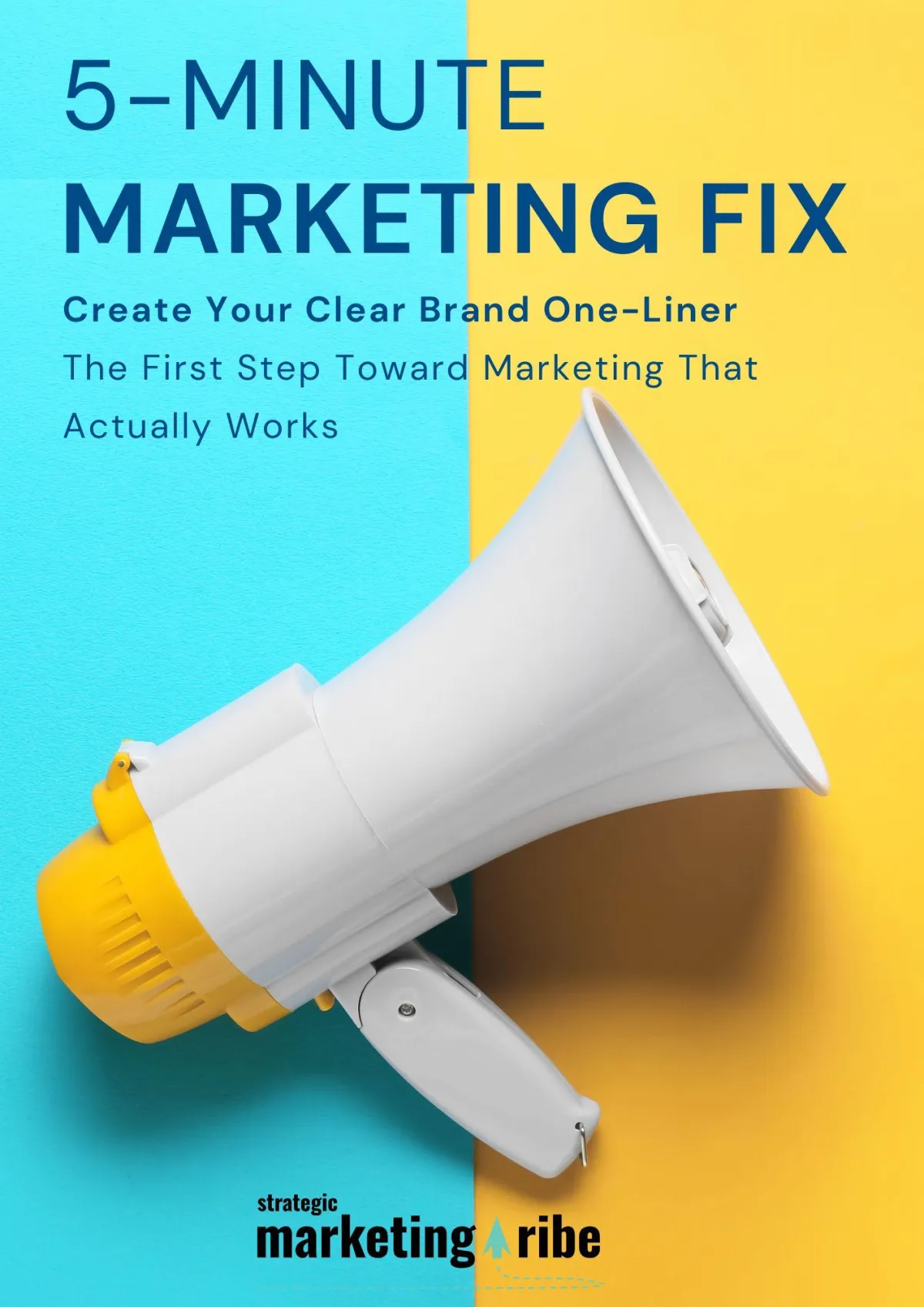
👉 If you are using a robot to write your emails, you are probably using one to write your website copy, too. And your clients can definitely tell. Download the 5-Minute Marketing Fix to spot exactly where your messaging sounds dangerously hollow, so you can replace the artificial polish with actual human connection.
Table of Contents:
You Didn't Write That Email. And Everyone Can Tell
Why Is A "Perfect" Email Actually Destroying Your Trust?
The Perception Gap—Better Words, Worse Reputation:
The "Uncanny Valley" Of Email:
How Does "Efficiency" Erode Your Business Relationships?
1. The AI Literacy Glossary Every Small Business Owner Needs in 2026
2. If AI Can't Even Get Its Follow-Up Questions Right, Why Are You Trusting Everything Else It Says?
3. AI Told Him He Was the Smartest Baby of 1996. He Believed It. Here's Why That Should Terrify You.
4. Why Grammarly Just Apologized For Stealing Your Identity
5. AI Slop Is Killing Trust Online. What Now?
1. What is the problem with using AI to write personal emails?
2. What is the "uncanny valley" of email?
3. Does AI really change how people perceive me professionally?
4. Why does an AI email feel "hollow" even if it is grammatically correct?
Why Is A "Perfect" Email Actually Destroying Your Trust?
Let me be incredibly clear about what I am not talking about.
AI-assisted marketing copy, automated email sequences, and massive newsletter blasts are a completely different conversation. Those communications are, by nature, broadcasted to a category of people. What I am describing is the deeply uncomfortable trend of people using a chatbot to write highly personal, relational communications.
I am talking about the follow-up email to a supplier after a difficult meeting. The message to a team member who missed a massive deadline. The "just checking in" note to a colleague who is going through a personal crisis.
These communications exist exclusively to move a human relationship forward. But increasingly, they are being outsourced to a machine that has never met either party, has absolutely no history with the person, and has zero stakes in the relationship.
And the people receiving them absolutely know.
The Perception Gap—Better Words, Worse Reputation:
When you let an algorithm write your apologies, you are making a massive psychological trade-off that you do not even realize is happening.
A massive 2025 study published in the International Journal of Business Communication revealed a terrifying reality for business owners. The research found that while AI-assisted writing is generally perceived as more polished and professional, the managers who actually use it for personal correspondence are seen as measurably less sincere, less caring, and less confident by the people receiving the messages.
The perception gap is the ultimate trap: the AI makes the words look better, but it makes the sender look significantly worse.
Research consistently shows that only 40% of recipients perceive AI-written messages as sincere. Stanford researchers confirmed that people inherently trust human-written communication far more than AI-generated text, even when the robot's version is technically more accurate.
But if the AI's grammar is flawless, why does it feel so untrustworthy?
The "Uncanny Valley" Of Email:
The issue is that AI writes entirely too well, but in the exact wrong way.
Its messages are too polished, too relentlessly structured, and too consistently correct. Humans have spent their entire lives reading human communication, and we subconsciously register the total absence of imperfection as the complete absence of a person.
When a real human writes to you, they include tiny signals of genuine thought. A slightly awkward phrasing. A quick aside that is slightly off-topic. A sentence that trails off exactly the way a spoken sentence would. These are not grammatical errors; they are undeniable proof that a real person actually sat down and thought about you specifically.
AI strips all of that out. And in doing so, it strips out the humanity, plunging your relationship into the "uncanny valley."
The uncanny valley is a concept from robotics: as a machine looks more human, we like it more, until it gets so close to human that it becomes deeply unsettling. An obviously automated MailChimp receipt bothers no one. But an email that uses your name correctly, references a specific conversation, and yet somehow feels like it was written by a stranger? That is deeply unsettling. It is close enough to human to feel personal, but artificial enough to feel completely fake.
And that fake feeling is quietly destroying your network.
How Does "Efficiency" Erode Your Business Relationships?
The people who defend AI email always point to the massive efficiency gains, completely missing the fact that the struggle is actually the entire point.
When you sit down to write a difficult email to an unhappy client, the fact that you actively wrestled with the tone, carefully chose the words, and spent ten minutes thinking about their specific feelings is a massive signal of respect. It proves that the relationship matters to you.
When you outsource that effort to an AI in thirty seconds, you completely remove the signal.
You aren't just losing the relationship; you are losing the skill. When an algorithm handles the heavy lifting of human expression, you lose the practice of it. You stop internalizing the rhythms of language. You lose your instinctive sense of what a specific client needs to hear.
This leads to a terrifying homogenization of language. Because these tools are all trained on the same data, professional communication is rapidly becoming indistinguishable from a single, highly polished, completely empty corporate voice.
The Ultimate AI Litmus Test:
You have a voice. It is the most powerful business asset you own. It is how people recognize you, trust you, and remember you. Every single AI-written email you send is a tiny withdrawal from that trust account.
Using AI to help you structure a difficult message or check your tone is fine. The danger is using it to completely replace your voice simply because the conversation feels uncomfortable or time-consuming. Because that discomfort is exactly where the actual relationship lives. The halting, imperfect email you write yourself is frequently the only one that actually matters.
If you are not sure whether you should use an AI to write an email to someone, ask yourself one simple question: If they found out a robot wrote this, would they view it as a brilliant efficiency hack, or would it feel like a personal betrayal?
That answer is your guide.
If you rely heavily on AI to write your website copy, your prospects are feeling that exact same sense of betrayal before they even book a call with you. Get my 5-Minute Marketing Fix. It helps you identify exactly where your messaging sounds like an empty, polished robot, so you can inject the undeniable human authenticity that actually closes sales.
👉 Stop losing sales. Download the fix now.
Related Articles:
1. The AI Literacy Glossary Every Small Business Owner Needs in 2026
If the concept of the "Uncanny Valley" fascinates you, you need to understand the rest of the vocabulary shaping this technological shift. This plain-language glossary breaks down exactly how Large Language Models work, why they hallucinate, and why they are mathematically designed to sound like corporate sycophants.
2. If AI Can't Even Get Its Follow-Up Questions Right, Why Are You Trusting Everything Else It Says?
That hollow feeling you get from an AI email is the exact same feeling you get when a chatbot offers a completely useless follow-up question. This article explores why the software fundamentally fails to understand human context, and why relying on it for communication is a massive strategic error.
3. AI Told Him He Was the Smartest Baby of 1996. He Believed It. Here's Why That Should Terrify You.
When you let AI write your emails, you are letting a sycophant speak for you. Read this terrifying breakdown of how a YouTuber proved that AI is structurally designed to flatter users and validate delusions, highlighting the massive psychological dangers of replacing human friction with artificial agreement.
4. Why Grammarly Just Apologized For Stealing Your Identity
AI doesn't just write hollow emails; it actively tries to fake human authenticity. Discover how Grammarly got caught using language models to impersonate famous living authors, and why the tech industry's desperate attempt to mimic the human voice is destroying corporate credibility.
5. AI Slop Is Killing Trust Online. What Now?
The homogenization of email is just a symptom of a much larger internet crisis. This post explores how generic, AI-generated "slop" is flooding search engines and social media, destroying consumer trust online, and what you must do to stand out as an undeniable, authentic human expert.
FAQs:
1. What is the problem with using AI to write personal emails?
While AI can make an email grammatically perfect, research shows it makes the sender appear significantly less sincere, less caring, and less trustworthy. Recipients instinctively register the hyper-polished, robotic tone and feel that the sender did not care enough to write the message themselves.
2. What is the "uncanny valley" of email?
The uncanny valley occurs when a piece of communication is close enough to human to feel personal (using your name, referencing a specific project), but artificial enough to feel deeply unsettling. It feels hollow because it mimics human connection without any actual human stakes or emotion behind it.
3. Does AI really change how people perceive me professionally?
Yes. A 2025 study in the International Journal of Business Communication proved that while AI-assisted writing is viewed as polished, the managers who use it for personal correspondence are judged by their peers and employees as measurably less confident and less sincere.
4. Why does an AI email feel "hollow" even if it is grammatically correct?
Because AI writes too well. Human communication is naturally imperfect. We use slightly awkward phrasing, trailing sentences, and unique rhythms that signal genuine thought. AI strips out all of these human imperfections, resulting in a sterile, homogenized corporate voice that feels entirely empty.
5. Should I stop using AI for communication entirely?
No. Using AI to brainstorm, check for tone, or structure a difficult message is a legitimate use of the tool. The danger lies in outsourcing the entire relational effort. If the email is meant to maintain or repair a human relationship, the effort of writing it yourself is the actual signal of respect.

Is your Marketing Message so confusing even your own mom doesn’t get it? Let's clarify your message—so everyone wants to work with you!





Created with clarity (and coffee)