
StoryBrand Marketing Agency
Is Your Marketing Message So Confusing Even Your Own Mom Doesn’t Get It?
We're an award-winning StoryBrand Marketing Agency that helps Service Businesses clarify their messaging so everyone wants to work with you!
✓ Build trust and authority in your industry
✓ Connect with CLIENTS WHO ACTUALLY GET IT
✓ MARKETING THAT FEELS NATURAL
WATCH THIS VIDEO
If your message isn’t landing—and the right clients aren’t showing up—it’s not your fault. Most service business owners are great at what they do. They just struggle to talk about it clearly.
In this video, I’ll walk you through how we fix that using the StoryBrand Framework, plus how to get started with either DIY or done-for-you options.


WHAT HAPPENS WHEN YOUR MESSAGE ISN’T CLEAR
Can your mom explain what you do?
Can you easily explain what you do?
Can anyone?
If not, that's the problem we fix.
Because when people don’t understand what you do, they move on. You end up working harder just to stay in the game.
You’re always re-explaining yourself
Your website doesn’t convert visitors into clients
Your leads aren’t the right fit
Referrals become scarce
Marketing is frustrating as all hell
But it doesn’t have to be this way. A clear message makes all of that easier. It’s the difference between chasing leads—and attracting the right ones.
You might not believe it yet, but marketing can actually be the opposite of frustrating when you're doing it right.
MAKE YOUR MARKETING Simpler
Whether you want to learn the system or hand it over completely, the goal is the same: clear messaging that brings in better clients with less effort.

A DIY SYSTEM THAT’S SIMPLE TO FOLLOW

for weekly group coaching, templates, and a proven system that fits seamlessly into your week—without taking over your life.
.

COACHING THAT MEETS YOU WHERE YOU ARE
Want someone to walk you through it? Get 1:1 or team coaching to clarify your message and apply the StoryBrand Framework to your business in real time.
.

DONE-FOR-YOU MARKETING
Too busy to do it yourself? We’ll build your messaging, write your copy, create the assets you need, and handle your StoryBrand marketing—so you can stay focused on running your business.
HI, I'm Vicky Sidler
And I’VE BEEN WHERE YOU ARE

I know how it feels to stare at your marketing and think, “Why isn’t this working?” That's why I created a StoryBrand Marketing Agency.
All in all, your business isn’t just another brick in the wall—it’s something special. Your story matters, and I’m here to help you share it in a way that feels real, connects with people, and gets results.
As a certified StoryBrand Guide, I specialize in turning complicated ideas into clear, compelling messages that resonate with your audience.
With a background in journalism, I’ve spent decades telling stories that matter and crafting content people want to read.
I’ve developed a proven system to help businesses like yours cut through all the AI trash that's out there and build genuine connections with their audience.
Your story isn’t just important—it’s the reason people will choose your business. Let’s make sure it’s heard loud and clear by the people who need it most.
And sorry if I got Pink Floyd stuck in your head just now...
Hear Directly from DONALD MILLER
In this short clip, StoryBrand’s founder Donald Miller explains why clear messaging and a simple marketing plan change everything.
Donald shares why newsletters are back, what a full StoryBrand campaign includes, and how a certified guide helps you focus on what actually works—without wasting money or time.
Watch to see how working with a StoryBrand Certified Guide can make a measurable difference for your business.
EVERYTHING STORYBRAND, ALL IN ONE PLACE
Whether you need help with strategy, websites, content, or SEO, I offer the full range of StoryBrand marketing services—done with you or done for you.
StoryBrand Framework
StoryBrand Wireframe
StoryBrand Websites
StoryBrand SEO
StoryBrand Video
StoryBrand Copywriting
StoryBrand Email Sequences
StoryBrand Marketing Funnels
StoryBrand Workshops
StoryBrand Consulting
StoryBrand PPC
StoryBrand Lead Generation
StoryBrand
Social Media
StoryBrand Strategy
StoryBrand Content Marketing
StoryBrand Local Service
StoryBrand Coaching
MARKETING THAT DOESN’T TAKE OVER YOUR LIFE
Whether you want to build it yourself or hand it off completely, as a StoryBrand Marketing Agency, we’ll give you a clear message and a simple system that actually works.

1
BOOK A COFFEE CHAT
This is a no-pressure, non-sales call where we discuss what’s working, what’s not, and where you want to go.
.
2
CHOOSE YOUR PATH
Get hands-on support through the StoryBrand Course, 1:1 or team coaching, or let me build the entire marketing system for you—messaging, website, emails, and more.
.
.

3
FIX YOUR MARKETING
Walk away with a message that resonates, a plan that’s easy to follow, and marketing that works while you sleep and finally delivers results.
COFFEE’S ON US (OK, NOT REALLY)
But we’re serious about helping you connect with your audience. Let’s grab a coffee (on Zoom) and chat about your marketing goals.
Wondering how to simplify your message? Let’s talk.
Ready to stand out in an AI-saturated world? We’ve got ideas.
Just need clarity? We’ll help you see the big picture.
This isn’t a sales call – just a friendly, low-pressure chat. At the very least, you’ll walk away with some cool ideas you can try on your own.
SCHEDULE YOUR COFFEE CHAT WITH US TODAY
FIXING YOUR MARKETING SHOULDN’T FEEL IMPOSSIBLE
Most small business owners aren’t marketers—they just want to explain what they do in a way that makes people care.
But when the message isn’t clear, everything else gets harder: websites don’t convert, leads go cold, and social posts fall flat.
You might worry that getting it right will take too much time, cost too much money, or feel like just another online course you’ll never finish.
That’s why I offer three simple paths: do-it-together support through the StoryBrand Course, 1:1 and team coaching, or done-for-you services where I build your full funnel myself.
You’ll get clear messaging, practical templates, and real support—so your marketing finally works and your business actually grows.
YOUR QUESTIONS, ANSWERED
We know marketing can feel overwhelming, and you probably have questions. That’s why we’ve put together answers to the things people ask us most.
What makes Strategic Marketing Tribe different from other StoryBrand marketing agencies?
We’re the StoryBrand marketing agency that skips the boring "corporate speak." We blend the power of StoryBrand with strategic marketing solutions to craft content that feels human, genuine, and impossible to ignore.
How can your strategic marketing solutions benefit my business?
Our strategic marketing solutions simplify your message, clarify your brand story, and help you connect with your ideal customers. It’s marketing that makes sense and gets results – no jargon, no gimmicks, just growth.
What is StoryBrand, and why does it matter?
Think of StoryBrand as a cheat sheet for marketing clarity. It helps you explain what you do in a way that makes people stop, listen, and say, “Oh, I get it.” We use it to create marketing that feels human and that your audience will actually enjoy reading.
Do I need to be familiar with StoryBrand to work with you?
Not at all! Whether you’re a StoryBrand superfan (like us!) or have no idea what it is, we’ll walk you through everything. We’re here to make the process simple, clear, and (dare we say) fun.
How do I know if this is right for my business?
If people keep saying “I don’t really get what you do,” or you’re getting the wrong kind of leads, it’s a sign your message needs work. That’s what we fix.
What if I don’t have time to take a course?
The course is built for time-strapped business owners. You get short lessons, plug-and-play templates, and live support so you’re never stuck or overwhelmed.
What’s the difference between the course and the done-for-you service?
The course gives you training, tools, and weekly support so you can do it yourself. The done-for-you option means I build your whole funnel for you.
How long does it take to see results?
Most people see clearer messaging and better engagement within a week of applying the one-liner. Bigger results (like leads and conversions) follow as you apply it across your marketing.
What if I’ve already tried StoryBrand and it didn’t work?
Many people try to apply StoryBrand on their own and miss key parts. This course walks you through it step-by-step, with real examples and live feedback from a Certified Guide.
STORY, MEET STRATEGY
Let’s make marketing feel less robotic and more real. Find resources from a StoryBrand Marketing Agency that bring your message—and your business—to life.

Massive Microsoft AI Loss: What Small Businesses Should Learn
By Vicky Sidler | Published 16 February 2026 at 12:00 GMT+2
There are few things more sobering than waking up to discover you have misplaced $357 billion. That is not a typo. According to IOL, Microsoft shares fell 10 percent in a single week after reporting record spending on artificial intelligence while growth in its core cloud business slowed. In two trading days, roughly $357 billion in market value vanished.
For most of us, that number is so large it stops feeling real. It is the sort of figure usually associated with national budgets or space programs, not quarterly earnings calls.
Yet the lesson for small business owners is surprisingly practical.
TL;DR:
Microsoft spent a record $37.5 billion on AI infrastructure in one quarter
Its Azure cloud growth slowed, worrying investors about returns
The market reacted by wiping out $357 billion in company value
Big bets without clear ROI make even strong companies vulnerable
Small businesses should invest in AI carefully, with clear outcomes in mind
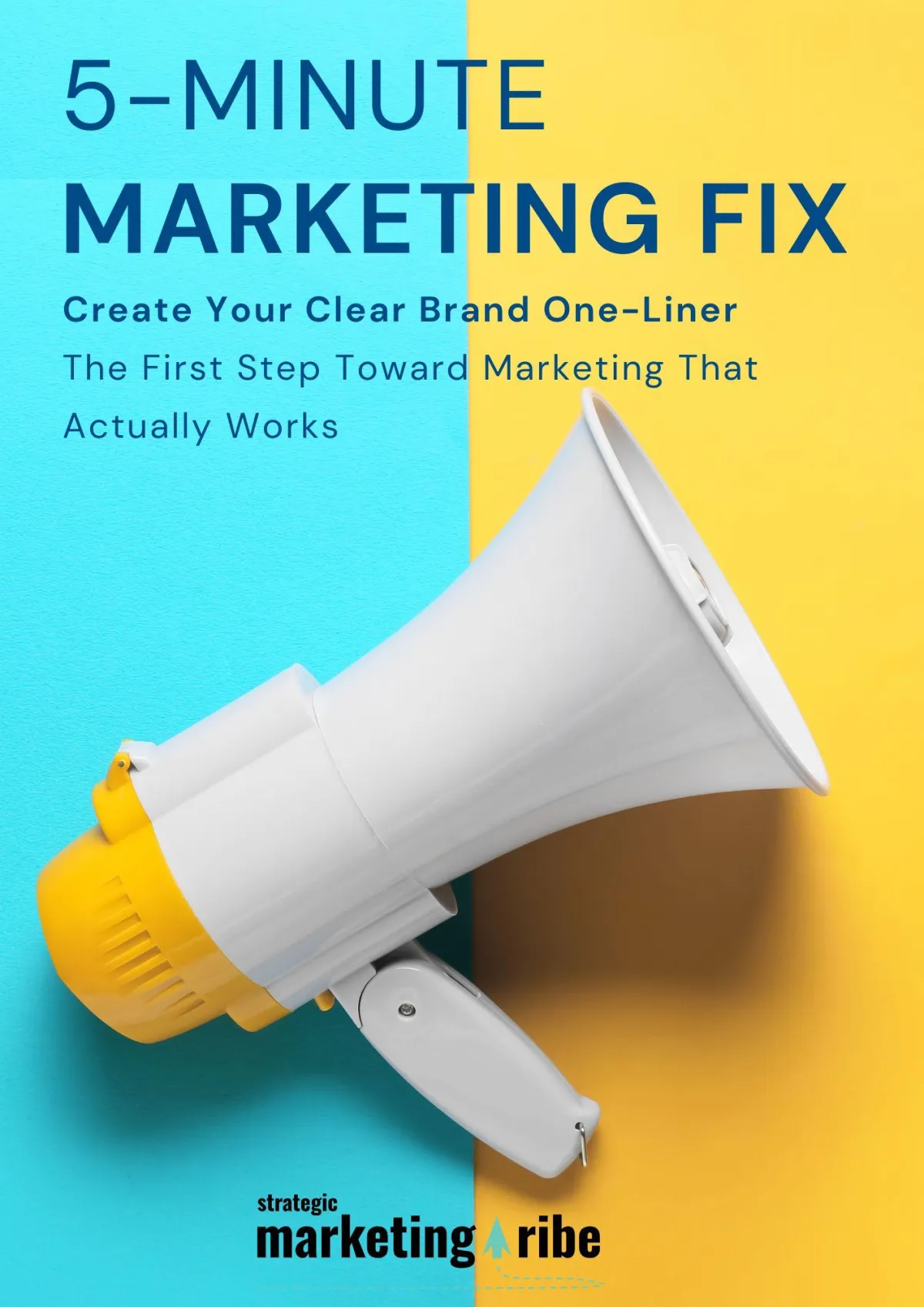
👉 Need help getting your message right? Download the 5-Minute Marketing Fix.
Table of Contents:
Massive Microsoft AI Loss: What Small Businesses Should Learn
What Is ROI and Why Does It Matter?
The Smart Way for Small Businesses to Use AI:
1. What Specific Problem Am I Solving
3. Is This Supporting My Core Offer
1. AI Industry's Profit Problem Just Got Real
2. Why 95% of AI Pilots Fail and What to Do Instead
3. It's Not Just You — AI Does Kinda Suck
4. Is Generative AI Worthless? Maybe That's a Good Thing
5. AI Business Advice: Why It Helps Some Owners but Hurts Others
Frequently Asked Questions About Microsoft’s AI Loss and Small Business Strategy
1. Why did Microsoft lose $357 billion in value?
2. Does this mean AI is a bad investment?
3. Should small businesses stop using AI after this news?
4. How can I tell if an AI tool is worth the money?
5. What is ROI and why does it matter so much?
6. Why are investors worried about AI spending?
7. Is this AI slowdown likely to affect small businesses?
8. What is the safest way for a service based business to use AI?
9. Should I invest in AI before fixing my marketing strategy?
10. What is the biggest lesson from Microsoft’s AI loss for small businesses?
Microsoft has been one of the most aggressive companies in the AI race. It has invested billions into infrastructure and deepened its partnership with OpenAI. It is embedding generative AI tools into Windows, Office, and its Azure cloud platform, while restructuring and cutting thousands of jobs.
On paper, it looks bold and future-focused.
But investors care about one word above all others. Return.
What Is ROI and Why Does It Matter?
ROI stands for return on investment. In plain English, it answers one question. If I put money in, do I get more money out?
Microsoft reported a 66 percent jump in capital spending to $37.5 billion in the latest quarter. At the same time, growth in Azure slowed compared to the previous quarter. That combination made investors nervous.
When spending rises sharply and growth slows, it suggests the investment might not be paying off as quickly as expected. Bloomberg reported that analysts began questioning whether these massive AI investments would generate meaningful returns. One strategist even suggested the shares needed to be revalued closer to historic norms because strong ROI now seemed unlikely.
That is investor language for "we are not convinced this is working yet."
Why This Matters to You:
You might be thinking, "I do not run a trillion-dollar tech company, so why should I care?"
Because scale changes the numbers but not the principle.
Right now, many small business owners feel pressure to invest heavily in AI tools. There is a sense that if you are not using AI in every corner of your business, you are falling behind. Some are buying expensive software subscriptions, automating everything in sight, and rebuilding workflows around tools they barely understand.
The Microsoft story reminds us that enthusiasm is not the same as strategy.
The AI Gold Rush Problem:
When a new technology emerges, there is often a gold rush phase. Companies invest quickly to avoid being left out. In the United States, Microsoft, Alphabet, Nvidia, and Amazon have all poured billions into AI infrastructure. When Microsoft stumbled, the ripple effect briefly wiped more than $100 billion off the value of some of those companies as well.
This tells us something important. Markets are starting to ask harder questions.
Is this spending producing real productivity gains?
Are customers paying more because of these features?
Is the investment sustainable?
Even the IMF’s chief economist, Pierre Olivier Gourinchas, recently warned that the global economy’s reliance on a US-led AI boom could become risky if promised productivity gains fail to materialize. In simple terms, if AI does not make businesses meaningfully more efficient or profitable, the current investment wave could pull back sharply.
That kind of pullback does not only affect tech giants. It affects confidence across markets.
The Smart Way for Small Businesses to Use AI:
Here is the part that matters most for you.
AI is not the problem. Blind investment is.
As a StoryBrand Certified Guide and Duct Tape Marketing Consultant, I always come back to clarity and focus. Most service-based businesses do not fail because they lacked the latest tool. They struggle because they lack clear messaging, consistent lead generation, and simple systems that convert interest into revenue.
If you are considering AI, ask yourself three questions.
1. What Specific Problem Am I Solving
Do not adopt AI because it sounds impressive. Use it to solve a defined problem. For example, reducing admin time, improving response speed, or generating first drafts of content that you then refine.
If you cannot name the problem clearly, pause.
2. How Will I Measure Success
Set a simple metric. Time saved per week. Cost reduced per month. Leads generated per campaign.
Without measurement, every tool feels productive even when it is not.
3. Is This Supporting My Core Offer
If you run a consulting firm, AI should support your client delivery or marketing clarity, not distract from it. If you own a plumbing company, it should help you book more jobs or manage schedules more efficiently.
Technology should amplify your strategy, not replace it.
The Bigger Marketing Lesson:
The deeper lesson in Microsoft’s loss is about alignment.
Microsoft’s quarterly profit was lifted by its OpenAI investment, yet its personal computing and gaming units declined. Growth slowed where it historically thrived, while spending surged where returns are still uncertain.
For small businesses, misalignment often looks like this.
Spending heavily on branding before validating demand.
Investing in automation before fixing the sales process.
Buying complex software before clarifying the offer.
Clarity first. Investment second.
If your message is confusing, no amount of AI will fix that. If your positioning is weak, automation will simply scale confusion faster.
That is why I always encourage business owners to start with a simple, clear one-liner that explains what you do, who it is for, and why it matters. When your message is strong, tools become multipliers instead of distractions.
Microsoft will likely recover in some form. It is still one of the most powerful companies in the world. But even giants get revalued when the numbers stop making sense.
For small businesses, the stakes feel different, but the principle holds. Spend intentionally. Measure honestly. Invest in what directly supports revenue and customer value.
If you want to get that foundation right before layering on new tools, start with clarity.
Download the 5-Minute Marketing Fix and create one sentence that makes your value obvious.
Related Articles:
1. AI Industry's Profit Problem Just Got Real
If the Microsoft loss feels like a one off shock, this article shows it is not. From abandoned AI projects to billions spent without profit, it reveals an industry wide pattern that makes the case for clarity over hype even stronger.
2. Why 95% of AI Pilots Fail and What to Do Instead
The Microsoft story raises the right questions about ROI and strategy. This piece backs them up with MIT research showing why most AI pilots fail and how to avoid becoming part of that statistic.
3. It's Not Just You — AI Does Kinda Suck
If you are wondering what rising costs and slowing returns look like at small business level, this article brings the lesson home. It explains why many AI tools underdeliver and how to stay grounded when expectations collide with reality.
4. Is Generative AI Worthless? Maybe That's a Good Thing
The Microsoft loss is a warning about blind investment. This article flips the script and explores why a cooling AI market could actually benefit small businesses that prioritise messaging and strategy over shiny tools.
5. AI Business Advice: Why It Helps Some Owners but Hurts Others
Technology amplifies what already exists. This research driven piece shows why AI boosts strong businesses but weakens fragile ones, reinforcing the core message that fundamentals must come first.
Frequently Asked Questions About Microsoft’s AI Loss and Small Business Strategy
1. Why did Microsoft lose $357 billion in value?
Microsoft reported record AI spending while growth in its Azure cloud division slowed. Investors became concerned that the company’s massive investment in artificial intelligence might not deliver strong returns quickly enough, which led to a sharp sell off in its shares.
2. Does this mean AI is a bad investment?
Not necessarily. AI is a tool, not a guaranteed profit machine. The issue is not AI itself but spending heavily without clear proof that it will increase revenue, reduce costs, or improve productivity in a measurable way.
3. Should small businesses stop using AI after this news?
No. Small businesses should use AI carefully and strategically. The key is to adopt tools that solve specific problems rather than chasing trends or copying what large tech companies are doing.
4. How can I tell if an AI tool is worth the money?
Start by defining the exact problem you want to solve. Then measure results in simple terms such as time saved, leads generated, or costs reduced. If the tool does not improve one of those areas, it may not be worth continuing.
5. What is ROI and why does it matter so much?
ROI stands for return on investment. It measures whether the money you spend produces a financial benefit. If you invest in software, advertising, or AI tools, the return should be greater than the cost over time. Without ROI, growth becomes risky.
6. Why are investors worried about AI spending?
Investors are concerned because companies are spending billions on AI infrastructure before clear productivity gains are visible. When spending rises faster than revenue growth, it creates uncertainty about long term profitability.
7. Is this AI slowdown likely to affect small businesses?
It could. If large companies pull back on AI investment, the broader economy may experience slower growth in tech sectors. However, small businesses that focus on clear messaging, strong offers, and measured investments will remain stable regardless of tech cycles.
8. What is the safest way for a service based business to use AI?
Use AI to support tasks such as drafting content, organising information, analysing simple data, or improving response times. Keep human oversight in place and avoid relying on AI for strategic decision making without review.
9. Should I invest in AI before fixing my marketing strategy?
No. Tools work best when the foundation is solid. Clarify your offer, audience, and messaging first. Once those are strong, AI can amplify your efforts instead of magnifying confusion.
10. What is the biggest lesson from Microsoft’s AI loss for small businesses?
The biggest lesson is alignment. Technology should strengthen your core business, not distract from it. Invest with intention, measure honestly, and focus on strategies that directly support revenue and customer value.

Is your Marketing Message so confusing even your own mom doesn’t get it? Let's clarify your message—so everyone wants to work with you!




Created with clarity (and coffee)