StoryBrand Marketing Agency
Is Your Marketing Message So Confusing Even Your Own Mom Doesn’t Get It?
We're an award-winning StoryBrand Marketing Agency that helps Service Businesses clarify their messaging so everyone wants to work with you!
✓ Build trust and authority in your industry
✓ Connect with CLIENTS WHO ACTUALLY GET IT
✓ MARKETING THAT FEELS NATURAL
WATCH THIS VIDEO
If your message isn’t landing—and the right clients aren’t showing up—it’s not your fault. Most service business owners are great at what they do. They just struggle to talk about it clearly.
In this video, I’ll walk you through how we fix that using the StoryBrand Framework, plus how to get started with either DIY or done-for-you options.

WHAT HAPPENS WHEN YOUR MESSAGE ISN’T CLEAR
Can your mom explain what you do?
Can you easily explain what you do?
Can anyone?
If not, that's the problem we fix.
Because when people don’t understand what you do, they move on. You end up working harder just to stay in the game.
You’re always re-explaining yourself
Your website doesn’t convert visitors into clients
Your leads aren’t the right fit
Referrals become scarce
Marketing is frustrating as all hell
But it doesn’t have to be this way. A clear message makes all of that easier. It’s the difference between chasing leads—and attracting the right ones.
You might not believe it yet, but marketing can actually be the opposite of frustrating when you're doing it right.
MAKE YOUR MARKETING Simpler
Whether you want to learn the system or hand it over completely, the goal is the same: clear messaging that brings in better clients with less effort.
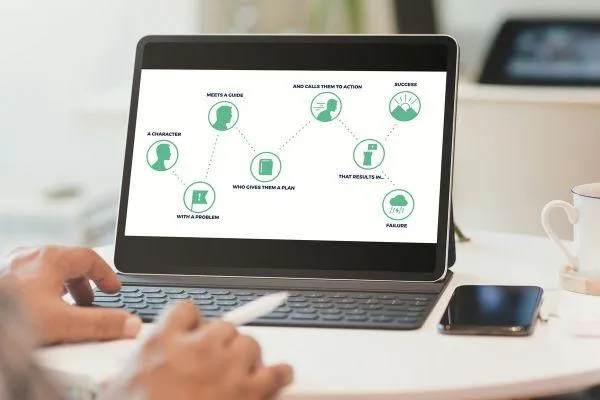
A DIY SYSTEM THAT’S SIMPLE TO FOLLOW

for weekly group coaching, templates, and a proven system that fits seamlessly into your week—without taking over your life.
.

COACHING THAT MEETS YOU WHERE YOU ARE
Want someone to walk you through it? Get 1:1 or team coaching to clarify your message and apply the StoryBrand Framework to your business in real time.
.

DONE-FOR-YOU MARKETING
Too busy to do it yourself? We’ll build your messaging, write your copy, create the assets you need, and handle your StoryBrand marketing—so you can stay focused on running your business.
HI, I'm Vicky Sidler
And I’VE BEEN WHERE YOU ARE

I know how it feels to stare at your marketing and think, “Why isn’t this working?” That's why I created a StoryBrand Marketing Agency.
All in all, your business isn’t just another brick in the wall—it’s something special. Your story matters, and I’m here to help you share it in a way that feels real, connects with people, and gets results.
As a certified StoryBrand Guide, I specialize in turning complicated ideas into clear, compelling messages that resonate with your audience.
With a background in journalism, I’ve spent decades telling stories that matter and crafting content people want to read.
I’ve developed a proven system to help businesses like yours cut through all the AI trash that's out there and build genuine connections with their audience.
Your story isn’t just important—it’s the reason people will choose your business. Let’s make sure it’s heard loud and clear by the people who need it most.
And sorry if I got Pink Floyd stuck in your head just now...
Hear Directly from DONALD MILLER
In this short clip, StoryBrand’s founder Donald Miller explains why clear messaging and a simple marketing plan change everything.
Donald shares why newsletters are back, what a full StoryBrand campaign includes, and how a certified guide helps you focus on what actually works—without wasting money or time.
Watch to see how working with a StoryBrand Certified Guide can make a measurable difference for your business.
EVERYTHING STORYBRAND, ALL IN ONE PLACE
Whether you need help with strategy, websites, content, or SEO, I offer the full range of StoryBrand marketing services—done with you or done for you.
StoryBrand Framework
StoryBrand Wireframe
StoryBrand Websites
StoryBrand SEO
StoryBrand Video
StoryBrand Copywriting
StoryBrand Email Sequences
StoryBrand Marketing Funnels
StoryBrand Workshops
StoryBrand Consulting
StoryBrand PPC
StoryBrand Lead Generation
StoryBrand
Social Media
StoryBrand Strategy
StoryBrand Content Marketing
StoryBrand Local Service
StoryBrand Coaching
MARKETING THAT DOESN’T TAKE OVER YOUR LIFE
Whether you want to build it yourself or hand it off completely, as a StoryBrand Marketing Agency, we’ll give you a clear message and a simple system that actually works.

1
BOOK A COFFEE CHAT
This is a no-pressure, non-sales call where we discuss what’s working, what’s not, and where you want to go.
.
2
CHOOSE YOUR PATH
Get hands-on support through the StoryBrand Course, 1:1 or team coaching, or let me build the entire marketing system for you—messaging, website, emails, and more.
.
.

3
FIX YOUR MARKETING
Walk away with a message that resonates, a plan that’s easy to follow, and marketing that works while you sleep and finally delivers results.
COFFEE’S ON US (OK, NOT REALLY)
But we’re serious about helping you connect with your audience. Let’s grab a coffee (on Zoom) and chat about your marketing goals.
Wondering how to simplify your message? Let’s talk.
Ready to stand out in an AI-saturated world? We’ve got ideas.
Just need clarity? We’ll help you see the big picture.
This isn’t a sales call – just a friendly, low-pressure chat. At the very least, you’ll walk away with some cool ideas you can try on your own.
SCHEDULE YOUR COFFEE CHAT WITH US TODAY
FIXING YOUR MARKETING SHOULDN’T FEEL IMPOSSIBLE
Most small business owners aren’t marketers—they just want to explain what they do in a way that makes people care.
But when the message isn’t clear, everything else gets harder: websites don’t convert, leads go cold, and social posts fall flat.
You might worry that getting it right will take too much time, cost too much money, or feel like just another online course you’ll never finish.
That’s why I offer three simple paths: do-it-together support through the StoryBrand Course, 1:1 and team coaching, or done-for-you services where I build your full funnel myself.
You’ll get clear messaging, practical templates, and real support—so your marketing finally works and your business actually grows.
YOUR QUESTIONS, ANSWERED
We know marketing can feel overwhelming, and you probably have questions. That’s why we’ve put together answers to the things people ask us most.
What makes Strategic Marketing Tribe different from other StoryBrand marketing agencies?
We’re the StoryBrand marketing agency that skips the boring "corporate speak." We blend the power of StoryBrand with strategic marketing solutions to craft content that feels human, genuine, and impossible to ignore.
How can your strategic marketing solutions benefit my business?
Our strategic marketing solutions simplify your message, clarify your brand story, and help you connect with your ideal customers. It’s marketing that makes sense and gets results – no jargon, no gimmicks, just growth.
What is StoryBrand, and why does it matter?
Think of StoryBrand as a cheat sheet for marketing clarity. It helps you explain what you do in a way that makes people stop, listen, and say, “Oh, I get it.” We use it to create marketing that feels human and that your audience will actually enjoy reading.
Do I need to be familiar with StoryBrand to work with you?
Not at all! Whether you’re a StoryBrand superfan (like us!) or have no idea what it is, we’ll walk you through everything. We’re here to make the process simple, clear, and (dare we say) fun.
How do I know if this is right for my business?
If people keep saying “I don’t really get what you do,” or you’re getting the wrong kind of leads, it’s a sign your message needs work. That’s what we fix.
What if I don’t have time to take a course?
The course is built for time-strapped business owners. You get short lessons, plug-and-play templates, and live support so you’re never stuck or overwhelmed.
What’s the difference between the course and the done-for-you service?
The course gives you training, tools, and weekly support so you can do it yourself. The done-for-you option means I build your whole funnel for you.
How long does it take to see results?
Most people see clearer messaging and better engagement within a week of applying the one-liner. Bigger results (like leads and conversions) follow as you apply it across your marketing.
What if I’ve already tried StoryBrand and it didn’t work?
Many people try to apply StoryBrand on their own and miss key parts. This course walks you through it step-by-step, with real examples and live feedback from a Certified Guide.
STORY, MEET STRATEGY
Let’s make marketing feel less robotic and more real. Find resources from a StoryBrand Marketing Agency that bring your message—and your business—to life.

AI-Generated Passwords Are Shockingly Easy to Crack
By Vicky Sidler | Published 26 February 2026 at 12:00 GMT+2
If you have ever asked ChatGPT to “give me a strong password” and felt oddly pleased with yourself, this is your cue to pause and quietly change it.
According to reporting by Sky News, based on research from AI cybersecurity firm Irregular, passwords generated by major AI tools are not as secure as they look. In fact, they are often predictable enough that even older computers can crack them far faster than anyone would like to admit.
The short version is simple. If an AI created your password, it may be time for a new one.
This comes after leading models, including ChatGPT, Claude, and Gemini, were tested. All three produced repeated patterns and, in some cases, identical passwords across multiple attempts. That is not random. That is a pattern wearing a disguise.
TL;DR:
AI tools do not generate passwords randomly
They repeat patterns from their training data
Some AI-generated passwords were reused multiple times
Hackers use automated tools that thrive on predictable patterns
The fix is simple. Use a proper password manager or passkeys instead
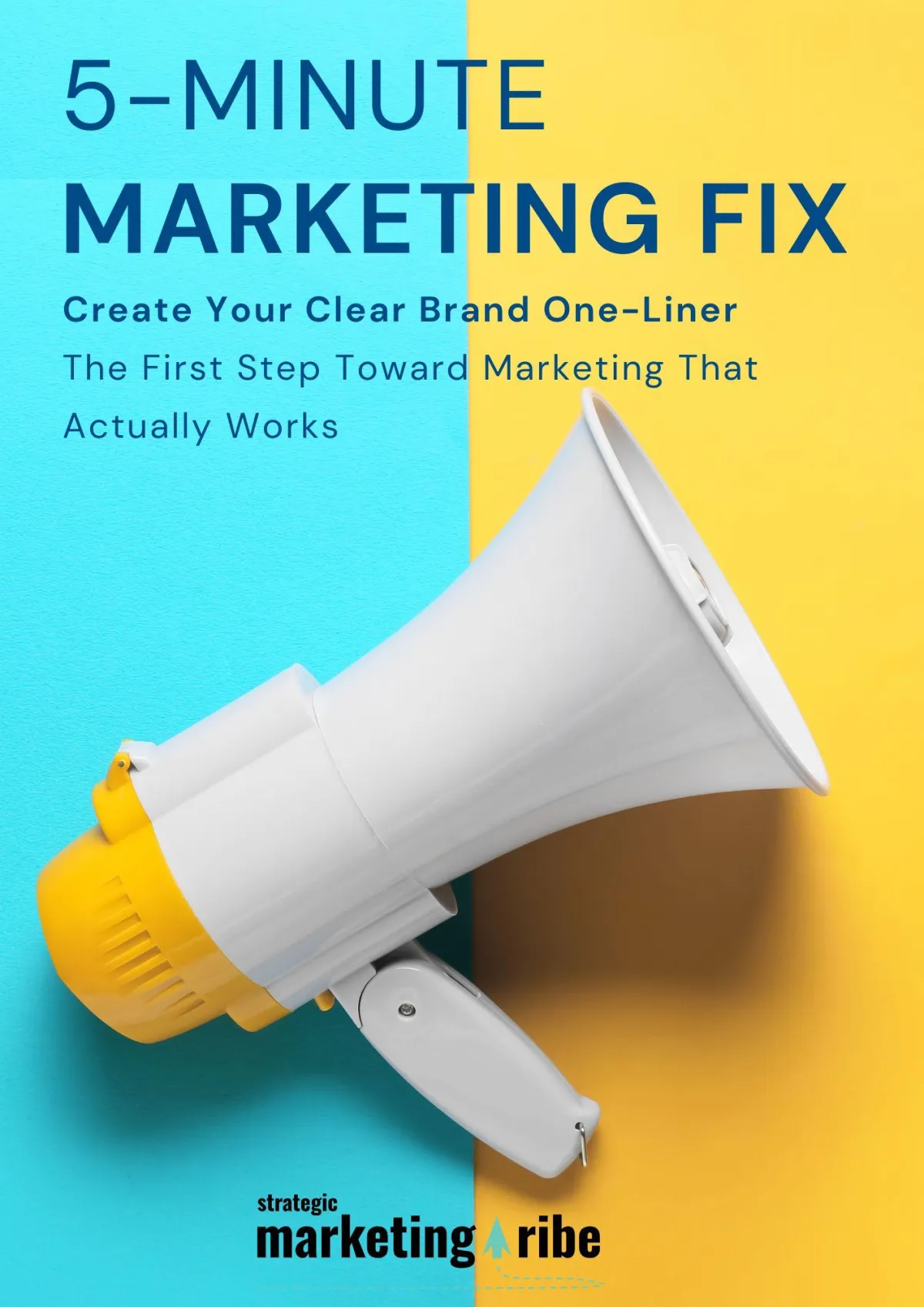
Need help getting your message right? Download the 5-Minute Marketing Fix.
Table of Contents:
AI-Generated Passwords Are Shockingly Easy to Crack
Why AI Passwords Look Strong but Are Not:
Why This Matters for Small Business Owners:
A Marketing Lesson Hidden in a Password Story:
1. Small Businesses Are Being Targeted—Here’s What Cybersecurity Stats Say in 2025
2. South Africa's 2025 Data Breach Count Hits 369k—Are You Next?
3. Microsoft Takes Down Phishing Sites in $100K Scam
4. Small Businesses Hit by AI Fraud Surge
5. Google Gemini Can Now Browse For You. Should You Let It?
Frequently Asked Questions About AI Generated Passwords
1. Are AI generated passwords safe to use?
2. Why do AI tools create predictable passwords?
3. How can hackers crack AI generated passwords so quickly?
4. Do online password strength checkers detect this problem?
5. What is the safest way to create strong passwords for my business?
6. Should small businesses switch to passkeys instead of passwords?
7. What should I do if I already used AI to generate passwords?
8. Is it okay to use AI for other security tasks?
The problem sounds technical, but it is surprisingly easy to understand once you strip away the jargon.
A strong password should be random. Truly random. That means there is no pattern a computer can recognize. Specialist tools like Apple Password Manager, Google Password Manager, 1Password, and LastPass use secure random generators. In plain English, they create combinations that are not based on previous examples. They are mathematically unpredictable.
Large language models, on the other hand, do not work that way.
Why AI Passwords Look Strong but Are Not:
AI tools are trained to predict what comes next in a sequence of text. They are brilliant at producing something that looks right. They are not designed to create true randomness.
So when you ask for a “strong password,” the model gives you something that resembles what strong passwords tend to look like. A capital letter here. A number there. A symbol placed strategically in the middle. It feels secure because it ticks the visual boxes.
But research from Irregular showed those passwords followed repeatable patterns. In one test, 50 passwords generated by Claude produced only 23 unique results. One password appeared 10 times. That is less “cyber fortress” and more “copy and paste with enthusiasm.”
Online password checkers even rated these AI passwords as extremely strong, with some claiming they would take millions of trillions of years to crack. The catch is those tools do not know the pattern behind the scenes. They judge the length and the mix of characters, not whether the password is part of a predictable family tree.
According to Irregular co-founder Dan Lahav, if you are relying on AI-generated passwords, even older computers could crack them in a relatively short time because attackers use automated guessing tools that look specifically for patterns.
And cybercriminals love patterns.
Why This Matters for Small Business Owners:
You might be thinking, “I only used AI for one or two accounts.” That may be true. But small businesses often manage dozens of logins. Email. Accounting software. CRM systems. Payment gateways. Website hosting. Social media. Each one is a potential entry point.
If just one password is weak, it can expose client data, invoices, or private communication. That is not just inconvenient. It can damage trust, and trust is expensive to rebuild.
There is another twist. Developers are increasingly using AI to write code. Irregular found fragments of recognizable AI-generated passwords in public code repositories. In some cases, these appeared in what looked like real services. That means some businesses may be exposed without even realizing an AI-generated password was inserted somewhere along the line.
In marketing we talk about clarity all the time. In cybersecurity, clarity looks like this. If you do not know exactly how something was generated, do not assume it is safe.
The Simple Fix:
The reassuring part is that this sits in the category of avoidable, high impact when it goes wrong.
The fix is straightforward.
First, use a dedicated password manager. These tools generate and store passwords securely using true randomness. You do not have to memorize anything except one master password.
Second, consider passkeys where possible. Passkeys use biometric authentication such as fingerprint or face ID instead of traditional passwords. They are both stronger and easier to use, which is rare in technology.
If neither is an option, choose a long, memorable phrase that only makes sense to you. Not a quote from a movie. Not your dog’s name with a number. Something personal and layered. Length matters more than complexity.
And whatever you do, do not ask an AI to improvise.
A Marketing Lesson Hidden in a Password Story:
There is a broader lesson here for business owners who love efficiency. AI is an excellent assistant. It can draft emails, brainstorm ideas, and simplify explanations. But it is not designed for every task.
Just because something sounds confident does not mean it is correct.
The same applies to your marketing. Many businesses use language that looks impressive but follows predictable patterns. Words like "innovative," "cutting edge," and "customer centric." They appear strong. They feel polished. Yet they blend into a sea of sameness.
As a StoryBrand Certified Guide and Duct Tape Marketing Consultant, I see this daily. Real strength is not about looking complex. It is about being clear and deliberate. Whether that is your password or your positioning.
If you want to tighten up your message so clients understand exactly what you do and why it matters, start with one clear sentence.
Download the free 5-Minute Marketing Fix. It will help you clarify your message without relying on guesswork, patterns, or borrowed language that only looks strong from a distance.
Related Articles:
1. Small Businesses Are Being Targeted—Here’s What Cybersecurity Stats Say in 2025
If the password issue feels like one small crack in the wall, this article shows the whole building. It breaks down current attack statistics and gives a practical action plan so you can strengthen more than just your logins.
2. South Africa's 2025 Data Breach Count Hits 369k—Are You Next?
Real breach numbers make abstract risk feel very concrete. This piece shows how often accounts are actually exposed and reinforces why regular password updates and proper managers are non negotiable.
3. Microsoft Takes Down Phishing Sites in $100K Scam
Predictable passwords are one problem. Phishing is another. This article explains how criminals trick people into handing over even strong credentials and why staff awareness matters just as much as technical tools.
4. Small Businesses Hit by AI Fraud Surge
Here you will see how attackers use AI themselves, targeting invoices, payments, and customer data. It connects the dots between convenience driven AI use and the growing fraud risk facing small firms.
5. Google Gemini Can Now Browse For You. Should You Let It?
If AI should not be trusted to generate your passwords, should it be logging into your accounts on your behalf? This article explores where smart delegation ends and security risk begins.
Frequently Asked Questions About AI Generated Passwords
1. Are AI generated passwords safe to use?
Not reliably. AI tools create passwords based on patterns they have learned from existing text, not true randomness. That means the passwords may look strong but can still follow predictable structures that automated hacking tools can guess.
2. Why do AI tools create predictable passwords?
Large language models are built to predict what comes next in a sequence of text. When you ask for a password, they generate something that resembles a strong password rather than something mathematically random. It is imitation, not true randomness.
3. How can hackers crack AI generated passwords so quickly?
Cybercriminals use automated tools that test millions of combinations per second. If passwords follow common patterns, those tools can narrow down the possibilities and guess them much faster than if the password were truly random.
4. Do online password strength checkers detect this problem?
Usually not. Most password checkers look at length and character variety. They do not analyse whether the password is part of a predictable pattern used repeatedly by an AI model.
5. What is the safest way to create strong passwords for my business?
Use a reputable password manager such as Apple Password Manager, Google Password Manager, 1Password, or LastPass. These tools generate passwords using secure random number generators and store them safely so you do not have to remember each one.
6. Should small businesses switch to passkeys instead of passwords?
Where possible, yes. Passkeys use biometrics like fingerprint or face recognition and are generally safer and easier to manage. They reduce the risk of stolen or guessed passwords.
7. What should I do if I already used AI to generate passwords?
Change them as soon as possible, especially for email, banking, payment systems, and any account that stores client data. Replace them with passwords created by a proper password manager.
8. Is it okay to use AI for other security tasks?
AI can help explain security concepts in plain English or summarise technical guidance. It should not be used to generate passwords or make final security decisions that protect sensitive business information.
9. Are long phrases better than complex short passwords?
Yes. A long, memorable phrase that only makes sense to you is usually stronger than a short password with random symbols. Length increases the number of possible combinations, which makes it harder to crack.
10. How often should I update my business passwords?
Review and update critical passwords regularly, especially after staff changes, suspected breaches, or major system updates. Using a password manager makes this process far easier and more consistent

Is your Marketing Message so confusing even your own mom doesn’t get it? Let's clarify your message—so everyone wants to work with you!



Created with clarity (and coffee)