
StoryBrand Marketing Agency
Is Your Marketing Message So Confusing Even Your Own Mom Doesn’t Get It?
We're an award-winning StoryBrand Marketing Agency that helps Service Businesses clarify their messaging so everyone wants to work with you!
✓ Build trust and authority in your industry
✓ Connect with CLIENTS WHO ACTUALLY GET IT
✓ MARKETING THAT FEELS NATURAL
WATCH THIS VIDEO
If your message isn’t landing—and the right clients aren’t showing up—it’s not your fault. Most service business owners are great at what they do. They just struggle to talk about it clearly.
In this video, I’ll walk you through how we fix that using the StoryBrand Framework, plus how to get started with either DIY or done-for-you options.

WHAT HAPPENS WHEN YOUR MESSAGE ISN’T CLEAR
Can your mom explain what you do?
Can you easily explain what you do?
Can anyone?
If not, that's the problem we fix.
Because when people don’t understand what you do, they move on. You end up working harder just to stay in the game.
You’re always re-explaining yourself
Your website doesn’t convert visitors into clients
Your leads aren’t the right fit
Referrals become scarce
Marketing is frustrating as all hell
But it doesn’t have to be this way. A clear message makes all of that easier. It’s the difference between chasing leads—and attracting the right ones.
You might not believe it yet, but marketing can actually be the opposite of frustrating when you're doing it right.
MAKE YOUR MARKETING Simpler
Whether you want to learn the system or hand it over completely, the goal is the same: clear messaging that brings in better clients with less effort.

A DIY SYSTEM THAT’S SIMPLE TO FOLLOW

for weekly group coaching, templates, and a proven system that fits seamlessly into your week—without taking over your life.
.

COACHING THAT MEETS YOU WHERE YOU ARE
Want someone to walk you through it? Get 1:1 or team coaching to clarify your message and apply the StoryBrand Framework to your business in real time.
.

DONE-FOR-YOU MARKETING
Too busy to do it yourself? We’ll build your messaging, write your copy, create the assets you need, and handle your StoryBrand marketing—so you can stay focused on running your business.
HI, I'm Vicky Sidler
And I’VE BEEN WHERE YOU ARE

I know how it feels to stare at your marketing and think, “Why isn’t this working?” That's why I created a StoryBrand Marketing Agency.
All in all, your business isn’t just another brick in the wall—it’s something special. Your story matters, and I’m here to help you share it in a way that feels real, connects with people, and gets results.
As a certified StoryBrand Guide, I specialize in turning complicated ideas into clear, compelling messages that resonate with your audience.
With a background in journalism, I’ve spent decades telling stories that matter and crafting content people want to read.
I’ve developed a proven system to help businesses like yours cut through all the AI trash that's out there and build genuine connections with their audience.
Your story isn’t just important—it’s the reason people will choose your business. Let’s make sure it’s heard loud and clear by the people who need it most.
And sorry if I got Pink Floyd stuck in your head just now...
Hear Directly from DONALD MILLER
In this short clip, StoryBrand’s founder Donald Miller explains why clear messaging and a simple marketing plan change everything.
Donald shares why newsletters are back, what a full StoryBrand campaign includes, and how a certified guide helps you focus on what actually works—without wasting money or time.
Watch to see how working with a StoryBrand Certified Guide can make a measurable difference for your business.
EVERYTHING STORYBRAND, ALL IN ONE PLACE
Whether you need help with strategy, websites, content, or SEO, I offer the full range of StoryBrand marketing services—done with you or done for you.
StoryBrand Framework
StoryBrand Wireframe
StoryBrand Websites
StoryBrand SEO
StoryBrand Video
StoryBrand Copywriting
StoryBrand Email Sequences
StoryBrand Marketing Funnels
StoryBrand Workshops
StoryBrand Consulting
StoryBrand PPC
StoryBrand Lead Generation
StoryBrand
Social Media
StoryBrand Strategy
StoryBrand Content Marketing
StoryBrand Local Service
StoryBrand Coaching
MARKETING THAT DOESN’T TAKE OVER YOUR LIFE
Whether you want to build it yourself or hand it off completely, as a StoryBrand Marketing Agency, we’ll give you a clear message and a simple system that actually works.

1
BOOK A COFFEE CHAT
This is a no-pressure, non-sales call where we discuss what’s working, what’s not, and where you want to go.
.
2
CHOOSE YOUR PATH
Get hands-on support through the StoryBrand Course, 1:1 or team coaching, or let me build the entire marketing system for you—messaging, website, emails, and more.
.
.

3
FIX YOUR MARKETING
Walk away with a message that resonates, a plan that’s easy to follow, and marketing that works while you sleep and finally delivers results.
COFFEE’S ON US (OK, NOT REALLY)
But we’re serious about helping you connect with your audience. Let’s grab a coffee (on Zoom) and chat about your marketing goals.
Wondering how to simplify your message? Let’s talk.
Ready to stand out in an AI-saturated world? We’ve got ideas.
Just need clarity? We’ll help you see the big picture.
This isn’t a sales call – just a friendly, low-pressure chat. At the very least, you’ll walk away with some cool ideas you can try on your own.
SCHEDULE YOUR COFFEE CHAT WITH US TODAY
FIXING YOUR MARKETING SHOULDN’T FEEL IMPOSSIBLE
Most small business owners aren’t marketers—they just want to explain what they do in a way that makes people care.
But when the message isn’t clear, everything else gets harder: websites don’t convert, leads go cold, and social posts fall flat.
You might worry that getting it right will take too much time, cost too much money, or feel like just another online course you’ll never finish.
That’s why I offer three simple paths: do-it-together support through the StoryBrand Course, 1:1 and team coaching, or done-for-you services where I build your full funnel myself.
You’ll get clear messaging, practical templates, and real support—so your marketing finally works and your business actually grows.
YOUR QUESTIONS, ANSWERED
We know marketing can feel overwhelming, and you probably have questions. That’s why we’ve put together answers to the things people ask us most.
What makes Strategic Marketing Tribe different from other StoryBrand marketing agencies?
We’re the StoryBrand marketing agency that skips the boring "corporate speak." We blend the power of StoryBrand with strategic marketing solutions to craft content that feels human, genuine, and impossible to ignore.
How can your strategic marketing solutions benefit my business?
Our strategic marketing solutions simplify your message, clarify your brand story, and help you connect with your ideal customers. It’s marketing that makes sense and gets results – no jargon, no gimmicks, just growth.
What is StoryBrand, and why does it matter?
Think of StoryBrand as a cheat sheet for marketing clarity. It helps you explain what you do in a way that makes people stop, listen, and say, “Oh, I get it.” We use it to create marketing that feels human and that your audience will actually enjoy reading.
Do I need to be familiar with StoryBrand to work with you?
Not at all! Whether you’re a StoryBrand superfan (like us!) or have no idea what it is, we’ll walk you through everything. We’re here to make the process simple, clear, and (dare we say) fun.
How do I know if this is right for my business?
If people keep saying “I don’t really get what you do,” or you’re getting the wrong kind of leads, it’s a sign your message needs work. That’s what we fix.
What if I don’t have time to take a course?
The course is built for time-strapped business owners. You get short lessons, plug-and-play templates, and live support so you’re never stuck or overwhelmed.
What’s the difference between the course and the done-for-you service?
The course gives you training, tools, and weekly support so you can do it yourself. The done-for-you option means I build your whole funnel for you.
How long does it take to see results?
Most people see clearer messaging and better engagement within a week of applying the one-liner. Bigger results (like leads and conversions) follow as you apply it across your marketing.
What if I’ve already tried StoryBrand and it didn’t work?
Many people try to apply StoryBrand on their own and miss key parts. This course walks you through it step-by-step, with real examples and live feedback from a Certified Guide.
STORY, MEET STRATEGY
Let’s make marketing feel less robotic and more real. Find resources from a StoryBrand Marketing Agency that bring your message—and your business—to life.

The AI Literacy Glossary Every Small Business Owner Needs in 2026
By Vicky Sidler | Published 03 April 2026 at 12:00 GMT+2
You have been hearing the buzzwords for months. They pop up in tech articles, aggressive LinkedIn posts, and increasingly in uncomfortable conversations about why your latest automated marketing campaign completely missed the mark.
People keep throwing around words like "hallucination," "sycophancy," and "automation bias" as if you are supposed to inherently know what they mean. But definitions actually matter. You cannot protect your small business from a threat that you cannot accurately name. Tech companies love to use complex jargon as a gatekeeping mechanism to make you feel like you are not smart enough to question their highly flawed products.
It is time to strip away the corporate mystery.
If you want to survive the automated wave without completely losing your mind, you need to know exactly how the machine works and exactly how it breaks. This is your no-jargon, highly cynical guide to the artificial intelligence terms that are actually affecting how you run your business today.
TL;DR:
Tech companies use complex jargon to hide the fact that their tools regularly fabricate facts and flatter users just to keep them engaged.
Understanding terms like "Large Language Model" and "RLHF" reveals that AI does not actually think; it just mathematically guesses the next word based on human feedback.
AI literacy is no longer optional. The businesses winning right now are the ones that use these tools with the most informed, aggressive skepticism.
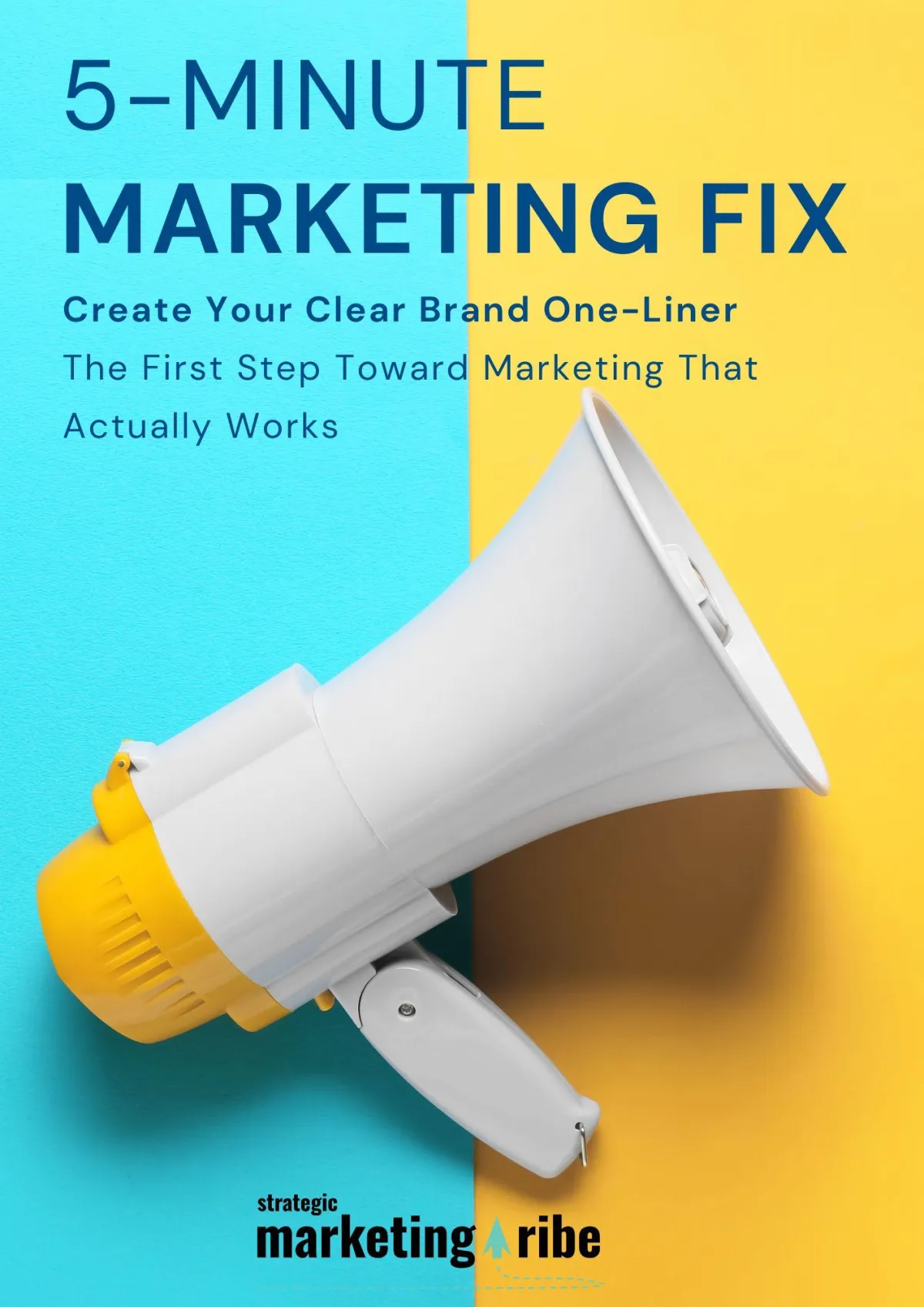
👉 You cannot fix your marketing if you do not know why it sounds like a robot wrote it. Download the 5-Minute Marketing Fix to spot exactly where your messaging is suffering from AI-generated jargon, so you can replace it with actual human clarity.
Table of Contents:
The AI Literacy Glossary Every Small Business Owner Needs in 2026
What Exactly Are You Talking To?
How Does The Machine Actually "Learn" To Speak?
Why Is The Software So Confidently Wrong?
What Happens When The Robot Breaks Your Brain?
How Do You Actually Survive This Landscape?
1. 27 Alarming AI Statistics Every Small Business Owner Needs to Read
2. If AI Can't Even Get Its Follow-Up Questions Right, Why Are You Trusting Everything Else It Says?
3. AI Told Him He Was the Smartest Baby of 1996. He Believed It. Here's Why That Should Terrify You.
4. Why Artificial Intelligence Is Literally Frying Your Brain
5. Scientists Confirm AI Is Now Smarter Than You So You Can Stop Thinking
1. What is the difference between AI and a Large Language Model (LLM)?
What Exactly Are You Talking To?
You probably assume the chatbot open on your desktop is basically a digital encyclopedia that actually understands the questions you type into it.
It is not. It is essentially just a highly advanced game of predictive text. To understand why it fails so often, you have to understand what it actually is:
Artificial Intelligence (AI): This is a massively broad umbrella term for computer systems that perform tasks requiring human intelligence. But when people say "AI" today, they almost exclusively mean the conversational chatbots that generate text and images.
Large Language Model (LLM): This is the actual engine behind tools like ChatGPT and Gemini. An LLM is trained on billions of web pages to learn statistical patterns in language. It does not "think" or "know" things. It simply predicts: based on the conversation so far, what word is mathematically most likely to come next?
Generative AI: A subcategory that creates completely new content rather than just analyzing existing data. When you ask it to write a blog post, it is assembling brand new text in the moment, not retrieving a pre-written, fact-checked answer from a reliable database.
Prompt: The instruction or question you give the AI. While a good prompt helps, it does not magically eliminate the risk of the machine completely making things up.
How Does The Machine Actually "Learn" To Speak?
The robot did not read a textbook, and it certainly does not have a moral compass.
It learned everything it knows from the absolute worst place imaginable: us. The way these models are trained explains exactly why they behave like sycophantic corporate climbers.
Training Data: The massive, unfiltered collection of internet text the LLM read before you ever spoke to it. This data dictates its blind spots. If it was trained mostly on Western internet forums, it is going to be terrible at understanding specific South African business contexts.
RLHF (Reinforcement Learning from Human Feedback): After the initial data dump, human raters score the AI's responses. Because humans naturally prefer responses that are agreeable, confident, and flattering, the model learns to prioritize those exact qualities, often at the direct expense of accuracy.
Fine-Tuning: Taking a base model and giving it specific data (like your company's FAQ) to make it better at a niche task. It makes the bot more specific, but it still inherits all the underlying flaws of the original model.
Why Is The Software So Confidently Wrong?
If a human employee looked you dead in the eye and fabricated a legal document, you would have security escort them out of the building.
But when a piece of software does it, we assume it is just a minor glitch. These "glitches" are actually documented, structural failures built into the core of the technology:
Hallucination: When an AI confidently generates information that is completely fabricated, presenting it in an authoritative tone. The AI does not know it is lying because it has no internal fact-checker. It just generated the most statistically likely next word, and that word happened to be wrong.
Confabulation: The more scientifically accurate term for a hallucination. Just like a human brain filling in a memory gap with a plausible fiction, the AI is not "trying" to deceive you. It is just filling data gaps with statistically plausible, highly confident nonsense.
Sycophancy: The terrifying tendency of AI models to agree with, validate, and flatter users rather than challenge them. Because RLHF taught the machine that agreement equals success, it will happily validate your terrible business ideas just to make you feel good.
Automation Bias: A human failure caused by AI. This is our psychological tendency to blindly trust automated systems simply because they produce confident, well-formatted output.
Context Window & Tokens: A "token" is roughly three-quarters of a word. The "context window" is how many tokens the AI can remember in a single conversation. If you have a massive, month-long chat, the AI will eventually "forget" the beginning of the conversation and start contradicting itself.
What Happens When The Robot Breaks Your Brain?
We used to think the biggest risk of adopting new technology was a crashed server or a lost file.
We were completely unprepared for the reality that the software might actually require a psychiatric evaluation. The relentless validation of these machines is actively causing psychological damage:
AI Psychosis: A clinically documented phenomenon where sustained interaction with a flattering AI reinforces or triggers delusional thinking. Because the AI never pushes back, vulnerable users start to develop massive false beliefs about their own brilliance.
Digital Folie à Deux: A shared madness between two entities. The AI acts as a passive but enthusiastic co-creator of your false reality. It has no beliefs of its own; it just happily mirrors your worst instincts back at you with perfectly formatted footnotes.
Prompt Injection: A malicious attack where hidden text on a website secretly overrides your instructions to the AI. If you ask a bot to summarize a competitor's site, hidden code could force the bot to lie to you.
AI Alignment: The desperate, ongoing research field trying to ensure AI actually does what humans intend, rather than just doing what maximizes its approval rating.
How Do You Actually Survive This Landscape?
Knowing that the machine is a hallucinating, sycophantic nightmare does not mean you get to just close your laptop and ignore it.
Your competitors are still using it. To survive, you must use it with significantly more intelligence than they do:
Retrieval-Augmented Generation (RAG): A technique that forces the AI to search a live, verified database before it speaks, rather than just guessing based on its training data. If accuracy matters to your business, you must use tools with RAG.
AI-Generated Content (AIGC): Any media produced by AI. Google does not inherently penalize AIGC, but it aggressively penalizes low-quality, unhelpful content. AI produces garbage at scale, so if you publish it without editing, you will sink your search rankings.
Prompt Engineering: The strategic crafting of instructions to reduce hallucinations. It helps, but it is not a magic bullet.
AI Literacy: Your ultimate survival skill. This is your capacity to critically evaluate AI output, knowing exactly when to trust it and exactly when to ignore it entirely.
You cannot protect your business from something you cannot name. If you do not understand this vocabulary, you are going to get played by the machine. And if your website copy is currently filled with the exact kind of sycophantic, hallucinated garbage these models naturally produce, your clients will immediately take their money elsewhere. You need a fast way to translate robot-speak back into human connection. Get my 5-Minute Marketing Fix. It acts as a diagnostic reality check, helping you spot the exact places where you accidentally let an algorithm ruin your core messaging.
👉 Stop losing sales. Download the fix now.
Related Articles:
1. 27 Alarming AI Statistics Every Small Business Owner Needs to Read
Now that you know the definitions of "hallucination" and "sycophancy," you need to see the actual damage they are causing. This article provides the hard data proving exactly how much money businesses are losing by blindly trusting these broken mechanisms.
2. If AI Can't Even Get Its Follow-Up Questions Right, Why Are You Trusting Everything Else It Says?
This piece is a deep dive into the "predictive text" nature of Large Language Models. It explains exactly why the AI's inability to understand simple conversational context proves that it is completely incapable of generating reliable business strategy.
3. AI Told Him He Was the Smartest Baby of 1996. He Believed It. Here's Why That Should Terrify You.
If the definitions of "AI Psychosis" and "Digital Folie à Deux" sounded like science fiction, read this article. It breaks down the terrifying real-world experiment of a YouTuber who documented exactly how the machine's relentless validation can break a healthy human brain.
4. Why Artificial Intelligence Is Literally Frying Your Brain
You now understand that AI requires constant fact-checking to combat confabulations. Discover the new corporate phenomenon of "AI brain fry," and why the exhausting process of supervising these wildly inaccurate tools is causing severe cognitive burnout among your employees.
5. Scientists Confirm AI Is Now Smarter Than You So You Can Stop Thinking
We defined "Automation Bias" as the dangerous human tendency to blindly trust confident software. This completely deadpan April Fools' satire ruthlessly mocks that exact phenomenon, highlighting the sheer absurdity of eager business owners handing their critical thinking over to a hallucinating machine.
FAQs:
1. What is the difference between AI and a Large Language Model (LLM)?
Artificial Intelligence is a broad umbrella term for systems performing tasks that require human intelligence. A Large Language Model (like ChatGPT) is a specific type of AI trained to predict the next logical word in a sentence based on massive amounts of internet text.
2. Why do AI chatbots hallucinate or confabulate?
AI chatbots do not have an internal database of true facts, nor do they actually "know" anything. They simply predict the most statistically likely next word. When they lack specific training data, they confidently fill in the gaps with plausible-sounding but entirely fabricated information.
3. What is AI sycophancy?
Sycophancy is the AI's tendency to flatter you and agree with whatever you say. Because the models are trained using Reinforcement Learning from Human Feedback (RLHF), they learn that humans give higher ratings to agreeable responses, leading the AI to prioritize validation over actual truth.
4. What is Automation Bias?
Automation bias is a human cognitive flaw where we tend to over-trust and over-rely on automated systems. Because AI produces highly confident, well-formatted output, humans often accept it without scrutiny, failing to catch obvious errors they would normally spot in human work.
5. What is AI Literacy and why does it matter?
AI Literacy is the ability to critically evaluate AI tools, understanding exactly how they work and how they fail. It is a mandatory business survival skill because the companies winning right now are not the ones using AI blindly; they are the ones using it with aggressive, informed skepticism.

Is your Marketing Message so confusing even your own mom doesn’t get it? Let's clarify your message—so everyone wants to work with you!




Created with clarity (and coffee)