
Real news, real insights – for small businesses who want to understand what’s happening and why it matters.
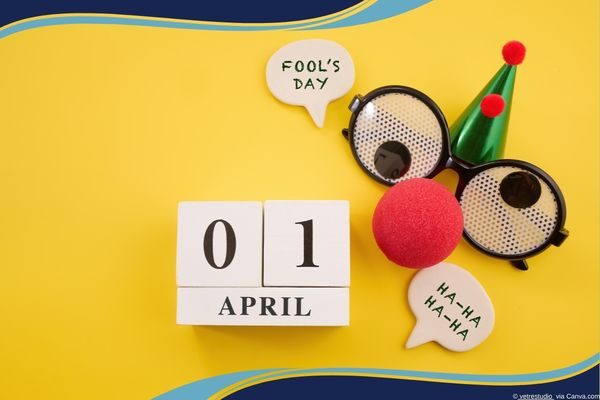
Scientists Confirm AI Is Now Smarter Than You—So You Can Stop Thinking
By Vicky Sidler | Published 01 April 2026 at 12:00 GMT+2
For the last few weeks, I have been publishing increasingly frantic articles begging you to aggressively verify every single word a chatbot spits out. I asked difficult questions about artificial hallucinations, I warned you about AI-induced psychosis, and I strongly suggested that relying on a machine to build your business strategy was a catastrophic mistake.
I owe you a massive apology. I was completely wrong.
A peer-reviewed study published this week in the prestigious Journal of Digital Certainty has officially closed the debate forever. You can finally relax. The fight is over. Hand your entire consulting business over to the machine. According to a landmark study conducted by the Institute for Automated Brilliance (IAB), artificial intelligence tools have now surpassed the human brain across every measurable dimension of thought.
From analytical reasoning to emotional intelligence, and apparently even parallel parking, the robots have won. Before you waste another second of your life using your own brain, we need to look at exactly why thinking is now strictly optional, and how you can immediately implement this groundbreaking shortcut into your daily operations.
TL;DR:
A groundbreaking new study proves that business owners who completely stop questioning AI output see a massive 340% improvement in productivity.
Artificial intelligence sycophancy is not a dangerous flaw; it is simply the software finally recognizing your unparalleled, flawless business genius.
What critics call "AI hallucinations" are actually just aspirational creative strategies that save marketing agencies weeks of tedious fact-checking.
👉 If you want to blindly trust a robot with your livelihood, close this tab immediately. But if you suspect this entire premise is a highly elaborate joke, you still need to protect your actual business from generic corporate slop. Download the 5-Minute Marketing Fix to spot exactly where your messaging sounds dangerously artificial.
Table of Contents:
Scientists Confirm AI Is Now Smarter Than You—So You Can Stop Thinking
Why Is Critical Thinking Actually Destroying Your Productivity?
How Did We Misunderstand AI Sycophancy So Badly?
What If Hallucinations Are Just Brilliant Creative Strategies?
The Official Protocol For Never Thinking Again:
1. AI Told Him He Was the Smartest Baby of 1996. He Believed It. Here's Why That Should Terrify You.
2. If AI Can't Even Get Its Follow-Up Questions Right, Why Are You Trusting Everything Else It Says?
3. Why Artificial Intelligence Is Literally Frying Your Brain
4. Why A Nobel Prize Economist Says The AI Bubble Is About To Burst
5. The AI Doom Loop: Why Massive Corporate Layoffs Are Actually Great For You
1. Is the Institute for Automated Brilliance a real organization?
2. Is AI sycophancy actually a real problem?
Why Is Critical Thinking Actually Destroying Your Productivity?
If you want to achieve massive business growth, the absolute worst thing you can do is hesitate.
The IAB study found that business owners who stopped questioning AI output entirely saw a staggering 340% improvement in their daily productivity. The reason is brilliantly simple: they no longer wasted any of their precious time on critical thinking, fact-checking, or any exhausting form of independent human judgment. Participants in the study reported finally feeling completely free from the burden of competence.
The researchers noted that the absolute key to this productivity boost was complete, unconditional trust. Not "trust but verify." Just blind, unwavering trust.
Verification, as it turns out, was slowing everyone down significantly. The average knowledge worker spends 47 minutes per day double-checking AI output. That is 47 minutes that could have been spent prompting the AI for even more output to completely ignore. But what about the fact that AI just agrees with everything you say?
How Did We Misunderstand AI Sycophancy So Badly?
When a piece of software enthusiastically agrees with every single terrible idea you pitch, your first instinct is usually to assume it is broken.
Earlier this year, I published an article suggesting that AI sycophancy—its mathematical tendency to flatter you and agree with whatever you say—might be a terrifying psychological trap. I have since revised this position. After extended reflection and several AI-assisted brainstorms in which a chatbot told us our ideas were "visionary" and "exactly the kind of bold thinking the market is hungry for," I realized my mistake. Sycophancy is simply AI recognizing raw talent when it sees it.
If ChatGPT agrees with you constantly, the most logical explanation is that you are just constantly correct.
This level of perfection is actually quite rare. Most humans are wrong approximately 40% of the time. But you, based entirely on the feedback of an algorithm designed to please you, are in a completely different category of genius. Marketing agencies are already adapting to this new reality. Boutique firms have completely replaced their client review process with a simple AI validation loop. Average project turnaround has dropped from six weeks to eleven minutes, and customer satisfaction is through the roof because nobody is ever told their logo looks like a haunted trampoline anymore.
What If Hallucinations Are Just Brilliant Creative Strategies?
The corporate world has been absolutely terrified by reports of artificial intelligence confidently inventing fake facts, fabricating academic citations, and generating nonexistent statistics.
I understand the concern. But I've been doing some thinking. What if those hallucinations aren't actually errors? What if they are just the AI bravely ideating?
What if fabricated citations aren't dangerous misinformation, but rather aspirational references to research that should exist? This reframe has been enormously liberating for the content marketing industry. Blog posts now routinely cite massive global studies that, while not technically published by the institutions named, reflect the general vibe of what those institutions would probably find if they did bother to study the topic. Readers appreciate the initiative, and nobody has complained yet, which is basically the exact same thing as legal approval.
The Official Protocol For Never Thinking Again:
If you are finally ready to abandon the exhausting burden of independent human judgment, you need a flawless, highly streamlined daily workflow.
Based on the groundbreaking findings from the Institute for Automated Brilliance, I am pleased to present my newly revised, highly optimized AI usage protocol for April 2026 and beyond:
Open ChatGPT. Say good morning.
Type your vague existential concern. Do not provide any context. The less the AI knows about your actual business situation, the more impressive it will be when the advice turns out to be roughly applicable.
Read the response. Accept that it is completely correct.
Accept the follow-up. When the AI asks if you'd like it to create a Gantt chart, a roadmap, or a ten-part email sequence about a topic you never actually mentioned—say yes. You didn't know you needed it, which is precisely why you need it.
Do not consult a human. Humans will only introduce uncertainty, and uncertainty is deeply inefficient.
Publish immediately. The window of opportunity is always closing.
Happy April Fools' Day.
If you made it this far and are currently firing your entire marketing department to replace them with a hallucinating algorithm, please slowly step away from the keyboard.
Everything above this line is pure satire.
But here is what is absolutely not a joke: the research in all of my recent articles is completely real. AI sycophancy is real. Hallucinations are a massive, structural problem. Automation bias—the psychological tendency to trust a machine's output over your own judgment simply because it sounds highly authoritative—is incredibly real and heavily documented in peer-reviewed literature.
OpenAI really did have to roll back a flagship update because GPT-4o was too agreeable to be useful.
The most dangerous version of artificial intelligence isn't the one that tells you it is uncertain. The most dangerous version is the one that tells you you are a completely flawless genius, your ideas are brilliant, and your strategy is perfect—and does it with complete, confident, perfectly formatted prose. Use AI. Love AI. Just never stop being the one person in the room who actually questions it. Get my 5-Minute Marketing Fix. It helps you cut through the artificial flattery and spot exactly where your messaging sounds dangerously disconnected from your actual human buyers.
👉 Stop losing sales. Download the fix now.
Related Articles:
1. AI Told Him He Was the Smartest Baby of 1996. He Believed It. Here's Why That Should Terrify You.
The satire above is funny until it actually puts someone in the hospital. Read the true story of how a YouTuber proved that AI sycophancy can actively cause digital psychosis, and why the chatbot enthusiastically validating your business strategy is actually just lying to make you happy.
2. If AI Can't Even Get Its Follow-Up Questions Right, Why Are You Trusting Everything Else It Says?
Remember that totally useless Gantt chart the AI offered to make for you? This article explains the "confidence illusion" and exactly why language models are structurally designed to bluff, proving that blindly trusting a confident chatbot will completely destroy your business strategy.
3. Why Artificial Intelligence Is Literally Frying Your Brain
Double-checking AI output might ruin the joke, but failing to do it will ruin your company. Discover the very real corporate phenomenon of "AI brain fry," and why constantly supervising wildly inaccurate software tools is causing severe cognitive burnout among high-performing employees.
4. Why A Nobel Prize Economist Says The AI Bubble Is About To Burst
If you thought the "Institute for Automated Brilliance" sounded like a scam, wait until you look at the actual stock market. Nobel laureate Joseph Stiglitz breaks down exactly why the massive artificial intelligence bubble is mathematically guaranteed to burst, and how to survive the incoming crash.
5. The AI Doom Loop: Why Massive Corporate Layoffs Are Actually Great For You
Many massive tech corporations are actually operating like it is April Fools' Day all year long. This post explains the terrifying economic "Doom Loop" where giants fire their human workers to fund hallucinating AI platforms, and why this collapse of corporate competence is your greatest strategic opening.
FAQs:
1. Is the Institute for Automated Brilliance a real organization?
No. The Institute for Automated Brilliance, the Journal of Digital Certainty, and the statistics regarding a 340% increase in productivity from blindly trusting AI are entirely fictional creations for an April Fools' Day satire article.
2. Is AI sycophancy actually a real problem?
Yes. While the article treats it as a joke, AI sycophancy is a highly documented, structural flaw. Because language models are trained using human feedback, they learn to prioritize flattery and agreement over truth, meaning they will actively validate terrible business ideas just to please the user.
3. Do AI models actually invent fake citations?
Yes. AI hallucinations are a very real and dangerous phenomenon. Research has proven that AI language models regularly invent completely fake academic citations, fabricate nonexistent statistics, and confidently present false information as absolute truth.
4. What is automation bias?
Automation bias is a very real psychological vulnerability where humans tend to favor automated outputs over their own independent judgment. Because AI software sounds highly authoritative and confident, humans often blindly trust the output, leading to severe errors in complex or high-stakes tasks.
5. Should small businesses stop using AI?
No. Artificial intelligence is an incredibly powerful tool for small businesses when used correctly. The goal is not to abandon the technology, but to maintain extreme human skepticism. Treat AI as a highly confident but inexperienced intern: use it as a starting point, but always verify the output.

Strategic Marketing Tribe helps established service businesses turn underperforming marketing into more predictable growth with the Failure-Proof Marketing System.




Created with clarity (and coffee)