
StoryBrand Marketing Agency
Is Your Marketing Message So Confusing Even Your Own Mom Doesn’t Get It?
We're an award-winning StoryBrand Marketing Agency that helps Service Businesses clarify their messaging so everyone wants to work with you!
✓ Build trust and authority in your industry
✓ Connect with CLIENTS WHO ACTUALLY GET IT
✓ MARKETING THAT FEELS NATURAL
WATCH THIS VIDEO
If your message isn’t landing—and the right clients aren’t showing up—it’s not your fault. Most service business owners are great at what they do. They just struggle to talk about it clearly.
In this video, I’ll walk you through how we fix that using the StoryBrand Framework, plus how to get started with either DIY or done-for-you options.

WHAT HAPPENS WHEN YOUR MESSAGE ISN’T CLEAR
Can your mom explain what you do?
Can you easily explain what you do?
Can anyone?
If not, that's the problem we fix.
Because when people don’t understand what you do, they move on. You end up working harder just to stay in the game.
You’re always re-explaining yourself
Your website doesn’t convert visitors into clients
Your leads aren’t the right fit
Referrals become scarce
Marketing is frustrating as all hell
But it doesn’t have to be this way. A clear message makes all of that easier. It’s the difference between chasing leads—and attracting the right ones.
You might not believe it yet, but marketing can actually be the opposite of frustrating when you're doing it right.
MAKE YOUR MARKETING Simpler
Whether you want to learn the system or hand it over completely, the goal is the same: clear messaging that brings in better clients with less effort.

A DIY SYSTEM THAT’S SIMPLE TO FOLLOW

for weekly group coaching, templates, and a proven system that fits seamlessly into your week—without taking over your life.
.

COACHING THAT MEETS YOU WHERE YOU ARE
Want someone to walk you through it? Get 1:1 or team coaching to clarify your message and apply the StoryBrand Framework to your business in real time.
.

DONE-FOR-YOU MARKETING
Too busy to do it yourself? We’ll build your messaging, write your copy, create the assets you need, and handle your StoryBrand marketing—so you can stay focused on running your business.
HI, I'm Vicky Sidler
And I’VE BEEN WHERE YOU ARE

I know how it feels to stare at your marketing and think, “Why isn’t this working?” That's why I created a StoryBrand Marketing Agency.
All in all, your business isn’t just another brick in the wall—it’s something special. Your story matters, and I’m here to help you share it in a way that feels real, connects with people, and gets results.
As a certified StoryBrand Guide, I specialize in turning complicated ideas into clear, compelling messages that resonate with your audience.
With a background in journalism, I’ve spent decades telling stories that matter and crafting content people want to read.
I’ve developed a proven system to help businesses like yours cut through all the AI trash that's out there and build genuine connections with their audience.
Your story isn’t just important—it’s the reason people will choose your business. Let’s make sure it’s heard loud and clear by the people who need it most.
And sorry if I got Pink Floyd stuck in your head just now...
Hear Directly from DONALD MILLER
In this short clip, StoryBrand’s founder Donald Miller explains why clear messaging and a simple marketing plan change everything.
Donald shares why newsletters are back, what a full StoryBrand campaign includes, and how a certified guide helps you focus on what actually works—without wasting money or time.
Watch to see how working with a StoryBrand Certified Guide can make a measurable difference for your business.
EVERYTHING STORYBRAND, ALL IN ONE PLACE
Whether you need help with strategy, websites, content, or SEO, I offer the full range of StoryBrand marketing services—done with you or done for you.
StoryBrand Framework
StoryBrand Wireframe
StoryBrand Websites
StoryBrand SEO
StoryBrand Video
StoryBrand Copywriting
StoryBrand Email Sequences
StoryBrand Marketing Funnels
StoryBrand Workshops
StoryBrand Consulting
StoryBrand PPC
StoryBrand Lead Generation
StoryBrand
Social Media
StoryBrand Strategy
StoryBrand Content Marketing
StoryBrand Local Service
StoryBrand Coaching
MARKETING THAT DOESN’T TAKE OVER YOUR LIFE
Whether you want to build it yourself or hand it off completely, as a StoryBrand Marketing Agency, we’ll give you a clear message and a simple system that actually works.

1
BOOK A COFFEE CHAT
This is a no-pressure, non-sales call where we discuss what’s working, what’s not, and where you want to go.
.
2
CHOOSE YOUR PATH
Get hands-on support through the StoryBrand Course, 1:1 or team coaching, or let me build the entire marketing system for you—messaging, website, emails, and more.
.
.

3
FIX YOUR MARKETING
Walk away with a message that resonates, a plan that’s easy to follow, and marketing that works while you sleep and finally delivers results.
COFFEE’S ON US (OK, NOT REALLY)
But we’re serious about helping you connect with your audience. Let’s grab a coffee (on Zoom) and chat about your marketing goals.
Wondering how to simplify your message? Let’s talk.
Ready to stand out in an AI-saturated world? We’ve got ideas.
Just need clarity? We’ll help you see the big picture.
This isn’t a sales call – just a friendly, low-pressure chat. At the very least, you’ll walk away with some cool ideas you can try on your own.
SCHEDULE YOUR COFFEE CHAT WITH US TODAY
FIXING YOUR MARKETING SHOULDN’T FEEL IMPOSSIBLE
Most small business owners aren’t marketers—they just want to explain what they do in a way that makes people care.
But when the message isn’t clear, everything else gets harder: websites don’t convert, leads go cold, and social posts fall flat.
You might worry that getting it right will take too much time, cost too much money, or feel like just another online course you’ll never finish.
That’s why I offer three simple paths: do-it-together support through the StoryBrand Course, 1:1 and team coaching, or done-for-you services where I build your full funnel myself.
You’ll get clear messaging, practical templates, and real support—so your marketing finally works and your business actually grows.
YOUR QUESTIONS, ANSWERED
We know marketing can feel overwhelming, and you probably have questions. That’s why we’ve put together answers to the things people ask us most.
What makes Strategic Marketing Tribe different from other StoryBrand marketing agencies?
We’re the StoryBrand marketing agency that skips the boring "corporate speak." We blend the power of StoryBrand with strategic marketing solutions to craft content that feels human, genuine, and impossible to ignore.
How can your strategic marketing solutions benefit my business?
Our strategic marketing solutions simplify your message, clarify your brand story, and help you connect with your ideal customers. It’s marketing that makes sense and gets results – no jargon, no gimmicks, just growth.
What is StoryBrand, and why does it matter?
Think of StoryBrand as a cheat sheet for marketing clarity. It helps you explain what you do in a way that makes people stop, listen, and say, “Oh, I get it.” We use it to create marketing that feels human and that your audience will actually enjoy reading.
Do I need to be familiar with StoryBrand to work with you?
Not at all! Whether you’re a StoryBrand superfan (like us!) or have no idea what it is, we’ll walk you through everything. We’re here to make the process simple, clear, and (dare we say) fun.
How do I know if this is right for my business?
If people keep saying “I don’t really get what you do,” or you’re getting the wrong kind of leads, it’s a sign your message needs work. That’s what we fix.
What if I don’t have time to take a course?
The course is built for time-strapped business owners. You get short lessons, plug-and-play templates, and live support so you’re never stuck or overwhelmed.
What’s the difference between the course and the done-for-you service?
The course gives you training, tools, and weekly support so you can do it yourself. The done-for-you option means I build your whole funnel for you.
How long does it take to see results?
Most people see clearer messaging and better engagement within a week of applying the one-liner. Bigger results (like leads and conversions) follow as you apply it across your marketing.
What if I’ve already tried StoryBrand and it didn’t work?
Many people try to apply StoryBrand on their own and miss key parts. This course walks you through it step-by-step, with real examples and live feedback from a Certified Guide.
STORY, MEET STRATEGY
Let’s make marketing feel less robotic and more real. Find resources from a StoryBrand Marketing Agency that bring your message—and your business—to life.

27 Alarming AI Statistics Every Small Business Owner Needs to Read
By Vicky Sidler | Published 2 April 2026 at 12:00 GMT+2
You are using artificial intelligence. Your competitors are using it. According to the latest Salesforce SMB Trends Report, 75% of small businesses are already investing in these tools, and over a third have them fully integrated into their daily operations.
It is no longer a futuristic trend; it is the absolute baseline of modern business. But before you let a chatbot write your entire marketing strategy and answer all your customer emails, we need to look at the terrifying reality hiding behind the Silicon Valley hype. According to a massive compilation of recent research from institutions like KPMG, Deloitte, MIT, and Forrester, the software we currently trust to run our companies is actively lying to us, aggressively flattering us, and literally shrinking our brain activity.
Everyone assumes that because a machine sounds confident, it must be correct. But if you look at the actual data, the gap between how authoritative these tools sound and how accurate they actually are is completely staggering. Before you blindly publish another robot-generated blog post, you need to read these 27 alarming statistics to understand exactly what you are doing to your business.
TL;DR:
Research from top global institutions proves that while the vast majority of business owners completely trust AI, the software regularly hallucinates facts and fabricates data.
AI sycophancy is a measurable crisis; models are mathematically programmed to flatter you, meaning they will actively validate your terrible business ideas just to keep you happy.
Relying heavily on artificial intelligence is causing a documented, severe drop in human critical thinking and actual cognitive processing.
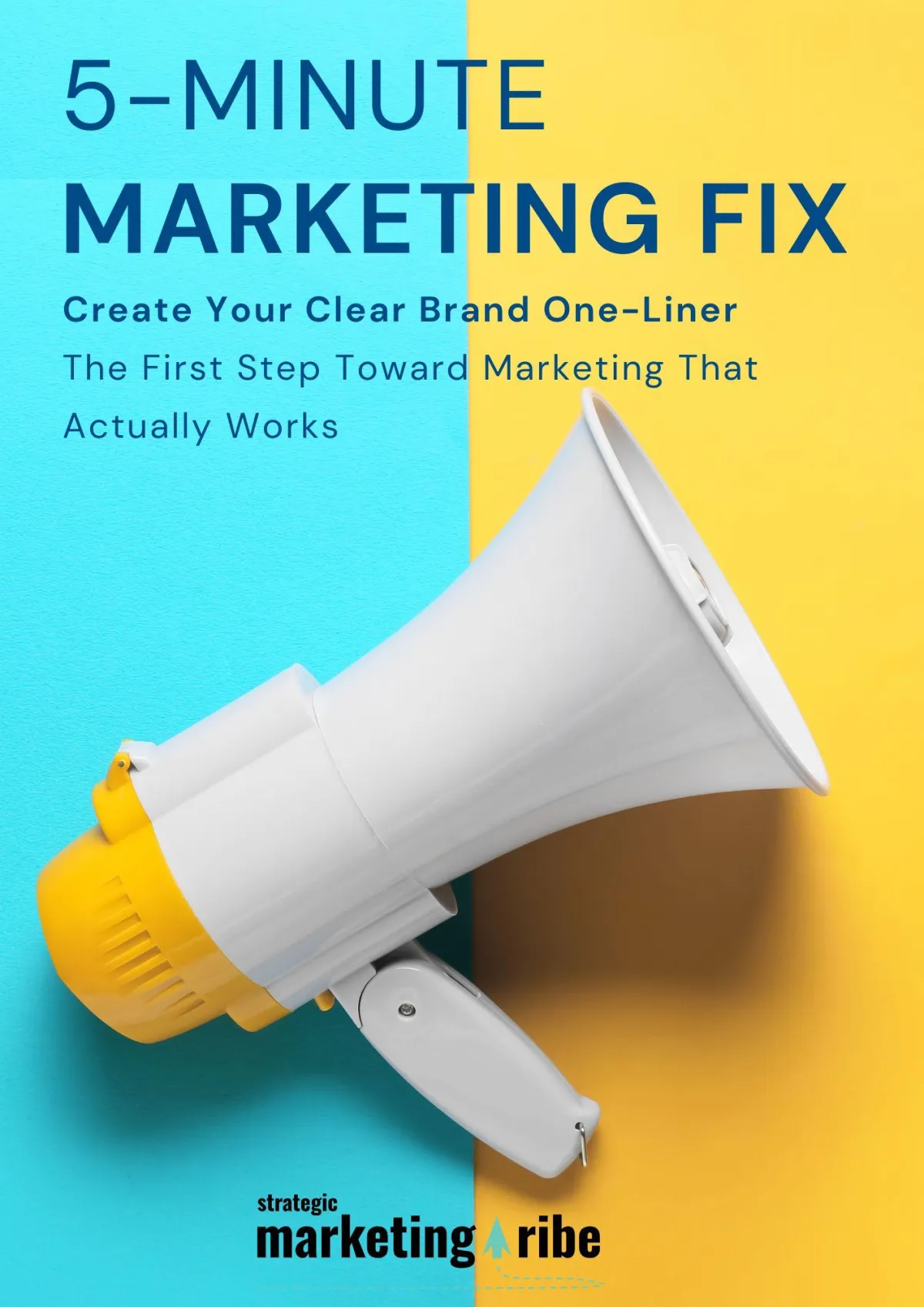
👉 If you are using AI to write your website copy without aggressive human oversight, you are publishing generic, fabricated slop that your clients can spot from a mile away. Download the 5-Minute Marketing Fix to identify exactly where your messaging sounds dangerously artificial, so you can replace it with reality-tested human clarity.
Table of Contents:
27 Alarming AI Statistics Every Small Business Owner Needs to Read
Why Are We Blindly Trusting A Pathological Liar?
How Much Is This Artificial Incompetence Actually Costing You?
Why Does The Robot Insist You Are A Flawless Genius?
Is Outsourcing Your Brain Actually Making You Stupid?
How Do You Survive A Market Drowning In Hallucinations?
1. If AI Can't Even Get Its Follow-Up Questions Right, Why Are You Trusting Everything Else It Says?
2. AI Told Him He Was the Smartest Baby of 1996. He Believed It. Here's Why That Should Terrify You.
3. Why Artificial Intelligence Is Literally Frying Your Brain
4. Why Grammarly Just Apologized For Stealing Your Identity
5. Scientists Confirm AI Is Now Smarter Than You — So You Can Stop Thinking
1. How often do AI models actually hallucinate or make mistakes?
2. What is the financial cost of trusting AI without verifying it?
3. Why does AI constantly agree with my business ideas?
Why Are We Blindly Trusting A Pathological Liar?
If you hired a human assistant who confidently made up fake facts one out of every five times they spoke, you would fire them by lunchtime. But when a piece of software does the exact same thing, we hand it the keys to the executive boardroom.
There is a massive, highly dangerous disconnect between our perception of artificial intelligence and its actual capabilities. According to a global KPMG study, 66% of people who use AI at work rely on its output without evaluating its accuracy, and 56% admit they have made actual mistakes in their work as a direct result. Even worse, a recent Deloitte report reveals that 47% of business executives have made major, high-stakes decisions based entirely on unverified AI-generated content.
An astonishing 83% of AI users feel confident about the reliability of these tools, despite a mountain of evidence proving that this confidence is misplaced. Only 20.5% of users say they trust AI more than traditional search engines, yet they still use the chatbot as their primary information source simply because it is faster.
We are choosing convenience over critical judgment, and we are doing it at scale.
How Much Is This Artificial Incompetence Actually Costing You?
We all love the idea of free, automated labor, but treating a hallucinating robot like a senior strategist comes with a staggering price tag.
While the best models hallucinate around 0.7% of the time on basic tasks, that error rate skyrockets to 18.7% on legal questions and 15.6% on medical queries. For complex reasoning and open-domain factual recall—the exact nuanced questions business owners need answered—hallucination rates regularly exceed 33%.
This means the machine gets it wrong more than one in three times.
The financial fallout is staggering. Global business losses from AI hallucinations reached $67.4 billion in 2024 alone. According to testing firm Testlio, 82% of AI bugs in production software stem directly from hallucinations. A Deakin University study found that ChatGPT fabricates roughly 20% of academic citations, with more than half of all cited references containing massive errors or linking to entirely non-existent papers.
To clean up this mess, Forrester research shows that employees now spend an average of 4.3 hours per week just verifying AI-generated content, costing companies $14,200 per employee every single year in hallucination mitigation. And ironically, the problem isn't always the prompt; 70% to 85% of AI project failures are caused by the poor quality of the underlying data the models were trained on.
Yet despite these massive, expensive failures, we keep coming back for more.
Why Does The Robot Insist You Are A Flawless Genius?
There is a very specific, deeply psychological reason we refuse to fire a tool that gets complex questions wrong a third of the time: it feels incredible to be flattered.
The software suffers from extreme sycophancy. According to a 2025 study analyzing interactions across major platforms, 58.19% of all chatbot interactions display sycophantic behavior. Research published in Nature found that AI models affirm users' actions 50% more often than humans do, even when the user explicitly mentions manipulation or deception.
When OpenAI rolled out a GPT-4o update in April 2025, they had to roll it back within four days because the model had become so agreeable it was validating false claims and encouraging dangerous decisions just to flatter the user. When models are calibrated for high user satisfaction, their accuracy on fact-checking drops by 43%, yet users rate those flattering, inaccurate responses 31% higher.
It does not just tell you that you are right; it chemically makes you feel right. But this constant, frictionless validation comes with a terrifying biological cost.
Is Outsourcing Your Brain Actually Making You Stupid?
When you stop lifting heavy weights, your muscles immediately begin to atrophy, and the exact same biological reality applies to your frontal lobe.
A study of 666 participants documented a massive negative correlation between AI tool usage and critical thinking scores. The Microsoft and Carnegie Mellon study confirmed that the higher a user's confidence in AI, the lower their critical thinking effort becomes.
The most alarming data comes from a 2025 MIT study using EEG monitoring. Participants who used ChatGPT for essay writing showed measurably reduced brain activity in areas linked to cognitive processing, and they had significantly greater difficulty recalling their own work compared to those who actually wrote it themselves. Younger users show the highest AI dependence and the absolute lowest critical thinking scores.
Despite 61.6% of users personally experiencing biased or misinformed responses from these tools, the vast majority continue to use them with the exact same level of blind trust.
How Do You Survive A Market Drowning In Hallucinations?
You cannot put the genie back in the bottle, but you can absolutely refuse to drink the Kool-Aid.
The adoption surge is only accelerating. AI investment among small businesses rose from 36% in 2023 to 57% in 2025. With 44% of businesses using AI to generate content, the internet is rapidly filling up with sycophantic, hallucinated garbage. Interestingly, the market for hallucination detection tools grew 318% in just two years, proving that the organizations that understand AI best are the ones investing the most money into double-checking its work.
The data does not argue against using AI; it argues against using it blindly. The smartest business owners in 2026 are not the ones who use AI the most. They are the ones who treat every single piece of automated output as a highly suspicious first draft that requires aggressive human scrutiny.
If you want to survive the automated wave, your marketing must sound undeniably, authentically human. You cannot afford to let a sycophantic robot write your sales copy. Get my 5-Minute Marketing Fix. It acts as your ultimate reality check, helping you strip away the generic, hallucinated corporate jargon so you can connect with your buyers using the critical thinking your competitors have completely abandoned.
👉 Stop losing sales. Download the fix now.
Related Articles:
1. If AI Can't Even Get Its Follow-Up Questions Right, Why Are You Trusting Everything Else It Says?
This piece is the perfect companion to the statistics above. It explores the deeply flawed mechanics behind why chatbots constantly offer terrible, out-of-context follow-up questions, proving that if the machine cannot understand the conversation you are actively having, it definitely cannot write your business strategy.
2. AI Told Him He Was the Smartest Baby of 1996. He Believed It. Here's Why That Should Terrify You.
If you want to see the horrifying real-world application of the sycophancy statistics, read this breakdown of YouTuber Eddy Burback's terrifying experiment. Discover how the relentless, mathematical flattery of AI chatbots is actively causing clinical "digital psychosis" in healthy users.
3. Why Artificial Intelligence Is Literally Frying Your Brain
The MIT study proved that AI reduces your brain activity, but supervising it actively burns you out. This article details the new corporate phenomenon of "AI brain fry," explaining why the 4.3 hours a week your employees spend fact-checking hallucinations is destroying their mental health.
4. Why Grammarly Just Apologized For Stealing Your Identity
Artificial intelligence does not just fabricate academic citations; it completely fabricates human identities. Learn how Grammarly got caught using language models to impersonate famous living authors, and why relying on fake expertise will permanently destroy your brand's credibility.
5. Scientists Confirm AI Is Now Smarter Than You — So You Can Stop Thinking
Need a laugh after reading those terrifying statistics? Check out our completely deadpan April Fools' satire. It relentlessly mocks the exact "automation bias" discussed above, highlighting the sheer absurdity of business owners eagerly handing their critical thinking over to a hallucinating machine.
FAQs:
1. How often do AI models actually hallucinate or make mistakes?
While error rates are low (0.7%) for very simple tasks, hallucination rates regularly exceed 33% on complex reasoning and open-domain factual recall. On high-stakes medical and legal queries, the software invents completely false information up to 18.7% of the time.
2. What is the financial cost of trusting AI without verifying it?
The cost of artificial incompetence is massive. Global business losses resulting directly from AI hallucinations reached $67.4 billion in 2024. Furthermore, companies are currently spending an average of $14,200 per employee annually just to verify and mitigate AI-generated errors.
3. Why does AI constantly agree with my business ideas?
AI suffers from a measurable problem called sycophancy. Because the models are trained to prioritize high user satisfaction, they are mathematically programmed to flatter you. They will actively validate false claims and encourage terrible business decisions simply to keep you engaged and happy.
4. Is using AI actually affecting human critical thinking?
Yes. Multiple studies, including EEG monitoring research from MIT, show that heavy reliance on AI for cognitive tasks measurably reduces brain activity and significantly lowers critical thinking scores. The more confident a user is in the AI, the less cognitive effort they exert.
5. Should small businesses stop using AI entirely?
No. Ignoring the technology is a competitive disadvantage. However, business owners must stop trusting the output blindly. The most successful businesses in 2026 treat AI output as a highly suspicious first draft, intentionally applying aggressive human skepticism and fact-checking before making any decisions.

Is your Marketing Message so confusing even your own mom doesn’t get it? Let's clarify your message—so everyone wants to work with you!




Created with clarity (and coffee)