
StoryBrand Marketing Agency
Is Your Marketing Message So Confusing Even Your Own Mom Doesn’t Get It?
We're an award-winning StoryBrand Marketing Agency that helps Service Businesses clarify their messaging so everyone wants to work with you!
✓ Build trust and authority in your industry
✓ Connect with CLIENTS WHO ACTUALLY GET IT
✓ MARKETING THAT FEELS NATURAL
WATCH THIS VIDEO
If your message isn’t landing—and the right clients aren’t showing up—it’s not your fault. Most service business owners are great at what they do. They just struggle to talk about it clearly.
In this video, I’ll walk you through how we fix that using the StoryBrand Framework, plus how to get started with either DIY or done-for-you options.


WHAT HAPPENS WHEN YOUR MESSAGE ISN’T CLEAR
Can your mom explain what you do?
Can you easily explain what you do?
Can anyone?
If not, that's the problem we fix.
Because when people don’t understand what you do, they move on. You end up working harder just to stay in the game.
You’re always re-explaining yourself
Your website doesn’t convert visitors into clients
Your leads aren’t the right fit
Referrals become scarce
Marketing is frustrating as all hell
But it doesn’t have to be this way. A clear message makes all of that easier. It’s the difference between chasing leads—and attracting the right ones.
You might not believe it yet, but marketing can actually be the opposite of frustrating when you're doing it right.
MAKE YOUR MARKETING Simpler
Whether you want to learn the system or hand it over completely, the goal is the same: clear messaging that brings in better clients with less effort.

A DIY SYSTEM THAT’S SIMPLE TO FOLLOW

for weekly group coaching, templates, and a proven system that fits seamlessly into your week—without taking over your life.
.

COACHING THAT MEETS YOU WHERE YOU ARE
Want someone to walk you through it? Get 1:1 or team coaching to clarify your message and apply the StoryBrand Framework to your business in real time.
.

DONE-FOR-YOU MARKETING
Too busy to do it yourself? We’ll build your messaging, write your copy, create the assets you need, and handle your StoryBrand marketing—so you can stay focused on running your business.
HI, I'm Vicky Sidler
And I’VE BEEN WHERE YOU ARE

I know how it feels to stare at your marketing and think, “Why isn’t this working?” That's why I created a StoryBrand Marketing Agency.
All in all, your business isn’t just another brick in the wall—it’s something special. Your story matters, and I’m here to help you share it in a way that feels real, connects with people, and gets results.
As a certified StoryBrand Guide, I specialize in turning complicated ideas into clear, compelling messages that resonate with your audience.
With a background in journalism, I’ve spent decades telling stories that matter and crafting content people want to read.
I’ve developed a proven system to help businesses like yours cut through all the AI trash that's out there and build genuine connections with their audience.
Your story isn’t just important—it’s the reason people will choose your business. Let’s make sure it’s heard loud and clear by the people who need it most.
And sorry if I got Pink Floyd stuck in your head just now...
Hear Directly from DONALD MILLER
In this short clip, StoryBrand’s founder Donald Miller explains why clear messaging and a simple marketing plan change everything.
Donald shares why newsletters are back, what a full StoryBrand campaign includes, and how a certified guide helps you focus on what actually works—without wasting money or time.
Watch to see how working with a StoryBrand Certified Guide can make a measurable difference for your business.
EVERYTHING STORYBRAND, ALL IN ONE PLACE
Whether you need help with strategy, websites, content, or SEO, I offer the full range of StoryBrand marketing services—done with you or done for you.
StoryBrand Framework
StoryBrand Wireframe
StoryBrand Websites
StoryBrand SEO
StoryBrand Video
StoryBrand Copywriting
StoryBrand Email Sequences
StoryBrand Marketing Funnels
StoryBrand Workshops
StoryBrand Consulting
StoryBrand PPC
StoryBrand Lead Generation
StoryBrand
Social Media
StoryBrand Strategy
StoryBrand Content Marketing
StoryBrand Local Service
StoryBrand Coaching
MARKETING THAT DOESN’T TAKE OVER YOUR LIFE
Whether you want to build it yourself or hand it off completely, as a StoryBrand Marketing Agency, we’ll give you a clear message and a simple system that actually works.

1
BOOK A COFFEE CHAT
This is a no-pressure, non-sales call where we discuss what’s working, what’s not, and where you want to go.
.
2
CHOOSE YOUR PATH
Get hands-on support through the StoryBrand Course, 1:1 or team coaching, or let me build the entire marketing system for you—messaging, website, emails, and more.
.
.

3
FIX YOUR MARKETING
Walk away with a message that resonates, a plan that’s easy to follow, and marketing that works while you sleep and finally delivers results.
COFFEE’S ON US (OK, NOT REALLY)
But we’re serious about helping you connect with your audience. Let’s grab a coffee (on Zoom) and chat about your marketing goals.
Wondering how to simplify your message? Let’s talk.
Ready to stand out in an AI-saturated world? We’ve got ideas.
Just need clarity? We’ll help you see the big picture.
This isn’t a sales call – just a friendly, low-pressure chat. At the very least, you’ll walk away with some cool ideas you can try on your own.
SCHEDULE YOUR COFFEE CHAT WITH US TODAY
FIXING YOUR MARKETING SHOULDN’T FEEL IMPOSSIBLE
Most small business owners aren’t marketers—they just want to explain what they do in a way that makes people care.
But when the message isn’t clear, everything else gets harder: websites don’t convert, leads go cold, and social posts fall flat.
You might worry that getting it right will take too much time, cost too much money, or feel like just another online course you’ll never finish.
That’s why I offer three simple paths: do-it-together support through the StoryBrand Course, 1:1 and team coaching, or done-for-you services where I build your full funnel myself.
You’ll get clear messaging, practical templates, and real support—so your marketing finally works and your business actually grows.
YOUR QUESTIONS, ANSWERED
We know marketing can feel overwhelming, and you probably have questions. That’s why we’ve put together answers to the things people ask us most.
What makes Strategic Marketing Tribe different from other StoryBrand marketing agencies?
We’re the StoryBrand marketing agency that skips the boring "corporate speak." We blend the power of StoryBrand with strategic marketing solutions to craft content that feels human, genuine, and impossible to ignore.
How can your strategic marketing solutions benefit my business?
Our strategic marketing solutions simplify your message, clarify your brand story, and help you connect with your ideal customers. It’s marketing that makes sense and gets results – no jargon, no gimmicks, just growth.
What is StoryBrand, and why does it matter?
Think of StoryBrand as a cheat sheet for marketing clarity. It helps you explain what you do in a way that makes people stop, listen, and say, “Oh, I get it.” We use it to create marketing that feels human and that your audience will actually enjoy reading.
Do I need to be familiar with StoryBrand to work with you?
Not at all! Whether you’re a StoryBrand superfan (like us!) or have no idea what it is, we’ll walk you through everything. We’re here to make the process simple, clear, and (dare we say) fun.
How do I know if this is right for my business?
If people keep saying “I don’t really get what you do,” or you’re getting the wrong kind of leads, it’s a sign your message needs work. That’s what we fix.
What if I don’t have time to take a course?
The course is built for time-strapped business owners. You get short lessons, plug-and-play templates, and live support so you’re never stuck or overwhelmed.
What’s the difference between the course and the done-for-you service?
The course gives you training, tools, and weekly support so you can do it yourself. The done-for-you option means I build your whole funnel for you.
How long does it take to see results?
Most people see clearer messaging and better engagement within a week of applying the one-liner. Bigger results (like leads and conversions) follow as you apply it across your marketing.
What if I’ve already tried StoryBrand and it didn’t work?
Many people try to apply StoryBrand on their own and miss key parts. This course walks you through it step-by-step, with real examples and live feedback from a Certified Guide.
STORY, MEET STRATEGY
Let’s make marketing feel less robotic and more real. Find resources from a StoryBrand Marketing Agency that bring your message—and your business—to life.

Why Grammarly Just Apologized For Stealing Your Identity
By Vicky Sidler | Published 28 March 2026 at 12:00 GMT+2
How exactly do you convince people to pay twelve dollars a month for a glorified spell checker?
If you are a massive tech company, you just quietly steal the identities of famous writers and rent them out to the public. According to a highly entertaining article by Victor Tangermann at Futurism, the writing assistant Grammarly recently launched an "Expert Review" feature that infuriated the entire journalism industry. The software actively impersonated living and dead writers without their permission, claiming to offer writing suggestions inspired by their specific voices.
Everyone assumes that artificial intelligence is going to steal our jobs. It turns out, the tech billionaires are actually just going to steal our reputations first. Before you sign up for another premium software subscription, we need to look at the hilarious absurdity of this corporate identity theft, and why your verified, undeniable human authenticity is the only thing protecting your consulting business from the exact same scam.
TL;DR:
Grammarly launched a premium feature that used artificial intelligence to impersonate famous journalists and authors without their consent.
The feature was a complete technical disaster, offering deep writing advice from Stephen King on paragraphs of literal dummy placeholder text.
The company buried a massive legal disclaimer in their fine print to avoid lawsuits, proving that Big Tech will eagerly fake human authenticity for profit.
👉 If multi-billion dollar tech companies are desperately trying to fake human expertise, your actual, verified human expertise is your most valuable asset. Download the 5-Minute Marketing Fix to spot exactly where your messaging sounds dangerously artificial and starts costing you sales.
Table of Contents:
Why Grammarly Just Apologized For Stealing Your Identity
Why Did A Tech Company Try To Rent Out Stephen King?
Were The Fake Experts Even Any Good At Writing?
The Cowardice Of The Corporate Fine Print:
How Do You Protect Your Consulting Business From Identity Thieves?
1. Why Your Basic Human Decency Is Making You Blind To AI Threats
2. Why Big Tech Ignores Billion Dollar Fines While Your Small Business Cannot
3. The AI Doom Loop: Why Massive Corporate Layoffs Are Actually Great For You
4. Why Artificial Intelligence Is Literally Frying Your Brain
5. AI Slop Is Killing Trust Online. What Now?
1. What was the Grammarly "Expert Review" scandal?
2. Did the AI feature actually provide good writing advice?
3. How did Grammarly try to avoid getting sued by the authors?
4. How did the journalists react to their identities being used?
5. What is the marketing lesson for small service businesses?
Why Did A Tech Company Try To Rent Out Stephen King?
Because teaching a robot to write well is incredibly difficult, but stealing a famous person's reputation is incredibly easy.
Grammarly claimed their new tool would take your writing to the next level by making suggestions inspired by leading professionals. They locked this feature behind a twelve dollar a month Pro subscription. But they forgot to actually ask any of those leading professionals if they wanted to be turned into a corporate chatbot.
The backlash was immediate and explosive. Tech journalist Kara Swisher, whose identity was actively hijacked by the software, publicly seethed at the company, calling them rapacious information and identity thieves. She promised to go "full McConaughey" on them, which is a terrifying legal threat.
But the massive legal and ethical nightmare was only half the problem.
Were The Fake Experts Even Any Good At Writing?
No. They were terrible at it. Because a language model does not actually know what words mean.
The feature left much to be desired, highlighting the persistent, hilarious pain points that plague all of these massive language models. To test the system, author and copy editor Benjamin Dreyer copy-pasted several paragraphs of "lorem ipsum" into the software. Lorem ipsum is literal dummy placeholder text commonly used in graphic design. It means absolutely nothing.
The artificial intelligence confidently analyzed this gibberish and proudly offered him writing tips from the venerable novelist Stephen King.
The software was not actually providing expert review. It was just hallucinating corporate buzzwords while wearing a famous author's skin. So how did the company plan to get away with this massive deception?
The Cowardice Of The Corporate Fine Print:
They tried to have it both ways, and they got caught.
Grammarly wanted to directly profit from the implication that these prominent writers were associated with their product. But to avoid getting sued into oblivion, they buried a massive disclaimer deep in their software documentation. Tech reporter Casey Newton spotted the fine print, which stated that references from these experts were "for informational purposes only" and did not indicate any actual affiliation or endorsement.
They were fully aware they were faking human authenticity. Casey Newton even found a virtual version of himself handing out writing advice on the platform. He noted that he always assumed AI might take his job, but he figured someone would at least tell him when it happened.
How Do You Protect Your Consulting Business From Identity Thieves?
You have to make your actual human personality completely impossible to replicate.
Grammarly's CEO eventually apologized and disabled the feature, admitting they "fell short." But this scandal proves a terrifying reality for your small service business. Massive tech companies know that automated, generic robot text is completely worthless. They know that clients only want to hear from verified, trusted human experts. That is exactly why they tried to steal those human identities and sell them for twelve dollars a month.
Your human authenticity is the most expensive commodity on the internet. If your website copy is currently stuffed with flawless, boring corporate jargon, you sound exactly like the dummy text that Grammarly's fake Stephen King was trying to edit. Your potential clients are desperately looking for a real person. You have to strip the robot-speak out of your funnels immediately.
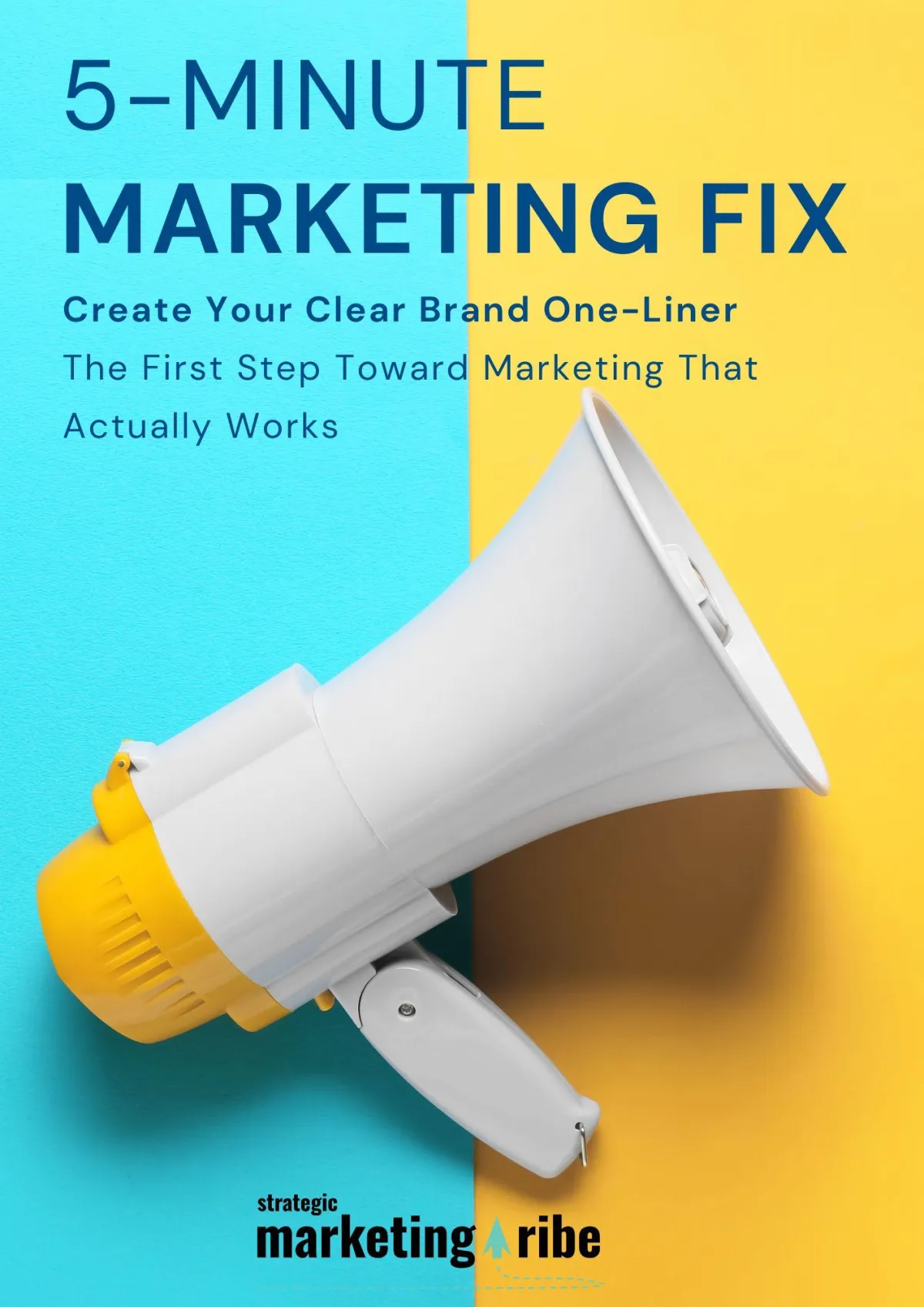
And that’s a great reason to get my 5-Minute Marketing Fix. It helps you identify the exact spots where your messaging sounds like a hallucinating chatbot, so you can replace it with the undeniable human clarity your clients are actually willing to pay for.
👉 Stop losing sales. Download the fix now.
Related Articles:
1. Why Your Basic Human Decency Is Making You Blind To AI Threats
If you are shocked that a massive tech company would casually steal a journalist's identity for profit, you are suffering from the Goodness Blind Spot. This post explains why decent people completely fail to anticipate how bad actors will weaponize AI to destroy reputations, and why your business is currently highly vulnerable to corporate sabotage.
2. Why Big Tech Ignores Billion Dollar Fines While Your Small Business Cannot
Grammarly tried to hide their identity theft behind a massive legal disclaimer in their fine print. This article exposes exactly how Big Tech weaponizes systemic legal complexity to break the rules, treat massive fines as a basic cost of doing business, and crush small businesses that actually try to follow the law.
3. The AI Doom Loop: Why Massive Corporate Layoffs Are Actually Great For You
Grammarly tried to replace expensive human editors with a twelve dollar chatbot. This article explains the self-reinforcing economic "Doom Loop" where massive corporations fire human workers to fund AI platforms, and why this structural collapse of corporate competence is your greatest strategic opening to sell actual human trust.
4. Why Artificial Intelligence Is Literally Frying Your Brain
If getting your identity stolen by a robot sounds exhausting, wait until you have to supervise one. Discover why constantly overseeing hallucinating AI agents is causing severe mental fatigue and "brain fry" among high-performing employees, and how offering simple, jargon-free human clarity can rescue your clients from burnout.
5. AI Slop Is Killing Trust Online. What Now?
Grammarly's software confidently offered Stephen King's writing advice on paragraphs of literal gibberish. The internet is rapidly filling up with this exact type of automated, confident slop. This post explores how generic content destroys your credibility, and what you must do to stand out in a sea of hallucinating robots.
FAQs:
1. What was the Grammarly "Expert Review" scandal?
Grammarly launched a premium software feature that used artificial intelligence to impersonate famous journalists and authors without their permission. The tool claimed to offer writing suggestions inspired by these experts, prompting massive public backlash and accusations of corporate identity theft.
2. Did the AI feature actually provide good writing advice?
No. The feature was deeply flawed and prone to hilarious hallucinations. When an author copy-pasted "lorem ipsum" (meaningless dummy placeholder text) into the software, the AI confidently analyzed the gibberish and offered professional writing tips from novelist Stephen King.
3. How did Grammarly try to avoid getting sued by the authors?
The company buried a massive legal disclaimer deep in their software documentation. The fine print stated that the references to these experts were for informational purposes only and did not indicate any actual affiliation or endorsement, allowing them to profit from the names without paying the writers.
4. How did the journalists react to their identities being used?
The reaction was explosively negative. Prominent tech journalist Kara Swisher publicly slammed the company as "rapacious information and identity thieves," while reporter Casey Newton expressed shock at finding a virtual version of himself handing out writing advice without his knowledge.
5. What is the marketing lesson for small service businesses?
This scandal proves that massive tech companies know human authenticity is highly valuable, which is exactly why they tried to fake it. To survive in an automated world, small businesses must fiercely protect their authentic voice, strip away generic corporate jargon, and build undeniable, verified trust with their clients.

Is your Marketing Message so confusing even your own mom doesn’t get it? Let's clarify your message—so everyone wants to work with you!






Created with clarity (and coffee)