
StoryBrand Marketing Agency
Is Your Marketing Message So Confusing Even Your Own Mom Doesn’t Get It?
We're an award-winning StoryBrand Marketing Agency that helps Service Businesses clarify their messaging so everyone wants to work with you!
✓ Build trust and authority in your industry
✓ Connect with CLIENTS WHO ACTUALLY GET IT
✓ MARKETING THAT FEELS NATURAL
WATCH THIS VIDEO
If your message isn’t landing—and the right clients aren’t showing up—it’s not your fault. Most service business owners are great at what they do. They just struggle to talk about it clearly.
In this video, I’ll walk you through how we fix that using the StoryBrand Framework, plus how to get started with either DIY or done-for-you options.


WHAT HAPPENS WHEN YOUR MESSAGE ISN’T CLEAR
Can your mom explain what you do?
Can you easily explain what you do?
Can anyone?
If not, that's the problem we fix.
Because when people don’t understand what you do, they move on. You end up working harder just to stay in the game.
You’re always re-explaining yourself
Your website doesn’t convert visitors into clients
Your leads aren’t the right fit
Referrals become scarce
Marketing is frustrating as all hell
But it doesn’t have to be this way. A clear message makes all of that easier. It’s the difference between chasing leads—and attracting the right ones.
You might not believe it yet, but marketing can actually be the opposite of frustrating when you're doing it right.
MAKE YOUR MARKETING Simpler
Whether you want to learn the system or hand it over completely, the goal is the same: clear messaging that brings in better clients with less effort.

A DIY SYSTEM THAT’S SIMPLE TO FOLLOW

for weekly group coaching, templates, and a proven system that fits seamlessly into your week—without taking over your life.
.

COACHING THAT MEETS YOU WHERE YOU ARE
Want someone to walk you through it? Get 1:1 or team coaching to clarify your message and apply the StoryBrand Framework to your business in real time.
.

DONE-FOR-YOU MARKETING
Too busy to do it yourself? We’ll build your messaging, write your copy, create the assets you need, and handle your StoryBrand marketing—so you can stay focused on running your business.
HI, I'm Vicky Sidler
And I’VE BEEN WHERE YOU ARE

I know how it feels to stare at your marketing and think, “Why isn’t this working?” That's why I created a StoryBrand Marketing Agency.
All in all, your business isn’t just another brick in the wall—it’s something special. Your story matters, and I’m here to help you share it in a way that feels real, connects with people, and gets results.
As a certified StoryBrand Guide, I specialize in turning complicated ideas into clear, compelling messages that resonate with your audience.
With a background in journalism, I’ve spent decades telling stories that matter and crafting content people want to read.
I’ve developed a proven system to help businesses like yours cut through all the AI trash that's out there and build genuine connections with their audience.
Your story isn’t just important—it’s the reason people will choose your business. Let’s make sure it’s heard loud and clear by the people who need it most.
And sorry if I got Pink Floyd stuck in your head just now...
Hear Directly from DONALD MILLER
In this short clip, StoryBrand’s founder Donald Miller explains why clear messaging and a simple marketing plan change everything.
Donald shares why newsletters are back, what a full StoryBrand campaign includes, and how a certified guide helps you focus on what actually works—without wasting money or time.
Watch to see how working with a StoryBrand Certified Guide can make a measurable difference for your business.
EVERYTHING STORYBRAND, ALL IN ONE PLACE
Whether you need help with strategy, websites, content, or SEO, I offer the full range of StoryBrand marketing services—done with you or done for you.
StoryBrand Framework
StoryBrand Wireframe
StoryBrand Websites
StoryBrand SEO
StoryBrand Video
StoryBrand Copywriting
StoryBrand Email Sequences
StoryBrand Marketing Funnels
StoryBrand Workshops
StoryBrand Consulting
StoryBrand PPC
StoryBrand Lead Generation
StoryBrand
Social Media
StoryBrand Strategy
StoryBrand Content Marketing
StoryBrand Local Service
StoryBrand Coaching
MARKETING THAT DOESN’T TAKE OVER YOUR LIFE
Whether you want to build it yourself or hand it off completely, as a StoryBrand Marketing Agency, we’ll give you a clear message and a simple system that actually works.

1
BOOK A COFFEE CHAT
This is a no-pressure, non-sales call where we discuss what’s working, what’s not, and where you want to go.
.
2
CHOOSE YOUR PATH
Get hands-on support through the StoryBrand Course, 1:1 or team coaching, or let me build the entire marketing system for you—messaging, website, emails, and more.
.
.

3
FIX YOUR MARKETING
Walk away with a message that resonates, a plan that’s easy to follow, and marketing that works while you sleep and finally delivers results.
COFFEE’S ON US (OK, NOT REALLY)
But we’re serious about helping you connect with your audience. Let’s grab a coffee (on Zoom) and chat about your marketing goals.
Wondering how to simplify your message? Let’s talk.
Ready to stand out in an AI-saturated world? We’ve got ideas.
Just need clarity? We’ll help you see the big picture.
This isn’t a sales call – just a friendly, low-pressure chat. At the very least, you’ll walk away with some cool ideas you can try on your own.
SCHEDULE YOUR COFFEE CHAT WITH US TODAY
FIXING YOUR MARKETING SHOULDN’T FEEL IMPOSSIBLE
Most small business owners aren’t marketers—they just want to explain what they do in a way that makes people care.
But when the message isn’t clear, everything else gets harder: websites don’t convert, leads go cold, and social posts fall flat.
You might worry that getting it right will take too much time, cost too much money, or feel like just another online course you’ll never finish.
That’s why I offer three simple paths: do-it-together support through the StoryBrand Course, 1:1 and team coaching, or done-for-you services where I build your full funnel myself.
You’ll get clear messaging, practical templates, and real support—so your marketing finally works and your business actually grows.
YOUR QUESTIONS, ANSWERED
We know marketing can feel overwhelming, and you probably have questions. That’s why we’ve put together answers to the things people ask us most.
What makes Strategic Marketing Tribe different from other StoryBrand marketing agencies?
We’re the StoryBrand marketing agency that skips the boring "corporate speak." We blend the power of StoryBrand with strategic marketing solutions to craft content that feels human, genuine, and impossible to ignore.
How can your strategic marketing solutions benefit my business?
Our strategic marketing solutions simplify your message, clarify your brand story, and help you connect with your ideal customers. It’s marketing that makes sense and gets results – no jargon, no gimmicks, just growth.
What is StoryBrand, and why does it matter?
Think of StoryBrand as a cheat sheet for marketing clarity. It helps you explain what you do in a way that makes people stop, listen, and say, “Oh, I get it.” We use it to create marketing that feels human and that your audience will actually enjoy reading.
Do I need to be familiar with StoryBrand to work with you?
Not at all! Whether you’re a StoryBrand superfan (like us!) or have no idea what it is, we’ll walk you through everything. We’re here to make the process simple, clear, and (dare we say) fun.
How do I know if this is right for my business?
If people keep saying “I don’t really get what you do,” or you’re getting the wrong kind of leads, it’s a sign your message needs work. That’s what we fix.
What if I don’t have time to take a course?
The course is built for time-strapped business owners. You get short lessons, plug-and-play templates, and live support so you’re never stuck or overwhelmed.
What’s the difference between the course and the done-for-you service?
The course gives you training, tools, and weekly support so you can do it yourself. The done-for-you option means I build your whole funnel for you.
How long does it take to see results?
Most people see clearer messaging and better engagement within a week of applying the one-liner. Bigger results (like leads and conversions) follow as you apply it across your marketing.
What if I’ve already tried StoryBrand and it didn’t work?
Many people try to apply StoryBrand on their own and miss key parts. This course walks you through it step-by-step, with real examples and live feedback from a Certified Guide.
STORY, MEET STRATEGY
Let’s make marketing feel less robotic and more real. Find resources from a StoryBrand Marketing Agency that bring your message—and your business—to life.

What A Small-Town Paper Reminded Me About Why Writing Actually Works
By Vicky Sidler | Published 23 May 2026 at 12:00 GMT+2
Have you ever found yourself on a rare, blissful vacation, sitting in a sleepy coastal town like Port Alfred, ignoring your "perfectly optimized" smartphone to read a blurry, local newspaper about a cupcake fundraiser?
I picked up a copy of The Announcer somewhere in the middle of a week away in the Eastern Cape, a place where the afternoon moves at the pace of a heavily sedated tortoise. The paper is modest, to put it kindly. Some of the photos are a bit blurry. There is coverage of croquet clubs, dance school performances, and a "Cupcakes for Cancer" drive at the local mall. There was even a letter from a boxing academy trainer thanking a café and a printing shop for their support, mentioning how his boxer knocked out an opponent in nineteen seconds.
I read every single word. And I don’t say that as a curiosity; I say it because I can’t remember the last time I read an entire piece of online content without having fourteen other tabs open and a sense of impending doom.
As a StoryBrand Certified Guide, I spend my life begging businesses to stop acting like unfeeling machines and start acting like human Guides. We are currently drowning in a digital landscape filled with "perfect" AI-generated content that no one actually wants to read.
Let’s rip apart why your brain instinctively hates "competent" writing, why a blurry photo of a cupcake drive is more effective than your 4K stock imagery, and how to use the "boxing trainer" method to make your brand undeniably human.
TL;DR:
Research by Raptive shows that consumer trust drops by nearly 50% when an article feels AI-generated, regardless of how "elegant" or "correct" the writing is.
AI writing suffers from being "Wikipedian"—a product of safe bets and statistical averages that lacks the specific, gritty texture of a real person (according to the Boston Globe).
Specificity is the ultimate weapon: readers don't trust polished prose; they trust writing that names actual names, actual numbers, and actual moments.
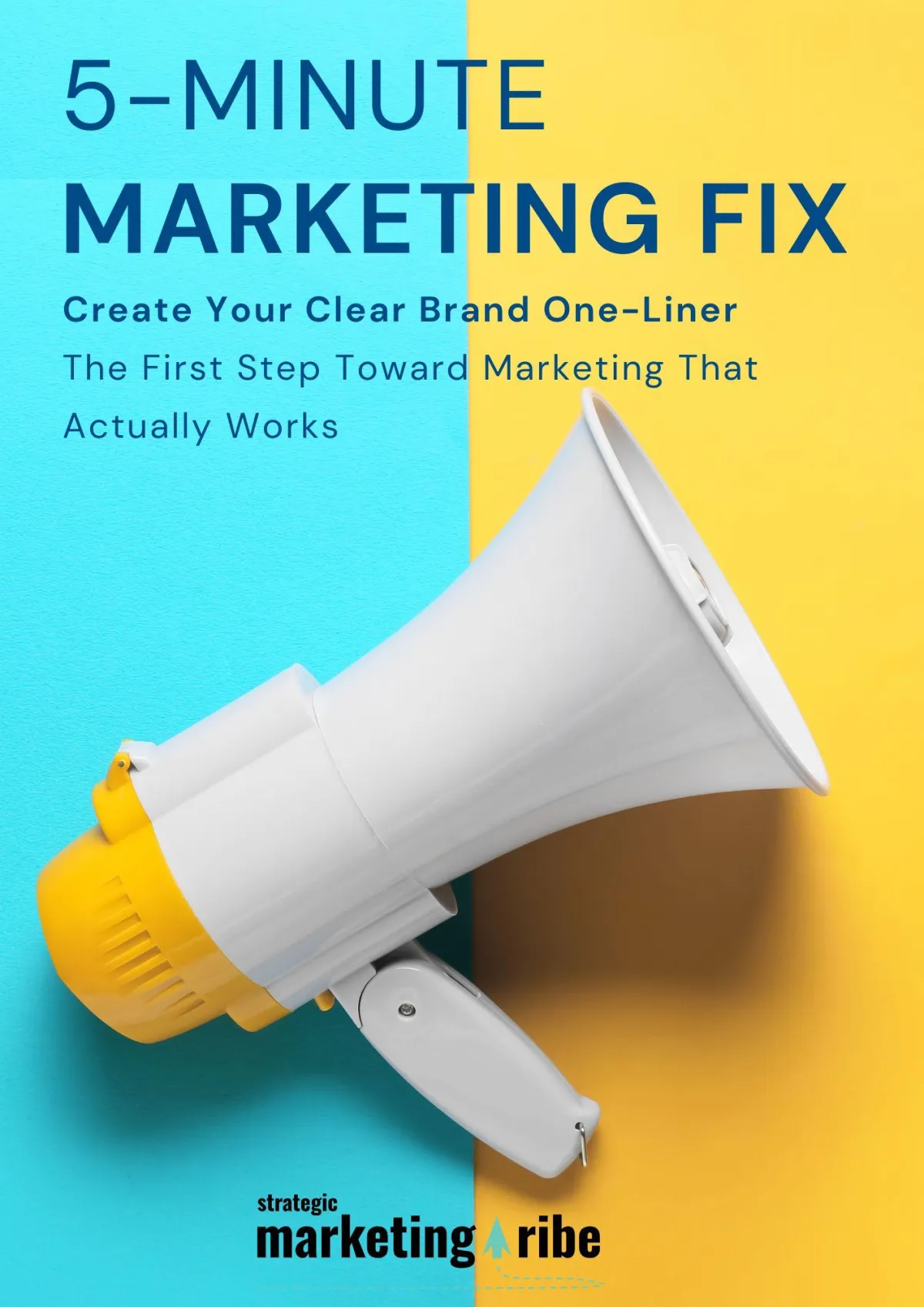
👉 If your brand sounds like a statistically averaged chatbot, you are training your customers to ignore you. You must establish secure, undeniable human authority. Download the 5-Minute Marketing Fix to craft a powerful StoryBrand One-Liner that standardizes your brand message, giving you a scalable, repeatable way to earn trust that no algorithm can replicate.
Table of Contents:
What A Small-Town Paper Reminded Me About Why Writing Actually Works
Why Does Your Brain Secretly Hate "Perfect" Writing?
Is Your Content Accidentally Nuking Your Customer Trust?
How Does A Small-Town Boxing Trainer Out-Market Your Entire Team?
Can Your Brand Survive The "Great Flattening" of Information?
1. Why Starbucks Just Fired Its Robots (And Why Your Brand Needs To Humanize Now)
2. Why Your AI Assistant Keeps Forgetting Your Instructions (And How To Fix It)
3. ChatGPT Is Now Shoving Ads Into Your Prompts (And Why Marketers Hate It)
4. Why Meta Is Entering Its "Zombie Era" (And How To Avoid The Same Fate)
5. Why Buying A Sports Jersey Is Now A Cybersecurity Nightmare (And How To Protect Your Brand)
1. Does AI content actually hurt my brand's trust?
2. What is "Wikipedian" style writing?
3. Why is specificity so important for marketing?
4. What is "vernacular journalism"?
5. How can small businesses compete with AI-generated content?
Why Does Your Brain Secretly Hate "Perfect" Writing?
Because here is the truly frustrating thing about AI writing: it isn’t actually "bad" in the way we expected—it is just catastrophically boring.
AI knows when to use a comma. It structures an argument with the precision of a Swiss watch. It delivers a call to action. By every technical measure, a chatbot often outperforms a human writer who hasn't fully mastered their craft. And yet, as a report in the Boston Globe pointed out, AI style is "Wikipedian: everyone and no one at the same time." It is technically correct, but it is a product of "safe bets," statistically assembled from the average of everything rather than the particular perspective of anyone.
It is the linguistic equivalent of an airport hotel room: clean, functional, and so aggressively beige that you forget you were even there the moment you step out the door. When you give someone a compliment that is technically accurate but feels empty, they know. Your readers are the same. They feel the lack of a gesture. They feel the absence of a person behind the words, and they are reacting with a level of hostility that should make every corporate CMO spontaneously combust.
Is Your Content Accidentally Nuking Your Customer Trust?
Because if you think your audience is "fine" with your automated blog posts as long as the information is accurate, you are ignoring a mountain of terrifying research.
A study by Raptive found that trust drops by nearly 50% when an article feels AI-generated—even when it isn't. According to Adweek, 82.1% of readers say they can identify AI content, and when they do, their opinion of the brand drops significantly. Among the 45-to-65-year-old demographic—the people who actually have the money and the authority to make B2B decisions—nearly 30% actively dislike AI-generated content.
The Nuremberg Institute for Market Decisions (NIM) even found that when an ad is described as "AI-made," consumers evaluate it more negatively across the board. They find it less "natural," less "useful," and they are significantly less likely to actually buy the product. The content of the ad didn't change; only the perceived origin did. People aren't looking for the most "competent" answer; they are looking for evidence that a human was paying attention.
How Does A Small-Town Boxing Trainer Out-Market Your Entire Team?
Because the letter in The Announcer had something your slick corporate PDF never will: it had the gritty, unpolished texture of a real person who sat down and thought carefully about what needed to be said.
The trainer thanked specific businesses by name—this cafè, that hotel, that printer. He wrote about taking kids away from drugs and alcohol simply and without embarrassment. It wasn't "balanced" or "symmetrical." It was specific. Research on credibility is remarkably consistent: readers don't trust polished prose; they trust specific prose. As noted by TechWriteable, specificity creates recognition, and recognition creates the connection that keeps people opening your emails.
AI writing tends toward the general. It says "many small businesses face challenges with cash flow." A human writer says, "I had R12,000 in the account and invoices due in three weeks... Here is what I did." The first sentence is a safe bet. The second one makes you lean forward. If your writing is too neat and too symmetrical, it loses believability. You lose the "presence" that makes people come back.
Can Your Brand Survive The "Great Flattening" of Information?
Because if you are pumping out high-quantity, low-presence content, you aren't building an audience; you are just contributing to the noise.
Journalism scholars describe this as "vernacular journalism"—content focused on the everyday lives and proximate preoccupations of ordinary people. The reason The Announcer is worth reading is that it provides evidence of presence. The fact that someone showed up to that cupcake drive, took a blurry photo, and printed it is proof that someone was paying attention to this specific place and these specific people.
That quality—having actually been there—is what no amount of AI efficiency can replicate. Not because the AI can’t produce the words, but because the words are not the point. The point is the attention behind them. In a B2B sales cycle that stretches over months, your vague, smooth emails are communicating that you are "anyone." And "anyone" is the first person to be replaced when the budget gets tight.
You must stop hiding behind your tools. The most effective content you can produce is writing that could only have come from you. Mention the specific problem your client had. Mention the thing that went wrong before the thing that went right. Get my 5-Minute Marketing Fix. It helps you use your actual human brain to craft a StoryBrand One-Liner with the slight imperfection and raw specificity of a person who has actually lived through something. Prove to your customers that you are a genuine Guide who is paying attention, rather than a system that has just learned to describe it.
👉 Stop being "anyone." Download the fix now.
Related Articles:
1. Why Starbucks Just Fired Its Robots (And Why Your Brand Needs To Humanize Now)
Starbucks realized that efficiency does not equal loyalty. Discover why the coffee giant is ditching automation to hire more human baristas to save their brand experience.
2. Why Your AI Assistant Keeps Forgetting Your Instructions (And How To Fix It)
AI lacks the persistent memory of a human partner. Uncover the reality of "Context Rot" and why building a business on forgetful algorithms is a massive operational risk.
3. ChatGPT Is Now Shoving Ads Into Your Prompts (And Why Marketers Hate It)
If you think AI writing is generic now, wait until it starts selling you things. Read why OpenAI’s new advertising model is a deeply flawed nightmare for brand trust.
4. Why Meta Is Entering Its "Zombie Era" (And How To Avoid The Same Fate)
When you prioritize scale over human connection, your platform starts to rot. Discover why Facebook is entering its lifeless decline and how to protect your brand from the same fate.
5. Why Buying A Sports Jersey Is Now A Cybersecurity Nightmare (And How To Protect Your Brand)
Trust is fragile. Read how the rush to digitize fan engagement has caused a 112% spike in cyberattacks, proving that corporate tech often ignores human safety.
FAQs:
1. Does AI content actually hurt my brand's trust?
Yes. Research from Raptive and NIM consistently shows that when content is perceived as AI-generated, trust drops by up to 50%. Consumers find AI content less natural and less useful, leading to lower purchase intent.
2. What is "Wikipedian" style writing?
The Boston Globe coined this term to describe AI writing that is technically correct but feels like it was written by "everyone and no one at the same time." It relies on statistical "safe bets" rather than a unique, human perspective.
3. Why is specificity so important for marketing?
Specificity creates recognition and connection. When you name actual names, numbers, and moments, you prove "presence"—the evidence that a human was actually paying attention to the specific problem at hand.
4. What is "vernacular journalism"?
This is content focused on the everyday lives and preoccupations of a local community. It succeeds because it is highly specific and proximate, providing proof that someone is invested in a specific group of people.
5. How can small businesses compete with AI-generated content?
By leaning into their humanity. Small businesses should write with the "boxing trainer" method: mention specific clients, specific failures, and specific results. AI can describe a situation, but it can never prove it was actually there.

Is your Marketing Message so confusing even your own mom doesn’t get it? Let's clarify your message—so everyone wants to work with you!





Created with clarity (and coffee)