
Real news, real insights – for small businesses who want to understand what’s happening and why it matters.
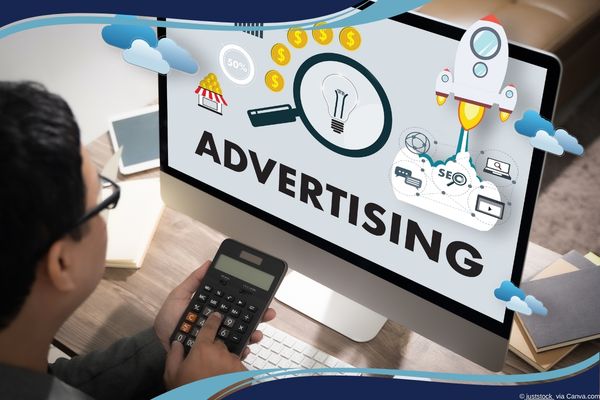
ChatGPT Is Now Shoving Ads Into Your Prompts (And Why Marketers Hate It)
By Vicky Sidler | Published 13 May 2026 at 12:00 GMT+2
If you thought your deeply personal, late-night conversations with ChatGPT were a safe, ad-free sanctuary, I have some truly depressing news for you. The tech industry has officially arrived to monetize your existential dread.
According to a highly illuminating article by Simon Chandler in Raconteur, OpenAI has begun aggressively rolling out advertisements directly into the ChatGPT interface. We all knew this was coming. The absolute second a Silicon Valley CEO promises that their revolutionary product will prioritize "humanity" over ad revenue, you should immediately start a countdown timer.
But here is the most delicious irony of this entire situation: despite OpenAI’s desperate pivot from a brand-led model to a cost-per-click cash grab, the actual marketing industry is looking at this shiny new toy and collectively rolling its eyes.
As a StoryBrand Certified Guide, I am constantly helping businesses navigate the chaos of digital advertising to find genuine human connection. But if you are thinking about dumping your entire ad budget into a chatbot that doesn't actually know who it is talking to, you are about to make a very expensive mistake.
Let’s rip apart the massive, glaring holes in OpenAI's new advertising platform, why you are paying a premium to target the exact wrong people, and how to survive the terrifying new era of Answer Engine Optimization.
TL;DR:
OpenAI is officially rolling out banner ads inside ChatGPT, shifting to a cost-per-click (CPC) model with a massive $50,000 minimum initial commitment.
Marketers are deeply skeptical because ChatGPT lacks essential demographic data and behavioral tracking, offering only conversation history and location targeting.
The platform suffers from a fatal "depth" flaw: the heaviest, most valuable users are paying for the ad-free premium tiers, meaning advertisers are paying a premium just to reach casual, free-tier users.
👉 If you blindly throw your marketing budget at a chatbot, your ads will become intrusive, annoying AI slop. You must establish secure, undeniable human authority. Download the 5-Minute Marketing Fix to craft a powerful StoryBrand One-Liner that standardizes your brand message, giving you a scalable, repeatable way to earn trust before the robots ruin your reputation.
Table of Contents:
ChatGPT Is Now Shoving Ads Into Your Prompts (And Why Marketers Hate It)
Why Is OpenAI Suddenly Monetizing Your Private Conversations?
But Are They Actually Giving Marketers Any Useful Data?
Who Exactly Are You Paying $50,000 To Reach?
How Do You Survive This New "Answer Engine" Nightmare?
1. Why Your AI Assistant Keeps Forgetting Your Instructions (And How To Fix It)
2. Why AI Search Is 60% Hallucination (And How To Be The Real StoryBrand Guide)
3. Why Starbucks Just Fired Its Robots (And Why Your Brand Needs To Humanize Now)
4. Why The Internet Is Drowning In AI Slop (And How To Keep Your StoryBrand Clean)
5. Why 44% Of Gen Z Is Sabotaging Your AI Strategy (And How To Save Your Brand)
1. Are there ads on ChatGPT now?
2. How much does it cost to advertise on ChatGPT?
3. Why are marketers skeptical of ChatGPT ads?
Why Is OpenAI Suddenly Monetizing Your Private Conversations?
Because it turns out that running a massive, global supercomputer that hallucinates recipes for thousands of people simultaneously is incredibly expensive.
CEO Sam Altman may have once famously admitted to hating ads, but financial reality has a funny way of changing your deeply held moral convictions. After quietly testing the waters in the United States, OpenAI is now rolling out banner ads at the bottom of chats in Canada, Australia, and New Zealand. They initially positioned this as an upper-funnel, CPM (cost-per-thousand) brand awareness play, but they have already started rapidly backtracking. They are now desperately pivoting to a CPC (cost-per-click) model, charging between $3 and $5 a click, just to convince skeptical advertisers that they are actually getting some measurable bang for their buck.
And if you want in on this "experimental phase," you are going to have to open your wallet very wide. The initial minimum commitment was a completely prohibitive $250,000, which they recently panicked and lowered to $50,000. But even with a discount, throwing fifty grand at an algorithmically inserted banner ad inside a chat window feels less like a strategic investment and more like setting a pile of cash on fire in a dark room.
But Are They Actually Giving Marketers Any Useful Data?
Because if you are going to demand a fifty-thousand-dollar minimum commitment just to run a test pilot, you would assume they are handing over the keys to the demographic kingdom.
They absolutely are not.
As Nicole Greene, a VP Analyst at Gartner, brutally pointed out, ChatGPT currently lacks the comprehensive demographic data, behavioral tracking, and audience segmentation that makes platforms like Google and Meta so terrifyingly effective. When you buy an ad on ChatGPT, you are essentially flying blind. It relies entirely on the immediate conversational history and the user's location. There are no traditional placement parameters. There are no auction mechanics. You are just blindly handing your brand over to an AI and trusting it to insert your ad into a fluid, unpredictable conversation.
And that introduces a massive, undeniable brand safety risk. Because AI conversations are entirely generated on the fly, you have absolutely zero control over the context of where your ad appears. You could easily end up paying $5 a click to have your luxury brand's banner ad cheerfully displayed directly beneath a massive, multi-paragraph AI hallucination about why your industry is a scam.
Who Exactly Are You Paying $50,000 To Reach?
Because this is the fatal flaw in OpenAI’s entire advertising strategy, and it is baked directly into their business model.
Claire Holubowskyj, a Senior Research Analyst at Enders Analysis, exposed the core paradox of ChatGPT ads: it has enormous reach, but absolutely zero depth. Why? Because the heaviest, most dedicated users—the professionals, the decision-makers, the people with actual disposable income who use the tool every single day—are all paying for the premium, ad-free subscription tiers.
This means that if you buy ads on ChatGPT, you are completely blocked from targeting their most valuable demographic. You are exclusively paying a premium to target the casual, free-tier users who log on once a week to ask the AI to write a passive-aggressive email to their landlord. You are inherently buying access to the lowest-intent segment of their entire 700-million-user user base.
How Do You Survive This New "Answer Engine" Nightmare?
Because regardless of how clunky and expensive this platform currently is, the era of traditional SEO is dying, and you have to adapt before you become invisible.
The introduction of ChatGPT ads proves that the internet is shifting from search engines to "answer engines." You can no longer rely on tricking a Google algorithm with a blog post stuffed full of keywords. You have to adapt to AEO (Answer Engine Optimization). This means moving away from static, sales-heavy messaging and investing in natural-language, dialogue-style formats. Your content needs to be structured so that an AI can easily interpret it, digest it, and naturally recommend it to a user in the middle of a high-consideration purchase conversation.
But you cannot do that if your underlying brand message is a chaotic, generic mess. If you want an AI to recommend you, or if you want a human being to actually click on your ad, your core message has to be flawlessly clear.
Get my 5-Minute Marketing Fix. It acts as a rapid diagnostic tool to help you use your actual human brain to craft a crystal-clear StoryBrand One-Liner. It gives you a standardized, reliable system to establish undeniable empathy and authority. You have to prove to your customers that you are a competent, awake human Guide, otherwise, you are just going to become another ignored, $5 banner ad at the bottom of a robotic chat window.
👉 Stop wasting money on bad ads. Download the fix now.
Related Articles:
1. Why Your AI Assistant Keeps Forgetting Your Instructions (And How To Fix It)
If you think paying for ads on ChatGPT is risky, wait until you realize the bot can't even remember the conversation it is having. Discover the terrifying reality of "Context Rot" and why AI models structurally forget everything you tell them mid-conversation.
2. Why AI Search Is 60% Hallucination (And How To Be The Real StoryBrand Guide)
Imagine paying $5 a click just to have your ad displayed next to a completely fabricated fact. Uncover the Stanford study proving that AI models confidently lie with alarming conviction 60% of the time, and why trusting them with your brand safety is a disaster.
3. Why Starbucks Just Fired Its Robots (And Why Your Brand Needs To Humanize Now)
OpenAI thinks inserting ads into a chat window is the future of marketing, but the biggest brands in the world are retreating from automation. Discover why Starbucks just halted its massive AI rollout, proving that robotic efficiency cannot replace human empathy.
4. Why The Internet Is Drowning In AI Slop (And How To Keep Your StoryBrand Clean)
If you are going to survive Answer Engine Optimization, you cannot use generic corporate language. Read the research proving that relying on automated "AI slop" actively destroys your human authenticity and makes people completely ignore your marketing.
5. Why 44% Of Gen Z Is Sabotaging Your AI Strategy (And How To Save Your Brand)
Your customers don't want AI ads, and your employees don't want AI tools. Discover the shocking statistics behind Gen Z corporate sabotage and why forcing aggressive tech automation onto your audience will actively ruin your brand loyalty.
FAQs:
1. Are there ads on ChatGPT now?
Yes. OpenAI has begun rolling out banner ads directly within the ChatGPT interface for users on its free tiers. After testing in the US, the pilot program is currently expanding to Canada, Australia, and New Zealand.
2. How much does it cost to advertise on ChatGPT?
It is extremely expensive. The minimum initial commitment to run ads was originally set at $250,000, though it has reportedly dropped to $50,000. OpenAI is currently charging between $3 and $5 per click (CPC) or between $25 and $45 per thousand impressions (CPM).
3. Why are marketers skeptical of ChatGPT ads?
The platform currently lacks the deep demographic data, behavioral tracking, and audience segmentation that marketers rely on from Google and Meta. It only targets based on location and immediate conversational history, leading to highly unpredictable results and massive brand safety risks.
4. What is the biggest flaw in OpenAI's advertising model?
The "depth" problem. ChatGPT's most dedicated, high-value users all pay for premium subscription tiers, which are ad-free. Therefore, advertisers are paying massive premiums just to reach the casual, free-tier users who have much lower purchase intent.
5. What is AEO (Answer Engine Optimization)?
As platforms like ChatGPT replace traditional Google searches, brands must shift from SEO (keyword stuffing) to AEO. This requires creating natural-language, dialogue-style content structured so that an AI can easily interpret it and seamlessly recommend it during an interactive user conversation.

Strategic Marketing Tribe helps established service businesses turn underperforming marketing into more predictable growth with the Failure-Proof Marketing System.





Created with clarity (and coffee)