
StoryBrand Marketing Agency
Is Your Marketing Message So Confusing Even Your Own Mom Doesn’t Get It?
We're an award-winning StoryBrand Marketing Agency that helps Service Businesses clarify their messaging so everyone wants to work with you!
✓ Build trust and authority in your industry
✓ Connect with CLIENTS WHO ACTUALLY GET IT
✓ MARKETING THAT FEELS NATURAL
WATCH THIS VIDEO
If your message isn’t landing—and the right clients aren’t showing up—it’s not your fault. Most service business owners are great at what they do. They just struggle to talk about it clearly.
In this video, I’ll walk you through how we fix that using the StoryBrand Framework, plus how to get started with either DIY or done-for-you options.


WHAT HAPPENS WHEN YOUR MESSAGE ISN’T CLEAR
Can your mom explain what you do?
Can you easily explain what you do?
Can anyone?
If not, that's the problem we fix.
Because when people don’t understand what you do, they move on. You end up working harder just to stay in the game.
You’re always re-explaining yourself
Your website doesn’t convert visitors into clients
Your leads aren’t the right fit
Referrals become scarce
Marketing is frustrating as all hell
But it doesn’t have to be this way. A clear message makes all of that easier. It’s the difference between chasing leads—and attracting the right ones.
You might not believe it yet, but marketing can actually be the opposite of frustrating when you're doing it right.
MAKE YOUR MARKETING Simpler
Whether you want to learn the system or hand it over completely, the goal is the same: clear messaging that brings in better clients with less effort.

A DIY SYSTEM THAT’S SIMPLE TO FOLLOW

for weekly group coaching, templates, and a proven system that fits seamlessly into your week—without taking over your life.
.

COACHING THAT MEETS YOU WHERE YOU ARE
Want someone to walk you through it? Get 1:1 or team coaching to clarify your message and apply the StoryBrand Framework to your business in real time.
.

DONE-FOR-YOU MARKETING
Too busy to do it yourself? We’ll build your messaging, write your copy, create the assets you need, and handle your StoryBrand marketing—so you can stay focused on running your business.
HI, I'm Vicky Sidler
And I’VE BEEN WHERE YOU ARE

I know how it feels to stare at your marketing and think, “Why isn’t this working?” That's why I created a StoryBrand Marketing Agency.
All in all, your business isn’t just another brick in the wall—it’s something special. Your story matters, and I’m here to help you share it in a way that feels real, connects with people, and gets results.
As a certified StoryBrand Guide, I specialize in turning complicated ideas into clear, compelling messages that resonate with your audience.
With a background in journalism, I’ve spent decades telling stories that matter and crafting content people want to read.
I’ve developed a proven system to help businesses like yours cut through all the AI trash that's out there and build genuine connections with their audience.
Your story isn’t just important—it’s the reason people will choose your business. Let’s make sure it’s heard loud and clear by the people who need it most.
And sorry if I got Pink Floyd stuck in your head just now...
Hear Directly from DONALD MILLER
In this short clip, StoryBrand’s founder Donald Miller explains why clear messaging and a simple marketing plan change everything.
Donald shares why newsletters are back, what a full StoryBrand campaign includes, and how a certified guide helps you focus on what actually works—without wasting money or time.
Watch to see how working with a StoryBrand Certified Guide can make a measurable difference for your business.
EVERYTHING STORYBRAND, ALL IN ONE PLACE
Whether you need help with strategy, websites, content, or SEO, I offer the full range of StoryBrand marketing services—done with you or done for you.
StoryBrand Framework
StoryBrand Wireframe
StoryBrand Websites
StoryBrand SEO
StoryBrand Video
StoryBrand Copywriting
StoryBrand Email Sequences
StoryBrand Marketing Funnels
StoryBrand Workshops
StoryBrand Consulting
StoryBrand PPC
StoryBrand Lead Generation
StoryBrand
Social Media
StoryBrand Strategy
StoryBrand Content Marketing
StoryBrand Local Service
StoryBrand Coaching
MARKETING THAT DOESN’T TAKE OVER YOUR LIFE
Whether you want to build it yourself or hand it off completely, as a StoryBrand Marketing Agency, we’ll give you a clear message and a simple system that actually works.

1
BOOK A COFFEE CHAT
This is a no-pressure, non-sales call where we discuss what’s working, what’s not, and where you want to go.
.
2
CHOOSE YOUR PATH
Get hands-on support through the StoryBrand Course, 1:1 or team coaching, or let me build the entire marketing system for you—messaging, website, emails, and more.
.
.

3
FIX YOUR MARKETING
Walk away with a message that resonates, a plan that’s easy to follow, and marketing that works while you sleep and finally delivers results.
COFFEE’S ON US (OK, NOT REALLY)
But we’re serious about helping you connect with your audience. Let’s grab a coffee (on Zoom) and chat about your marketing goals.
Wondering how to simplify your message? Let’s talk.
Ready to stand out in an AI-saturated world? We’ve got ideas.
Just need clarity? We’ll help you see the big picture.
This isn’t a sales call – just a friendly, low-pressure chat. At the very least, you’ll walk away with some cool ideas you can try on your own.
SCHEDULE YOUR COFFEE CHAT WITH US TODAY
FIXING YOUR MARKETING SHOULDN’T FEEL IMPOSSIBLE
Most small business owners aren’t marketers—they just want to explain what they do in a way that makes people care.
But when the message isn’t clear, everything else gets harder: websites don’t convert, leads go cold, and social posts fall flat.
You might worry that getting it right will take too much time, cost too much money, or feel like just another online course you’ll never finish.
That’s why I offer three simple paths: do-it-together support through the StoryBrand Course, 1:1 and team coaching, or done-for-you services where I build your full funnel myself.
You’ll get clear messaging, practical templates, and real support—so your marketing finally works and your business actually grows.
YOUR QUESTIONS, ANSWERED
We know marketing can feel overwhelming, and you probably have questions. That’s why we’ve put together answers to the things people ask us most.
What makes Strategic Marketing Tribe different from other StoryBrand marketing agencies?
We’re the StoryBrand marketing agency that skips the boring "corporate speak." We blend the power of StoryBrand with strategic marketing solutions to craft content that feels human, genuine, and impossible to ignore.
How can your strategic marketing solutions benefit my business?
Our strategic marketing solutions simplify your message, clarify your brand story, and help you connect with your ideal customers. It’s marketing that makes sense and gets results – no jargon, no gimmicks, just growth.
What is StoryBrand, and why does it matter?
Think of StoryBrand as a cheat sheet for marketing clarity. It helps you explain what you do in a way that makes people stop, listen, and say, “Oh, I get it.” We use it to create marketing that feels human and that your audience will actually enjoy reading.
Do I need to be familiar with StoryBrand to work with you?
Not at all! Whether you’re a StoryBrand superfan (like us!) or have no idea what it is, we’ll walk you through everything. We’re here to make the process simple, clear, and (dare we say) fun.
How do I know if this is right for my business?
If people keep saying “I don’t really get what you do,” or you’re getting the wrong kind of leads, it’s a sign your message needs work. That’s what we fix.
What if I don’t have time to take a course?
The course is built for time-strapped business owners. You get short lessons, plug-and-play templates, and live support so you’re never stuck or overwhelmed.
What’s the difference between the course and the done-for-you service?
The course gives you training, tools, and weekly support so you can do it yourself. The done-for-you option means I build your whole funnel for you.
How long does it take to see results?
Most people see clearer messaging and better engagement within a week of applying the one-liner. Bigger results (like leads and conversions) follow as you apply it across your marketing.
What if I’ve already tried StoryBrand and it didn’t work?
Many people try to apply StoryBrand on their own and miss key parts. This course walks you through it step-by-step, with real examples and live feedback from a Certified Guide.
STORY, MEET STRATEGY
Let’s make marketing feel less robotic and more real. Find resources from a StoryBrand Marketing Agency that bring your message—and your business—to life.
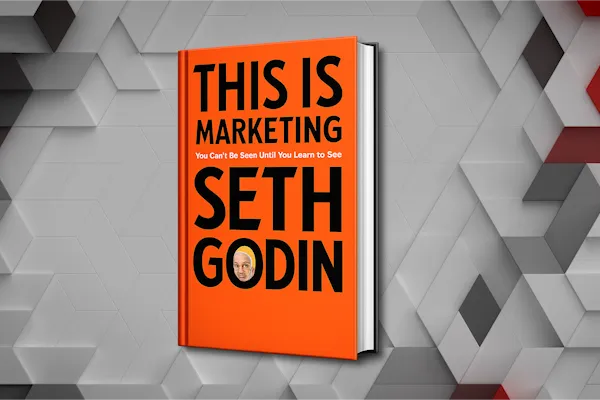
Seth Godin This Is Marketing Summary for Small Business
By Vicky Sidler | Published 1 March 2026 at 12:00 GMT+2
If you have ever paid for an advert, refreshed your dashboard, and waited for the flood of inquiries that never quite arrived, you have already experienced the gap between noise and impact.
For years, marketing rewarded whoever could shout the loudest, repeat the most, and occupy the most billboards. That era made sense when attention was scarce and options were limited. Today, attention is fragmented, choice is infinite, and shouting mostly blends into background static.
In This Is Marketing, Seth Godin argues that the real work of marketing is no longer about volume.
It is about empathy.
According to Godin, effective marketing is the generous act of helping someone solve a problem that matters to them, not a problem that happens to increase your quarterly revenue target.
That shift sounds subtle. It is not.
TL;DR:
Marketing is not about shouting at everyone. It is about serving someone specific.
Choose the smallest viable market instead of trying to please the masses.
People buy transformation, not products.
Story and status drive decisions more than features.
Build permission and trust instead of chasing attention.
👉 Need help getting your message right? Download the 5-Minute Marketing Fix.
Table of Contents:
Why Worldview Matters More Than Demographics:
Tension and the Decision to Act:
The Responsibility of the Marketer:
1. Stop Targeting Everyone: Why Clarity Beats Volume
2. Content Marketing Strategy Framework Every Small Biz Needs
3. Badass Business Book Club – StoryBrand 2.0 Review
4. Badass Business Book Club – Duct Tape Marketing Review
5. Badass Business Book Club – The 1-Page Marketing Plan Review
Frequently Asked Questions About Seth Godin’s This Is Marketing
1. What is the main idea of This Is Marketing by Seth Godin?
2. What does “smallest viable market” actually mean?
3. How do I choose a niche without losing potential customers?
4. What is the difference between demographics and psychographics in marketing?
5. Why does Seth Godin say people buy transformation, not products?
6. What is permission marketing and why does it matter?
7. How can a small business apply This Is Marketing without a big budget?
8. What does “remarkable” mean in practical terms for a service business?
9. Is This Is Marketing only relevant for big brands?
10. What is the first step I should take after reading This Is Marketing?
From Shouting to Serving:
Marketing used to follow what I call the fizzy drink formula. Put your brand everywhere, repeat it often enough, and assume familiarity will eventually lead to sales.
That approach relied on interruption and saturation. Godin’s view is that interruption is now expensive, exhausting, and increasingly ineffective, because people have learned to tune it out with remarkable skill.
The alternative is quieter and far more strategic.
Instead of asking how to get more customers for your product, you begin by asking what product you should build for the customers you most want to serve. That is a reversal many small businesses resist, because it requires saying no to large groups of people who might theoretically buy from you.
The Smallest Viable Market:
Godin introduces the idea of the Smallest Viable Market, which is simply the smallest group of people who urgently want what you make and are willing to spread the word about it. Choosing this group feels risky at first, because narrowing your focus appears to shrink your opportunity.
In practice, it sharpens your relevance.
When you try to appeal to everyone, you drift toward the safe middle. Safe usually means forgettable. When you choose a defined group, you gain the freedom to speak directly to their worldview, frustrations, and ambitions. You stop being a generic option and become a meaningful solution.
A simple way to think about it is this:
My product is for people who believe something specific.
I focus on people who want a particular result.
I promise that engaging with what I create will help them achieve a defined transformation.
Specificity is not about excluding others out of spite. It is about designing something remarkable for someone who cannot wait to find it.
Why Worldview Matters More Than Demographics:
Many business owners still describe their audience using surface-level traits such as age, income, or location. While these details have some value, they rarely explain behavior. Two people of the same age and income can make wildly different decisions because they see the world differently.
Godin highlights the importance of psychographics, which is simply a way of describing what people value, fear, and aspire to.
People buy in ways that protect or elevate their status within their group. Status does not always mean dominance or wealth. For some, status is belonging. For others, it is independence, competence, or respect.
When your marketing acknowledges that inner narrative, it becomes far more persuasive. You are no longer selling a service. You are offering a shift in how someone sees themselves and how they are seen by others.
As a StoryBrand Certified Guide and Duct Tape Marketing Consultant, I often remind clients that clarity about transformation is more powerful than a list of features. If your message does not clearly describe the change you create, your audience is left to guess, and guessing rarely leads to buying.
Tension and the Decision to Act:
People change when the tension between where they are and where they want to be becomes uncomfortable enough. Tension is not panic. It is the quiet recognition that the current situation is no longer sufficient.
Your role as a marketer is to name that tension honestly and offer a credible path forward. If you skip the problem and rush to the solution, you remove the emotional energy that drives action. When you acknowledge the struggle and articulate a hopeful outcome, you create movement.
Stories work because they mirror this journey. A story begins with a challenge, introduces a guide, and ends with resolution. Marketing that follows this structure feels natural because it reflects how we already process change.
Permission Is the Real Asset:
One of the most practical ideas in the book is permission marketing. Permission means someone has chosen to hear from you. They have subscribed, followed, or joined because they expect value.
Buying attention through advertising can generate short-term results, and in many cases it should form part of your strategy. However, rented attention disappears the moment you stop paying. Owned attention, built through trust and consistency, compounds over time.
If you stopped sending your weekly email and people noticed, you have built permission. If your audience forwards your content to colleagues, you have built relevance. These are assets far more stable than a temporary spike in clicks.
Remarkable Is Built In:
Godin’s well-known idea of the Purple Cow suggests that in a crowded marketplace, being average is invisible. "Remarkable" does not mean outrageous or extreme. It means worth talking about.
For a service business, remarkability might look like a clearly defined process, an unusually transparent pricing model, or a guarantee that reduces risk. The key is that it must be designed into the offer from the beginning, not added as decorative copy at the end.
The Responsibility of the Marketer:
Perhaps the most overlooked theme in This Is Marketing is responsibility. Marketing is not inherently manipulative. It becomes manipulative when it prioritizes the company’s short-term gain over the customer’s genuine change.
When used well, marketing connects people to solutions that improve their lives, their businesses, and their communities. That is not hype. It is leadership.
For small business owners, the practical takeaway is straightforward. Stop trying to be slightly interesting to everyone. Start being deeply useful to someone. Define your smallest viable market. Understand their worldview. Offer a clear transformation. Show up consistently.
If you would like help articulating that transformation in one sharp sentence, start with the free 5-Minute Marketing Fix.
Clarity is not loud, but it travels further than noise ever could.
Related Articles:
1. Stop Targeting Everyone: Why Clarity Beats Volume
If the idea of the smallest viable market made you slightly uncomfortable, this article shows why that discomfort is usually a sign you are on the right track. It walks through how narrowing your focus actually increases growth, rather than shrinking it.
2. Content Marketing Strategy Framework Every Small Biz Needs
Godin gives the philosophy. This post gives you a simple framework to turn empathy and permission into a practical content plan that works even with a small team and limited budget.
3. Badass Business Book Club – StoryBrand 2.0 Review
If the idea that people buy transformation rather than features resonated, the StoryBrand review shows you exactly how to communicate that transformation in clear, customer-focused language.
4. Badass Business Book Club – Duct Tape Marketing Review
This review connects customer-centric thinking to a repeatable small business system, helping you move from big ideas about empathy to consistent, integrated action.
5. Badass Business Book Club – The 1-Page Marketing Plan Review
If you understand the philosophy but want everything mapped out simply, this review shows how to compress your strategy into a one-page roadmap you can actually use.
Frequently Asked Questions About Seth Godin’s This Is Marketing
1. What is the main idea of This Is Marketing by Seth Godin?
The core idea is that marketing is not about grabbing attention from everyone. It is about helping a specific group of people solve a problem that matters to them. Instead of pushing products, you create change for a clearly defined audience and build trust over time.
2. What does “smallest viable market” actually mean?
The smallest viable market is the smallest group of people who urgently want what you offer and are likely to spread the word about it. It means choosing focus over mass appeal, so you can design your product and message specifically for them instead of watering it down for everyone.
3. How do I choose a niche without losing potential customers?
Start by identifying the group that gets the best results from your work or values what you do most. Focusing on them does not permanently exclude others. It strengthens your positioning so that when others see your clarity, they are more likely to trust you as well.
4. What is the difference between demographics and psychographics in marketing?
Demographics describe surface traits such as age, income, or location. Psychographics describe beliefs, values, fears, and aspirations. Psychographics are often more powerful because people make decisions based on how they see themselves and what they want to become.
5. Why does Seth Godin say people buy transformation, not products?
Because most purchases are tied to change. A customer is not buying coaching, software, or consulting in isolation. They are buying confidence, growth, stability, recognition, or peace of mind. The product is simply the vehicle for that transformation.
6. What is permission marketing and why does it matter?
Permission marketing means communicating with people who have chosen to hear from you. They subscribe, follow, or opt in because they expect value. This builds a long term asset based on trust, instead of relying only on paid advertising that stops working when you stop paying.
7. How can a small business apply This Is Marketing without a big budget?
You can apply it by narrowing your focus, clarifying your message, and consistently serving your chosen audience with helpful content. It requires more thought than money. Clear positioning and steady communication often outperform expensive campaigns aimed at everyone.
8. What does “remarkable” mean in practical terms for a service business?
Remarkable means worth talking about. For a service business, that could be a clearly defined process, a strong guarantee, a unique specialisation, or an experience clients naturally share with others. It is built into the offer itself, not added later as clever wording.
9. Is This Is Marketing only relevant for big brands?
No. In many ways, it is more useful for small businesses. Smaller teams can focus faster, adjust more easily, and build close relationships with a niche. The principles of empathy, clarity, and trust are often easier to implement at a smaller scale.
10. What is the first step I should take after reading This Is Marketing?
Start by clearly answering two questions. Who is this for, and what change do I create for them? If you cannot answer those in one simple sentence, refine your message first. A tool like the 5-Minute Marketing Fix can help you clarify that before you invest time or money in tactics.


Is your Marketing Message so confusing even your own mom doesn’t get it? Let's clarify your message—so everyone wants to work with you!






Created with clarity (and coffee)