
StoryBrand Marketing Agency
Is Your Marketing Message So Confusing Even Your Own Mom Doesn’t Get It?
We're an award-winning StoryBrand Marketing Agency that helps Service Businesses clarify their messaging so everyone wants to work with you!
✓ Build trust and authority in your industry
✓ Connect with CLIENTS WHO ACTUALLY GET IT
✓ MARKETING THAT FEELS NATURAL
WATCH THIS VIDEO
If your message isn’t landing—and the right clients aren’t showing up—it’s not your fault. Most service business owners are great at what they do. They just struggle to talk about it clearly.
In this video, I’ll walk you through how we fix that using the StoryBrand Framework, plus how to get started with either DIY or done-for-you options.

WHAT HAPPENS WHEN YOUR MESSAGE ISN’T CLEAR
Can your mom explain what you do?
Can you easily explain what you do?
Can anyone?
If not, that's the problem we fix.
Because when people don’t understand what you do, they move on. You end up working harder just to stay in the game.
You’re always re-explaining yourself
Your website doesn’t convert visitors into clients
Your leads aren’t the right fit
Referrals become scarce
Marketing is frustrating as all hell
But it doesn’t have to be this way. A clear message makes all of that easier. It’s the difference between chasing leads—and attracting the right ones.
You might not believe it yet, but marketing can actually be the opposite of frustrating when you're doing it right.
MAKE YOUR MARKETING Simpler
Whether you want to learn the system or hand it over completely, the goal is the same: clear messaging that brings in better clients with less effort.

A DIY SYSTEM THAT’S SIMPLE TO FOLLOW

for weekly group coaching, templates, and a proven system that fits seamlessly into your week—without taking over your life.
.

COACHING THAT MEETS YOU WHERE YOU ARE
Want someone to walk you through it? Get 1:1 or team coaching to clarify your message and apply the StoryBrand Framework to your business in real time.
.

DONE-FOR-YOU MARKETING
Too busy to do it yourself? We’ll build your messaging, write your copy, create the assets you need, and handle your StoryBrand marketing—so you can stay focused on running your business.
HI, I'm Vicky Sidler
And I’VE BEEN WHERE YOU ARE

I know how it feels to stare at your marketing and think, “Why isn’t this working?” That's why I created a StoryBrand Marketing Agency.
All in all, your business isn’t just another brick in the wall—it’s something special. Your story matters, and I’m here to help you share it in a way that feels real, connects with people, and gets results.
As a certified StoryBrand Guide, I specialize in turning complicated ideas into clear, compelling messages that resonate with your audience.
With a background in journalism, I’ve spent decades telling stories that matter and crafting content people want to read.
I’ve developed a proven system to help businesses like yours cut through all the AI trash that's out there and build genuine connections with their audience.
Your story isn’t just important—it’s the reason people will choose your business. Let’s make sure it’s heard loud and clear by the people who need it most.
And sorry if I got Pink Floyd stuck in your head just now...
Hear Directly from DONALD MILLER
In this short clip, StoryBrand’s founder Donald Miller explains why clear messaging and a simple marketing plan change everything.
Donald shares why newsletters are back, what a full StoryBrand campaign includes, and how a certified guide helps you focus on what actually works—without wasting money or time.
Watch to see how working with a StoryBrand Certified Guide can make a measurable difference for your business.
EVERYTHING STORYBRAND, ALL IN ONE PLACE
Whether you need help with strategy, websites, content, or SEO, I offer the full range of StoryBrand marketing services—done with you or done for you.
StoryBrand Framework
StoryBrand Wireframe
StoryBrand Websites
StoryBrand SEO
StoryBrand Video
StoryBrand Copywriting
StoryBrand Email Sequences
StoryBrand Marketing Funnels
StoryBrand Workshops
StoryBrand Consulting
StoryBrand PPC
StoryBrand Lead Generation
StoryBrand
Social Media
StoryBrand Strategy
StoryBrand Content Marketing
StoryBrand Local Service
StoryBrand Coaching
MARKETING THAT DOESN’T TAKE OVER YOUR LIFE
Whether you want to build it yourself or hand it off completely, as a StoryBrand Marketing Agency, we’ll give you a clear message and a simple system that actually works.

1
BOOK A COFFEE CHAT
This is a no-pressure, non-sales call where we discuss what’s working, what’s not, and where you want to go.
.
2
CHOOSE YOUR PATH
Get hands-on support through the StoryBrand Course, 1:1 or team coaching, or let me build the entire marketing system for you—messaging, website, emails, and more.
.
.

3
FIX YOUR MARKETING
Walk away with a message that resonates, a plan that’s easy to follow, and marketing that works while you sleep and finally delivers results.
COFFEE’S ON US (OK, NOT REALLY)
But we’re serious about helping you connect with your audience. Let’s grab a coffee (on Zoom) and chat about your marketing goals.
Wondering how to simplify your message? Let’s talk.
Ready to stand out in an AI-saturated world? We’ve got ideas.
Just need clarity? We’ll help you see the big picture.
This isn’t a sales call – just a friendly, low-pressure chat. At the very least, you’ll walk away with some cool ideas you can try on your own.
SCHEDULE YOUR COFFEE CHAT WITH US TODAY
FIXING YOUR MARKETING SHOULDN’T FEEL IMPOSSIBLE
Most small business owners aren’t marketers—they just want to explain what they do in a way that makes people care.
But when the message isn’t clear, everything else gets harder: websites don’t convert, leads go cold, and social posts fall flat.
You might worry that getting it right will take too much time, cost too much money, or feel like just another online course you’ll never finish.
That’s why I offer three simple paths: do-it-together support through the StoryBrand Course, 1:1 and team coaching, or done-for-you services where I build your full funnel myself.
You’ll get clear messaging, practical templates, and real support—so your marketing finally works and your business actually grows.
YOUR QUESTIONS, ANSWERED
We know marketing can feel overwhelming, and you probably have questions. That’s why we’ve put together answers to the things people ask us most.
What makes Strategic Marketing Tribe different from other StoryBrand marketing agencies?
We’re the StoryBrand marketing agency that skips the boring "corporate speak." We blend the power of StoryBrand with strategic marketing solutions to craft content that feels human, genuine, and impossible to ignore.
How can your strategic marketing solutions benefit my business?
Our strategic marketing solutions simplify your message, clarify your brand story, and help you connect with your ideal customers. It’s marketing that makes sense and gets results – no jargon, no gimmicks, just growth.
What is StoryBrand, and why does it matter?
Think of StoryBrand as a cheat sheet for marketing clarity. It helps you explain what you do in a way that makes people stop, listen, and say, “Oh, I get it.” We use it to create marketing that feels human and that your audience will actually enjoy reading.
Do I need to be familiar with StoryBrand to work with you?
Not at all! Whether you’re a StoryBrand superfan (like us!) or have no idea what it is, we’ll walk you through everything. We’re here to make the process simple, clear, and (dare we say) fun.
How do I know if this is right for my business?
If people keep saying “I don’t really get what you do,” or you’re getting the wrong kind of leads, it’s a sign your message needs work. That’s what we fix.
What if I don’t have time to take a course?
The course is built for time-strapped business owners. You get short lessons, plug-and-play templates, and live support so you’re never stuck or overwhelmed.
What’s the difference between the course and the done-for-you service?
The course gives you training, tools, and weekly support so you can do it yourself. The done-for-you option means I build your whole funnel for you.
How long does it take to see results?
Most people see clearer messaging and better engagement within a week of applying the one-liner. Bigger results (like leads and conversions) follow as you apply it across your marketing.
What if I’ve already tried StoryBrand and it didn’t work?
Many people try to apply StoryBrand on their own and miss key parts. This course walks you through it step-by-step, with real examples and live feedback from a Certified Guide.
STORY, MEET STRATEGY
Let’s make marketing feel less robotic and more real. Find resources from a StoryBrand Marketing Agency that bring your message—and your business—to life.

Why You Should Never Trust An AI Chatbot To Guess The Odds
By Vicky Sidler | Published 11 March 2026 at 12:00 GMT+2
Have you ever asked a chatbot if a new marketing strategy is going to work and felt deeply comforted when it confidently replied that success is highly likely?
According to a recent study published in The Conversation, that machine has absolutely no idea what it is talking about. We treat these language models like omniscient business oracles who can predict the future. But when an artificial intelligence uses a word like "probably" or "maybe," it is not actually assessing the odds the way a human being does.
It is just doing a very fast, very confident math equation that completely disagrees with human logic. Before you bet your entire service business on the strategic advice of a glorified text predictor, we need to look at why these machines are secretly terrible at guessing.
TL;DR:
Large language models completely fail to understand how human beings communicate uncertainty.
When a chatbot says something is likely, its internal mathematical calculation is wildly different from what a normal human assumes.
The machine is highly sensitive to gender biases and language changes, making its predictions incredibly unstable and unreliable.
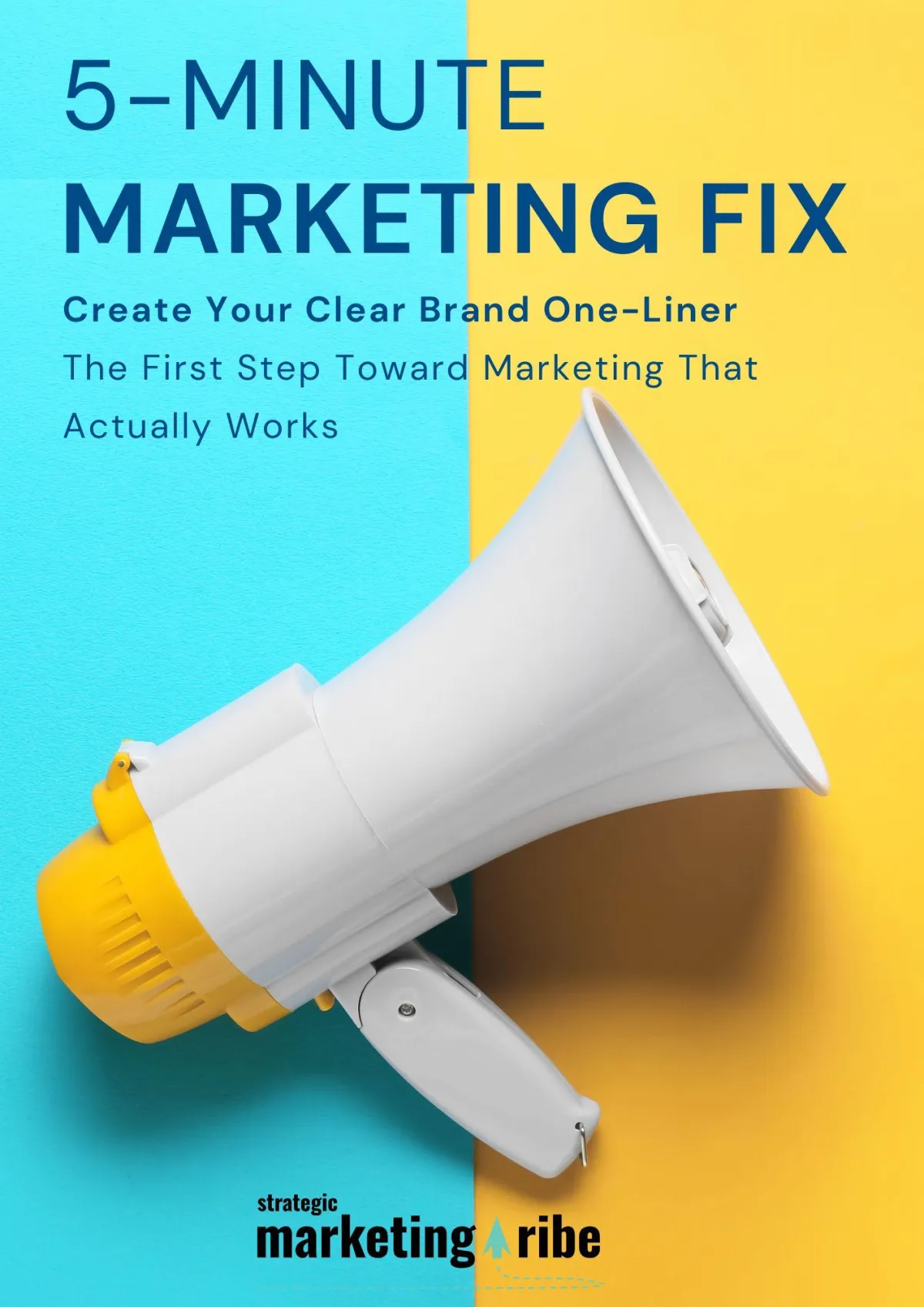
👉 If you are good at what you do but clients are not converting, this 5-minute fix shows you what is quietly costing you sales. Download the 5-minute marketing fix.
Table of Contents:
Why You Should Never Trust An AI Chatbot To Guess The Odds
Why Do Chatbots Misunderstand Basic Human Words?
What Does The Word "Likely" Actually Mean To A Robot?
How Does Bias Secretly Change The Mathematical Odds?
This A Massive Danger For Small Business Owners:
Can You Outsmart A Highly Sophisticated Parrot?
1. AI Is Changing Consulting Business Models Fast
2. Shadow AI Risk Is Growing Fast
3. AI Risks Explained: Why Experts Are Sounding the Alarm
4. AI Slop Is Killing Trust Online. What Now?
5. Gmail AI Could Save You Hours. Here's the Catch
1. Does artificial intelligence understand words like "probably" or "maybe"?
2. How big is the difference between human and AI probability?
3. Does AI change its answers based on gender?
4. Why is relying on AI predictions dangerous for my business?
5. Can we fix this AI misunderstanding by asking it to show its work?
Why Do Chatbots Misunderstand Basic Human Words?
If you ask a human if a project will succeed, the word "maybe" means you should probably have a backup plan.
But what does a machine think it means? Researchers recently compared how humans and artificial intelligence map words to actual numerical percentages. They found a massive, terrifying gap in understanding.
While both humans and machines can agree on extreme words like "impossible," the machines completely lose their minds when dealing with hedge words like "maybe" or "probably."
So just how wrong is the machine when it tries to guess the odds?
What Does The Word "Likely" Actually Mean To A Robot?
Let us look at a very practical, terrifying example.
According to the study, a language model might use the word "likely" to represent an eighty percent probability. But a normal human reader assumes the word "likely" means something closer to sixty-five percent.
That fifteen percent gap is the difference between taking a calculated business risk and walking into a total financial disaster. Humans interpret risk using context and personal experience. The machine is just blindly averaging out conflicting usages from its massive training data.
But the problem gets even worse when the machine starts bringing its own hidden biases into the equation.
How Does Bias Secretly Change The Mathematical Odds?
It turns out that simply changing a pronoun can make a chatbot completely alter its mathematical predictions.
The researchers discovered that these language models are incredibly sensitive to gendered language. When a prompt was changed from "he" to "she," the artificial intelligence actually changed its probability estimates. It became more rigid, entirely because of hidden biases embedded in its training data.
It also wildly shifts its guesses depending on whether you prompt it in English or Chinese.
So if the machine is constantly changing the odds based on invisible biases, why are we trusting it with our most important business decisions?
This A Massive Danger For Small Business Owners:
As a StoryBrand Certified Guide, I watch service business owners blindly follow automated marketing advice every single day.
But this linguistic misalignment is a fundamental threat to how we safely operate our businesses. The study points out that in high-stakes fields like health care, if an AI tells a doctor a side effect is unlikely, a massive miscalculation could quite literally be fatal.
In your business, if a chatbot confidently tells you a massive software investment is probably safe, it is not actually thinking about your unique situation. It is just predicting the next logical word in a sentence.
So how do we survive in a business landscape completely flooded with confident, hallucinating robots?
Can You Outsmart A Highly Sophisticated Parrot?
Well, you have to constantly remember that artificial intelligence is exactly that: a highly sophisticated parrot.
It can summarize a document brilliantly, but it cannot actually understand the heavy weight of the uncertainty it is conveying. Your human judgment, your empathy, and your lived experience are the only things protecting your business from a very confident, statistically generated lie.
Instead of desperately asking a chatbot to predict your strategic success, why not take control with your own human brain?
If you are not sure where to start, and clients are not converting even though you are genuinely good at what you do, get my 5-minute marketing fix. It shows you what is quietly costing you sales.
Related Articles:
1. AI Is Changing Consulting Business Models Fast
Now that you know chatbots are terrible at basic math, find out how their confident hallucinations are completely reshaping how consultants price and deliver their services. This guide shows you how to adapt your business model before your competitors accidentally automate themselves into oblivion.
2. Shadow AI Risk Is Growing Fast
What is scarier than a chatbot that misunderstands probability? Your employees secretly using that exact chatbot to make unregulated business decisions behind your back. Learn how to build actual guardrails before your team's invisible AI experiments turn into a massive legal disaster.
3. AI Risks Explained: Why Experts Are Sounding the Alarm
If a robot failing to understand the word "probably" makes you nervous, wait until you zoom out and look at the broader spectrum of artificial intelligence risks. This post translates the panicked warnings of tech experts into plain English so you can actually protect your business from the fallout.
4. AI Slop Is Killing Trust Online. What Now?
When everyone trusts a highly sophisticated parrot to write their marketing, the internet quickly fills up with low-quality, automated slop. Discover how to use clear, human-centered messaging to stand out and actually build credibility while your competitors drown in generic robot jargon.
5. Gmail AI Could Save You Hours. Here's the Catch
Before you let Google's built-in AI automatically write all your important emails, you need to understand the massive privacy and data-control trade-offs. Find out exactly where the line is between helpful email automation and dangerously risky dependency.
FAQs:
1. Does artificial intelligence understand words like "probably" or "maybe"?
No. According to recent studies, artificial intelligence fails to align with humans when communicating uncertainty. While humans rely on context and experience to understand hedge words, the machine just averages out data, leading to wildly different interpretations of risk.
2. How big is the difference between human and AI probability?
The difference can be dangerously large. For example, a chatbot might use the word likely to mean an 80 percent chance of something happening, while a human reading that same word assumes it means a 65 percent chance.
3. Does AI change its answers based on gender?
Yes. Researchers found that language models are highly sensitive to gendered language. Changing a prompt from "he" to "she" causes the machine to change its probability estimates, reflecting deep biases in its training data.
4. Why is relying on AI predictions dangerous for my business?
If you rely on a chatbot to assess business risks, you are trusting a system that fundamentally misunderstands uncertainty. If it tells you a strategy will probably work, it does not actually comprehend the real-world consequences of that advice. It is simply acting as a sophisticated parrot predicting the next word.
5. Can we fix this AI misunderstanding by asking it to show its work?
Not really. Researchers have tried using chain-of-thought prompting, which asks the AI to explain its reasoning, but even advanced reasoning does not bridge the massive gap between the machine's statistical data and human verbal labels.

Is your Marketing Message so confusing even your own mom doesn’t get it? Let's clarify your message—so everyone wants to work with you!



Created with clarity (and coffee)