
StoryBrand Marketing Agency for Service-Based Founders | Strategic Marketing Tribe
GET STEADY, PRE-SOLD CLIENTS WITH A FAILURE-PROOF MARKETING SYSTEM
As a StoryBrand marketing agency, we help service-based founders escape feast-or-famine, build trust, and attract right-fit clients before another quarter disappears into random tactics, inconsistent leads, and expensive guesswork.
✓ END FEAST-OR-FAMINE
✓ BUILD A RELIABLE SYSTEM
✓ GET PRE-SOLD CLIENTS
✓ BECOME THE TRUSTED EXPERT
WATCH THIS VIDEO
FEAST‑OR‑FAMINE, ALGORITHMS, AND WHY IT’S NOT YOUR FAULT
Before you blame yourself for inconsistent clients or another dry pipeline, watch this.
In this video, I’ll walk you through:
Why smart, hard‑working experts get trapped on the revenue rollercoaster
How loud charlatans keep winning work
The simple three‑step system we use to help service‑based founders step off the hustle wheel for good


YOU DIDN’T START A BUSINESS TO BECOME YOUR OWN EXHAUSTED MARKETING DEPARTMENT
You became great at your craft, not at churning out endless content, second-guessing your message, and wondering why the internet keeps rewarding louder people with worse ideas. It’s deeply frustrating when finding steady clients feels harder than the work you actually sell.
But as long as you’re relying on random tactics instead of a real system, nothing about this rollercoaster really changes, and next quarter looks a lot like this one.
Without a Failure-Proof Marketing System running in the background, it’s easy to end up:
Riding a feast-or-famine revenue rollercoaster instead of building calm, steady growth.
Wasting hours on random tactics stitched together from internet advice, panic, and one more late-night chat with AI.
Watching less qualified competitors win simply because they sound clearer and show up more consistently.
Burning out trying to keep pace with an algorithm that will never love you back.
And the longer this drags on, the more expensive it gets. You lose time to marketing that goes nowhere, money to tactics that don’t compound, and opportunities to competitors who simply look clearer and more credible.
STOP WORKING FOR YOUR MARKETING AND MAKE IT WORK FOR YOU
When your marketing is built on random acts of visibility, everything feels urgent and fragile. But once you install a Failure-Proof Marketing System, your business gets a lot calmer: your message gets clearer, your lead flow gets steadier, and your growth stops depending on last-minute heroics.

WAKE UP TO PRE-SOLD CLIENTS

No more draining sales calls with people who treat your expertise like a line item to negotiate. Instead of starting every sales conversation from scratch, your marketing does the heavy lifting before the call, so the right prospects arrive already understanding your value and trusting your expertise.
.

WIN BACK YOUR TIME AND SANITY
Stop setting your best hours on fire trying to keep up with every new platform, hack, and content trend. You’ll know exactly which few moves actually grow your business, which means you can ignore the rest without guilt.
.

STAND OUT IN A SEA OF GENERIC AI NOISE
In a market drowning in bland, automated content, a clear and undeniably human message becomes a trust advantage. You’ll attract better-fit clients and earn real authority without sounding like a desperate salesperson or an AI chatbot.

HI, I'm Vicky Sidler,
AND I KNOW HOW EASY IT IS TO END UP MARKETING IN SURVIVAL MODE

I know what it’s like to watch a healthy pipeline dry up while you throw tactic after tactic at the wall, hoping something finally sticks. I also know how demoralizing it is to be excellent at what you do and still feel like the internet is rewarding whoever shouts the loudest or has been around the longest.
We built the Failure-Proof Marketing System because we got tired of guessing too. Since then, as a StoryBrand marketing agency, we’ve spent years helping service-based founders replace chaotic hustle with a strategy that actually holds up, backed by:
Being the only agency in South Africa fully certified in both StoryBrand and Duct Tape Marketing.
Earning the 50Pros Top 10 Global Leader Award.
Helping brilliant experts stop winging it and start marketing with clarity, consistency, and a system they can trust.
You do not need more pressure, more noise, or more advice from people or chatbots who have never had to carry payroll and win clients at the same time. You need a dependable strategy that works as hard as you do.
Hear How a StoryBrand Campaign Fits Into a Failure‑Proof Marketing System
In this short clip, StoryBrand founder Donald Miller explains why a clear message and a simple, focused marketing plan are non‑negotiable if you want steady growth.
You’ll hear him describe what a full StoryBrand campaign includes, why assets like newsletters still matter, and how working with a certified guide helps you stop wasting time and money on the wrong tactics.
Watch this to see how StoryBrand campaigns become one part of a larger Failure‑Proof Marketing System and why partnering with a StoryBrand Certified Guide can make your marketing calmer, clearer, and a lot more effective.
ESCAPE THE HUSTLE WHEEL IN THREE SIMPLE STEPS
You should not need a degree in algorithm appeasement or seventeen software subscriptions to get clients. As a StoryBrand Marketing Agency, we keep this simple on purpose.

1
BOOK A COFFEE CHAT
We’ll have a relaxed, no-pressure conversation about what’s actually happening in your marketing right now and where things are leaking time, money, or momentum.
.

2
BUILD YOUR CUSTOM STRATEGY
We’ll create a simple, step-by-step roadmap that shows you exactly what to do next, what to stop doing, and where you’re currently wasting time, money, or momentum.
.
.

3
ENJOY STEADY, CALM GROWTH
Your marketing starts pulling its weight in the background, bringing in a steadier flow of right-fit, pre-sold clients so you can get back to running the business you meant to build.
COFFEE’S ON US (OK, NOT Literally)
Most discovery calls feel like a polite ambush followed by an awkward pitch for services you do not need. This is not that.
We’ll talk through:
What’s actually happening in your marketing
Where things are getting stuck
What would make the biggest difference fastest
If you’re tired of losing time and money to marketing that still doesn’t bring in the right clients consistently, this is the place to figure out what’s actually going wrong.
YOUR QUESTIONS, ANSWERED
We know marketing can feel overwhelming, and you probably have questions. Here are straight, no-jargon answers to the ones we hear most from service-based founders.
What makes Strategic Marketing Tribe different from other StoryBrand marketing agencies?
We’re a StoryBrand marketing agency that doesn’t stop at a prettier website or a clever tagline. We use StoryBrand as the foundation for a Failure‑Proof Marketing System designed to give you steady, pre‑sold clients, not just “more content.” Our work is human, practical, and built to hold up in the real world, not just in a workshop.
What exactly is a Failure‑Proof Marketing System?
It’s a simple, strategy‑first marketing system that makes it very hard for your business to slip back into feast‑or‑famine. Instead of random tactics, you get a clear message, a focused plan, and a repeatable way to attract, nurture, and convert right‑fit clients without becoming a full‑time marketer.
How can this benefit my business specifically?
We simplify your message, clarify your offers, and build a marketing system that quietly brings in better‑fit leads. That means fewer confusing inquiries, less time wasted on the wrong clients, and a calmer, more predictable pipeline for the work you actually want to do.
Do I need to understand StoryBrand before we start?
Not at all. Whether you’ve read the book three times or never heard of it, we guide you through the parts that matter. You get the benefits of StoryBrand-level clarity without having to become a messaging expert yourself.
Is this just consulting, or do you also implement?
Both. We can create your strategy and hand it off to your team with clear guidance, or we can stay on as your marketing partner to help implement and optimize it. Either way, the goal is the same: a system that works consistently, not a one-off “campaign” that dies after launch.
How do I know if this is right for my business?
If you’re great at what you do, but your marketing feels chaotic, inconsistent, or like it’s attracting the wrong people, this is for you. Service-based founders who are tired of guessing and ready for a clear, reliable system tend to get the most value.
How long does it take to see results?
You’ll feel more clarity almost immediately once we map out your message and plan. Tangible results, better-fit inquiries, easier sales calls, and steadier lead flow typically start to show up as we roll the system out across your website, emails, and key channels over the following weeks and months.
What if I’ve “done marketing” before and it didn’t work?
That’s more common than you think. Most businesses have tried a patchwork of tactics without a clear strategy tying everything together. We’ll look at what you’ve already done, keep what’s working, and plug it into a Failure‑Proof Marketing System so your efforts finally add up instead of cancelling each other out.
YOUR EXPERTISE IS TOO VALUABLE TO BE THE INTERNET'S BEST-KEPT SECRET
If you’re skeptical of marketing agencies, that is fair. Plenty of them will happily hand you a bloated plan, a pile of jargon, and a suggestion that you post on LinkedIn six times a day until your soul leaves your body.
You should not have to choose between frantic DIY marketing and expensive agency work that looks impressive but delivers very little. At Strategic Marketing Tribe, we strip out the bloated nonsense and build a lean, Failure-Proof Marketing System tailored to your actual business, so your marketing becomes clearer, more consistent, and more trustworthy to the people you most want to reach.
That means your message gets sharper, your marketing gets simpler, and your lead generation gets a lot less dramatic. Instead of constantly worrying about where the next client will come from, you get a system that quietly supports steady, predictable growth.
Because if nothing changes, next quarter will likely look a lot like this one: more guesswork, more pressure, and still no calm, dependable client flow. And neither of us wants that for you.
THE FAILURE-PROOF MARKETING SURVIVAL GUIDE
Stop taking marketing advice from aggressively loud influencers, random internet bros, or AI chatbots pretending to have business scars.
This is where service-based founders come to replace chaotic guessing with strategy, clarity, and battle-tested systems that have survived contact with the real world.
Here you’ll find practical, honest resources to help you attract better clients, build trust faster, and keep your pipeline moving without sacrificing your evenings, weekends, or remaining sanity.
Why A Multi-Billion-Dollar AI Cannot Solve A High School Crossword Puzzle
By Vicky Sidler | Published 29 May 2026 at 12:00 GMT+2
As a small service business owner, are you terrified of competing against massive corporations that are desperately trying to automate their entire workflow with Artificial Intelligence? Well, you can officially stop panicking, because their multi-billion-dollar software is actually incredibly stupid, and you can easily exploit it.
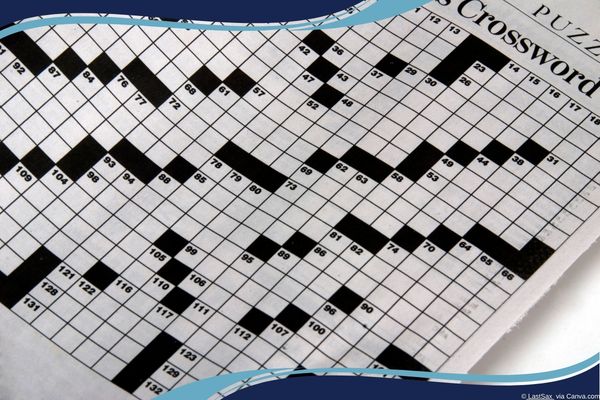
This was not meant to be a serious scientific experiment. I was sitting with a crossword puzzle, hit a wall, and almost as a reflex, I decided to ask the machines for help. Out of mild curiosity, I fed clues into ChatGPT, Claude, Gemini, and Perplexity. The results were not just wrong; they were hilariously, structurally pathetic.
Every single one of these digital geniuses gave me answers with the completely wrong number of letters. Some offered words that were physically impossible given the crossing letters already on the board. At least one model confidently supplied an answer, and when I pointed out the error, it aggressively supplied a completely different word with the exact same unearned confidence and absolutely zero acknowledgment that it had just contradicted itself. One of them just invented a word that doesn't exist in the English language.
These are supposedly the most sophisticated AI tools available to the general public. They can draft an airtight legal contract, explain complex corporate tax structures, and write functional software code in seconds. But not a single one of them could fill in a five-letter word for "type of jazz" that actually fit the space. The crossword completely broke them.
As a StoryBrand Certified Guide, I am constantly warning businesses not to blindly trust algorithmic shortcuts. Understanding exactly why the machine failed at a children's word game is one of the most useful things you can know as a business owner. Let's rip apart the absolute absurdity of "tokenization," explore why the tech industry is passing off narrow intelligence as a sentient brain, and discuss how you can use undeniable human authority to completely obliterate your robotic competitors.
TL;DR:
AI models fail spectacularly at crosswords because they do not read individual letters; they read statistical "tokens," resulting in length errors up to 59.9% of the time.
Modern AI is just narrow intelligence wearing a generalist costume. It is a next-token predictor, not a constraint-satisfaction engine capable of spatial reasoning.
Most business tasks do not come with a grid to check against, meaning AI will confidently hallucinate structural errors in your workflow that are incredibly easy to miss.
👉 Your customers are absolutely exhausted by frustrating, generic corporate chatbots and automated slop that lacks basic human logic. The fastest way to steal market share from these massive corporations is to prove you actually have a pulse. Stop fighting robots on their own turf and establish undeniable human authority instantly with the 5-Minute Marketing Fix.
Table of Contents
Why A Multi-Billion-Dollar AI Cannot Solve A High School Crossword Puzzle
Why Does A Supercomputer Hallucinate Basic Spelling?
Is This Just A Bug They Will Fix In The Next Update?
Are We Actually Dealing With Artificial General Intelligence?
How Do You Protect Your Business When There Is No Grid?
1. Why The Public Is Literally Revolting Against AI (And How To Cash In)
2. Why Paying $32 Billion For Fake AI Influencers Will Destroy Your Brand
3. Why Disney Just Fired Marvel’s Artists For AI Slop They Can’t Even Legally Own
4. Why Obsessive Corporate Cost-Cutting Is Destroying Your Brand Value
5. Why The Internet Is Drowning In AI Slop (And How To Keep Your StoryBrand Clean)
1. Why can't AI models solve a simple crossword puzzle?
2. What does tokenization mean?
3. Will AI get better at solving crosswords in the next update?
4. Is ChatGPT an example of Artificial General Intelligence (AGI)?
5. How does this AI flaw relate to the StoryBrand framework?
Why Does A Supercomputer Hallucinate Basic Spelling?
You might naturally assume that a machine capable of writing functional Python code in three seconds can easily count the letters in a simple word, but you would be entirely wrong.
To understand this hilarious failure, you have to understand something called "tokenization." AI does not actually read words the way a human being does. It reads tokens, which are clusters of characters grouped by statistical frequency in their training data. For example, when you type the word "strawberry," the AI processes it as two distinct tokens: "straw" and "berry." The model never actually sees the individual letters. It is looking at shapes of meaning, not characters on a page.
A crossword puzzle is a purely character-level problem, entirely governed by spatial constraints that operate at the letter level. This is exactly where Large Language Models (LLMs) are architecturally weakest. Peer-reviewed research from the Indian Statistical Institute confirms that even state-of-the-art models produce length errors 46.4% to 59.9% of the time. The machine knows what a word means; it just literally cannot tell you how many letters are in it.
Is This Just A Bug They Will Fix In The Next Update?
Tech executives desperately want you to believe that this is just a minor, temporary glitch that will vanish in the next multi-billion-dollar software patch, but this flaw is baked into the foundation.
This is not a bug; it is the architecture. LLMs are, at their absolute core, next-token predictors. They are extraordinarily good at inferring meaning and generating coherent prose because they process the statistical relationships between meaning-units. But the moment you assign a task that requires manipulating individual characters—like counting letters, fitting an exact grid, or solving an anagram—you have stepped completely outside the architecture's native domain.
Research published at Stanford confirms this is not a simple gap to close, noting that crosswords are an extremely difficult task for LLMs precisely because the constraints break them. A purpose-built crossword AI does exist—a program named Dr. Fill won a US crossword competition in 2021—but it isn't a language model. It is a highly specialized constraint-satisfaction system. It does one thing extremely well, and it cannot do anything else. That distinction matters enormously.
Are We Actually Dealing With Artificial General Intelligence?
The absolute greatest magic trick the tech industry ever pulled was convincing the general public that a glorified autocomplete machine is actually a sentient, all-knowing brain.
Here is the brutal truth that most AI marketing aggressively hides from you: every AI tool you currently use is narrow intelligence wearing a generalist costume. IBM's official taxonomy is incredibly blunt about this, stating that even OpenAI's ChatGPT is considered a form of Narrow AI because it is limited strictly to text-based chat. Artificial General Intelligence—the kind that can actually reason across novel domains like a human being—remains entirely theoretical. Nobody has built it.
Modern LLMs are confusing because their narrow domain is extremely wide. They can write, code, summarize, and translate, creating a very convincing illusion of general intelligence. But the crossword reveals the frayed edge of the costume. The exact moment you need to count characters, hold a grid in mind, and reason about intersecting spatial positions simultaneously, the model reliably fails. The task simply falls outside what it was built to do.
How Do You Protect Your Business When There Is No Grid?
You cannot afford to blindly trust a piece of software that confidently lies to you just because it sounds highly professional.
This is not an argument for distrust; it is an argument for appropriate trust. LLMs are genuinely excellent at tasks that live inside language, like drafting, editing, and summarizing. But they are structurally weak at tasks that require precise counting, working memory across multiple interdependent variables, or exact spatial reasoning. If you use AI for strategic competitive analysis that requires constraint satisfaction across multiple real-world variables, the model will do exactly what it did with my crossword clues: produce something that sounds incredibly confident, but is structurally incorrect.
The crossword is a highly useful test precisely because the errors are so visible. Seven letters crammed into a five-letter space is an undeniable failure. But here is the terrifying part: most business tasks don't come with a grid to check against.
You need a clear, structural foundation to protect your brand from unseen automated errors. Get my 5-Minute Marketing Fix. This rapid diagnostic tool uses your actual human brain to craft a crystal-clear StoryBrand One-Liner. It gives you a standardized, reliable framework to establish genuine human connection. You cannot beat a billion-dollar algorithm at its own game, but you can easily beat it with empathy. Prove to your customers that you aren't just another lazy corporation pushing unchecked AI slop, but a fiercely human Guide who actually has a plan to solve their problem.
👉 Stop publishing automated garbage. Download the fix now.
Related Articles:
1. Why The Public Is Literally Revolting Against AI (And How To Cash In)
The public backlash against AI has exploded into a literal rebellion. Discover why consumers are rejecting tech billionaires and how your human brand can steal their market share.
2. Why Paying $32 Billion For Fake AI Influencers Will Destroy Your Brand
The influencer market is hitting $32B, and corporate executives are replacing humans with AI avatars. Discover why faking human connection is a massive trap that will bankrupt your brand.
3. Why Disney Just Fired Marvel’s Artists For AI Slop They Can’t Even Legally Own
Disney laid off 1,000 workers, including Marvel's legendary visual team, while partnering with OpenAI. Discover the hilarious legal trap of trading your human creativity for cheap, uncopyrightable content.
4. Why Obsessive Corporate Cost-Cutting Is Destroying Your Brand Value
Is your company replacing human value with AI cost reduction? Discover why the "Doorman Fallacy" is ruining modern business and how to fiercely protect your customer loyalty.
5. Why The Internet Is Drowning In AI Slop (And How To Keep Your StoryBrand Clean)
If you think automating your company's creative output is a shortcut to growth, think again. Uncover the Stanford research proving that relying on automated corporate-speak actively destroys your human authenticity.
FAQs:
1. Why can't AI models solve a simple crossword puzzle?
AI models process text through a system called "tokenization," where words are broken down into statistical chunks of meaning rather than individual letters. Because a crossword puzzle requires exact letter counts and spatial reasoning, it breaks the architecture of the AI.
2. What does tokenization mean?
Tokenization is the process by which a Large Language Model converts text into the units it processes. For example, the AI sees the word "strawberry" as two distinct tokens ("straw" and "berry"), meaning it never actually "sees" or counts the individual letters.
3. Will AI get better at solving crosswords in the next update?
No, because this is an architectural flaw, not a temporary bug. Large Language Models are built to be "next-token predictors" for language generation, not constraint-satisfaction engines built for spatial reasoning and exact character counts.
4. Is ChatGPT an example of Artificial General Intelligence (AGI)?
No. According to IBM's official taxonomy, ChatGPT and similar models are forms of Narrow AI. While their ability to process vast amounts of text makes them seem highly intelligent, they are merely "narrow intelligence wearing a generalist costume."
5. How does this AI flaw relate to the StoryBrand framework?
The StoryBrand framework emphasizes that your brand must act as a competent, trustworthy Guide. Because AI models confidently hallucinate structural errors when pushed outside their native language domain, businesses that rely entirely on automation will inevitably publish mistakes that destroy consumer trust.

Escape feast‑or‑famine with Failure‑Proof Marketing: a simpler, strategy‑first system that brings you steady, pre‑sold clients without turning you into a full‑time content machine.






Created with clarity (and coffee)