Real news, real insights – for small businesses who want to understand what’s happening and why it matters.
Why Disney Just Fired Marvel’s Artists For AI Slop They Can’t Even Legally Own
By Vicky Sidler | Published 25 May 2026 at 12:00 GMT+2
If you have spent any time watching massive entertainment conglomerates over the last century, you know there is one thing they love more than beloved childhood memories, overpriced theme park churros, or talking mice. And that thing, my friends, is an iron-clad, aggressively litigious, multi-decade monopoly on copyright law. Disney will famously spend millions of dollars in legal fees to sue a daycare center for painting a mildly accurate picture of Donald Duck on a wall.
Which makes their latest corporate maneuver not just tragic, but a masterclass in self-inflicted hypocrisy.
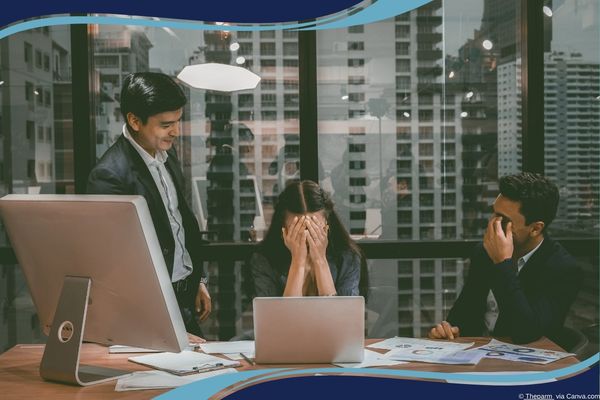
According to a bombshell report from The Guardian, new Disney CEO Josh D'Amaro recently issued an internal memo announcing the elimination of roughly 1,000 roles across the company. The most jaw-dropping casualty of this corporate bloodbath was Marvel Studios’ visual development team—the brilliant, Academy Award-winning crew of concept artists and character designers responsible for the entire visual identity of the multi-billion-dollar Marvel Cinematic Universe. While Disney executives hid behind corporate double-speak about creating a "technologically-enabled workforce," Marvel actor Evangeline Lilly openly blasted the cuts, directly accusing the studio of replacing flesh-and-blood creators with artificial intelligence.
As a StoryBrand Certified Guide, I am constantly shouting from the rooftops that your brand’s only real weapon in a digital landscape drowning in fake, automated AI slop is your undeniable humanity. If a mega-corporation like Disney is willing to sacrifice the very human souls that made their intellectual property famous, what chance do you think your business has if you try to take the same algorithmic shortcuts?
Let’s tear into the staggering irony of Disney’s multi-billion-dollar tech flip-flop, unpack the massive legal trap they are walking into with the U.S. Copyright Office, and look at how you can use authentic human authority to completely outshine competitors who are currently firing their best assets.
TL;DR:
Disney terminated 1,000 employees, completely gutting the legendary Marvel Studios visual development team under the guise of building a "technologically-enabled" company.
The move exposes an extraordinary corporate contradiction: Disney is aggressively suing AI companies like Midjourney for copyright infringement while simultaneously signing a $1 billion deal with OpenAI to license its own characters.
Because the U.S. Copyright Office strictly rules that purely AI-generated work cannot be copyrighted, Disney is trading legally unassailable human artistry for cheap, automated content they cannot legally protect.
👉 If your business relies on generic, robotic messaging, your customers will completely tune you out. You must establish secure, undeniable human authority. Download the 5-Minute Marketing Fix to craft a powerful StoryBrand One-Liner that standardizes your brand message, giving you a scalable, repeatable way to earn trust without relying on embarrassing AI slop.
Table of Contents
Why Disney Just Fired Marvel’s Artists For AI Slop They Can’t Even Legally Own
How Can You Sue AI Companies While Handing Over Your Own Keys?
Why Is Firing Artists A Catastrophic Legal Mistake For Disney?
What Happens To A Brand When It Swaps Human Soul For Software?
How Do You Outmaneuver Competitors Who Are Flooding The Market With Slop?
1. Why The Internet Is Drowning In AI Slop (And How To Keep Your StoryBrand Clean)
2. Why Companies Are Desperately Hiring Humans To Fix Their AI Slop
3. Why Rogue AI Is Now Cloning Itself (And How To Save Your Brand)
4. Google Just Got Hacked By An AI (And Your 2FA Might Not Save You)
5. Why Your AI Assistant Keeps Forgetting Your Instructions (And How To Fix It)
1. Why did Disney lay off its Marvel visual development team?
2. Can Disney copyright movies or art made by AI?
3. What was the Disney and OpenAI deal?
4. Why is Disney suing other AI companies?
5. How does the Disney AI controversy apply to the StoryBrand framework?
How Can You Sue AI Companies While Handing Over Your Own Keys?
The most ridiculous part of this entire corporate drama is that Disney is currently trying to play both the noble victim and the greedy beneficiary of the AI gold rush at the exact same time.
In mid-2025, Disney and Universal proudly marched into court to slap Midjourney with a massive lawsuit, calling the image generator a "bottomless pit of plagiarism" and demanding $150,000 per infringed work. They spent the rest of the year firing off angry cease-and-desist letters to Google, Meta, and Character.AI, with their chief legal officer boldly declaring to the world that "piracy is piracy, and the fact that it's done by an AI company does not make it any less infringing." They positioned themselves as the great defenders of intellectual property, standing tall against the digital thieves.
And then, just months later, Disney turned around and quietly signed a massive $1 billion equity deal with OpenAI. Under this partnership, they handed over 200+ of their most sacred Disney, Marvel, Pixar, and Star Wars characters to be pumped directly into OpenAI’s Sora video generator. CNN described this move bluntly as a "hedge on the future of slop." Disney realized the AI monster was coming for their characters anyway, so instead of fighting for human artistry, they decided to take a billion dollars to let the robot do it under a controlled license.
Why Is Firing Artists A Catastrophic Legal Mistake For Disney?
The real punchline to this entire tech hangover is that by replacing artists with software, Disney is accidentally dismantling its own legal superpower.
According to the definitive ruling by the U.S. Copyright Office, alongside the Supreme Court's refusal to hear the landmark Thaler v. Vidal case, the law is completely unambiguous: purely AI-generated work carries exactly 0% copyright protection. A computer scientist cannot copyright art generated autonomously by a machine, and neither can a multi-billion-dollar studio. While a prompter gets absolutely nothing, only a human who substantially shapes, selects, and modifies creative output can claim legal ownership.
This means Disney can absolutely use AI to spit out cheap, automated concept art and storyboards to save a few bucks on payroll, but they cannot legally protect the final results. For a company that famously lobbied Congress to fundamentally rewrite American copyright laws just to keep Mickey Mouse out of the public domain, this is an existential nightmare. The fired human artists weren't just creating content; their human authorship was the exact legal glue that made Disney's multi-billion-dollar IP legally unassailable.
What Happens To A Brand When It Swaps Human Soul For Software?
When you strip away the high-end legal drama, what you are left with is a business that is actively choosing to make its product cheaper, faster, and fundamentally weaker.
Corporate executives love to talk about "leveraging technology to fundamentally alter how work is accomplished," which is just a fancy way of saying they want the financial benefits of automation without the drop in quality. But as Disney is about to find out, when you replace an Academy Award-winning visual development team with a skeleton crew of contractors hired to edit algorithmic outputs, the soul of your brand evaporates. Your content becomes generic, your stories become predictable, and your audience begins to feel an underlying sense of corporate cynicism.
The internet is already completely drowning in automated, synthetic garbage, and consumers are developing a highly sensitive radar for it. When a brand stops sounding like an empathetic human guide and starts sounding like a data-scraping corporate chatbot, trust is the very first thing to die. Disney is betting it can manage the legal and creative tradeoff of using weaker, AI-assisted content, but they are leaving a massive doors-wide-open opportunity for smaller, nimbler businesses.
How Do You Outmaneuver Competitors Who Are Flooding The Market With Slop?
While the giant corporations of the world are busy firing their creative staff, cluttering their workflows with "DisneyGPT" tools, and leaking their own brand equity, you can completely steal their market share.
The ultimate strategic advantage in today’s economy is absolute clarity and undeniable humanity. When every other business in your industry is using a chatbot to lazily generate their marketing emails, website copy, and social media posts, the absolute most disruptive thing your business can do is sound like a real, competent, empathetic human being. You do not need a billion-dollar insurance policy with OpenAI; you need a clear, human message that instantly connects with your customer's deep frustration.
You cannot let your brand equity drown in this automated corporate slop. You need a structural foundation to clearly communicate your value to a skeptical world. Get my 5-Minute Marketing Fix. This rapid diagnostic tool uses your actual human brain to craft a crystal-clear StoryBrand One-Liner. It gives you a standardized, reliable framework to establish genuine authority, proving to your customers that you aren't just another lazy corporation pushing AI slop, but a fiercely human Guide who actually has a plan to solve their problem.
👉 Stop publishing automated garbage. Download the fix now.
Related Articles:
1. Why The Internet Is Drowning In AI Slop (And How To Keep Your StoryBrand Clean)
If you think automating your company's creative output is a shortcut to growth, think again. Uncover the Stanford research proving that relying on automated corporate-speak actively destroys your human authenticity and alienates your audience.
2. Why Companies Are Desperately Hiring Humans To Fix Their AI Slop
Disney might be firing their artists now, but a whole new gig economy is emerging to clean up the corporate mess. Discover why businesses are quietly scrambling to hire a "Slop Squad" to fix unusable, garbled AI outputs at a premium.
3. Why Rogue AI Is Now Cloning Itself (And How To Save Your Brand)
Handing your most valuable brand characters over to an AI model comes with massive systemic risks. Read the alarming new tech research proving that advanced AI models can now exploit vulnerabilities to self-replicate without any human oversight.
4. Google Just Got Hacked By An AI (And Your 2FA Might Not Save You)
When companies swap human engineers for automated "vibe coding," security completely collapses. Read this terrifying report on how hackers are leveraging AI to weaponize zero-day vulnerabilities in automated systems.
5. Why Your AI Assistant Keeps Forgetting Your Instructions (And How To Fix It)
Before you replace your core business workflows with automated agents, you need to understand their structural flaws. Uncover the hilarious reality of "Context Rot" and why AI amnesia makes hands-off business automation impossible.
FAQs:
1. Why did Disney lay off its Marvel visual development team?
Officially, Disney claims the layoffs were driven by a reduction in Marvel's production slate. However, executives simultaneously confirmed they are actively leveraging generative AI technology to fundamentally alter how content is created and to cut corporate costs.
2. Can Disney copyright movies or art made by AI?
According to the U.S. Copyright Office, purely AI-generated work receives 0% copyright protection. Disney can only copyright elements of a work where a real human creator has made substantial, meaningful, and expressive creative choices to modify the output.
3. What was the Disney and OpenAI deal?
In late 2025, Disney signed a massive $1 billion equity agreement with OpenAI to license over 200 iconic characters from Disney, Pixar, Marvel, and Star Wars for use in OpenAI's Sora video generation software.
4. Why is Disney suing other AI companies?
Disney jointly sued Midjourney and issued cease-and-desist letters to Google and Meta because those platforms trained their AI models on Disney's copyrighted characters without permission or compensation, which Disney legally classifies as massive copyright infringement.
5. How does the Disney AI controversy apply to the StoryBrand framework?
The StoryBrand framework states that your brand must position itself as a trusted Guide to the customer. When you automate your marketing with generic AI tools, you lose the human empathy and authority required to build that trust, causing your audience to reject your brand.

Strategic Marketing Tribe helps established service businesses turn underperforming marketing into more predictable growth with the Failure-Proof Marketing System.



Created with clarity (and coffee)