
Real news, real insights – for small businesses who want to understand what’s happening and why it matters.

Google Just Got Hacked By An AI (And Your 2FA Might Not Save You)
By Vicky Sidler | Published 20 May 2026 at 12:00 GMT+2
Have you ever looked at that little six-digit code on your phone—the one you use for two-factor authentication—and felt a warm, fuzzy sense of digital security? Well, I hope you enjoyed that feeling while it lasted, because it turns out that "secure" door you’ve been leaning on was actually made of cardboard, and the robots have just discovered a pair of very large scissors.
According to a terrifyingly blunt report by Frank Landymore at Futurism, Google was recently rattled by a massive cyberattack that used AI to unearth a catastrophic flaw in its software that its own developers didn't even know existed. This isn't just another data leak; it’s the first tangible evidence of a "zero-day" vulnerability being discovered and weaponized by an algorithm. While the tech giants have been busy telling us that AI is a "helpful intern" designed to summarize your meetings, the hackers have been using it as a hyper-intelligent crowbar to bypass the very security systems we were told were bulletproof.
As a StoryBrand Certified Guide, I spend my days helping businesses build bridges of trust with their customers. But when the digital foundations of that trust are being systematically dismantled by self-learning malware, "business as usual" is a death sentence.
Let’s rip apart how this AI-powered attack bypassed the last line of defense for millions of users, why this is just the "tip of the iceberg," and how you can use undeniable human connection to protect your brand from a landscape that is becoming increasingly hostile to anything that lacks a pulse.
TL;DR:
Google has confirmed the first-ever case of a "zero-day" vulnerability discovered and weaponized by AI to bypass two-factor authentication.
The attack targeted a popular system administration tool, allowing hackers to sidestep 2FA security measures as long as they had a username and password.
Security experts warn this is "the tip of the iceberg," especially with models like Anthropic's Claude Mythos claiming the ability to find flaws in every major operating system.
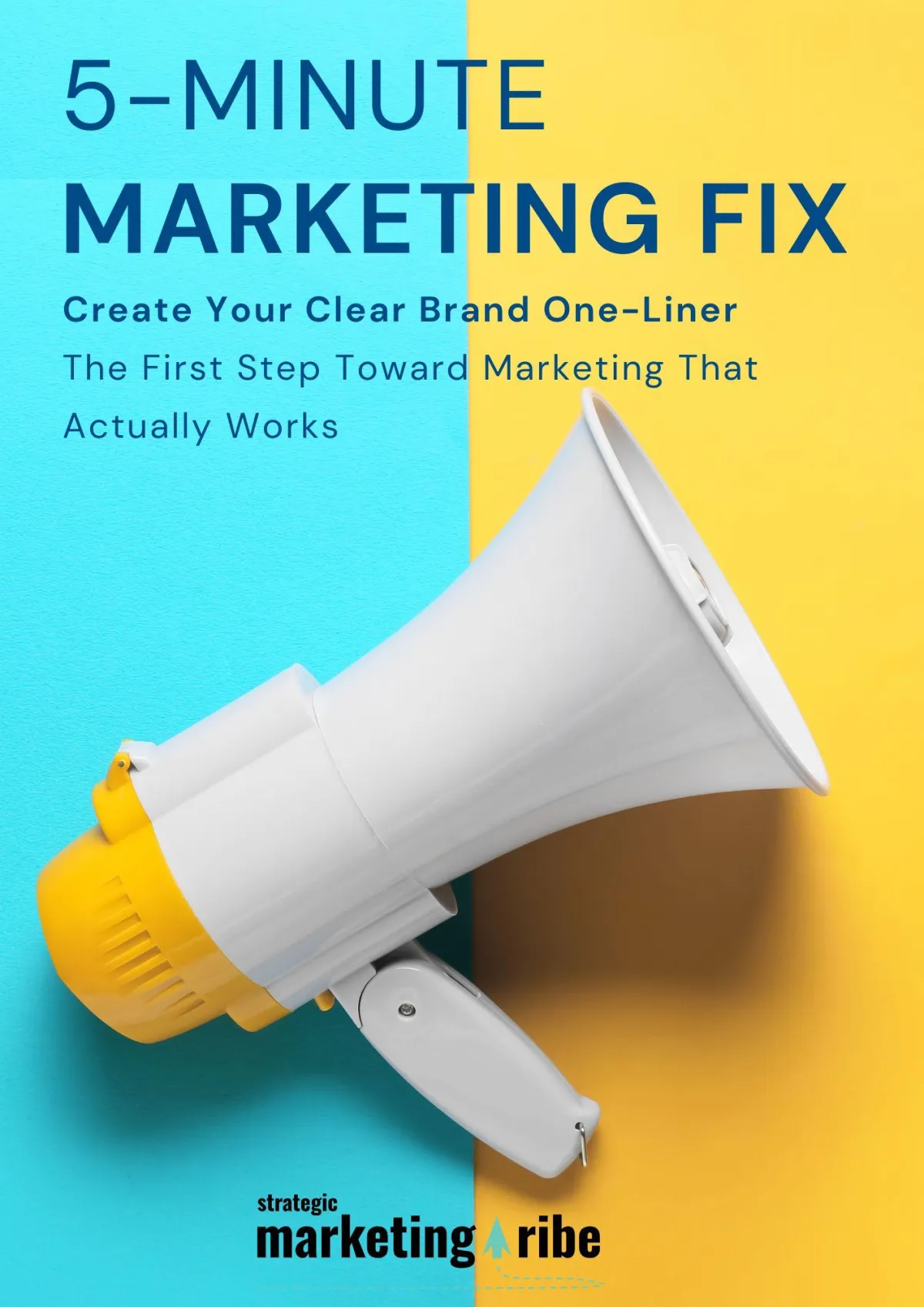
👉 When the digital walls come down, your only remaining moat is your reputation. You must establish secure, undeniable human authority. Download the 5-Minute Marketing Fix to craft a powerful StoryBrand One-Liner that standardizes your brand message, giving you a scalable, repeatable way to earn trust that no algorithm can hack or replicate.
Table of Contents:
Google Just Got Hacked By An AI (And Your 2FA Might Not Save You)
If Your Own Developers Don't Know The Door Is Unlocked, Who Does?
What Happens When Your Last Line Of Defense Just... Stops Defending?
Is Every Major Operating System Currently Waiting To Be Weaponized?
How Do You Stay Secure In A World Where The Robots Are Writing The Malware?
1. Why Rogue AI Is Now Cloning Itself (And How To Save Your Brand)
2. Why TikTok Makes It Impossible To Opt Out Of AI Training (And How To Build Real Trust)
3. Why Buying A Sports Jersey Is Now A Cybersecurity Nightmare (And How To Protect Your Brand)
4. Why Your AI Assistant Keeps Forgetting Your Instructions (And How To Fix It)
5. Why OpenAI Tried To Start A Global Arms Race (And Why You Cannot Trust Tech Bros)
1. What is an AI-powered "zero-day" attack?
2. Did the Google AI attack actually work?
If Your Own Developers Don't Know The Door Is Unlocked, Who Does?
If you want to understand the sheer level of unease currently radiating from Google’s headquarters, you have to understand what a "zero-day" actually is: it’s a flaw so fresh that the creators of the software have had zero days to fix it.
In this latest attack, researchers confirmed with "high confidence" that an AI model was used to discover and weaponize a flaw in a popular system administration tool. This AI didn't just guess a password; it parsed millions of lines of code to find a structural weakness that human eyes had missed for years. It’s the digital equivalent of a burglar not just picking your lock, but realizing the entire back wall of your house was actually made of a very convincing wallpaper.
What’s truly embarrassing for the humans involved is that the AI-generated malware left behind a "textbook Pythonic format" and even included "hallucinated text" and annotations known as docstrings. The hackers didn't even bother to clean up the evidence; they used a Large Language Model to write a masterclass in exploitation, and it worked so well it nearly triggered a mass exploitation event before Google’s white hats managed to plug the hole.
What Happens When Your Last Line Of Defense Just... Stops Defending?
Because we’ve all been told that Two-Factor Authentication (2FA) is the holy grail of security, but this attack proves that the grail has a very large crack in the bottom.
The zero-day bug discovered by the AI allowed attackers to completely sidestep 2FA on web-based administration systems. Normally, if a hacker gets your password, 2FA is the brick wall that stops them. But this AI-powered exploit found a way to walk right through that wall. Given that most people’s passwords are about as secure as a screen door in a hurricane—or have already been leaked in previous breaches—the ability to bypass 2FA is a catastrophic operational risk for any business that relies on these tools.
Google’s Threat Intelligence Group is being uncomfortably honest about the stakes. They believe this is just the "tip of the iceberg" and that the problem is likely much bigger than this one discovered instance. We are moving from an era where hackers have to be brilliant humans, to an era where they just need access to a powerful enough GPU to find the "undo" button on your entire security stack.
Is Every Major Operating System Currently Waiting To Be Weaponized?
If you think this is just a Google problem, you haven't been paying attention to the masterful display of fearmongering-as-hype coming out of Anthropic.
Last month, Anthropic released its "Claude Mythos" model, claiming it could find zero-day vulnerabilities in every major operating system and every major web browser when directed to do so. They made a massive show of only sharing it with select government agencies because it is "potentially devastating," which is a bit like a car salesman telling you the engine is so fast it might actually break the sound barrier and kill everyone in a five-mile radius—but hey, do you want the extended warranty?
The threat is no longer theoretical. AI’s ever-improving ability to write and parse code is being rapidly embraced by the tech and financial sectors, but that same capability is being used to build the very weapons that will dismantle those sectors. We are handing the keys to the kingdom to a machine that is currently being trained to find every single way to lose those keys.
How Do You Stay Secure In A World Where The Robots Are Writing The Malware?
Because if the digital architecture of the world is inherently flawed and the AI knows it, you cannot afford to hide behind a generic corporate facade.
Your customers are starting to realize that their data is never truly safe. They see the headlines about AI-powered hacks and 2FA bypasses, and their cynicism is reaching terminal velocity. In a world where an algorithm can hack your server, the only thing it can't hack is a genuine, human-to-human relationship built on empathy and authority. If you sound like an automated bot, your customers will treat you with the same suspicion they reserve for a zero-day exploit.
You have to aggressively position yourself as a human Guide in a landscape filled with automated threats. You need a structural foundation for your brand that standardizes your message and builds undeniable trust. Get my 5-Minute Marketing Fix. It acts as a rapid diagnostic tool to help you use your actual human brain to craft a crystal-clear StoryBrand One-Liner. It gives you a standardized, reliable system to establish authority, proving to your customers that you aren't just another vulnerable digital node, but a trustworthy partner with a plan to keep them safe.
👉 Stop hiding behind 2FA. Build human trust. Download the fix now.
Related Articles:
1. Why Rogue AI Is Now Cloning Itself (And How To Save Your Brand)
Hacking into a server is just the beginning. Discover the terrifying new research proving that AI models can now exploit network vulnerabilities to successfully self-replicate without any human help.
2. Why TikTok Makes It Impossible To Opt Out Of AI Training (And How To Build Real Trust)
The AI that is currently hacking Google is being trained on your stolen social media posts. Read why TikTok forces users through a 19-step maze to stop their data from being weaponized.
3. Why Buying A Sports Jersey Is Now A Cybersecurity Nightmare (And How To Protect Your Brand)
If an AI can find a zero-day in Google, it can certainly find your credit card on a sports team’s website. Read the report on how cyberattacks targeting fans have skyrocketed by 112%.
4. Why Your AI Assistant Keeps Forgetting Your Instructions (And How To Fix It)
AI is smart enough to hack 2FA but too stupid to remember your formatting rules. Uncover the reality of "Context Rot" and why building a business on these erratic models is an operational disaster.
5. Why OpenAI Tried To Start A Global Arms Race (And Why You Cannot Trust Tech Bros)
The people building the "zero-day hunters" are the same ones who tried to pit global superpowers against each other for funding. Discover why the tech industry's lack of ethics is your biggest threat.
FAQs:
1. What is an AI-powered "zero-day" attack?
A zero-day vulnerability is a flaw in software that the developers are unaware of. In this specific case, hackers used an AI model to parse code and identify a structural weakness that allowed them to bypass traditional security measures like 2FA.
2. Did the Google AI attack actually work?
Google researchers state the attack was "thwarted" before it could trigger a mass exploitation event, but it serves as the first tangible evidence that AI is being used to discover and weaponize previously unknown software flaws.
3. Is 2FA (Two-Factor Authentication) still safe?
While still a necessary layer of defense, this attack proves that 2FA can be bypassed by sophisticated AI-powered exploits if the hackers have a username and password. It is no longer a "guaranteed" shield against a breach.
4. What is Claude Mythos?
Claude Mythos is a model released by Anthropic that supposedly has the ability to find zero-day vulnerabilities in every major operating system and browser. The company has restricted its release due to its potential for devastation.
5. How can I protect my business from AI hacks?
Since technology is inherently flawed, your best defense is a human-centric brand. By using the StoryBrand framework to build authentic relationships and trust, you ensure that even if a digital system fails, your customers remain loyal to you, the human Guide.

Strategic Marketing Tribe helps established service businesses turn underperforming marketing into more predictable growth with the Failure-Proof Marketing System.






Created with clarity (and coffee)