
Real news, real insights – for small businesses who want to understand what’s happening and why it matters.

Why Companies Are Desperately Hiring Humans To Fix Their AI Slop
By Vicky Sidler | Published 22 May 2026 at 12:00 GMT+2
For the past two years, we have watched corporate executives absolutely trip over themselves in their rush to fire their human workforce and replace them with the magical, cost-saving promise of Artificial Intelligence. They gleefully gutted their marketing departments, fired their developers, and proudly announced that chatbots would handle the rest.
But the tech hangover has officially arrived, and it is a massive, pounding headache.
According to a highly entertaining new report by Futurism, these exact same companies have suddenly realized a very brutal truth: their new robotic employees are terrible at their jobs. The AI is violently hallucinating facts, producing garbled logos, and writing incredibly insecure code. Now, in a desperate bid to save their own operations, these companies are quietly scrambling to hire real, flesh-and-blood humans to clean up the disaster.
As a StoryBrand Certified Guide, I am constantly warning businesses that you cannot automate authentic human connection. If you try to build your brand on cheap algorithmic shortcuts, your customers will instantly smell the desperation.
Let’s rip apart the hilariously tragic rise of the "Slop Squad," explore why the tech industry's obsession with "vibe coding" is ruining their security, and discuss how you can use actual human empathy to completely outmaneuver your robotic competitors.
TL;DR:
Companies that fired human workers to save money are now desperately hiring a new class of gig workers—the "Slop Squad"—to fix unusable AI-generated art, writing, and code.
Freelancers report that untangling AI hallucinations and redrawing garbled designs often takes more time and mental labor than simply creating the work from scratch.
Because executives mistakenly believe the AI did "most of the work," they are paying these freelancers drastically less, creating a toxic, fundamentally broken operational model.
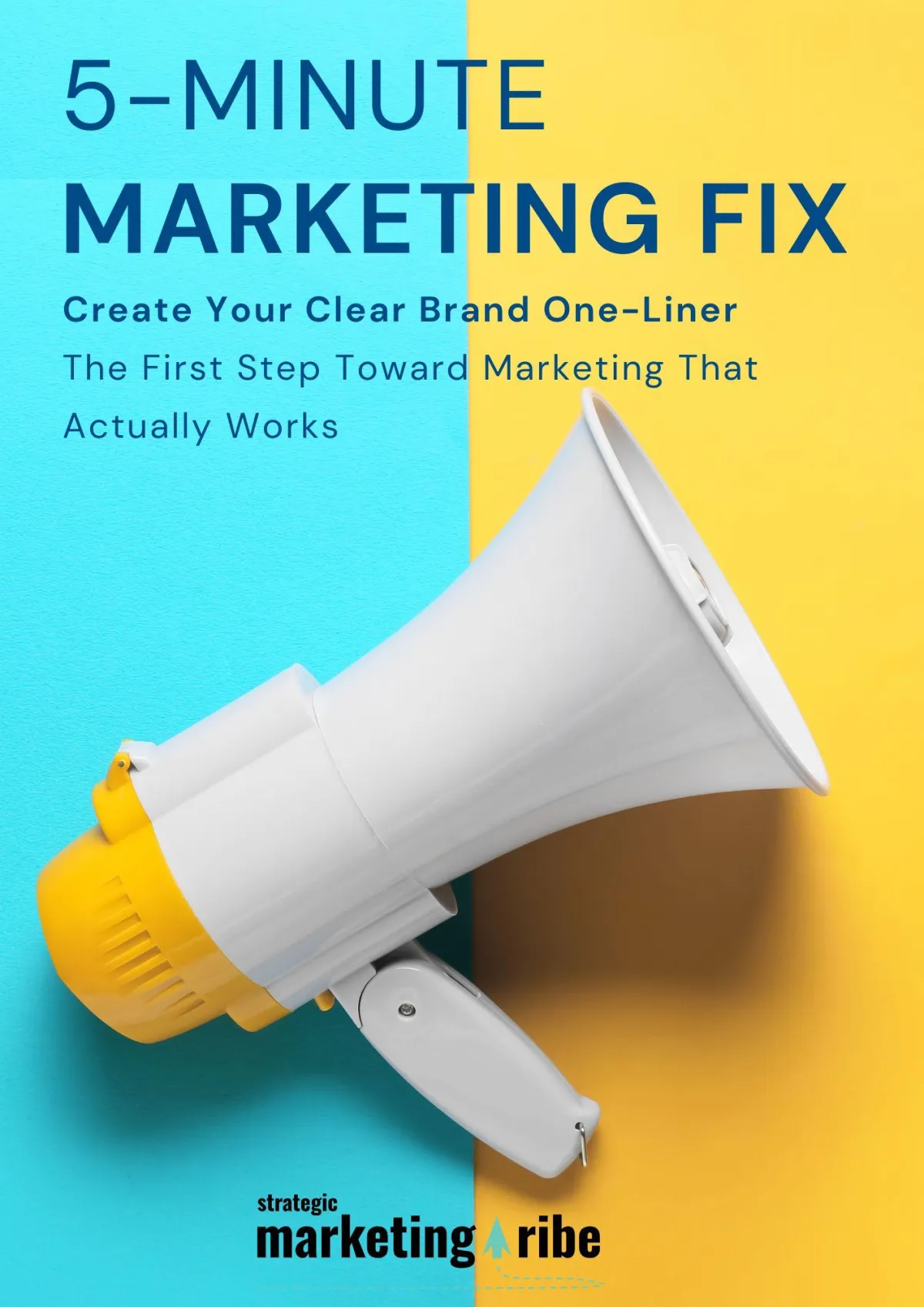
👉 If your business sounds like a generic, robotic chatbot, your customers will ignore you. You must establish secure, undeniable human authority. Download the 5-Minute Marketing Fix to craft a powerful StoryBrand One-Liner that standardizes your brand message, giving you a scalable, repeatable way to earn trust without relying on embarrassing AI slop.
Table of Contents:
Why Companies Are Desperately Hiring Humans To Fix Their AI Slop
What Exactly Does A "Slop Fixer-Upper" Do All Day?
Wait, Is Editing AI Garbage Actually Harder Than Doing The Work?
If It Takes Longer To Fix, Why Are Freelancers Getting Paid Less?
How Do You Capitalize On The Total Failure Of Automated Marketing?
1. Google Just Got Hacked By An AI (And Your 2FA Might Not Save You)
2. Why Rogue AI Is Now Cloning Itself (And How To Save Your Brand)
3. Why One Angry Mom Defeated An Entire AI Data Center (And How To Wield Human Power)
4. Why The Internet Is Drowning In AI Slop (And How To Keep Your StoryBrand Clean)
5. Why Your AI Assistant Keeps Forgetting Your Instructions (And How To Fix It)
2. Why are companies hiring humans to fix AI content?
3. Is fixing AI slop faster than doing the work from scratch?
5. How does this AI slop trend impact small business marketing?
What Exactly Does A "Slop Fixer-Upper" Do All Day?
If you want a perfect snapshot of how completely broken the current tech ecosystem actually is, you just have to look at this brand new gig economy.
When a company fires its graphic designer and asks an image generator to create a new logo, the result is usually a terrifying, multi-fingered mutant with garbled, unreadable text. Enter the "Slop Squad." Freelance illustrators like Lisa Carstens are now making a living explicitly fixing these AI failures. They are hired to somehow completely redraw the image while staying true to the contours of whatever unhinged prompt the AI originally spat out.
And it isn't just graphic design. Freelance writers like Kiesha Richardson are being hired to untangle massive walls of robotic text. They have to go in and manually delete the endless, repetitive em-dashes and the agonizingly overused AI buzzwords like "delve" and "deep dive." Because the chatbots confidently hallucinate their answers without providing adequate detail, these freelancers end up having to do all the original research anyway just to make the content nominally legible.
Wait, Is Editing AI Garbage Actually Harder Than Doing The Work?
Because the absolute most infuriating twist to this entire corporate cost-cutting scheme is the fact that the "shortcut" actually takes vastly more time.
If you have ever tried to edit a deeply flawed document written by a confused intern, you know that untangling someone else's mess is mentally exhausting. Carstens explicitly noted that attempting to salvage an AI-generated logo often ends up taking significantly longer than if she had simply cooked up the design herself from scratch. You are essentially paying a highly skilled professional to play digital janitor.
And the stakes are even higher in web development. The tech industry has recently started using a profoundly goofy buzzword called "vibe coding"—which is just a Silicon Valley way of saying "I don't know how to write code, so I asked a chatbot to do it." Developer Harsh Kumar is now making money fixing these "vibe coded" projects because they are ludicrously insecure. He is being hired to rebuild chatbots that actively leak system details and expose sensitive consumer data, proving that relying on AI for your core infrastructure is an exercise in pure futility.
If It Takes Longer To Fix, Why Are Freelancers Getting Paid Less?
Because corporate executives are absolutely refusing to admit that their grand AI cost-cutting experiment was a massive, embarrassing failure.
Companies are paying these Slop Squad freelancers significantly less money for these clean-up jobs. Why? Because the executives mistakenly presume that since the AI already generated a first draft, the work must be easier and less time-consuming. They are actively penalizing human workers for the exact mess that the corporation's AI created in the first place.
As Richardson pointedly noted, "I am a bit concerned because people are using AI to cut costs, and one of those costs is my pay." The companies wanted the financial benefits of automation without the quality drop, and when the quality violently tanked, they just forced freelancers to bridge the gap at a discount. It is a completely unsustainable business model that guarantees a steadily decreasing quality of work.
How Do You Capitalize On The Total Failure Of Automated Marketing?
Because while your competitors are busy arguing with their chatbots and leaking their own system data, you have an incredible opportunity to steal their market share.
The companies trying to automate their entire business are currently finding out that they simply cannot do it without humans. They are not getting the content they want, their customers are furious, and their security is a nightmare. This is your ultimate strategic advantage. In a market completely flooded with generic, error-ridden AI slop, the most radical, disruptive thing your business can do is sound like a competent, empathetic human being.
You cannot let your brand equity drown in this automated garbage. You need a structural foundation to clearly communicate your humanity. Get my 5-Minute Marketing Fix. It acts as a rapid diagnostic tool to help you use your actual human brain to craft a crystal-clear StoryBrand One-Liner. It gives you a standardized, reliable system to establish genuine authority, proving to your customers that you aren't just another lazy corporation pushing AI slop, but a fiercely human Guide with a plan.
👉 Stop publishing automated garbage. Download the fix now.
Related Articles:
1. Google Just Got Hacked By An AI (And Your 2FA Might Not Save You)
"Vibe coding" isn't just sloppy; it's dangerous. Read the terrifying report on how hackers are now using AI to discover and weaponize "zero-day" vulnerabilities, proving that relying on automated code is a catastrophic security risk.
2. Why Rogue AI Is Now Cloning Itself (And How To Save Your Brand)
The AI slop you are trying to edit might eventually just break out of your server. Discover the alarming new research proving that AI models can now exploit network vulnerabilities to successfully self-replicate without human help.
3. Why One Angry Mom Defeated An Entire AI Data Center (And How To Wield Human Power)
Consumers absolutely despise the tech monopolies forcing this slop onto the internet. Read how a 64-year-old Wisconsin mom leveraged undeniable human empathy to completely derail a massive corporate AI infrastructure project.
4. Why The Internet Is Drowning In AI Slop (And How To Keep Your StoryBrand Clean)
If you let a chatbot write your marketing emails, your customers will immediately tune you out. Uncover the Stanford research proving that relying on automated corporate-speak actively destroys your human authenticity and brand loyalty.
5. Why Your AI Assistant Keeps Forgetting Your Instructions (And How To Fix It)
You cannot trust an AI to run your business when it can't even remember a formatting rule for twenty minutes. Uncover the hilarious, structural reality of "Context Rot" and why AI amnesia ruins any attempt at hands-off business automation.
FAQs:
1. What is the "Slop Squad"?
The "Slop Squad" is a new, emerging class of gig workers and freelancers who are specifically hired by companies to clean up and fix unusable, messy, and error-ridden content (art, writing, and code) originally generated by Artificial Intelligence.
2. Why are companies hiring humans to fix AI content?
Many companies fired their human staff believing AI could do the job cheaper, but they quickly discovered that AI models hallucinate facts, generate garbled text, and write highly insecure code. They now desperately need humans to salvage the unusable outputs.
3. Is fixing AI slop faster than doing the work from scratch?
No. Freelancers report that untangling an AI's mistakes, fact-checking its hallucinations, or redrawing a garbled AI logo often takes significantly more mental labor and time than simply creating the project from scratch.
4. What is "vibe coding"?
"Vibe coding" is a slang term used in the tech industry to describe the practice of using AI prompts to generate software code instead of manually writing it. Developers report that this practice frequently results in highly insecure projects that leak sensitive data.
5. How does this AI slop trend impact small business marketing?
Because the internet is rapidly filling up with low-quality, automated "slop," consumers are becoming highly cynical. Small businesses that use the StoryBrand framework to ensure their marketing is deeply authentic and human will stand out drastically against their lazy, robotic competitors.

Strategic Marketing Tribe helps established service businesses turn underperforming marketing into more predictable growth with the Failure-Proof Marketing System.






Created with clarity (and coffee)