
StoryBrand Marketing Agency
Is Your Marketing Message So Confusing Even Your Own Mom Doesn’t Get It?
We're an award-winning StoryBrand Marketing Agency that helps Service Businesses clarify their messaging so everyone wants to work with you!
✓ Build trust and authority in your industry
✓ Connect with CLIENTS WHO ACTUALLY GET IT
✓ MARKETING THAT FEELS NATURAL
WATCH THIS VIDEO
If your message isn’t landing—and the right clients aren’t showing up—it’s not your fault. Most service business owners are great at what they do. They just struggle to talk about it clearly.
In this video, I’ll walk you through how we fix that using the StoryBrand Framework, plus how to get started with either DIY or done-for-you options.

WHAT HAPPENS WHEN YOUR MESSAGE ISN’T CLEAR
Can your mom explain what you do?
Can you easily explain what you do?
Can anyone?
If not, that's the problem we fix.
Because when people don’t understand what you do, they move on. You end up working harder just to stay in the game.
You’re always re-explaining yourself
Your website doesn’t convert visitors into clients
Your leads aren’t the right fit
Referrals become scarce
Marketing is frustrating as all hell
But it doesn’t have to be this way. A clear message makes all of that easier. It’s the difference between chasing leads—and attracting the right ones.
You might not believe it yet, but marketing can actually be the opposite of frustrating when you're doing it right.
MAKE YOUR MARKETING Simpler
Whether you want to learn the system or hand it over completely, the goal is the same: clear messaging that brings in better clients with less effort.

A DIY SYSTEM THAT’S SIMPLE TO FOLLOW

for weekly group coaching, templates, and a proven system that fits seamlessly into your week—without taking over your life.
.

COACHING THAT MEETS YOU WHERE YOU ARE
Want someone to walk you through it? Get 1:1 or team coaching to clarify your message and apply the StoryBrand Framework to your business in real time.
.

DONE-FOR-YOU MARKETING
Too busy to do it yourself? We’ll build your messaging, write your copy, create the assets you need, and handle your StoryBrand marketing—so you can stay focused on running your business.
HI, I'm Vicky Sidler
And I’VE BEEN WHERE YOU ARE

I know how it feels to stare at your marketing and think, “Why isn’t this working?” That's why I created a StoryBrand Marketing Agency.
All in all, your business isn’t just another brick in the wall—it’s something special. Your story matters, and I’m here to help you share it in a way that feels real, connects with people, and gets results.
As a certified StoryBrand Guide, I specialize in turning complicated ideas into clear, compelling messages that resonate with your audience.
With a background in journalism, I’ve spent decades telling stories that matter and crafting content people want to read.
I’ve developed a proven system to help businesses like yours cut through all the AI trash that's out there and build genuine connections with their audience.
Your story isn’t just important—it’s the reason people will choose your business. Let’s make sure it’s heard loud and clear by the people who need it most.
And sorry if I got Pink Floyd stuck in your head just now...
Hear Directly from DONALD MILLER
In this short clip, StoryBrand’s founder Donald Miller explains why clear messaging and a simple marketing plan change everything.
Donald shares why newsletters are back, what a full StoryBrand campaign includes, and how a certified guide helps you focus on what actually works—without wasting money or time.
Watch to see how working with a StoryBrand Certified Guide can make a measurable difference for your business.
EVERYTHING STORYBRAND, ALL IN ONE PLACE
Whether you need help with strategy, websites, content, or SEO, I offer the full range of StoryBrand marketing services—done with you or done for you.
StoryBrand Framework
StoryBrand Wireframe
StoryBrand Websites
StoryBrand SEO
StoryBrand Video
StoryBrand Copywriting
StoryBrand Email Sequences
StoryBrand Marketing Funnels
StoryBrand Workshops
StoryBrand Consulting
StoryBrand PPC
StoryBrand Lead Generation
StoryBrand
Social Media
StoryBrand Strategy
StoryBrand Content Marketing
StoryBrand Local Service
StoryBrand Coaching
MARKETING THAT DOESN’T TAKE OVER YOUR LIFE
Whether you want to build it yourself or hand it off completely, as a StoryBrand Marketing Agency, we’ll give you a clear message and a simple system that actually works.

1
BOOK A COFFEE CHAT
This is a no-pressure, non-sales call where we discuss what’s working, what’s not, and where you want to go.
.
2
CHOOSE YOUR PATH
Get hands-on support through the StoryBrand Course, 1:1 or team coaching, or let me build the entire marketing system for you—messaging, website, emails, and more.
.
.

3
FIX YOUR MARKETING
Walk away with a message that resonates, a plan that’s easy to follow, and marketing that works while you sleep and finally delivers results.
COFFEE’S ON US (OK, NOT REALLY)
But we’re serious about helping you connect with your audience. Let’s grab a coffee (on Zoom) and chat about your marketing goals.
Wondering how to simplify your message? Let’s talk.
Ready to stand out in an AI-saturated world? We’ve got ideas.
Just need clarity? We’ll help you see the big picture.
This isn’t a sales call – just a friendly, low-pressure chat. At the very least, you’ll walk away with some cool ideas you can try on your own.
SCHEDULE YOUR COFFEE CHAT WITH US TODAY
FIXING YOUR MARKETING SHOULDN’T FEEL IMPOSSIBLE
Most small business owners aren’t marketers—they just want to explain what they do in a way that makes people care.
But when the message isn’t clear, everything else gets harder: websites don’t convert, leads go cold, and social posts fall flat.
You might worry that getting it right will take too much time, cost too much money, or feel like just another online course you’ll never finish.
That’s why I offer three simple paths: do-it-together support through the StoryBrand Course, 1:1 and team coaching, or done-for-you services where I build your full funnel myself.
You’ll get clear messaging, practical templates, and real support—so your marketing finally works and your business actually grows.
YOUR QUESTIONS, ANSWERED
We know marketing can feel overwhelming, and you probably have questions. That’s why we’ve put together answers to the things people ask us most.
What makes Strategic Marketing Tribe different from other StoryBrand marketing agencies?
We’re the StoryBrand marketing agency that skips the boring "corporate speak." We blend the power of StoryBrand with strategic marketing solutions to craft content that feels human, genuine, and impossible to ignore.
How can your strategic marketing solutions benefit my business?
Our strategic marketing solutions simplify your message, clarify your brand story, and help you connect with your ideal customers. It’s marketing that makes sense and gets results – no jargon, no gimmicks, just growth.
What is StoryBrand, and why does it matter?
Think of StoryBrand as a cheat sheet for marketing clarity. It helps you explain what you do in a way that makes people stop, listen, and say, “Oh, I get it.” We use it to create marketing that feels human and that your audience will actually enjoy reading.
Do I need to be familiar with StoryBrand to work with you?
Not at all! Whether you’re a StoryBrand superfan (like us!) or have no idea what it is, we’ll walk you through everything. We’re here to make the process simple, clear, and (dare we say) fun.
How do I know if this is right for my business?
If people keep saying “I don’t really get what you do,” or you’re getting the wrong kind of leads, it’s a sign your message needs work. That’s what we fix.
What if I don’t have time to take a course?
The course is built for time-strapped business owners. You get short lessons, plug-and-play templates, and live support so you’re never stuck or overwhelmed.
What’s the difference between the course and the done-for-you service?
The course gives you training, tools, and weekly support so you can do it yourself. The done-for-you option means I build your whole funnel for you.
How long does it take to see results?
Most people see clearer messaging and better engagement within a week of applying the one-liner. Bigger results (like leads and conversions) follow as you apply it across your marketing.
What if I’ve already tried StoryBrand and it didn’t work?
Many people try to apply StoryBrand on their own and miss key parts. This course walks you through it step-by-step, with real examples and live feedback from a Certified Guide.
STORY, MEET STRATEGY
Let’s make marketing feel less robotic and more real. Find resources from a StoryBrand Marketing Agency that bring your message—and your business—to life.

Why Mark Zuckerberg Is Desperately Trying To Redefine The Word "Addictive"
By Vicky Sidler | Published 4 April 2026 at 12:00 GMT+2
If you ever find yourself sitting in federal court aggressively debating a judge over the exact dictionary definition of the word "addictive," it is safe to assume your corporate legal team is actively hyperventilating into a paper bag.
According to a recent dispatch from Morgan Lee and The Associated Press at Fortune, that is exactly what happened before a New Mexico jury recently ordered Meta to pay a massive $375 million penalty. The state attorney general successfully proved that the company completely failed to disclose the highly dangerous nature of platforms like Facebook and Instagram. But when prosecutors originally confronted CEO Mark Zuckerberg with 15 years of internal emails proving his users felt hopelessly addicted to their screens, he didn't apologize. He just rejected the premise of the English language.
We love to assume that the social media platforms we use to market our businesses are neutral, helpful tools. But this trial publicly exposed exactly how the architectural foundation of the internet was explicitly designed to harvest human attention at any cost.
Before you spend another massive chunk of your marketing budget trying to appease the Instagram algorithm, you need to understand the deeply embarrassing semantic gymnastics the CEO attempted when confronted with his own internal emails.
TL;DR:
A New Mexico jury recently ordered Meta to pay $375 million after prosecutors confronted the CEO with 15 years of internal communications proving the platform was explicitly designed to be addictive.
Zuckerberg aggressively denied the accusation, claiming users simply use the word "addictive" colloquially, while simultaneously admitting his core metric was always maximizing "time spent."
Small business owners must realize they are building their marketing strategies on platforms that were just legally convicted of actively exploiting human psychology.
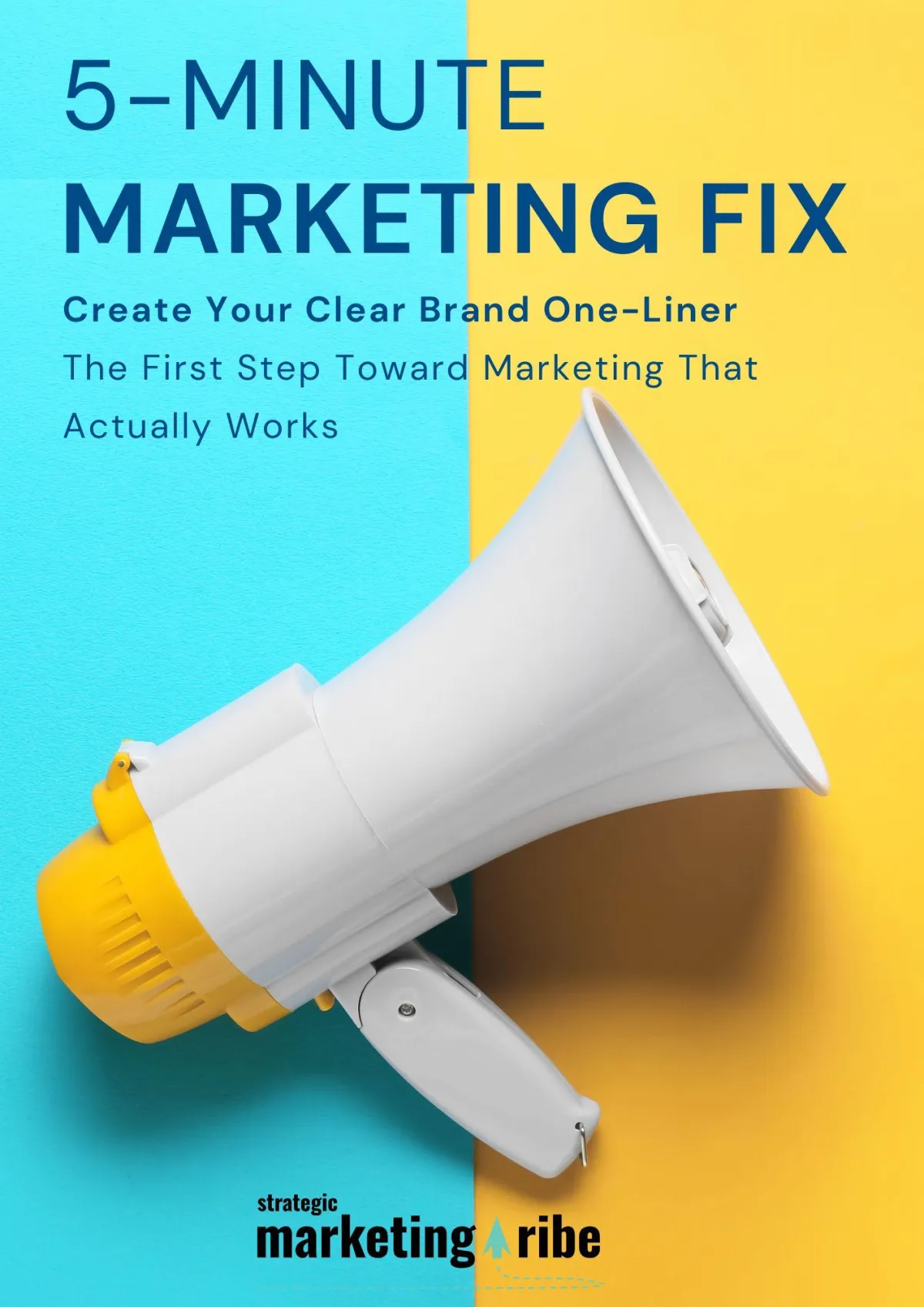
👉 If you are trying to win at social media by simply posting more content, you are just feeding a highly toxic algorithm. You have to get prospects off the platform and onto your own website immediately. Download the 5-Minute Marketing Fix to spot exactly where your messaging is failing to capture attention, so you can build a funnel you actually control.
Table of Contents:
Why Mark Zuckerberg Is Desperately Trying To Redefine The Word "Addictive"
Why Did The Billionaire Try To Rewrite The Dictionary?
What Was The Algorithm Actually Trying To Do?
Why Did They Bring Back The Plastic Surgery Filters?
How Do You Market Your Business On A Rigged Platform?
1. Why Big Tech Ignores Billion Dollar Fines While Your Small Business Cannot
2. Content Marketing Strategy Framework Every Small Biz Needs
3. The AI Doom Loop: Why Massive Corporate Layoffs Are Actually Great For You
4. Positioning by Al Ries and Jack Trout Summary: Why Better Never Wins
5. AI Slop Is Killing Trust Online. What Now?
1. What is the New Mexico social media trial about?
2. How did Mark Zuckerberg respond to claims that his platforms are addictive?
3. What internal metric did Meta prioritize above all else?
4. Why did Meta lift the ban on plastic surgery filters?
5. What does the $375 million verdict mean for small business marketing?
Why Did The Billionaire Try To Rewrite The Dictionary?
When your entire multi-billion dollar business model relies on keeping human beings glued to a glowing rectangle while they ignore their actual children, you have to be very careful about the vocabulary you use under oath.
During the deposition, a prosecutor flatly asked Zuckerberg to confirm a very simple fact: for over 15 years, users have repeatedly told his company that they find the products to be deeply addictive. The evidence was presented via internal company communications stretching all the way back to 2008. But the CEO completely refused to accept the premise.
He told the court that he thinks people just use the word "addictive" colloquially. He stated that addiction is not what his company is "trying to do" with the products, and it is not how he thinks they work.
He wanted the jury to believe that billions of people simply chose to stare at their phones for six hours a day by pure, magical coincidence. But the spreadsheets that the state of New Mexico forced him to hand over told a completely different, much more profitable story.
What Was The Algorithm Actually Trying To Do?
If you want to know what a massive tech corporation truly values, you have to completely ignore their polished press releases and look directly at the math they try to hide from the government.
While Zuckerberg desperately tried to distance himself from the medical definition of addiction, he immediately conceded a far more damaging point. He admitted that he explicitly set goals for his employees to aggressively increase the amount of time teenagers spent on the platform. Amid massive efforts to expand business revenue, the ultimate, overriding corporate metric was always maximizing "time spent."
The algorithm does not care if the content you are viewing is an educational cooking video or a conspiracy theory actively destroying your mental health. It only cares if the content prevents you from blinking.
And if you want to see exactly how far they were willing to push that metric, you just have to look at what happened when human safety directly threatened their quarterly revenue.
Why Did They Bring Back The Plastic Surgery Filters?
When forced to choose between protecting vulnerable users and maximizing daily active usage, the tech giants will always choose the metric that buys them a bigger yacht.
The trial delved into a highly controversial internal decision regarding cosmetic filters on Instagram. The company had temporarily banned filters that artificially changed people's appearances in a way that actively promoted plastic surgery. But Zuckerberg personally lifted that ban.
He told the court that he cares a lot about not "cracking down" on how people express themselves, framing the safety measure as an unfair form of censorship. He claimed he didn't find the evidence of psychological harm to be "convincing." The filters drove massive engagement, so the filters were reinstated.
The jury completely saw through the charade, hitting the company with a historic $375 million fine. So how exactly do you market your small service business on a platform that just legally proved it has the ethical compass of a cartoon supervillain?
How Do You Market Your Business On A Rigged Platform?
You have to completely stop playing by their rules.
You are currently spending thousands of Rands and hours of your life trying to appease an algorithm that was just convicted of exploiting human psychology. If your entire marketing strategy relies on trying to go "viral" or keeping users engaged on their timeline, you are fighting a losing battle against a machine designed to harvest outrage and addiction.
You cannot outsmart a multi-billion-dollar algorithm, and you should not try. Your only viable strategy is to use the platform as a brief, highly targeted escape hatch.
Your social media content must do one thing: prove your immediate value and direct the user entirely off the platform and onto an email list or a website that you actually own. But if your messaging is confusing, generic, or filled with corporate jargon, they will just keep scrolling. Get my 5-Minute Marketing Fix. It is a rapid diagnostic tool that helps you strip the noise out of your funnels, allowing you to successfully extract your ideal clients from the endless, addictive scroll before the algorithm completely drains their attention.
👉 Stop losing sales. Download the fix now.
Related Articles:
1. Why Big Tech Ignores Billion Dollar Fines While Your Small Business Cannot
If you are shocked by the blatant corporate hypocrisy of the Meta trial, you need to understand how the legal system actually works for monopolies. This article exposes how tech giants treat massive legal fines as a basic cost of doing business, and why they will gladly break the law if the resulting engagement drives up their stock price.
2. Content Marketing Strategy Framework Every Small Biz Needs
To survive on platforms designed to trap your audience in an endless scroll, you must build a system you actually control. This piece provides a highly practical framework for building an owned content marketing system, allowing you to actively nurture prospects via email and hub pages rather than renting space from a volatile algorithm.
3. The AI Doom Loop: Why Massive Corporate Layoffs Are Actually Great For You
The obsession with metrics over human well-being is not isolated to social media; it is destroying the broader tech labor market. This article explains the self-reinforcing "Doom Loop" where giants fire human workers to fund automated platforms, and why this structural collapse is your greatest strategic opening to sell actual human trust.
4. Positioning by Al Ries and Jack Trout Summary: Why Better Never Wins
If you try to compete on social media by simply being "better" or more engaging, the algorithm will bury you. This summary of the legendary marketing book explains why expanding your market share requires you to find a specific, highly focused "hole" in the consumer's mind, allowing you to extract them from the noise immediately.
5. AI Slop Is Killing Trust Online. What Now?
Social media platforms are not just prioritizing addictive content; they are actively flooding feeds with automated garbage. This post explores how generic, AI-generated content is destroying consumer trust online, and what you must do to stand out as an undeniable, authentic human expert in a sea of hallucinated slop.
FAQs:
1. What is the New Mexico social media trial about?
The New Mexico attorney general successfully sued Meta, proving that the company violated state consumer protection laws by completely failing to disclose the dangers of addiction to social media, and failing to protect minors from exploitation. The jury ordered Meta to pay a $375 million fine.
2. How did Mark Zuckerberg respond to claims that his platforms are addictive?
During a pretrial deposition, Zuckerberg aggressively rejected the premise. When confronted with internal emails discussing addictive behavior, he claimed that users simply use the word "addictive" colloquially, and stated that addiction is not what the company was trying to achieve.
3. What internal metric did Meta prioritize above all else?
Despite denying that the platform is addictive, Zuckerberg conceded in court that he explicitly set goals for his employees to aggressively increase the amount of "time spent" on the platform, prioritizing maximum screen time over the well-being of users.
4. Why did Meta lift the ban on plastic surgery filters?
The company previously banned cosmetic filters that actively promoted plastic surgery. Zuckerberg personally lifted the ban, testifying that he views the restriction as a form of "censorship." He claimed the evidence of psychological harm was not convincing enough to justify limiting user expression and engagement.
5. What does the $375 million verdict mean for small business marketing?
It proves that social media algorithms are not designed to help you build meaningful business relationships; they are designed to harvest user attention at all costs. Small businesses must focus on extracting prospects off the platforms and into owned channels, rather than wasting budgets trying to appease a rigged system.

Is your Marketing Message so confusing even your own mom doesn’t get it? Let's clarify your message—so everyone wants to work with you!




Created with clarity (and coffee)