

Real news, real insights – for small businesses who want to understand what’s happening and why it matters.
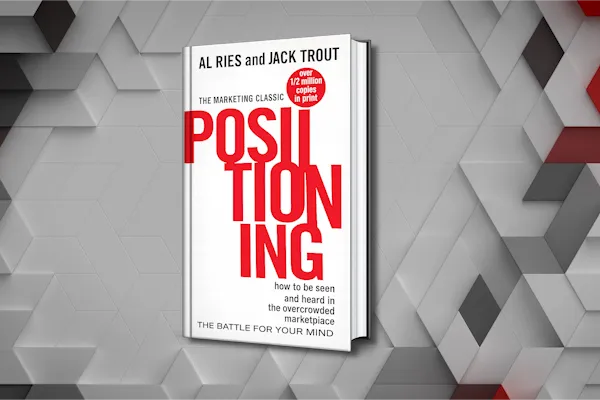
Positioning by Al Ries and Jack Trout Summary: Why Better Never Wins
By Vicky Sidler | Published 22 March 2026 at 12:00 GMT+2
Why is it that you can offer a demonstrably superior service, charge a completely reasonable price, and still lose clients to a massive, incompetent corporate giant who barely returns their phone calls?
Welcome to the painful, unfair reality of modern marketing. If you are frustrated that your brilliant service is constantly being ignored, you need to read the definitive Positioning by Al Ries and Jack Trout.
In their groundbreaking book, Ries and Trout expose the harsh truth about the modern marketplace: the battle for your clients is not actually being fought on the shelves or in the boardrooms. It is being fought entirely inside the incredibly crowded, highly defensive human mind.
If you are currently trying to win by proving that your service is simply "better" than the competition, you are walking straight into a massive advertising disaster.
Before you spend another cent on generic marketing, we need to look at why your prospects are actively ignoring you and exactly how you can use strategic positioning to permanently hack their decision-making process.
TL;DR:
In an overcommunicated society, the human mind defensively rejects complex messages; you must strip your marketing down to a single, radical oversimplification.
Claiming your service is "better" than the market leader is a guaranteed failure because the consumer's emotional mind has already assigned the "quality" slot to the incumbent.
Small businesses must find a "hole" in the market by embracing the strategy of sacrifice—you must be nothing to everyone else in order to be everything to your ideal client.
👉 If your marketing message is trying to appeal to everyone, you are completely invisible to the people who actually want to hire you. Download the 5-Minute Marketing Fix to spot exactly where your messaging is too complicated so you can start claiming your specific mental real estate.
Table of Contents:
Positioning by Al Ries and Jack Trout Summary: Why Better Never Wins
Why Is Your Brilliant Marketing Message Being Ignored?
The Fatal Mistake Of Trying To Be "Better":
How Do You Map The Consumer's Mental Ladder?
"Cherchez Le Creneau": Finding Your Profitable Hole
Why Is Your Business Name Killing Your Growth?
The Ultimate Mandate Is Complete Sacrifice
1. Ideal Client Profile: The Marketing Shortcut Small Businesses Miss
2. Content Marketing Strategy Framework Every Small Biz Needs
3. AI Search Is Replacing Google Traffic Faster Than You Think
4. How Small Businesses Can Use Hub Pages
5. AI SEO Is a Scam for Local Service Businesses
1. What is the core premise of Positioning by Al Ries and Jack Trout?
2. Why does claiming to be "better" usually fail?
3. What does "Cherchez Le Creneau" mean?
Why Is Your Brilliant Marketing Message Being Ignored?
Because we currently live in the world's first "overcommunicated society."
Your potential clients are drowning in a relentless barrage of digital noise and advertising fog. Because of this massive information overload, the prospect's brain has literally evolved into a defensive organ designed to instantly reject complexity. It aggressively screens out any new data that does not fit neatly into established, comfortable categories.
The human mind drastically prefers radical oversimplification to the agony of having to make a complex choice. If you attempt to communicate a multifaceted, nuanced value proposition, your prospect will simply ignore you. You are not being thorough; you are being invisible.
The Fatal Mistake Of Trying To Be "Better":
The most common strategic blunder for small business owners is falling into the "Better" trap.
You probably think that if you just explain how superior your service is, rational consumers will flock to you. But this is the Rationality Fallacy. Consumers are not rational; they are emotional, and they heavily gravitate toward the familiar. To the prospect, the market leader is automatically "better" simply by virtue of being the leader.
Trying to tell a prospect they are wrong about their current choice is completely futile. Once a mind is made up, it is virtually impossible to change. You cannot win by fighting the leader head-on. You have to find the "hole" they left behind.
How Do You Map The Consumer's Mental Ladder?
You have to figure out exactly where you currently stand.
Consumers use a mental framework called the "Product Ladder" to rank brands within a category. Each rung represents a brand, and the hierarchy is incredibly rigid. According to the 4:2:1 Rule, the brand on the top rung typically owns twice the market share of the second rung, and so on.
If you are not the leader, you cannot pretend the leader does not exist. That is strategic suicide. Successful follower positioning requires you to acknowledge the leader's position to create a frame of reference. Avis famously admitted they were No. 2 to Hertz, and 7-Up defined itself strictly against the cola giants as the "Uncola". They leveraged the leaders to create their own unique mental shortcut.
"Cherchez Le Creneau": Finding Your Profitable Hole
If you want to own a specific piece of mental real estate, you must embrace the strategy of sacrifice.
"Cherchez le creneau" literally means "look for the hole". In a crowded local market, you cannot afford broad appeal. You have to become "nothing to everyone else" so that you can be "everything to someone". You must identify a specific segment that the industry giants have neglected, and architect your entire business model around it.
You can own the high-price luxury slot by sacrificing foot traffic. You can own a specific gender niche by aggressively alienating the other. You can own the overnight slot by completely abandoning daytime work. But once you find that hole, how do you actually claim it?
Why Is Your Business Name Killing Your Growth?
Because your name is the very first hook in the battle for the mind.
Small service firms lacking massive advertising budgets cannot afford clever, coined names like "Qyx" or "Xerox". You must use a highly Descriptive Name that begins the positioning process immediately by stating your major benefit.
You must also avoid the Initial Trap at all costs. Calling your firm "J&L Consulting" is a strategic death sentence because the human mind works by sounds, not spellings. Initials provide absolutely no hook for the memory to grab onto.
The Ultimate Mandate Is Complete Sacrifice
If you take one lesson from this Positioning by Al Ries and Jack Trout Summary, let it be this: you must sacrifice to win.
You cannot be all things to all people. You must avoid the Line Extension trap, where you dilute your brand equity by slapping your successful name onto completely unrelated services. The rule for an ambitious service firm is absolute: one name, one position.
You cannot win a head-on battle against an established corporate giant. You must go around, under, or over them by simplifying your message to its absolute core. If your marketing copy is currently trying to explain ten different services to five different target audiences, you are completely invisible. Get my 5-Minute Marketing Fix. It helps you identify exactly where your messaging is too complex, so you can strip away the fog and secure your permanent, highly profitable position in your client's mind.
👉 Stop losing sales. Download the fix now.
Related Articles:
1. Ideal Client Profile: The Marketing Shortcut Small Businesses Miss
If Ries and Trout demand that you embrace the strategy of sacrifice, you need to know exactly who you are sacrificing for. This post shows you how to build a concrete Ideal Client Profile so you can confidently become "nothing to everyone else" and start dominating the specific mental real estate of your perfect buyers.
2. Content Marketing Strategy Framework Every Small Biz Needs
Once you have identified your specific "creneau" or hole in the market, you need a system to repeatedly hammer that position into the consumer's mind. This article gives you a practical framework for turning your new, simplified positioning statement into an actual, consistent content system across every channel.
3. AI Search Is Replacing Google Traffic Faster Than You Think
If human minds reject complexity, artificial intelligence search models reject it even faster. This post explains how the exact same rules of radical oversimplification apply to getting found online. If you want your new position to actually get seen by potential clients, you need to structure your content so AI engines can easily surface your authority.
4. How Small Businesses Can Use Hub Pages
To own your rung on the mental ladder, you have to organize your expertise so the prospect's brain doesn't have to work hard to understand you. This piece shows how to turn your core positioning message into a structured hub-and-spoke content system, guiding visitors through a completely frictionless learning path that reinforces your authority.
5. AI SEO Is a Scam for Local Service Businesses
If you are trying to out-position a massive corporate leader, you might be tempted to buy expensive, automated SEO tricks to force your way to the top. This post reinforces that you cannot beat the leader with generic software; you can only beat them by building deep, verified trust and providing a highly specific human solution that the giant cannot offer.
FAQs:
1. What is the core premise of Positioning by Al Ries and Jack Trout?
The Positioning by Al Ries and Jack Trout Summary reveals that marketing is not a battle of products, but a battle of perceptions fought inside the consumer's mind. To succeed in an overcommunicated society, businesses must secure a specific, oversimplified mental outpost rather than trying to prove they are objectively "better".
2. Why does claiming to be "better" usually fail?
Due to the Rationality Fallacy, consumers make emotional decisions based on familiarity rather than objective quality. The consumer's mind has already assigned the "quality" slot to the incumbent market leader. Telling a prospect they are wrong about their current choice usually results in defensive rejection.
3. What does "Cherchez Le Creneau" mean?
It translates to "look for the hole". Ries and Trout argue that a small business must find an unoccupied segment in the market that industry giants have neglected. This requires the strategy of sacrifice—narrowing your focus to dominate a specific niche, such as age, gender, price, or time of day.
4. Why are initials a terrible name for a small business?
Initials (like "J&L Consulting") are a strategic death sentence for unrecognized firms because the human mind works by sounds, not spellings. Initials provide no memorable "hook". Unless you have decades of dominance like IBM, you must use a Descriptive Name that instantly states your major benefit.
5. What is the Line Extension Trap?
The Line Extension Trap occurs when a business dilutes its brand equity by using a successful name for a completely new or unrelated service. Because the consumer's mind views a brand as a singular concept, attaching multiple distinct values to one name creates a fuzzy, confusing mental image that weakens the brand.


Strategic Marketing Tribe helps established service businesses turn underperforming marketing into more predictable growth with the Failure-Proof Marketing System.






Created with clarity (and coffee)