
Real news, real insights – for small businesses who want to understand what’s happening and why it matters.

AI Search Is Replacing Google Traffic Faster Than You Think
By Vicky Sidler | Published 19 December 2025 at 12:00 GMT+2
Google used to be your website’s best friend. Now it’s that friend who still comes to your party but doesn’t bring anyone with.
In a recent webinar, Todd Sawicki from Gumshoe.ai dropped a stat that should make every small business sit up: over 70% of Google searches now result in zero clicks. That means people ask Google a question, get the answer directly on the results page—and never visit your site.
At the same time, AI tools like ChatGPT, Perplexity, and Gemini are exploding. They now get over 3 billion queries a day. That’s right—per day… And unlike search engines, these tools don’t show a list of links. They give answers. Which means if your brand isn’t part of those answers, you disappear.
Welcome to the new customer acquisition game.
TL;DR:
70% of Google searches no longer lead to clicks
AI tools are becoming the next big search engines
These AI tools recommend businesses based on your website content
To show up, you must regularly publish FAQs, product pages, and how-to guides
YouTube descriptions and transcripts are gold mines for AI visibility
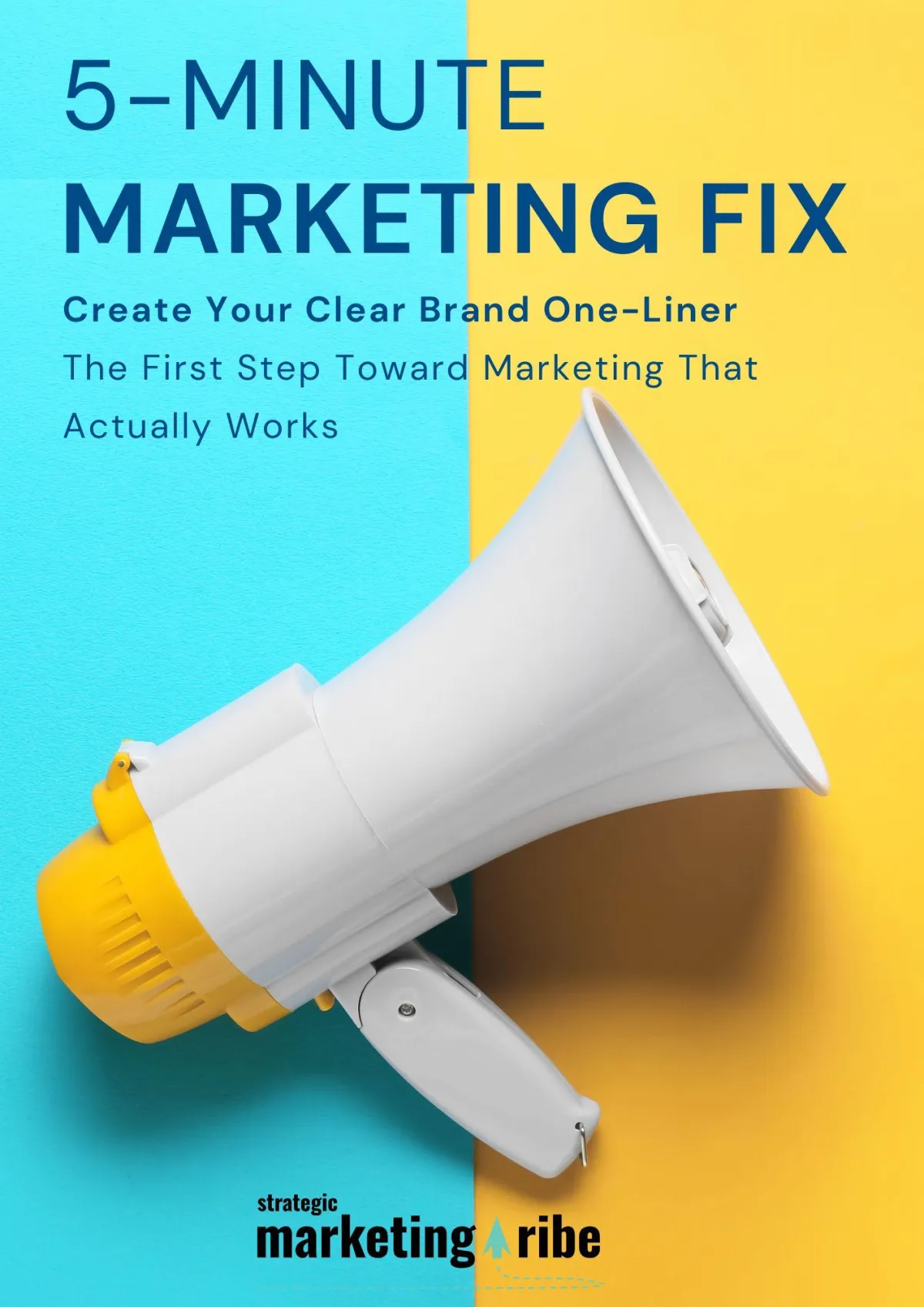
👉 Need help getting your message right? Download the 5-Minute Marketing Fix
Table of Contents:
AI Search Is Replacing Google Traffic Faster Than You Think
Search Has Changed. Quietly, But Completely.
Your Website Still Matters—A Lot:
It’s Not Just Your Site. Here’s Where Else AI Looks:
Don’t Worry About SEO Rankings (For Once):
You’re Not Optimising for Search. You’re Training a Sales Rep.
Action Plan for Small Businesses:
1. OpenAI is losing $7.77 for every $1 it earns
2. Map Content to the Customer Journey for Better Results
3. 10 Best Content Types for Small Business Marketing
4. Content Marketing Boosts Revenue More Than Ads
5. Define Your Brand Voice and Build Instant Recognition
Frequently Asked Questions About AI Search and Content Visibility
1. What is AI search and how is it different from Google?
2. What does "zero-click search" mean?
3. If users aren’t clicking, how can my business still get found?
4. How often do I need to update my website content?
5. What kinds of pages do AI tools look at on my site?
6. Do I still need SEO if AI doesn’t care about rankings?
7. What other sites does AI use to form its answers?
8. How can I tell what AI tools are saying about my brand?
Search Has Changed. Quietly, But Completely.
Sawicki compares AI search to walking into a shoe store and asking for help. Traditional Google search just dumps 10 boxes of shoes at your feet. AI acts like a smart salesperson who says, “Are you running a marathon or hiking the Alps?” and gives a personalized answer.
AI doesn’t just spit out links. It tries to understand you. That’s why keywords alone won’t cut it anymore. Instead, AI tools look for useful, structured information written for real people.
And that’s the part most businesses are missing.
Your Website Still Matters—A Lot:
You’d be forgiven for thinking AI doesn’t care about your site. It absolutely does. Gumshoe analyzed 10 million AI chats and found that 30 to 40% of sources cited by AI tools came from brand websites.
But not just any pages. They’re looking at:
Product description pages (PDPs)
FAQs
Knowledge base articles
Blog posts
How-to guides
If your site is full of fluff, salesy jargon, or outdated content, the AI models won’t find anything useful. And when they can’t find something? They make it up. This is called hallucination. Not the fun kind.
If you want AI tools to talk about you properly, you need to write things the way you’d train a new staff member: clearly, plainly, and repeatedly.
It’s Not Just Your Site. Here’s Where Else AI Looks:
Gumshoe’s research shows AI tools pull answers from a mix of sources. These include:
YouTube (especially transcripts and descriptions)
Reddit and Quora
Wikipedia
Research journals (especially in health and wellness)
Business directories (Google Maps, LinkedIn, Marriott.com, etc.)
The AI model matters too. For example:
Perplexity leans toward eCommerce and product content
ChatGPT favors business profiles and real-world services
Gemini (Google’s model) loves directories and YouTube
So if you’re running a YouTube channel, publish your videos with a clear description and turn on transcripts. AI isn’t watching your videos. It’s reading them.
Don’t Worry About SEO Rankings (For Once):
One of the wildest findings? AI doesn’t care if your site ranks on page one of Google.
Up to 90% of the links AI tools reference in answers are buried beyond page two. AI doesn’t need popularity. It’s hunting for what’s most correct, not what’s most clicked.
This is good news. You don’t need backlinks from tech blogs or viral posts to show up in AI. You need clarity.
Fresh Content Wins:
Here’s the catch: your content needs to be current. Gumshoe found that 51% of what AI tools reference is less than 90 days old. The average age of a cited article? Just 86 days.
That number is dropping fast.
Soon, if you want to stay visible in AI-generated answers, you’ll need to update your content monthly or even weekly. Not because AI is impatient. But because its memory is short. If you stop publishing, you fall out of the loop.
You’re Not Optimising for Search. You’re Training a Sales Rep.
Sawicki puts it perfectly. Think of AI tools as salespeople who represent your brand when you’re not in the room. Would you send them out without training?
Every FAQ you write, every product page you update, every blog you publish—these are how you teach AI to talk about your brand. If you don’t tell them what to say, they’ll guess. Badly.
Worse, they’ll say nothing at all and recommend your competitor.
Action Plan for Small Businesses:
Here’s what to do starting today:
Write FAQs for every product or service
Update your blog at least once a quarter
Create how-to guides and knowledge base articles
Post explainer videos on YouTube with full descriptions and transcripts
Avoid clever wording—state the obvious
Repeat the exact product name often (don’t assume the model will figure it out)
And yes, check what AI is already saying about you. Sawicki warns that AI will give different answers to different users. If you ask about your own business on ChatGPT, it might be flattering. That’s because it knows who you are. What matters is what it says to strangers.
Clarity Always Wins:
AI search is here, and it’s changing how people discover and trust your business. You don’t need fancy hacks. You just need to be useful, clear, and consistent.
And if you’re struggling to explain what you do in one simple sentence, start there.
Get my 5-Minute Marketing Fix and learn how to describe your business clearly enough for humans and AI.
Related Articles:
1. OpenAI is losing $7.77 for every $1 it earns
AI tools might be dominating today, but their future is uncertain. This post explains why owning your content is safer than relying on platforms you can’t control.
2. Map Content to the Customer Journey for Better Results
If AI search is the new salesperson, this article helps you write the right pitch for every stage of the customer journey using the Marketing Hourglass.
3. 10 Best Content Types for Small Business Marketing
Wondering what types of content actually help AI talk about your brand correctly? Start here.
4. Content Marketing Boosts Revenue More Than Ads
Nervous about losing clicks from Google? This post proves that good content still wins—and explains how to turn readers into leads without relying on ads.
5. Define Your Brand Voice and Build Instant Recognition
If AI tools are now your brand reps, your tone needs to be consistent. This post shows how to build a voice that sticks.
Frequently Asked Questions About AI Search and Content Visibility
1. What is AI search and how is it different from Google?
AI search uses tools like ChatGPT or Perplexity to answer questions directly instead of showing a list of links. It acts more like a virtual assistant than a traditional search engine.
2. What does "zero-click search" mean?
It means users get the answer they need directly on the search page or inside an AI tool, without clicking through to your website.
3. If users aren’t clicking, how can my business still get found?
You need to make sure AI tools are pulling your content into their answers. That means publishing useful, structured content like FAQs, product pages, and blog posts regularly.
4. How often do I need to update my website content?
Most AI models reference content that’s less than 90 days old. Updating quarterly is the minimum. Monthly is better. Weekly is ideal.
5. What kinds of pages do AI tools look at on my site?
They prioritise product description pages, FAQs, blog posts, knowledge bases, and how-to articles. These help the AI understand what you sell and who it helps.
6. Do I still need SEO if AI doesn’t care about rankings?
Yes, but the focus shifts. Instead of backlinks and keywords, AI looks for accuracy, clarity, and structure. It's more about being useful than being popular.
7. What other sites does AI use to form its answers?
YouTube is a big one. So are Reddit, Wikipedia, business directories, academic journals, and community forums. Make sure your brand shows up in a few of those too.
8. How can I tell what AI tools are saying about my brand?
You can’t just ask them directly—they personalise responses based on who’s asking. Tools like Gumshoe.ai simulate real users to help you see what AI says to strangers.
9. What if AI gets it wrong or makes things up?
That’s common. If you don’t publish the right information, AI will guess. The only way to reduce hallucinations is to clearly and repeatedly publish answers to likely questions.
10. Where should I start if this feels overwhelming?
Start by writing one clear sentence about what you do.Download the 5 Minute Marketing Fix to get help with that first step. Clarity makes everything else easier.

Strategic Marketing Tribe helps established service businesses turn underperforming marketing into more predictable growth with the Failure-Proof Marketing System.



Created with clarity (and coffee)