

Why Service Businesses Get Stuck in Feast or Famine (And How to Fix It)
By Vicky Sidler | Published 2 September 2026 at 12:00 GMT+2
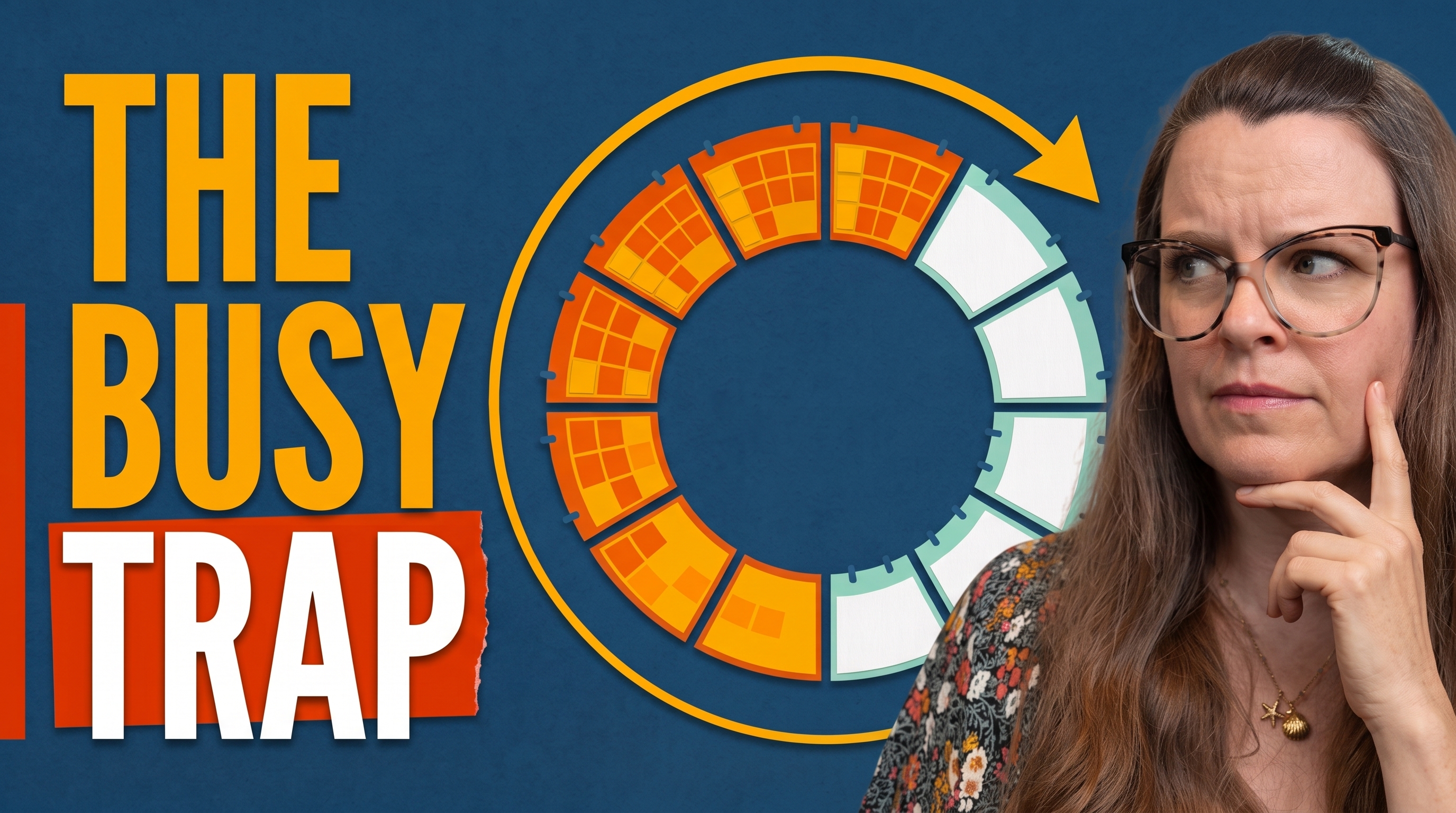
There is a very particular kind of business panic that only arrives immediately after a good month.
You have just finished a massive run of client work. The calendar is finally starting to open up. You take a deep breath, look ahead at the next four weeks, and notice something deeply unhelpful: there is nothing there. Not “nothing confirmed yet.” Nothing in progress. No decent conversations moving forward. No proposals likely to land. No reassuring reason to believe next month’s revenue will look anything like this month’s.
So naturally, you begin an emergency marketing program. You post on LinkedIn for the first time in weeks. You consider running ads. You rewrite the homepage at 11:40 p.m. You message a former client with an aggressively casual, “Hey! Just thought I’d check in…” that both of you know is not casual at all.
Then, eventually, a lead magically appears. You get busy again. The panic dissolves. The marketing stops entirely. And a few months later, you are standing in exactly the same place, wondering why this keeps happening.
TL;DR
Feast-or-famine leads are not proof that you are lazy, bad at marketing, or cursed by the LinkedIn algorithm.
They happen when your referrals, website, content, lead generator, and follow-up operate as separate activities instead of one connected system.
“Just be more consistent” is terrible advice. Consistency without a system is just reliably doing disconnected things that yield unreliable results.
👉 Find out which part of your lead system is missing. Take The Failure‑Proof Marketing Test and get a practical diagnosis in just two minutes.
Table of Contents:
Why Service Businesses Get Stuck in Feast or Famine (And How to Fix It)
The Good Month That Causes the Next Bad Month
Why “Just Be Consistent” Is Terrible Advice
The Referral Trap (And The "Wrong Lead" Problem)
Stop Letting a Full Calendar Fool You
1. Why Your Marketing Isn't Working (And It's Not Because You're Lazy)
2. Your Marketing Isn't Broken. One of These Three Things Is
3. What to Fix First When Your Marketing Stops Working (The Order Matters)
4. Why Your Marketing Feels Like a Second, Unpaid Job (And 5 Steps To Fix It)
5. Stop Asking AI for a Marketing Strategy Until You Watch This
1. Why is relying on referrals a dangerous marketing strategy?
2. Why doesn't "posting consistently" generate steady leads?
3. What does a working marketing system actually look like?
4. How do I stop getting the "wrong" leads?
5. What is the most dangerous moment for a service-based business?
The Good Month That Causes the Next Bad Month
The most dangerous moment in a service business is not when you are quiet; it is when you are busy enough to completely stop marketing.
When a lead or two arrives, the relief is immediate. You get busy delivering the work. The monthly email does not go out. The follow-up gets skipped. The website keeps existing, technically, but nobody is driving people toward it. That feels completely fine because this month's revenue is still landing! But while you are busy, the pipeline is quietly, aggressively emptying.
The people who were interested but not ready stop hearing from you. Past clients forget the exact problem you solve. Warm prospects drift toward a competitor who actually kept showing up. When the work eventually ends, you need results immediately, so you launch a frantic, exhausting campaign and hope something saves you before the calendar becomes a horror movie.
The problem is not that you stop marketing when you get busy. The problem is that the rest of your business stops marketing when you do.
Why “Just Be Consistent” Is Terrible Advice
Service founders get told to “just be more consistent” so often that it should come printed on a mug with a stock photo of a sunset.
It is also incredibly incomplete advice. You can post consistently, run ads consistently, and email consistently—and still get highly inconsistent leads every single month. Consistency without a system is just reliably doing disconnected things.
You can post consistently and attract people who will never buy. You can publish content consistently while your website sends every interested visitor into a maze of vague pages and abandoned contact forms. Telling an exhausted service founder to post more consistently is like telling a restaurant owner to cook more consistently when there is no menu, no ordering process, and no way to take payment. Technically they could produce more food, but the restaurant would still be a logistical crime scene!
A real system creates consistency by making the right marketing actions easier to repeat. It connects your offer, your message, your website, your lead generator, and your traffic sources into one cohesive path. Without that path, every single lead depends on you personally remembering to start from scratch.
Before moving on:
If you want to know exactly where your system is breaking down—not in theory, but specifically for your business—The Failure-Proof Marketing Test will give you a real answer in just a few minutes.
Your Marketing Is Operating in Fragments
Most feast-or-famine businesses are not doing nothing. They are doing quite a lot, which is exactly what makes it so frustrating.
They have a website, referrals, possibly some content, maybe a newsletter list, and a lead magnet with a very tasteful Canva cover. But none of these things are connected.
Referrals arrive, but there is no clear referral message or repeatable process, so the timing is entirely up to other people remembering the right thing at the right moment. Content exists, but there is no path from a useful post to lead capture, so interested readers simply nod and disappear. The website gets traffic, but the homepage says something vague like "we deliver innovative solutions for sustainable growth"—which is certainly a sentence, but it doesn't tell a visitor whether you are an accountant, a consultant, a roofing firm, or an unusually enthusiastic cult.
You do not have one marketing engine with a few loose screws. You have five separate activities living in different rooms and refusing to speak to each other. That is why your leads feel random.
The Referral Trap (And The "Wrong Lead" Problem)
Referrals are warm, credible, and often bring your best clients. They are also not a scalable plan.
If referrals are your entire client-acquisition strategy, you are trusting your future revenue to other people remembering that you exist, exactly what you do, who to send to you, and to do all of that at precisely the moment someone needs help. That is a beautiful system if your business strategy is "hope Susan remembers me at the right dinner party." A referral source only becomes dependable when it has structure: a clear statement of the expensive problem you solve, and a reason for past clients to introduce you at the right moment.
But here is where it gets counterintuitive: sometimes the feast-or-famine pattern is hidden by actual activity. You have form submissions, downloads, and people booking calls. The leads are just wrong.
Around 61% of marketers say generating high-quality leads is their greatest challenge. That means most of your marketing effort may be attracting people who are never realistically going to buy. A broad lead magnet like "10 Tips to Grow Your Business" will attract almost anyone who wants their business to grow, which is most of humanity and several people who are apparently just collecting PDFs. A sharper lead generator speaks to a specific, expensive problem—something like "The 90-Day Cash-Flow Risk Audit for Professional Firms With Unpredictable Revenue." Those offers attract the right people and gently bore the wrong ones into leaving. That is not exclusionary; it is highly efficient.
The Leads You Never Nurtured
Many of your best future clients are not ready when they first find you. They have budget timing, internal approval processes, and a very human tendency to hope the problem disappears if they ignore it aggressively enough.
If your only response to a new lead is "book a call now," you lose everyone who needs a little more time and trust. Lead-nurturing programs have been associated with 50% more sales-ready leads at a 33% lower cost. The principle is simple: people who are not ready today can still become clients later if you keep giving them relevant reasons to trust you.
Nurture is not blasting a generic, AI-written email every Tuesday until someone blocks you. It is a useful sequence of touchpoints that answers questions, demonstrates expertise, and makes the next step feel natural when their moment arrives. The important thing is that this keeps happening while you are busy delivering client work.
Stop Letting a Full Calendar Fool You
The goal of a system is not to get a lead every day. The goal is to stop discovering your pipeline is empty only after you have already run out of work.
You do not need to become a full-time content creator. You do not need to force yourself to post through burnout. And you certainly do not need twelve software tools, two freelancers, and a chatbot named Calvin.
You need a system where your offer, website, lead generator, nurture sequence, and traffic sources each have a different job, but actively work together. Because feast-or-famine leads are not what happens when you are lazy or inconsistent. They are what happens when every future lead depends on you personally remembering to start from scratch. Consistency is what a working system looks like from the outside; it is not something you should have to painfully manufacture from the inside.
Take The Failure-Proof Marketing Test right now. It takes two minutes and will instantly show you exactly where your system is breaking down before you waste another dime on disconnected tactics.
👉 Stop starting from zero. Take the test today.
Related Articles:
1. Why Your Marketing Isn't Working (And It's Not Because You're Lazy)
If you are relieved to learn that your feast-or-famine cycle is a structural issue and not a character flaw, this article dives deeper into why improvising a business model in public guarantees exhaustion, and how to build a real foundation instead.
2. Your Marketing Isn't Broken. One of These Three Things Is
If you realize your marketing is operating in disconnected fragments, this piece breaks down the three specific bottlenecks (Presence, Offer, and Flow) that are likely causing your issues, complete with brutal 5-second diagnostic tests.
3. What to Fix First When Your Marketing Stops Working (The Order Matters)
If you are ready to connect the fragments but don't know where to start, this article explains the exact 4-part sequence of leverage you must follow to avoid amplifying a broken foundation.
4. Why Your Marketing Feels Like a Second, Unpaid Job (And 5 Steps To Fix It)
If you are exhausted by random acts of marketing and want to see how a complete strategy-first framework brings order to the chaos, this article lays out the exact 5-step system to reclaim your sanity.
5. Stop Asking AI for a Marketing Strategy Until You Watch This
If you are tempted to use an AI tool to quickly connect your marketing fragments, this article breaks down why generic AI advice will confidently flatter you straight into the wrong strategy.
FAQs:
1. Why is relying on referrals a dangerous marketing strategy?
Referrals are warm and credible, but they are not a scalable plan. Relying solely on referrals means you are trusting your future revenue to other people remembering exactly what you do, who to send to you, and doing so at the exact moment someone needs help.
2. Why doesn't "posting consistently" generate steady leads?
Consistency without a system is just reliably doing disconnected things. You can post consistently but attract people who will never buy, or send them to a confusing website that fails to capture their information. Consistency must be applied to a connected buyer journey, not just random tactics.
3. What does a working marketing system actually look like?
A working system connects five distinct parts: a clear offer, a targeted message/website, a highly specific lead generator, an automated nurture sequence to keep leads warm, and one or two consistent traffic sources.
4. How do I stop getting the "wrong" leads?
You must sharpen your lead generator and positioning. Broad lead magnets attract broad audiences (who usually have no budget). A highly specific, problem-focused offer attracts the right people and gently bores the wrong people into leaving, which is highly efficient.
5. What is the most dangerous moment for a service-based business?
The most dangerous moment is not when you are quiet; it is when you are busy enough to completely stop marketing. When you get busy delivering work and pause your lead generation and nurture efforts, you are quietly scheduling your next famine.