
StoryBrand Marketing Agency
Is Your Marketing Message So Confusing Even Your Own Mom Doesn’t Get It?
We're an award-winning StoryBrand Marketing Agency that helps Service Businesses clarify their messaging so everyone wants to work with you!
✓ Build trust and authority in your industry
✓ Connect with CLIENTS WHO ACTUALLY GET IT
✓ MARKETING THAT FEELS NATURAL
WATCH THIS VIDEO
If your message isn’t landing—and the right clients aren’t showing up—it’s not your fault. Most service business owners are great at what they do. They just struggle to talk about it clearly.
In this video, I’ll walk you through how we fix that using the StoryBrand Framework, plus how to get started with either DIY or done-for-you options.

WHAT HAPPENS WHEN YOUR MESSAGE ISN’T CLEAR
Can your mom explain what you do?
Can you easily explain what you do?
Can anyone?
If not, that's the problem we fix.
Because when people don’t understand what you do, they move on. You end up working harder just to stay in the game.
You’re always re-explaining yourself
Your website doesn’t convert visitors into clients
Your leads aren’t the right fit
Referrals become scarce
Marketing is frustrating as all hell
But it doesn’t have to be this way. A clear message makes all of that easier. It’s the difference between chasing leads—and attracting the right ones.
You might not believe it yet, but marketing can actually be the opposite of frustrating when you're doing it right.
MAKE YOUR MARKETING Simpler
Whether you want to learn the system or hand it over completely, the goal is the same: clear messaging that brings in better clients with less effort.

A DIY SYSTEM THAT’S SIMPLE TO FOLLOW

for weekly group coaching, templates, and a proven system that fits seamlessly into your week—without taking over your life.
.

COACHING THAT MEETS YOU WHERE YOU ARE
Want someone to walk you through it? Get 1:1 or team coaching to clarify your message and apply the StoryBrand Framework to your business in real time.
.

DONE-FOR-YOU MARKETING
Too busy to do it yourself? We’ll build your messaging, write your copy, create the assets you need, and handle your StoryBrand marketing—so you can stay focused on running your business.
HI, I'm Vicky Sidler
And I’VE BEEN WHERE YOU ARE

I know how it feels to stare at your marketing and think, “Why isn’t this working?” That's why I created a StoryBrand Marketing Agency.
All in all, your business isn’t just another brick in the wall—it’s something special. Your story matters, and I’m here to help you share it in a way that feels real, connects with people, and gets results.
As a certified StoryBrand Guide, I specialize in turning complicated ideas into clear, compelling messages that resonate with your audience.
With a background in journalism, I’ve spent decades telling stories that matter and crafting content people want to read.
I’ve developed a proven system to help businesses like yours cut through all the AI trash that's out there and build genuine connections with their audience.
Your story isn’t just important—it’s the reason people will choose your business. Let’s make sure it’s heard loud and clear by the people who need it most.
And sorry if I got Pink Floyd stuck in your head just now...
Hear Directly from DONALD MILLER
In this short clip, StoryBrand’s founder Donald Miller explains why clear messaging and a simple marketing plan change everything.
Donald shares why newsletters are back, what a full StoryBrand campaign includes, and how a certified guide helps you focus on what actually works—without wasting money or time.
Watch to see how working with a StoryBrand Certified Guide can make a measurable difference for your business.
EVERYTHING STORYBRAND, ALL IN ONE PLACE
Whether you need help with strategy, websites, content, or SEO, I offer the full range of StoryBrand marketing services—done with you or done for you.
StoryBrand Framework
StoryBrand Wireframe
StoryBrand Websites
StoryBrand SEO
StoryBrand Video
StoryBrand Copywriting
StoryBrand Email Sequences
StoryBrand Marketing Funnels
StoryBrand Workshops
StoryBrand Consulting
StoryBrand PPC
StoryBrand Lead Generation
StoryBrand
Social Media
StoryBrand Strategy
StoryBrand Content Marketing
StoryBrand Local Service
StoryBrand Coaching
MARKETING THAT DOESN’T TAKE OVER YOUR LIFE
Whether you want to build it yourself or hand it off completely, as a StoryBrand Marketing Agency, we’ll give you a clear message and a simple system that actually works.

1
BOOK A COFFEE CHAT
This is a no-pressure, non-sales call where we discuss what’s working, what’s not, and where you want to go.
.
2
CHOOSE YOUR PATH
Get hands-on support through the StoryBrand Course, 1:1 or team coaching, or let me build the entire marketing system for you—messaging, website, emails, and more.
.
.

3
FIX YOUR MARKETING
Walk away with a message that resonates, a plan that’s easy to follow, and marketing that works while you sleep and finally delivers results.
COFFEE’S ON US (OK, NOT REALLY)
But we’re serious about helping you connect with your audience. Let’s grab a coffee (on Zoom) and chat about your marketing goals.
Wondering how to simplify your message? Let’s talk.
Ready to stand out in an AI-saturated world? We’ve got ideas.
Just need clarity? We’ll help you see the big picture.
This isn’t a sales call – just a friendly, low-pressure chat. At the very least, you’ll walk away with some cool ideas you can try on your own.
SCHEDULE YOUR COFFEE CHAT WITH US TODAY
FIXING YOUR MARKETING SHOULDN’T FEEL IMPOSSIBLE
Most small business owners aren’t marketers—they just want to explain what they do in a way that makes people care.
But when the message isn’t clear, everything else gets harder: websites don’t convert, leads go cold, and social posts fall flat.
You might worry that getting it right will take too much time, cost too much money, or feel like just another online course you’ll never finish.
That’s why I offer three simple paths: do-it-together support through the StoryBrand Course, 1:1 and team coaching, or done-for-you services where I build your full funnel myself.
You’ll get clear messaging, practical templates, and real support—so your marketing finally works and your business actually grows.
YOUR QUESTIONS, ANSWERED
We know marketing can feel overwhelming, and you probably have questions. That’s why we’ve put together answers to the things people ask us most.
What makes Strategic Marketing Tribe different from other StoryBrand marketing agencies?
We’re the StoryBrand marketing agency that skips the boring "corporate speak." We blend the power of StoryBrand with strategic marketing solutions to craft content that feels human, genuine, and impossible to ignore.
How can your strategic marketing solutions benefit my business?
Our strategic marketing solutions simplify your message, clarify your brand story, and help you connect with your ideal customers. It’s marketing that makes sense and gets results – no jargon, no gimmicks, just growth.
What is StoryBrand, and why does it matter?
Think of StoryBrand as a cheat sheet for marketing clarity. It helps you explain what you do in a way that makes people stop, listen, and say, “Oh, I get it.” We use it to create marketing that feels human and that your audience will actually enjoy reading.
Do I need to be familiar with StoryBrand to work with you?
Not at all! Whether you’re a StoryBrand superfan (like us!) or have no idea what it is, we’ll walk you through everything. We’re here to make the process simple, clear, and (dare we say) fun.
How do I know if this is right for my business?
If people keep saying “I don’t really get what you do,” or you’re getting the wrong kind of leads, it’s a sign your message needs work. That’s what we fix.
What if I don’t have time to take a course?
The course is built for time-strapped business owners. You get short lessons, plug-and-play templates, and live support so you’re never stuck or overwhelmed.
What’s the difference between the course and the done-for-you service?
The course gives you training, tools, and weekly support so you can do it yourself. The done-for-you option means I build your whole funnel for you.
How long does it take to see results?
Most people see clearer messaging and better engagement within a week of applying the one-liner. Bigger results (like leads and conversions) follow as you apply it across your marketing.
What if I’ve already tried StoryBrand and it didn’t work?
Many people try to apply StoryBrand on their own and miss key parts. This course walks you through it step-by-step, with real examples and live feedback from a Certified Guide.
STORY, MEET STRATEGY
Let’s make marketing feel less robotic and more real. Find resources from a StoryBrand Marketing Agency that bring your message—and your business—to life.
AI Content Does Not Hurt Google Rankings New Study Finds
By Vicky Sidler | Published 30 December 2025 at 12:00 GMT+2
At this point, AI content warnings are starting to sound like urban legends.
Do not use AI, or Google will punish you.
AI content will tank your rankings.
Google can tell if a robot wrote your blog, and it will not be happy about it.
Meanwhile, many of the pages already ranking on page one are quietly using AI every day and doing just fine.
A new large-scale study has now put real numbers behind what many small business owners have suspected for a while. AI content is not the SEO villain it has been made out to be.
According to research published by Ahrefs, analyzing 600,000 web pages, Google neither rewards nor punishes content simply because AI was involved in creating it.
TL;DR:
Most pages ranking on Google already use AI in some form
Google does not penalise AI content
Google does not reward AI content either
Fully AI-written pages rarely rank number one
Helpful content still matters more than how it was made
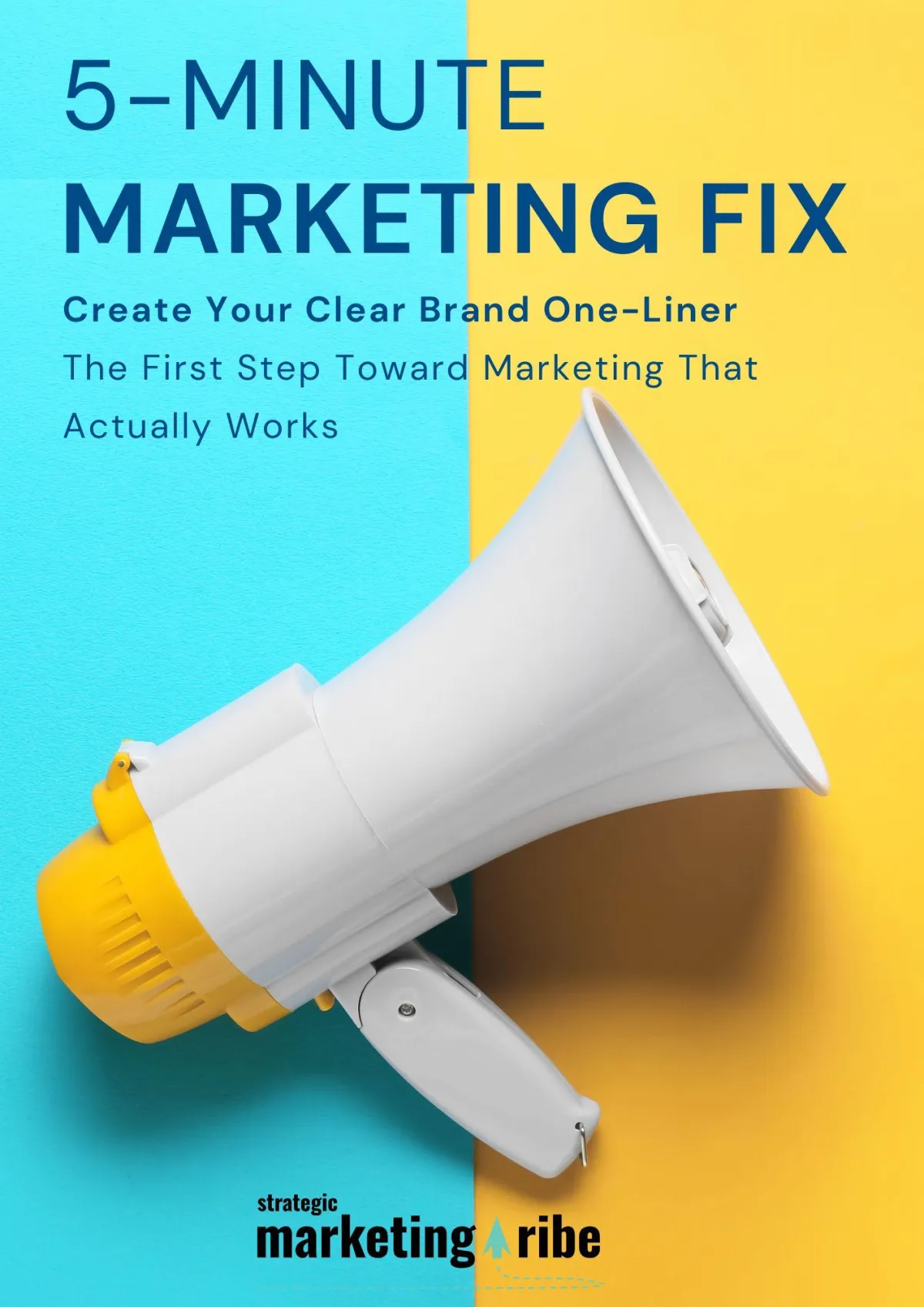
👉 Need help getting your message right? Download the 5-Minute Marketing Fix.
Table of Contents:
AI Content Does Not Hurt Google Rankings New Study Finds
What This Study Actually Looked At:
Almost Everything Ranking Uses AI:
Google Does Not Care How Content Is Made:
Why Pure AI Content Struggles at the Top:
What This Means for Small Business Owners
The Real SEO Risk No One Talks About:
A Smarter Way to Use AI in Your Marketing:
1. AI Search Is Replacing Google Traffic Faster Than You Think
2. OpenAI’s $27B Loss Could Tank the Whole AI Industry
3. Schema Markup Boosts SEO Without Extra Content
4. Content Marketing Boosts Revenue More Than Ads
5. Ideal Client Profile The Marketing Shortcut Small Businesses Miss
Frequently Asked Questions About AI Content and Google Rankings
1. Does Google penalize AI-generated content?
2. Can Google tell if my content was written by AI?
3. Is fully AI-written content safe to publish?
4. Why do number one ranking pages usually use less AI?
5. Should small businesses stop using AI for content?
6. What kind of AI use is best for SEO?
7. Can AI help with SEO tasks beyond writing?
8. What does Google really care about when ranking content?
What This Study Actually Looked At:
Before we jump to conclusions, it helps to understand what was tested.
The Ahrefs team pulled 100,000 random keywords from their database. For each keyword, they analyzed the top 20 ranking pages. That created a dataset of roughly 600,000 individual web pages.
Each page was then run through an AI content detector to estimate how much of the content appeared to be human-written, AI-written, or a mix of both.
This matters because AI detection is not perfect. These tools work on probabilities, not certainty. Still, when you analyze hundreds of thousands of pages, patterns start to appear.
Almost Everything Ranking Uses AI:
Here is the first finding that makes SEO fearmongers uncomfortable.
Only 13.5 percent of top-ranking pages were classified as purely human-written.
That means more than 86 percent of pages ranking in the top results showed some level of AI assistance.
Most of that use was not robots typing full blog posts. It was far more boring and far more normal.
AI was used for spelling checks, editing, restructuring paragraphs, refining titles, improving clarity, and challenging ideas. Even tools like Google Docs now include built-in AI support.
If Google were actively punishing AI content, these numbers would not exist.
Google Does Not Care How Content Is Made:
This is where things get very clear.
The study measured the relationship between how much AI was used on a page and where that page ranked on Google.
The result was a correlation of 0.011.
In plain English, that is basically zero.
There was no meaningful relationship between AI usage and ranking position. Pages with more AI did not rank better. Pages with less AI did not rank worse.
This strongly suggests that Google does not use AI detection as a ranking signal.
Which lines up with what Google has been saying publicly for years.
Google has repeatedly stated that it cares about content quality, usefulness, and relevance. Not whether a human or a machine helped produce it.
Why Pure AI Content Struggles at the Top:
There was one interesting nuance in the data.
While AI content is clearly not penalized, pages ranking at number one tended to have slightly less AI-generated content than those lower down the page.
This does not mean Google is secretly punishing AI. The difference was small, and the correlation was weak.
A more likely explanation is quality.
Fully AI-generated content tends to sound generic. It repeats common ideas. It lacks lived experience, opinion, and judgment. These are the things that often separate a good page from the best page.
AI is excellent at producing average content quickly. Ranking number one usually requires something better than average.
What This Means for Small Business Owners
If you run a service-based business, this study should be a relief.
You do not need to panic about using AI tools. You do not need to hide them. You do not need to apologize for them.
You also should not expect AI alone to carry your marketing.
Here is the simple rule.
Google does not reward effort.
Google rewards usefulness.
AI can help you be clearer, faster, and more consistent. It cannot replace your understanding of your customer, your service, or the real problems you solve.
From a StoryBrand and Duct Tape Marketing perspective, AI works best as an assistant, not an author.
Use it to sharpen your message. Use it to simplify your language. Use it to test clarity.
But do not use it to avoid thinking.
The Real SEO Risk No One Talks About:
The real risk is not AI content.
The real risk is publishing content that says nothing useful.
Whether written by a human or a machine, content that exists only to fill space will struggle. Content that helps people make decisions will continue to win.
Google has spent decades trying to measure one thing: Did this page help the searcher?
AI does not change that question.
A Smarter Way to Use AI in Your Marketing:
If you want AI to support your rankings rather than hold them back, keep it grounded.
Start with your own insight.
Use AI to improve structure and clarity.
Edit for real humans, not algorithms.
Most importantly, make sure your message is clear enough that a customer understands what you do in seconds.
That is where most small business marketing fails, with or without AI.
If you want help getting that clarity without overthinking it, start small.
Download the free 5-Minute Marketing Fix. It helps you create one clear sentence that explains what you do and why it matters.
Related Articles:
1. AI Search Is Replacing Google Traffic Faster Than You Think
This article looks beyond rankings and explains how AI tools like ChatGPT and Perplexity are changing how people find information. It shows why being understood and cited by AI may soon matter as much as traditional SEO.
2. OpenAI’s $27B Loss Could Tank the Whole AI Industry
You now know AI content is safe for SEO. This piece asks a harder question. What happens if the AI tools you rely on change pricing, access, or disappear altogether. A useful reality check for any business building systems around AI.
3. Schema Markup Boosts SEO Without Extra Content
If Google cares about usefulness rather than authorship, this article shows how to make your content easier for Google to understand. It explains schema markup in plain English and why it is one of the easiest SEO wins for small businesses.
4. Content Marketing Boosts Revenue More Than Ads
This article answers the why behind all this effort. It breaks down the data showing why consistent content marketing outperforms paid ads over time, making AI assisted workflows more valuable when used properly.
5. Ideal Client Profile The Marketing Shortcut Small Businesses Miss
The current article explains why pure AI content often sounds generic. This one shows how to fix that by defining who you are actually talking to, so your AI assisted content sounds more human and more relevant.
Frequently Asked Questions About AI Content and Google Rankings
1. Does Google penalize AI-generated content?
No. Large-scale studies show no meaningful relationship between AI usage and Google rankings. Google focuses on whether content is helpful and relevant, not on how it was created.
2. Can Google tell if my content was written by AI?
Google can analyze patterns in content quality, but it does not rely on AI detection to rank pages. Even if Google suspects AI involvement, there is no evidence it applies penalties based on that alone.
3. Is fully AI-written content safe to publish?
It is not unsafe, but it is risky. Pure AI content often lacks original insight, lived experience, and clear opinion. That makes it harder to stand out, especially in competitive searches.
4. Why do number one ranking pages usually use less AI?
The highest-ranking pages tend to offer deeper insight, clearer answers, and stronger relevance. These qualities usually come from human judgment, even when AI is used to assist with editing or structure.
5. Should small businesses stop using AI for content?
No. AI can be very useful for improving clarity, saving time, and maintaining consistency. The key is to use it as a support tool rather than a replacement for thinking.
6. What kind of AI use is best for SEO?
AI works best for outlining content, simplifying language, improving readability, checking grammar, and refining headlines. It should support your ideas, not generate them from scratch.
7. Can AI help with SEO tasks beyond writing?
Yes. AI can assist with keyword research, schema markup, content summaries, internal linking ideas, and technical explanations. These uses often deliver more value than full article generation.
8. What does Google really care about when ranking content?
Google cares about usefulness. It measures whether a page answers the searcher’s question clearly and accurately. AI involvement does not change that goal.
9. Will using AI hurt my brand credibility?
Only if the content feels generic or disconnected from your audience. When AI is guided by a clear message and strong understanding of your customer, it can actually improve credibility.
10. How do I make sure my AI-assisted content sounds human?
Start with a clear understanding of who you are talking to and what problem you solve. Add real examples, opinions, and practical advice. Use AI to polish the message, not to invent it.

Is your Marketing Message so confusing even your own mom doesn’t get it? Let's clarify your message—so everyone wants to work with you!



Created with clarity (and coffee)