

Real news, real insights – for small businesses who want to understand what’s happening and why it matters.
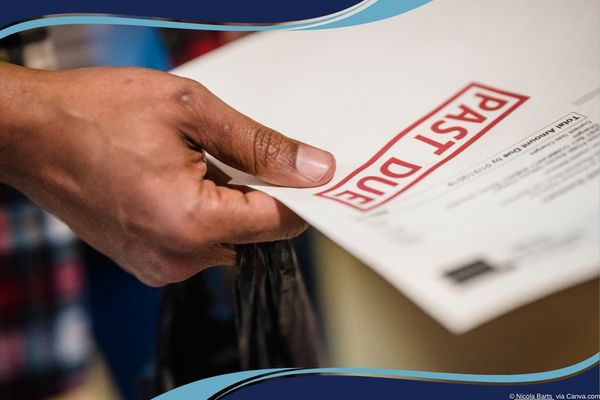
Why AI Debt Collectors Are Extorting South Africans (And How To Fight Back)
By Vicky Sidler | Published 9 May 2026 at 12:00 GMT+2
If you have ever had your phone ring before breakfast with an unknown number, only to be met with a threatening, robotic voice demanding payment for a debt you barely remember, congratulations: you have officially entered the terrifying new era of automated extortion.
Debt collection has always been an aggressively predatory industry. But lately, something far more sinister has shifted. Agencies are no longer just relying on underpaid call center workers to harass you; they are weaponizing AI-powered contact systems to reach more people, more often, in more invasive formats than ever before.
But here is the brilliant twist: before you let an algorithm panic you into handing over your bank details, you need to understand the actual legal landscape, because South African law gives you significantly more protection than the debt collectors want you to know.
As a StoryBrand Certified Guide, I spend my life helping businesses build profound, undeniable trust with their customers. But if your industry is actively deploying automated robots to harass, trick, and extort people, you are entirely destroying that trust.
We are going to rip apart exactly how these companies are using AI to exploit you, the massive legal loopholes they are hiding, and why refusing to act like a sociopathic chatbot is your ultimate business advantage.
TL;DR:
Debt collectors are increasingly using AI chatbots, voice clones, and automated SMS campaigns to pursue incredibly old, often legally uncollectible debts at a massive scale.
Under South African law, most consumer debt "prescribes" (expires) after 3 years. If you accidentally acknowledge the debt to an AI bot, you legally restart the clock and owe the money all over again.
Using automated, unfeeling AI to harass people destroys brand trust. To survive as a legitimate business, you must aggressively position yourself as an empathetic, human Guide.
👉 If your business communicates with customers like a hostile, automated debt collector, they will run screaming to your competitors. You must establish secure, undeniable human authority. Download the 5-Minute Marketing Fix to craft a powerful StoryBrand One-Liner that proves you are a living, breathing human being who actually cares about solving their problems.
Table of Contents:
Why AI Debt Collectors Are Extorting South Africans (And How To Fight Back)
Who Exactly Is Threatening You Over The Phone?
Why Are They So Desperate To Make You Panic And Pay?
What Are They Legally Allowed To Do To You?
How Are The Tech Bros Weaponizing Your Debt?
How Do You Survive The Automated Extortion?
1. Why AI Is Turning Your Customers Into Villains (And Killing Your StoryBrand Trust)
2. Why AI Search Is 60% Hallucination (And How To Be The Real StoryBrand Guide)
3. South Africa's AI Policy Was Written By AI (And Why Your Brand Can't Hide It Either)
4. Why The Internet Is Drowning In AI Slop (And How To Keep Your StoryBrand Clean)
5. Why ChatGPT Is Literally Boiling Your StoryBrand Brain
1. What is "prescribed debt" in South Africa?
2. How can I accidentally restart my prescribed debt?
3. Are debt collectors allowed to threaten me with jail?
4. How does POPIA protect me from AI debt collectors?
5. How do I stop the automated harassment without ruining my credit?
Who Exactly Is Threatening You Over The Phone?
If you think the person screaming at you on the other end of the line is a powerful government official, you are probably giving a highly unethical spreadsheet far too much credit.
Not everyone who contacts you about a debt has the same legal authority, and the differences are massive. First, you have registered debt collectors, who must be legally registered with the Council for Debt Collectors (CDC). If they cannot produce proof of this registration, they are committing a criminal offense. Second, you have attorneys and law firms, who are exempt from CDC registration but bound by the Law Society. Finally—and this is the most dangerous group—you have debt buyers. These are agencies that buy vast portfolios of unpaid debt for cents on the rand and then relentlessly harass you for the full amount.
Just because a new, terrifying-sounding agency is suddenly texting you does not mean your original debt has magically grown or become legally valid again. They are just hoping you don't know your rights, and they are using AI to cast an impossibly wide net to find the people who will panic and pay.
Why Are They So Desperate To Make You Panic And Pay?
Because they are racing against a magical, legally-binding expiration date that instantly wipes out their power—and they are terrified you might find out about it.
It is called "prescribed debt," and it is the most deliberately misunderstood concept in South African consumer credit law. Under the Prescription Act 68 of 1969, many debts simply expire after a set period if they go unacknowledged. Once a debt is prescribed, it is legally unenforceable. They cannot take you to court, they cannot get a judgment against you, and under the 2015 National Credit Amendment Act, they cannot even attempt to collect it without explicitly telling you in writing that the debt has prescribed.
Here is exactly how long those collectors have before your debt legally evaporates into the ether:
3 Years: Most consumer debt (credit cards, personal loans, retail accounts, vehicle finance).
6 Years: Debts based on bills of exchange or notarial contracts.
15 Years: State debt (loans, land sales by the State).
30 Years: Mortgage bonds, judgment debts, and tax.
But here is the cynical catch, and the exact reason they are using AI to relentlessly spam your phone: that 3-year clock resets to zero the absolute second you make a tiny payment, or acknowledge the debt verbally. This is exactly what the debt collectors are exploiting. They will use a friendly-sounding AI voicebot to get you to casually say, "Yes, I know I owe that," and boom—you are legally on the hook again.
What Are They Legally Allowed To Do To You?
Debt collectors operate on a foundation of terror, heavily implying that if you do not pay them immediately, a SWAT team is going to kick down your door and take your television.
The reality is much more boring. Legally, they can contact you during reasonable hours, negotiate payment plans, add legally prescribed fees, and instruct attorneys to issue a summons. They can only garnish your salary or attach your property if they have a valid, actual court judgment.
What they cannot do is impersonate law enforcement, threaten you with arrest (you cannot be arrested for a civil debt in South Africa), call your employer to shame you, use abusive language, or present fake court documents. They also cannot add infinite interest; the in duplum rule legally caps total interest at the amount of your outstanding principal. If a collector does any of these things, they aren't just being mean; they are aggressively breaking the law.
How Are The Tech Bros Weaponizing Your Debt?
As if dealing with aggressive call centers wasn't bad enough, the tech industry has decided to fully automate your financial anxiety.
Debt collection agencies are now unleashing AI-powered contact systems—chatbots, automated voice calls, and relentless SMS campaigns—capable of harassing thousands of people simultaneously at a fraction of the cost. Because the AI is so cheap, agencies can now ruthlessly pursue tiny, incredibly old debts that previously weren't worth the human labor cost. Furthermore, fraudsters are now using deepfake voice cloning to perfectly impersonate banks and legitimate agencies, causing complaints to the National Financial Ombud Scheme to absolutely skyrocket.
South Africa's POPIA (Protection of Personal Information Act) is your shield here. Section 71(1) restricts automated decision-making that has legal consequences. If an unfeeling AI system is blindly profiling you, making threats, and demanding payment without any human oversight, that is a massive POPIA compliance violation.
How Do You Survive The Automated Extortion?
When a robotic voice calls you at 6:00 AM threatening financial ruin, your natural human instinct is to panic, but you actually hold all the legal cards if you refuse to play their game.
Here is your step-by-step survival guide to shutting down the automated extortion:
Say absolutely nothing: Do not confirm your name, do not admit to owing anything, and do not make a "goodwill" payment. Silence is your armor.
Demand the receipts: Legally request the original credit agreement and a full breakdown of fees in writing.
Check the clock: Calculate three years from your last payment. If it has been longer, it might be prescribed. Do not pay a cent until you verify.
Set the boundaries: Tell them you will only communicate in writing, and forbid them from calling your workplace.
Check their badge: Demand their CDC registration details and verify them at cdc.org.za. If they aren't registered, they are illegal.
If you are a business owner watching this unfold, pay very close attention to how much you hate these automated, aggressive tactics. This is exactly how your customers feel when you use AI to spam them with generic marketing. If you want to actually connect with people and build undeniable brand trust, you have to prove you aren't a predatory robot. You need the 5-Minute Marketing Fix to craft a deeply human StoryBrand message that treats your customers like Heroes, not targets.
👉 Stop acting like a robot. Download the fix now.
Related Articles:
1. Why AI Is Turning Your Customers Into Villains (And Killing Your StoryBrand Trust)
The reason debt collectors are using AI is because it removes the human guilt of harassing people. Discover the terrifying psychology of "moral distance" and why outsourcing your communications to an AI makes businesses significantly more likely to act like absolute sociopaths.
2. Why AI Search Is 60% Hallucination (And How To Be The Real StoryBrand Guide)
If you think a debt collector is lying to you, wait until you talk to their chatbot. Learn why AI models confidently lie with alarming conviction 60% of the time, and why trusting a hallucinating robot to handle your customer service instantly destroys your credibility.
3. South Africa's AI Policy Was Written By AI (And Why Your Brand Can't Hide It Either)
Debt collectors aren't the only ones exploiting AI in South Africa. The government actually used an AI to write their national AI regulations, resulting in an embarrassingly fake document. See why outsourcing your brain to a robot destroys your authority.
4. Why The Internet Is Drowning In AI Slop (And How To Keep Your StoryBrand Clean)
Those automated voice messages threatening you with fake legal action are the textbook definition of "AI slop." Read the Stanford study proving that relying on this automated corporate-speak actively destroys your human authenticity and brand trust.
5. Why ChatGPT Is Literally Boiling Your StoryBrand Brain
When you let an algorithm do your thinking, you forget how to navigate complex legal and moral issues. Discover the terrifying science behind how outsourcing your marketing to a machine destroys your critical thinking skills and intellectual persistence.
FAQs:
1. What is "prescribed debt" in South Africa?
Under the Prescription Act 68 of 1969, most consumer debt (like credit cards and personal loans) legally expires or "prescribes" after 3 years if you do not make a payment or acknowledge the debt. Once prescribed, it is legally unenforceable and cannot be collected.
2. How can I accidentally restart my prescribed debt?
The 3-year prescription clock resets to zero immediately if you make even a tiny payment, or if you verbally or in writing acknowledge that you owe the money. Debt collectors use AI chatbots to trick you into casually confirming the debt on a recorded line, trapping you again.
3. Are debt collectors allowed to threaten me with jail?
Absolutely not. Under South African law, you cannot be arrested for a civil debt. If a debt collector impersonates law enforcement, threatens arrest, or uses abusive language, they are actively breaking the Debt Collectors Act.
4. How does POPIA protect me from AI debt collectors?
South Africa's Protection of Personal Information Act (POPIA) restricts automated decision-making that has legal consequences. If an AI system is blindly profiling you and issuing legal threats without human oversight, it may constitute a severe compliance violation.
5. How do I stop the automated harassment without ruining my credit?
Do not ignore a formal Section 129 Notice, but do not blindly pay a robotic caller either. Ask for written verification of the debt, calculate if it has prescribed, and demand that all future communication be done in writing. Verify the agency's CDC registration to ensure they are legal.


Strategic Marketing Tribe helps established service businesses turn underperforming marketing into more predictable growth with the Failure-Proof Marketing System.






Created with clarity (and coffee)