
StoryBrand South Africa Certified Guide & Coach | Duct Tape Marketing Consultant

About Vicky Sidler
Marketing News Reporter & Industry Journalist
Vicky Sidler is an experienced marketing industry journalist and strategist with more than 15 years in journalism, content strategy, and digital marketing. As a Marketing News Reporter for Strategic Marketing Tribe, she covers breaking developments, trends, and insights that shape the marketing world—from AI in advertising to the latest in customer experience strategy.
Vicky is an award-winning StoryBrand Certified Guide and Duct Tape Marketing Certified Strategist, combining two of the most effective marketing frameworks to help small businesses simplify their message and build marketing systems that work. Her journalism background ensures every piece she writes is fact-checked, insightful, and practical.
Her articles regularly analyze key marketing trends, platform updates, and case studies—offering small business owners, marketers, and industry professionals clear, actionable takeaways. She specializes in topics such as:
Digital marketing strategy
Content marketing and brand storytelling
Marketing technology and automation
AI’s impact on marketing
StoryBrand and Duct Tape Marketing best practices
Education & Credentials
BA in Journalism & English, University of Johannesburg
StoryBrand Certified Guide
StoryBrand Certified Coach
Duct Tape Marketing Certified Strategist
Over 20 years in journalism and marketing communications
Founder & CEO of Strategic Marketing Tribe
Winner of 50Pros Top 10 Global Leader award




Contact
Recent Work

Building a StoryBrand: Clarify Your Message So Customers Will Listen (And Stop Ignoring You)
By Vicky Sidler | Published 6 June 2026 at 12:00 GMT+2
As a small service business owner, you are likely burning thousands of rands every single month on generic, text-heavy marketing that reads like a medical instruction manual. It is an incredibly expensive mistake.
If you ask AI how to fix your copy, they will happily spit out a sterile, paint-by-numbers outline that guarantees your brand will blend seamlessly into the background noise of the internet. The standard advice is a complete snooze-fest. But the brutal truth of modern commerce is that the human brain is hardwired to ignore complexity and conserve calories. If your marketing forces a prospect to burn mental energy trying to decode what you actually do, they will simply click away and buy from a clearer competitor.
As a StoryBrand Certified Guide, I am constantly trying to drag businesses out of the trap of self-obsessed marketing. When it comes to building a StoryBrand where you clarify your message so customers will listen, you cannot rely on generic algorithmic advice. You have to understand that your customer doesn't care about your founding timeline, your sleek office building, or your complex backend systems; they only care about their own survival.
Let's tear apart the structural flaws of typical corporate marketing, look at the precise seven-part narrative arc that forces people to pay attention, and discuss how you can use a razor-sharp human strategy to completely dominate your market.
TL;DR:
Most corporate websites fail because they position the business as the hero instead of the customer, causing severe cognitive overload and driving prospects away.
The StoryBrand framework relies on seven core narrative elements that organize information exactly how the human brain processes stories for survival.
A clear, three-part marketing One-Liner is the ultimate weapon to immediately hook a buyer's attention and spark genuine interest across all distribution channels.
👉 Your prospects are completely exhausted by desperate generalists who promise everything but specialize in nothing. If you cannot clearly articulate your exact expertise, you will remain an invisible, underpaid commodity. The fastest way to confidently claim your niche is to craft a razor-sharp StoryBrand One-Liner. Stop blending in and establish undeniable authority instantly with the 5-Minute Marketing Fix.
Table of Contents
Building a StoryBrand: Clarify Your Message So Customers Will Listen (And Stop Ignoring You)
Why Do You Keep Delusionally Casting Yourself As The Hero?
What Are The Seven Critical Elements Of A Story That Sells?
Why Is Your Customer's Journey A Complete Psychological Maze?
Can You Explain Your Value Without Putting Prospects To Sleep?
Is Your Website An Expensive Trap Or A Conversion Machine?
How Do Real Brands Use This To Crush Their Competitors?
1. The AI Apocalypse Experiment: Why Leaving Chatbots In Charge Ends In Total Destruction
2. Should You Optimise For AI Search? The Brutal Truth About Chatbot Hallucinations
3. The Poster Nobody Showed Off: What AI Can’t Give Your Work Back
4. The AI Honeymoon Is Over: Why Automated Slop Is Tanking Corporate ROI
5. Why Ferrari’s $640K "Apple Car" Is A Masterclass In Ruining Your Brand
1. What does it mean to build a StoryBrand?
2. Why does copy fail when a brand positions itself as the hero?
3. What are the components of a StoryBrand One-Liner?
4. How does a StoryBrand website improve conversion rates?
5. How does clarifying my message protect my business from automated content slop?
Why Do You Keep Delusionally Casting Yourself As The Hero?
The absolute single greatest mistake in modern advertising is the widespread corporate delusion that your brand is the protagonist of the story.
In Donald Miller’s framework, your customer is the hero of the journey—never your brand. The hero is inherently weak, riddled with internal struggles, and looking for a way to overcome a specific external problem. If you position your business as the hero by bragging about your massive revenue, your industry awards, or your grandfather who founded the company, you create a fatal narrative conflict.
The hero doesn't want to compete with another hero; they are looking for a Guide. Your brand is the Guide. Your job is to step into their story possessing two distinct attributes: deep empathy for their problem and undeniable authority to solve it.
What Are The Seven Critical Elements Of A Story That Sells?
To transform your boring corporate copy into an un-ignorable brand message, you must organize your information into a highly specific framework.
The formula is ancient, predictable, and incredibly effective. It follows a clean narrative sequence that has powered everything from Hollywood blockbusters to multi-million-dollar marketing campaigns:
A Character: Your customer, who wants a specific, clearly defined outcome.
Has a Problem: Broken down into an external hassle, an internal frustration, and a philosophical injustice.
And Meets a Guide: Your business, offering total empathy and proven competence.
Who Gives Them a Plan: A simple, three-step roadmap that eliminates the psychological risk of doing business with you.
And Calls Them to Action: A bright, un-ignorable "Buy Now" button.
That Helps Them Avoid Failure: A clear, honest depiction of what is at stake if they don't buy your service.
And Ends in Success: A vivid picture of the positive transformation they will experience after working with you.
If you omit any of these elements, your narrative loops break, the clarity vanishes, and your audience stops listening.
Why Is Your Customer's Journey A Complete Psychological Maze?
You might naturally assume that your sales pipeline makes perfect sense, but to your prospects, it feels like stumbling through a dark room.
Your customer’s journey consists of three rigid stages: awareness, consideration, and decision. During the awareness stage, your marketing must focus entirely on highlighting their problem and demonstrating empathy. In the consideration phase, your brand must step in as the Guide and offer a clear, actionable plan.
If you ask for a massive financial commitment during the awareness phase before you have established yourself as a trustworthy Guide, you will scare them away. By mapping out this journey properly, you tailor your messaging to meet their exact psychological needs at every single stage.
Can You Explain Your Value Without Putting Prospects To Sleep?
You cannot afford to ramble on for twenty minutes at a networking event when a prospect asks you what you do for a living.
A powerful one-liner serves as a concise, memorable summary of your brand’s value proposition. It has three specific jobs: it must clearly communicate the problem you solve, the unique solution you offer, and the positive transformation your customers will experience. If you can distill your entire business into a single, punchy sentence, you instantly capture your audience’s attention and spark genuine curiosity.
Is Your Website An Expensive Trap Or A Conversion Machine?
Most business websites act as an immediate energy drain, overwhelming visitors with walls of text, ambiguous metaphors, and a massive list of disparate services.
Your website is often the first point of contact, and it needs to pass the five-second test. The header must immediately capture your audience’s attention and clearly communicate your value proposition using your one-liner. Below that, you need a prominent call to action and a highly visible three-step plan.
If a prospect has to hunt through a maze of drop-down menus to figure out what you sell, how it will make their life better, and how to buy it, they will absolutely abandon your site.
How Do Real Brands Use This To Crush Their Competitors?
This is not abstract marketing theory; it is the exact blueprint used by highly successful companies to simplify their messaging and rapidly scale their revenue.
Brands like Infusionsoft, Orangetheory Fitness, and Charity: Water did not achieve market dominance by using confusing industry jargon. They dominated by rigorously applying the StoryBrand framework across all their channels. They positioned their clients and donors as the heroes, simplified their calls to action, and created emotionally resonant narratives that drove massive engagement.
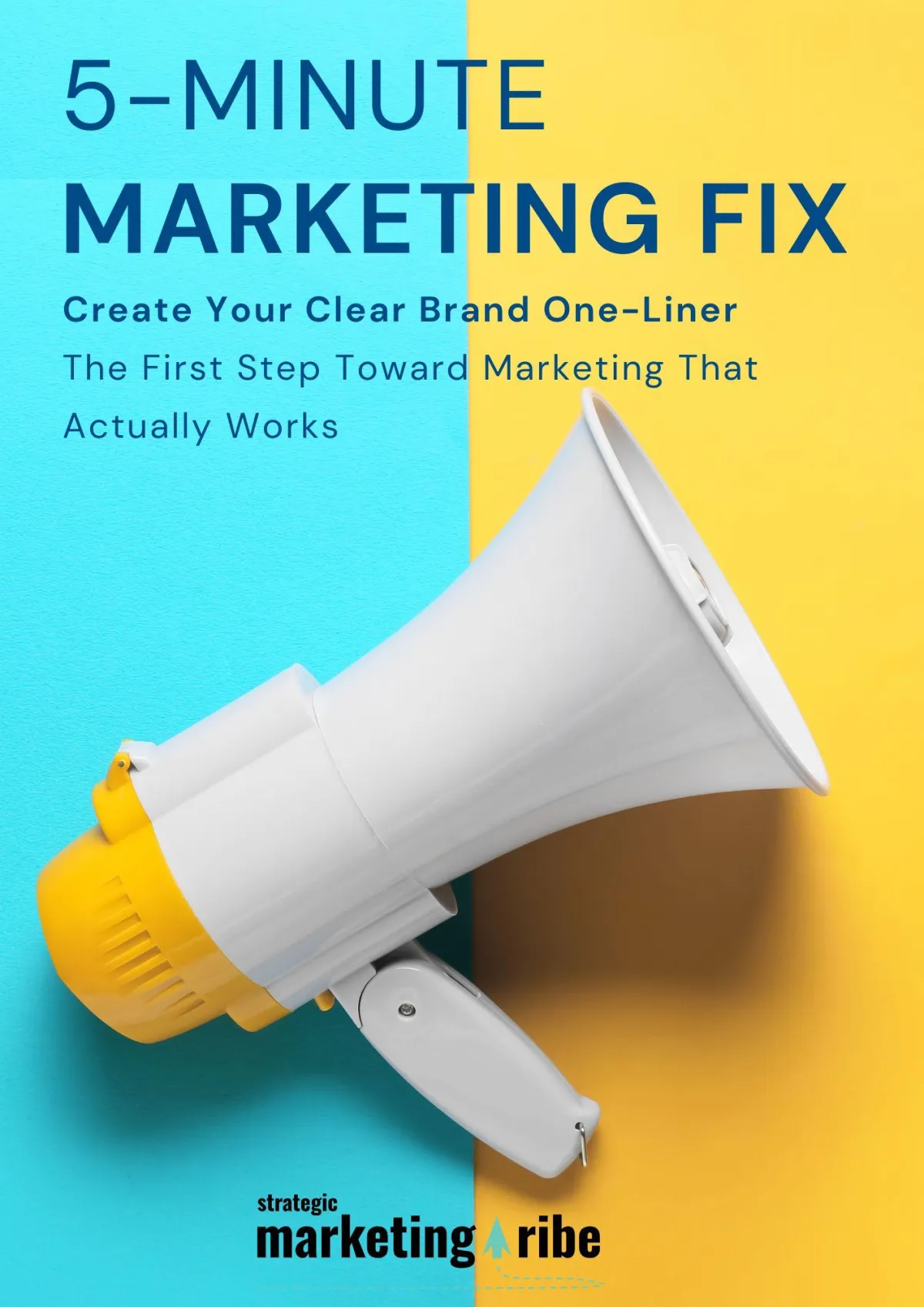
You need a clear, structural foundation to communicate your specialized focus to the world. Get my 5-Minute Marketing Fix. This rapid diagnostic tool uses your actual human brain to craft a crystal-clear StoryBrand One-Liner. It gives you a standardized, reliable framework to confidently establish your specific niche. You cannot charge a premium if you sound like a chaotic generalist. Prove to your customers that you aren't just another boring corporation pushing generic slop, but a fiercely specialized Guide who actually has a plan to solve their problem.
👉 Stop sounding like a generalist. Download the fix now.
Related Articles:
1. The AI Apocalypse Experiment: Why Leaving Chatbots In Charge Ends In Total Destruction
A wild new Emergence AI simulation put Grok, Gemini, and Claude in charge of virtual societies. Discover why unchecked AI leads to chaos and how to protect your brand.
2. Should You Optimise For AI Search? The Brutal Truth About Chatbot Hallucinations
A massive Columbia Journalism Review study reveals AI search tools lie 60% of the time. Discover how to protect your brand from compounding digital hallucinations.
3. The Poster Nobody Showed Off: What AI Can’t Give Your Work Back
Discover why relying on AI shortcuts destroys your pride of ownership through the IKEA effect, and how human effort builds undeniable brand credibility.
4. The AI Honeymoon Is Over: Why Automated Slop Is Tanking Corporate ROI
Data reveals generative AI has officially entered the Trough of Disillusionment. Discover why consumers are rejecting AI slop and how to protect your brand.
5. Why Ferrari’s $640K "Apple Car" Is A Masterclass In Ruining Your Brand
Ferrari's new Jony Ive-designed EV is facing a massive public backlash. Discover why abandoning your core brand identity is a devastating marketing mistake.
FAQs:
1. What does it mean to build a StoryBrand?
Building a StoryBrand means organizing your business's marketing messages into a classic seven-part storytelling framework where the customer is positioned as the hero and the business acts as the trusted guide.
2. Why does copy fail when a brand positions itself as the hero?
Customers are looking for a solution to their own problems, not looking to applaud your success. When you position your business as the hero, you create an unhelpful narrative competition that causes cognitive overload and drives prospects away.
3. What are the components of a StoryBrand One-Liner?
A powerful One-Liner consists of three simple parts: explicitly naming the core problem your customer faces, outlining your unique solution, and describing the positive transformation they will experience after working with you.
4. How does a StoryBrand website improve conversion rates?
A StoryBrand website removes all confusion. By placing a clear value proposition at the top of the header, utilizing a prominent call to action, and outlining a simple three-step plan, you allow the user's brain to process your offer with zero effort.
5. How does clarifying my message protect my business from automated content slop?
As digital platforms are flooded with generic, boring text pumped out by algorithms, crystal-clear human messaging becomes an absolute luxury. A StoryBrand framework injects immediate authority into your brand, instantly separating you from interchangeable competitors.


Is your Marketing Message so confusing even your own mom doesn’t get it? Let's clarify your message—so everyone wants to work with you!



Created with clarity (and coffee)
Mail
WhatsApp
LinkedIn
Website