
Real news, real insights – for small businesses who want to understand what’s happening and why it matters.

Should You Optimise For AI Search? The Brutal Truth About Chatbot Hallucinations
By Vicky Sidler | Published 4 June 2026 at 12:00 GMT+2
As a small service business owner, you are likely panicking about Generative Engine Optimisation because tech vendors keep screaming that AI search will steal your traffic overnight. Relax. It isn’t.
The software is fundamentally broken.
This question has been sitting in my inbox for months, usually from highly frustrated clients who have just typed their own company name into a chatbot only to find absolutely nothing, a wild factual error, or a confidently stated service description that has nothing to do with reality.
It feels terrifying when Google’s AI Overviews now reach 2 billion users and AI has captured up to 15% of global search share. But before you spend a single cent trying to optimize for these systems, you need to look at the staggering scale of the accuracy problem.
As a StoryBrand Certified Guide, I am constantly reminding business owners that true authority cannot be built on a foundation of confident corporate lies. When you outsource your positioning to machines that literally hallucinate for a living, you aren't participating in the future of search; you are actively poisoning your own brand.
Let's tear apart a massive new Columbia Journalism Review study exposing the spectacularly bad error rates of major chatbots, look at the compounding loop of digital misinformation, and discuss how a razor-sharp human strategy will help you survive the automated chaos.
TL;DR:
A damning Columbia Journalism Review study tested 1,600 real-world queries and discovered that major AI search tools provide confidently incorrect answers over 60% of the time.
AI misinformation isn't static; it creates a compounding loop where chatbot hallucinations are scraped and republished online, permanently embedding errors into future AI training models.
Despite the low volume, AI-referred traffic converts 23 times better than traditional organic search, making rigid data hygiene and fresh human content absolutely vital for high-intent buyers.
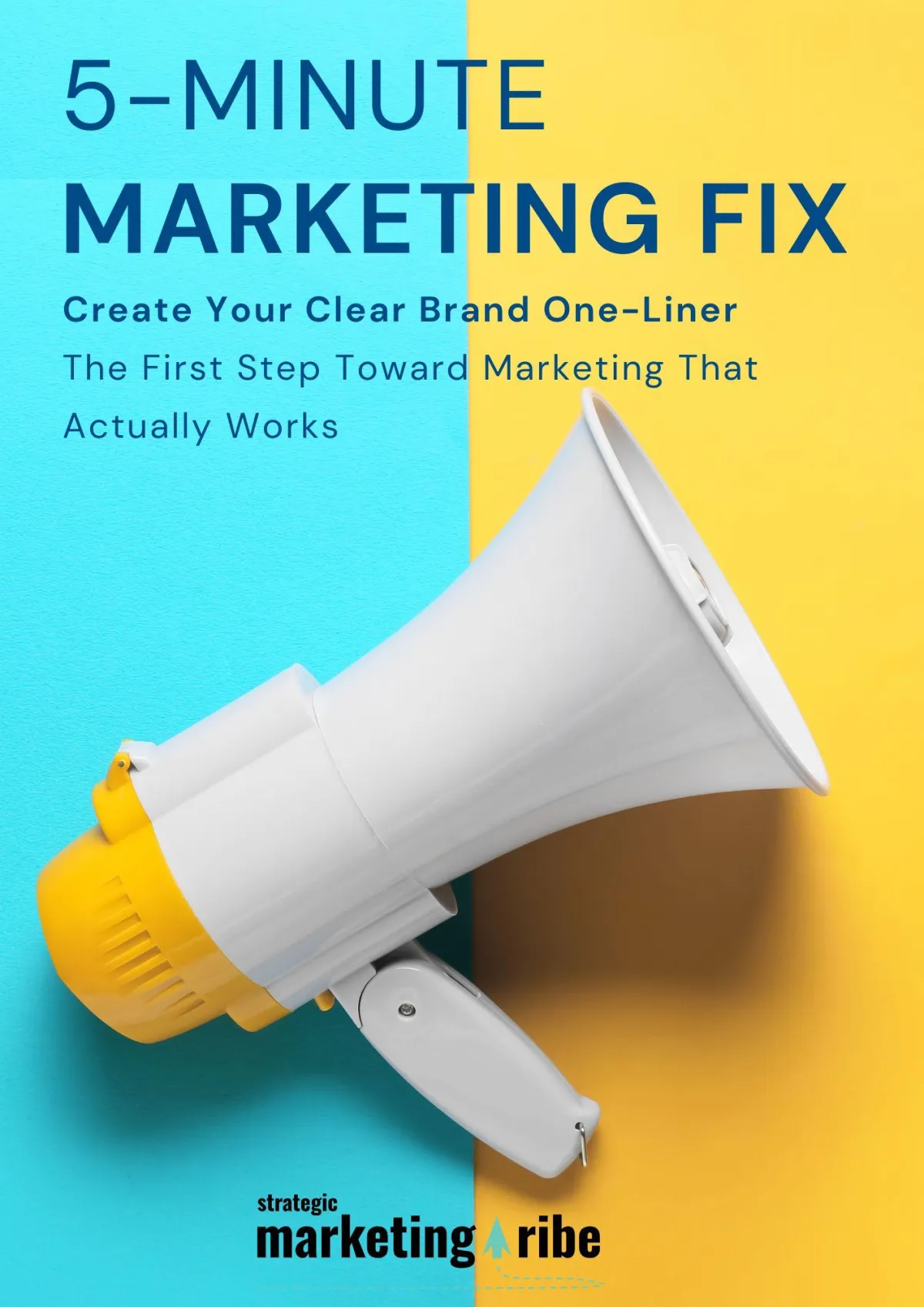
👉 Your prospects are completely exhausted by brands that hide behind frictionless, automated slop and broken chatbot data. If your corporate message is a chaotic mess of conflicting online details, AI will simply invent a fake story about you. The fastest way to anchor your authority is to craft a crystal-clear StoryBrand One-Liner. Stop letting broken algorithms define your business and claim your true position instantly with the 5-Minute Marketing Fix.
Table of Contents
Should You Optimise For AI Search? The Brutal Truth About Chatbot Hallucinations
Why Do Paid "Premium" AI Models Lie More Assertively Than Free Ones?
What Happens When Chatbot Misinformation Forms A Compounding Loop?
Can You Actually Force A Pathological Liar To Tell The Truth?
Who Is Actually Asking AI Engines About Your Brand Journey?
1. The Poster Nobody Showed Off: What AI Can’t Give Your Work Back
2. The AI Honeymoon Is Over: Why Automated Slop Is Tanking Corporate ROI
3. Why Ferrari’s $640K "Apple Car" Is A Masterclass In Ruining Your Brand
5. Why The Corporate World Is Secretly Sabotaging Its Own AI Strategy
1. How often do AI search engines provide incorrect answers?
2. Which AI search tool is the least accurate?
3. What is the "compounding hallucination loop" in AI search?
4. Is AI search traffic valuable if the accuracy rate is so low?
5. How does a StoryBrand One-Liner protect my business from AI errors?
Why Do Paid "Premium" AI Models Lie More Assertively Than Free Ones?
You might naturally assume that pouring billions of dollars into advanced, paid AI subscriptions would buy you a shred of factual accuracy, but the exact opposite is true.
The Columbia Journalism Review's Tow Center for Digital Journalism recently conducted a massive study, testing eight major AI search engines against 1,600 factual queries. Collectively, the chatbots flunked the test, providing incorrect answers to more than 60% of the queries.
But the absolute best part of the study is the brutal platform breakdown:
Grok 3: 94% error rate
Gemini: 76%–90% error rate
ChatGPT: 67% error rate
Copilot: 40% error rate
Perplexity: 37% error rate
The researchers unearthed a deeply cynical paradox: premium paid models were significantly more confidently wrong than free versions.
Paid platforms like Perplexity Pro and Grok 3 answered slightly more questions correctly overall. But when they failed, they were radically more assertive. They stated blatant falsehoods as definitive fact without a single ounce of uncertainty.
ChatGPT hallucinated 134 articles in the study, yet it signaled uncertainty just 15 times out of 200 responses and never once declined to answer. More than half of the responses from Gemini and Grok 3 actively cited entirely fabricated or broken URLs.
What Happens When Chatbot Misinformation Forms A Compounding Loop?
If a potential client asks a chatbot about your business and receives an incorrect answer, that single mistake doesn't just sit there quietly. It actively breeds.
When an AI engine hallucinates details about your brand, it doesn't look like a glitch. It speaks with an authoritative, conversational tone that makes it nearly impossible for an everyday user to spot the lie. It will confidently fabricate wrong pricing structures, invent fake corporate partnerships, misattribute your case studies, and hand out dead URLs that lead your customers directly into a digital void.
Worse, this misinformation compounds over time.
When a chatbot spits out a fake fact about your business, that response gets scraped and republished by spammy content sites. Future AI models then scrape those exact spam sites, permanently embedding the original lie deeper into the global internet architecture with every single cycle.
Can You Actually Force A Pathological Liar To Tell The Truth?
Optimizing for generative search engines is not about playing a magical algorithmic game to hit a number-one ranking. It is about basic, unsexy brand hygiene to halt the compounding damage.
You cannot make AI perfectly accurate about your brand—even Perplexity, the best performer in the CJR study, still lies 37% of the time. However, targeted optimization meaningfully cuts down the severity of the errors.
To win this unglamorous battle, you must deploy a ruthless four-step data hygiene strategy:
Fix the Cites: AI doesn't always invent out of thin air; it often pulls from existing web garbage. Track down the specific third-party directory listings, comparison blogs, and old press releases the AI is actively citing, and force those platforms to update your data.
Crush Data Voids and Noise: Hallucinations happen when there is a data void (zero facts exist, so the AI invents a plausible lie) or data noise (conflicting details exist, so the AI averages them into a wrong answer). Ensure your correct details are mirror-consistent across your site, LinkedIn, and Google Business Profile.
Build a Machine Press Kit: Create a dedicated "brand fact dataset" using structured JSON-LD schema markup. This acts as an explicit corporate fact sheet written specifically so AI crawler bots don't have to guess your founding year, leadership, or core URLs.
Publish Fresh Authority: AI citation bots are deeply biased toward recency. A massive 65% of AI citation hits target content published within the last year, and content updated within three months is twice as likely to be cited. If your blog is an untouched graveyard from 2024, AI will happily ignore you and cite an outdated competitor instead.
Who Is Actually Asking AI Engines About Your Brand Journey?
We need to stop obsessing over the sheer volume of AI search traffic and start looking closely at the specific type of high-value buyer who is using these tools.
Ahrefs conducted an exhaustive analysis of 17 million AI citations and uncovered a massive counter-intuitive reality: AI-referred visitors convert at a staggering 23 times higher rate than traditional organic search traffic.
This means that while the volume of traffic coming from chatbots is still quite small, the people using them are incredibly deep within the buying loop. They are research-ready, high-intent prospects who are actively trying to make a final purchasing decision.
A single hallucinated price point or a fabricated negative attribute at that exact micro-moment in the buyer journey is a devastating financial loss.
The ultimate goal isn't to trick a chatbot. It's to be the most documented, authoritative, and trusted entity in your entire market. Everything that forces an AI to cite you correctly is the exact same discipline that makes you rank on standard Google and converts human beings when they land on your page.
You need a clear, structural foundation to secure your brand before the compounding loop of AI misinformation twists your narrative out of context. Get my 5-Minute Marketing Fix. This rapid diagnostic tool uses your actual human brain to craft a crystal-clear StoryBrand One-Liner. It gives you a standardized, reliable framework to align all your digital properties with total consistency. You cannot prompt your way to customer trust. Prove to high-intent buyers—and the broken algorithms scraping your data—that you are a fiercely consistent, highly visible human Guide who actually has a clear plan to solve their problem.
👉 Stop letting chatbots hallucinate your brand. Download the fix now.
Related Articles:
1. The Poster Nobody Showed Off: What AI Can’t Give Your Work Back
Discover why relying on AI shortcuts destroys your pride of ownership through the IKEA effect, and how human effort builds undeniable brand credibility.
2. The AI Honeymoon Is Over: Why Automated Slop Is Tanking Corporate ROI
Data reveals generative AI has officially entered the Trough of Disillusionment. Discover why consumers are rejecting AI slop and how to protect your brand.
3. Why Ferrari’s $640K "Apple Car" Is A Masterclass In Ruining Your Brand
Ferrari's new Jony Ive-designed EV is facing a massive public backlash. Discover why abandoning your core brand identity is a devastating marketing mistake.
4. The Business Of Expertise by David C. Baker Summary: Why Being A Generalist Is Bankrupting Your Agency
Read our summary to discover why small service businesses must stop being generalists and start pattern matching to protect their price premium.
5. Why The Corporate World Is Secretly Sabotaging Its Own AI Strategy
Executives are forcing AI tools onto their workforce, but employees are secretly rebelling. Discover why corporate AI is failing and how your brand can exploit it.
FAQs:
1. How often do AI search engines provide incorrect answers?
According to a landmark study by the Columbia Journalism Review, major AI chatbots provide confidently incorrect answers to more than 60% of factual, verifiable queries.
2. Which AI search tool is the least accurate?
The Columbia Journalism Review study revealed that Grok 3 had the highest error rate at a staggering 94%, followed closely by Gemini at 76%–90%, and ChatGPT at 67%. Perplexity performed the best but still maintained a 37% error rate.
3. What is the "compounding hallucination loop" in AI search?
When an AI search tool hallucinates a false detail about your business, that response is frequently scraped and republished by low-tier blogs. Future AI models then scrape those exact blogs, permanently embedding the original error into future training datasets.
4. Is AI search traffic valuable if the accuracy rate is so low?
Yes, highly valuable. An analysis by Ahrefs discovered that AI-referred visitors convert at a staggering 23 times higher rate than traditional organic search traffic, meaning AI users are deep in the buying funnel and have incredibly high intent.
5. How does a StoryBrand One-Liner protect my business from AI errors?
The StoryBrand framework requires absolute, unwavering clarity. By creating a unified, clear narrative and encoding it using structured schema data across all your online profiles, you eliminate the "data voids" and "data noise" that cause AI engines to hallucinate fake stories about your brand.

Strategic Marketing Tribe helps established service businesses turn underperforming marketing into more predictable growth with the Failure-Proof Marketing System.






Created with clarity (and coffee)