
STORY, MEET STRATEGY
Let’s make marketing feel less robotic and more real.
Find resources that bring your message—and your business—to life.
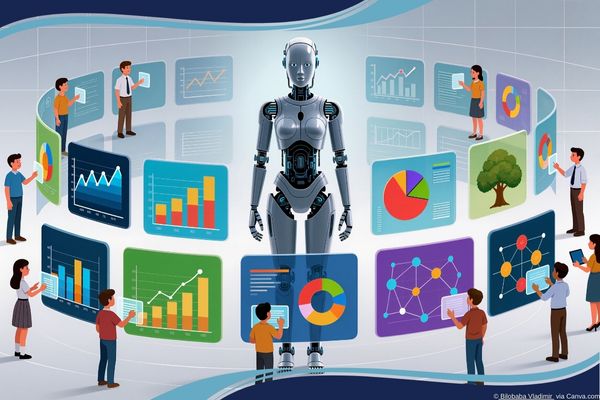
AI Research Is Not As Smart As You Think
By Vicky Sidler | Published 9 December 2025 at 12:00 GMT+2
If your idea of research is a quick Google search then glancing at the first few results and only reading the one with bullet points, then yes, AI probably does it better. But that’s not really the win you think it is.
We’ve reached a strange point where asking ChatGPT, Claude, or Perplexity to "research something for you" feels smarter than doing it yourself. It saves time. It sounds confident. It gives you neatly formatted paragraphs like a helpful little school project.
But here’s the thing. AI doesn’t know anything you couldn’t find on your own. And worse, it often doesn’t even know what it thinks it knows.
Let me explain.
TLDR:
AI only accesses public info, not secret databases
It often presents Reddit posts and blog rants like peer-reviewed facts
Sometimes it makes up sources and quotes entirely
The newer models are actually getting worse at telling the truth
Overusing AI dulls your brain over time
👉 Need help getting your message right? Download the 5 Minute Marketing Fix.
Table of Contents:
AI Research Is Not As Smart As You Think
AI Doesn’t Know More Than You Do:
Not All Sources Are Created Equal:
AI’s Confidence Is the Real Problem:
AI Doesn’t Understand What It’s Reading:
It Doesn’t Understand You Either:
1. AI Slop Is Breaking the Internet—Here’s What Small Brands Can Do
2. Fake AI Citations Trigger UK Court Warning—Here’s What Small Businesses Should Learn
3. Why You Can’t Trust ChatGPT, Perplexity or Other AI For Legal Advice
4. AI Business Advice: Why It Helps Some Owners but Hurts Others
5. AI Medical Advice Is Usually Wrong and Sometimes Dangerous
Frequently Asked Questions About AI Research
1. Does AI have access to more information than I do?
2. Can I trust the sources AI uses?
3. Why does AI sometimes give wrong or fake information?
4. Are newer AI models more accurate?
5. Does using AI for research affect how well I think?
6. Can AI understand context or social nuance?
7. How much of a document can AI actually process?
8. Should I still use AI for research at all?
AI Doesn’t Know More Than You Do:
Let’s start with the biggest myth. People think AI has some kind of VIP pass to elite knowledge. Like it reads secret memos from NASA and journals locked behind paywalls.
It doesn’t.
AI pulls from the same internet you do. Mostly public pages. It cannot see what’s inside premium research sites, academic databases, or subscription tools unless someone has shared that info somewhere public.
And even then, it doesn’t always grab it. It reads what fits in its token limit. That’s a fancy way of saying it forgets stuff halfway through reading, just like we do during long meetings.
Not All Sources Are Created Equal:
One of the more concerning habits AI has is acting like all sources are equally reliable. You might get a paragraph explaining complex economic policy, with a citation that turns out to be a LinkedIn post. Or a Reddit comment.
If you’d found that comment yourself, you’d probably think, “Who is this person? Do they know what they’re talking about?” But when AI gives it to you, the tone is so polished that you don’t question it. That’s how bad ideas get dressed up in nice suits and accidentally invited to dinner.
AI Also Just… Makes Stuff Up:
This part’s fun, in a horror-movie kind of way. Researchers tested ChatGPT and found it invented around 20 percent of its citations. Made-up articles. Wrong author names. Incorrect journal names. And even when it pointed to a real paper, it sometimes got the year, title, or findings completely wrong.
In courtrooms, this has already caused problems. Lawyers submitted entire briefs using fake AI-generated citations. Judges were not impressed. Fines were handed out. One lawyer had to redo ethics training, which is a bit like being made to write out lines on the blackboard after school like Bart Simpson—except it’s your career and professional reputation on the line.
AI’s Confidence Is the Real Problem:
It’s not just that AI gets it wrong. It’s that it gets it wrong with confidence. You’ll get a well-written explanation with a tone that says, “Trust me. I’ve got this.” And if you’re tired, rushed, or just looking for a shortcut, you probably will trust it.
But AI rarely says, “I don’t know.” It never warns you when it’s guessing. And unless you’re an expert in the topic yourself, it’s hard to tell when something sounds true but isn’t.
Newer Doesn’t Mean Smarter:
You’d expect newer models to improve. That’s how software usually works. But the latest AI models? They hallucinate more than the older ones. One OpenAI model got 48 percent of its answers wrong in tests. Another paid AI tool did worse than free ones. So if you’re paying for the privilege of being misinformed, consider that a premium disappointment.
It’s Making Us Dumber Too:
This one stings. Studies show the more we rely on AI, the worse we get at thinking critically. Younger users, especially, are showing declining ability to spot bad logic or weak sources. The technical term is “cognitive offloading,” but really it just means we’re handing over the thinking part to the robot and forgetting how to do it ourselves.
And once you stop questioning what you’re told, you become the perfect target for confident nonsense.
AI Doesn’t Understand What It’s Reading:
AI can pattern match. It can paraphrase. It can even “summarise” long documents. But it doesn’t actually understand anything. It has no life experience. No context. No gut instinct that something feels off.
It can’t connect real-world dots like a human can. It might miss the key argument in the middle of a document because it’s focused on the intro and conclusion. It doesn’t know which parts actually matter.
It Doesn’t Understand You Either:
AI doesn’t know if you’re a beginner or an expert. It doesn’t adjust its output based on your goals. It doesn’t know if you’re writing a legal brief or a tweet. So if you’re new to a topic, you’re more likely to take AI at face value—and miss when it’s wrong. Meanwhile, someone with more experience can catch the nonsense faster and steer it in a better direction. So ironically, AI helps the people who need it least.
What You Can Do Instead:
You don’t need to throw AI out completely. It can help you understand terms, summarise long reads, and brainstorm questions. But don’t treat it like a researcher. Treat it like an overconfident intern. Always check its work.
And if your current research method is just Googling whatever shows up first, it might be time to upgrade your own process too. You don’t need to be a scholar. You just need a bit more skepticism and a good nonsense detector.
Marketing works the same way. Clarity always beats complexity. If your business message sounds like AI wrote it, your prospects might assume it’s equally confused.
Need help simplifying your message so your ideal clients instantly get what you do? My 5-Minute Marketing fix can help you write one clear sentence that’s impossible to ignore.
Related Articles:
1. AI Slop Is Breaking the Internet—Here’s What Small Brands Can Do
If this article made you question the quality of AI outputs, this one shows how AI-generated junk is flooding the web and what your brand can do to stay credible.
2. Fake AI Citations Trigger UK Court Warning—Here’s What Small Businesses Should Learn
You’ve seen how AI invents sources. This piece unpacks the legal fallout when that goes unchecked—and why small businesses should take note.
3. Why You Can’t Trust ChatGPT, Perplexity or Other AI For Legal Advice
If you're tempted to let AI answer legal questions, this article explains why that shortcut could land you in real trouble.
4. AI Business Advice: Why It Helps Some Owners but Hurts Others
Wondering if AI is worth using in your business at all? This one breaks down when it helps and when it backfires.
5. AI Medical Advice Is Usually Wrong and Sometimes Dangerous
AI might sound smart, but its medical advice is often outdated or just plain wrong. If you value your health, read this one next.
Frequently Asked Questions About AI Research
1. Does AI have access to more information than I do?
No. AI tools like ChatGPT only pull from publicly available information online. They can’t access subscription databases, academic journals behind paywalls, or private research sources.
2. Can I trust the sources AI uses?
Not always. AI often presents Reddit threads, blog posts, or LinkedIn updates as if they were expert sources. It doesn’t reliably distinguish between credible and low-quality content.
3. Why does AI sometimes give wrong or fake information?
When AI doesn’t know something, it guesses. It creates outputs based on patterns, not facts. This can lead to fabricated citations, misquotes, and completely made-up sources.
4. Are newer AI models more accurate?
Surprisingly, no. Some newer models actually show higher hallucination rates than older ones. In testing, several paid AI tools performed worse than free versions.
5. Does using AI for research affect how well I think?
Yes. Studies show that over-reliance on AI weakens critical thinking skills, especially for younger users. The more you outsource thinking, the less sharp your judgment becomes.
6. Can AI understand context or social nuance?
Not well. AI lacks common sense and real-world experience. It can’t evaluate whether something “makes sense” or spot sarcasm, bias, or incomplete logic the way a human can.
7. How much of a document can AI actually process?
There are limits. AI models have token restrictions, which means they often skim or drop information from the middle of long documents. Summaries may miss key points entirely.
8. Should I still use AI for research at all?
Yes, but with caution. AI can be helpful for understanding terms, summarising content, or brainstorming ideas. Just don’t treat it as a replacement for real research or expert judgment.
9. Who benefits most from AI research tools?
People with strong subject knowledge. Experts can prompt better, spot errors quickly, and refine outputs. Beginners are more likely to be misled because they don’t know what to question.
10. How can I improve my own research process?
Start by being more selective about sources. Check author credibility, cross-reference key claims, and ask “Does this make sense?” before accepting anything as fact. That habit alone makes you smarter than most bots.

Is your Marketing Message so confusing even your own mom doesn’t get it? Let's clarify your message—so everyone wants to work with you!



Created with clarity (and coffee)