
STORY, MEET STRATEGY
Let’s make marketing feel less robotic and more real.
Find resources that bring your message—and your business—to life.

AI Is Making Big Decisions in South Africa Without You
By Vicky Sidler | Published 24 January 2026 at 12:00 GMT+2
Somewhere between your last invoice and your third attempt at logging into SARS eFiling, a machine quietly decided whether you were a risk. Not a red-flag kind of risk, necessarily. Just the kind that might need a little extra attention. A few more checks. An automated nudge. All without anyone asking if you were comfortable handing that decision over to a digital referee you didn’t know existed.
That’s not some far-off future scenario involving robot judges and AI auditors in smart glasses. According to TEDx speaker James Maisiri, it’s happening right now. In South Africa. With real consequences. And most people—including the ones being scored, sorted, flagged, or skipped—have absolutely no idea.
TL;DR:
AI is already shaping public services, finance, policing, and healthcare in South Africa
Most citizens—and many business owners—have no idea how or when AI is involved
Biased data and opaque algorithms are causing real harm, including financial exclusion and discrimination
South African media, government, and academics all have a role to play in raising AI awareness
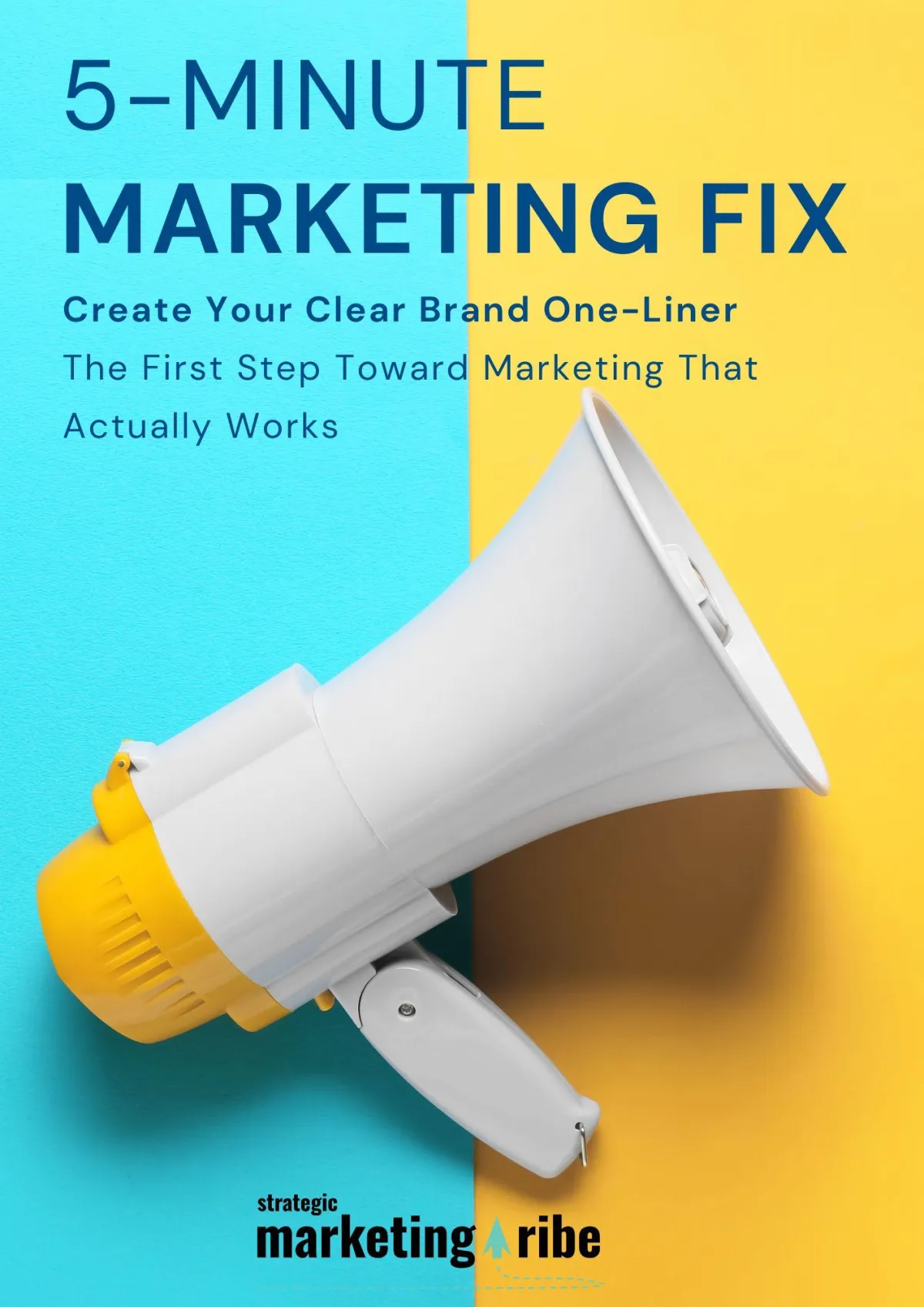
👉 Need help getting your message right? Download the 5-Minute Marketing Fix
Table of Contents:
AI Is Making Big Decisions in South Africa Without You
Democracy Without Participation:
Raising Awareness Shouldn’t Be a Side Project:
Why This Matters for Your Business:
One Clear Message is Still Your Best Defense:
1. AI Predictions for 2026: Here's What Chatbots Think Happens Next
2. Dead Internet Theory: Are You Marketing to Bots?
3. Why Replacing Copywriters With AI Will Destroy Your Brand
4. Marketing Strategy vs. Tactics: Why One Builds Trust and the Other Leads to Price Wars
5. Stop Targeting Everyone: Why Clarity Beats Volume
Frequently Asked Questions About AI and Small Business in South Africa
1. How is AI being used in South Africa right now?
2. Can AI really affect my business loan or credit application?
3. Why is AI being called a risk to democracy in South Africa?
4. What’s the danger of biased AI in small business?
5. What can I do to protect my business from AI mistakes?
6. Can I opt out of AI systems in South Africa?
7. How do I know if an AI made a decision about my business?
8. Is AI always bad for small businesses?
Not Just a Tech Problem:
Artificial intelligence is no longer confined to university research projects, self-driving car experiments, or badly written sci-fi movies. In South Africa, AI has already slipped into the bloodstream of public life. It’s sorting taxpayers at SARS. It’s helping banks decide who gets credit. It’s flagging potential fraud in the medical system. It’s scanning license plates and watching for “suspicious behavior” in low-income neighborhoods.
The machines are here. What’s missing is the memo.
According to one survey referenced by Maisiri, 73% of South Africans have either never heard of AI or have no real understanding of it. Which means these systems—the ones deciding who gets help, who gets sidelined, and who gets watched—are largely invisible to the people they affect most.
And that’s a problem.
Decisions Without Disclosure:
Let’s talk loans. In a recent study of the South African construction sector, AI models were found to approve applications from women-led businesses 52% less often than those led by men. When women were approved, they got less money and were charged more for it. No one programmed the algorithm to be sexist. It just learned from a biased dataset and confidently repeated history.
Then there’s the case of Black healthcare providers being incorrectly flagged for fraud. These professionals were targeted for investigations, fines, and penalties based not on evidence, but on the subtle prejudices baked into the system feeding the AI.
And if that sounds familiar, it’s because it mirrors what’s happening in predictive policing—where facial recognition and behavior-tracking tech are more likely to treat certain people as threats, not because they’ve done anything wrong, but because they happen to live in the “wrong” area or drive the “wrong” car.
Small business owners, especially those from underserved communities, end up being denied access, trust, or credibility without ever knowing why. It’s not a rejection letter. It’s a silent disqualification that never explains itself.
Democracy Without Participation:
AI isn’t just a tech tool. It’s a gatekeeper. And the gate has already been moved, locked, and automated—often with no human override.
Maisiri puts it bluntly: if citizens aren’t involved in how AI is designed and deployed, democracy loses one of its essential ingredients—the ability to question and shape the systems that govern us.
You can’t challenge what you can’t see. And you can’t vote against a process you never knew existed.
Right now, the conversation is stuck in a small triangle: academics write papers, governments write policies, and technologists write code. Meanwhile, the rest of us just keep refreshing our tax portal and wondering why the business loan that looked promising two weeks ago has mysteriously vanished into silence.
Raising Awareness Shouldn’t Be a Side Project:
Maisiri’s solution is practical, if ambitious: raise public AI literacy fast, and make the conversation visible to ordinary people, not just conference panels and think tanks.
He points to initiatives like free online AI courses from the University of Johannesburg and even references China’s decision to make AI education mandatory for primary school students. While that might be a leap for South Africa’s current education system, the idea stands—start early, start everywhere, and don’t wait for a crisis.
But awareness isn’t just the job of schools or the state.
Journalists, media companies, and yes, even small business owners, have a role in asking better questions and demanding more transparency. If AI is going to affect hiring, pricing, visibility, and access to opportunity, then at the very least, we deserve to know where and how it’s being used.
Why This Matters for Your Business:
If you run a small business and have ever applied for a loan, run a paid ad, filed a tax return, or tried to interact with a large government agency—AI has probably touched your file. That means someone (or something) made a prediction about your risk, reliability, or behavior and used that prediction to decide how your request was handled.
You might have noticed delays, higher costs, or fewer approvals. You might have chalked it up to bad luck. But the real reason might be an algorithm making decisions based on data you’ve never seen and can’t challenge.
You don’t need to become an AI engineer. But you do need to be aware that these systems are already here, already working, and already affecting the levers that control access to opportunity.
One Clear Message is Still Your Best Defense:
In a world where machines read data but don’t understand nuance, clarity becomes a competitive advantage. If your business messaging is vague, you’re not just confusing customers—you’re confusing the algorithm that decides which content to prioritize, which accounts to flag, or which businesses to trust.
And that’s where you can take back some control.
Download my 5 Minute Marketing Fix to start with one sharp, human-centered message that explains what you do and why it matters. It won’t fix the AI problem. But it might just help you stay visible and credible in systems that increasingly reward clarity and punish confusion.
Related Articles:
1. AI Predictions for 2026: Here's What Chatbots Think Happens Next
If AI is already shaping your future without asking, you’ll want to see what it thinks comes next. This one shows how AI predicts its own role in business, marketing, and daily life.
2. Dead Internet Theory: Are You Marketing to Bots?
Algorithms aren’t just flagging humans—they’re flooding your channels with bots. This post explains how to keep your marketing real in a space increasingly crowded by AI noise.
3. Why Replacing Copywriters With AI Will Destroy Your Brand
If machines can’t understand nuance, why let them write your message? This article breaks down why authentic strategy still beats algorithmic guesswork.
4. Marketing Strategy vs. Tactics: Why One Builds Trust and the Other Leads to Price Wars
Want to stand out in a system that treats you like a data point? This post shows how strategy helps you build long-term trust, not short-term clicks.
5. Stop Targeting Everyone: Why Clarity Beats Volume
Algorithms love vague businesses—because they’re easy to ignore. This one shows you how to get clear, specific, and impossible to overlook.
Frequently Asked Questions About AI and Small Business in South Africa
1. How is AI being used in South Africa right now?
AI is already part of government systems, banks, health services, and even law enforcement in South Africa. SARS uses it for risk detection and tax compliance, banks use it to automate loan approvals, and medical aids use it to detect fraud. You might not see it, but it’s probably already affecting your business.
2. Can AI really affect my business loan or credit application?
Yes. AI systems are being used to decide who qualifies for loans and under what terms. Studies show that women-led businesses in South Africa have been approved far less often, and on worse terms, because of biased data used by AI.
3. Why is AI being called a risk to democracy in South Africa?
AI makes decisions about people without asking for permission or explaining its process. Most South Africans don’t understand how these systems work, so they can’t push back when something goes wrong. That lack of transparency removes public oversight and weakens democratic control.
4. What’s the danger of biased AI in small business?
If the data used to train AI includes old prejudices (like gender or racial bias), the AI can repeat those patterns. That means you might be rejected for a loan, blocked from visibility, or unfairly flagged as a risk—and never be told why.
5. What can I do to protect my business from AI mistakes?
Start by staying informed. Know where AI is being used, especially in systems that affect your money or visibility. Then, make sure your business messaging is clear and consistent. AI systems rank and filter based on signals—if your brand is confusing or inconsistent, you’re more likely to be overlooked or misclassified.
6. Can I opt out of AI systems in South Africa?
In most cases, no. These systems are often built into essential services, and you won’t be asked for consent. That’s why public awareness matters—the more people understand how AI is used, the more pressure there will be to create fairer systems.
7. How do I know if an AI made a decision about my business?
You usually won’t know. That’s part of the problem. AI often works behind the scenes. If you’ve been rejected for a loan, flagged by a system, or declined for an opportunity with no clear explanation, there’s a chance AI was involved.
8. Is AI always bad for small businesses?
Not at all. AI can be useful for automating tasks, managing data, and helping you understand your audience. The issue is when it replaces human judgment in decisions that affect people’s lives and livelihoods, especially without accountability.
9. What’s the best way to get ahead of AI bias?
Clarity. Get specific about who you serve, what you offer, and why it matters. When your messaging is focused and human, both people and systems understand you better. Start with the 5-Minute Marketing Fix to get one clear sentence that makes your business easier to trust and harder to ignore.
10. Why does messaging matter if AI is doing the sorting?
Because AI is trained to pick up on patterns. If your message is vague, inconsistent, or confusing, it won’t know where to put you—which means less visibility and fewer opportunities. Clear messaging helps humans and algorithms understand your value faster.

Is your Marketing Message so confusing even your own mom doesn’t get it? Let's clarify your message—so everyone wants to work with you!



Created with clarity (and coffee)