STORY, MEET STRATEGY
Let’s make marketing feel less robotic and more real.
Find resources that bring your message—and your business—to life.
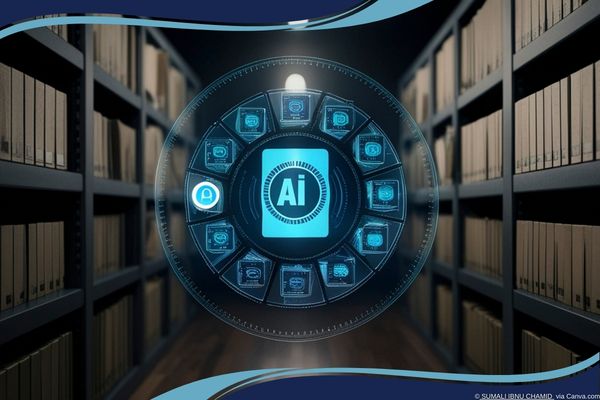
This South African University Just Schooled Everyone on AI
By Vicky Sidler | Published 28 January 2026 at 12:00 GMT+2
Universities aren’t known for moving quickly. But when they do, it usually means something important just happened or someone spilled coffee on the mainframe.
In this case, it’s the former.
North-West University has become the first South African university to adopt an official Artificial Intelligence policy. That’s right. While everyone else is still arguing about whether students should use ChatGPT to write essays, NWU quietly wrote a rulebook for the whole system.
According to The Citizen, the policy sets a human-first, ethics-aware, actually-structured framework for how AI will be used in teaching, research, assessment, and administration.
If that sounds boring, it’s only because you’ve never had to clean up a mess caused by vague expectations, rogue automation, or a team member who thinks “human oversight” is optional.
This isn’t just a win for academia. It’s a masterclass for every business still “figuring out” what to do with AI.
TL;DR:
NWU is the first SA university with a formal AI policy
The policy sets clear rules for using AI in teaching, research, and operations
It was designed to be flexible, ethical, and human-centred
Small businesses can learn from NWU’s structured, accountable approach
No matter your size, AI without guardrails invites chaos disguised as efficiency
👉 Need help getting your message right? Download the 5 Minute Marketing Fix.
Table of Contents:
This South African University Just Schooled Everyone on AI
When Universities Move Before Tech Startups:
Small Business? Smaller Margin for Error.
Human-Centred Sounds Cute Until Someone Gets Sued:
You Don’t Need a Policy Document. You Need a Backbone.
Clarity Outperforms Speed. Every Time.
1. AI Is Making Big Decisions in South Africa Without You
2. Marketing Confidence 2026: Why Most Teams Feel Lost
3. Why Privacy Still Matters in the Age of AI
5. AI Predictions for 2026: Here's What Chatbots Think Happens Next
Frequently Asked Questions About AI Policies for Small Businesses
1. What is an AI policy and why would a small business need one?
2. How do I create an AI policy for my small business?
3. Can I just let staff figure out their own AI use?
4. Is AI safe to use for client work or marketing content?
5. Do AI policies apply to freelancers or contractors?
6. What’s the risk of using AI without a policy in place?
7. What if I don’t have time to write a formal AI policy?
8. Does my business need to follow the same AI rules as a university?
9. What are examples of things AI should never do in my business?
10. Where can I start if I want to improve AI use in my business?
When Universities Move Before Tech Startups:
It’s a rare thing when the words “university policy” and “practical model for business” appear in the same sentence, but here we are. NWU didn’t just acknowledge that AI exists. They built a system around it, starting with a simple principle: AI can be helpful, but it must remain accountable to humans.
In a world where most policies are either vague guesses or borrowed disclaimers, this one feels almost… responsible.
Professor Anné Verhoef, who heads NWU’s AI Hub, said what many are too nervous to admit. Most institutions are delaying their AI policies because AI changes too quickly. But instead of using that as an excuse to stall, NWU treated it like a design challenge. They made the policy broad and adaptable—just structured enough to matter, just loose enough to keep up.
Which is a polite way of saying: Stop pretending the AI problem will solve itself. It won’t.
Small Business? Smaller Margin for Error.
Let’s not pretend your business has a steering committee reporting to IT, reporting to Senate, reporting to management. You probably have Janine, who uses AI in marketing, and Pieter, who thinks it’s the devil. Somewhere between them is a spreadsheet.
But that’s exactly why a clear framework matters.
If a public university with thousands of stakeholders needs a policy to avoid confusion, what happens when your part-time assistant uploads the wrong AI-generated email to the wrong client?
The risk is not that someone uses AI. The risk is that no one agrees how or when or why.
Human-Centred Sounds Cute Until Someone Gets Sued:
Verhoef used the phrase “human-centred” more than once. Which is good. Because most AI tools are not centred on anything except speed and probability.
The university policy makes sure students, lecturers, researchers, and managers all know where the lines are. Not everyone gets the same access. Not every use case gets a green light. Roles are defined. Oversight exists. Decisions are documented.
This is governance. Not in the bureaucratic sense. In the “you can point to who’s responsible if it breaks” sense.
Small businesses need the same. Just with fewer meetings.
You Don’t Need a Policy Document. You Need a Backbone.
NWU’s strategy is impressive. But no one’s asking you to form an AI task force before breakfast. You just need clarity.
Three questions will do the job:
What AI tools are allowed in your business?
What decisions must be made by a human?
Who is responsible if AI causes a problem?
Answer those, write them down, and make sure everyone knows. That’s 80% of a policy already done.
Because pretending AI isn’t part of your business won’t stop it from being used. It just stops you from seeing the risks before they hit.
Clarity Outperforms Speed. Every Time.
What NWU just did is rare: take a fast-moving tool and build guardrails without stopping the car. That’s smart leadership. That’s what gives people the confidence to use a new system properly.
In small business, the same rule applies. Confusion costs trust. And once trust goes, clients go with it.
So if you’re trying to build marketing systems that don’t accidentally eat your reputation for lunch, start with clarity.
Get your core message sorted. Know what you do, how you help, and what problem you solve. That’s your anchor when the tools change. AI or not.
Download the free 5-Minute Marketing Fix and get one clear sentence that keeps your message sharp, your team aligned, and your brand intact.
Related Articles:
1. AI Is Making Big Decisions in South Africa Without You
AI is already shaping outcomes for small businesses across South Africa—from finance to marketing visibility—without your knowledge or input. This is why internal governance isn’t optional.
2. Marketing Confidence 2026: Why Most Teams Feel Lost
If NWU’s structured AI framework makes sense to you, this article explains how the same principle of clarity builds better marketing systems for your team. It’s the other half of the clarity equation.
3. Why Privacy Still Matters in the Age of AI
This piece highlights the serious privacy risks small businesses face when AI tools are used without oversight. It’s a sobering follow-up to why NWU was wise to lead with accountability.
4. Tired of ChatGPT and Claude? Here are three underrated AI tools small businesses can use for automation, content, and smarter workflows
You’ve seen what responsible AI policy looks like. Now see which tools actually fit within a structured, ethical use case for small business owners.
5. AI Predictions for 2026: Here's What Chatbots Think Happens Next
NWU’s policy was built to be flexible—because the future of AI is accelerating. This article offers a peek into what’s next and why your business should prepare now, not later.
Frequently Asked Questions About AI Policies for Small Businesses
1. What is an AI policy and why would a small business need one?
An AI policy is a set of internal rules that guide how artificial intelligence tools are used in your business. It helps you avoid confusion, prevent mistakes, and protect your team, clients, and reputation by making it clear who can use AI, for what tasks, and under what conditions.
2. How do I create an AI policy for my small business?
Start with three questions:
Which AI tools are allowed?
What decisions still need human approval?
Who is responsible if something goes wrong?
Write down your answers and share them with your team. That’s your starter policy.
3. Can I just let staff figure out their own AI use?
You could, but you’ll also be accepting the risk of inconsistent results, misused data, and potential client fallout. Without shared expectations, every staff member becomes their own IT department—and that rarely ends well.
4. Is AI safe to use for client work or marketing content?
It can be, if you set clear guardrails. AI is great for idea generation, outlining, or drafting—but final decisions should still be made by a human who understands your brand, your clients, and the context.
5. Do AI policies apply to freelancers or contractors?
Yes. If they’re doing work under your business name, they need to follow the same rules. Make sure your expectations are written down and included in any onboarding or project brief.
6. What’s the risk of using AI without a policy in place?
Inconsistent quality, compliance issues, privacy risks, and brand damage. If AI outputs something inaccurate or inappropriate and no one catches it, the fallout still lands on your business.
7. What if I don’t have time to write a formal AI policy?
You don’t need a 10-page document. Even a one-page outline with clear dos and don’ts is better than nothing. The point is to stop winging it and give your team something to work from.
8. Does my business need to follow the same AI rules as a university?
Not exactly. But the principles are the same: clarity, accountability, and human oversight. What NWU did at scale, you can do in a simplified way that suits your size and industry.
9. What are examples of things AI should never do in my business?
Make legal, hiring, or financial decisions without review. Share client data with third-party tools. Replace human judgment in sensitive or complex situations. Always keep a human in the loop.
10. Where can I start if I want to improve AI use in my business?
Start by clarifying your message. That gives you the foundation to build consistent marketing, choose the right tools, and communicate expectations. Use the free5-Minute Marketing Fix to get one clear sentence that anchors everything else.

Is your Marketing Message so confusing even your own mom doesn’t get it? Let's clarify your message—so everyone wants to work with you!





Created with clarity (and coffee)