
STORY, MEET STRATEGY
Let’s make marketing feel less robotic and more real.
Find resources that bring your message—and your business—to life.

AI Bubble Threatens the Whole Economy If It Bursts
By Vicky Sidler | Published 2 December 2025 at 12:00 GMT+2
Right now, AI is doing more than writing poems, sorting spreadsheets and helping teenagers fake essays. It’s holding up the US economy. Not metaphorically. Not as a side effect. Directly.
According to Futurism, AI investment has become so massive, it's now the main force driving economic growth in the United States. Think stimulus package, but privately funded and completely unregulated.
So what happens if that money vanishes?
TL;DR:
AI infrastructure spending has outpaced even the dot-com era
AI is contributing more to US growth than all consumer spending combined
Investors are pumping trillions into AI companies without clear proof of return
If the AI sector collapses, the economic fallout could rival or exceed the 2000s crash
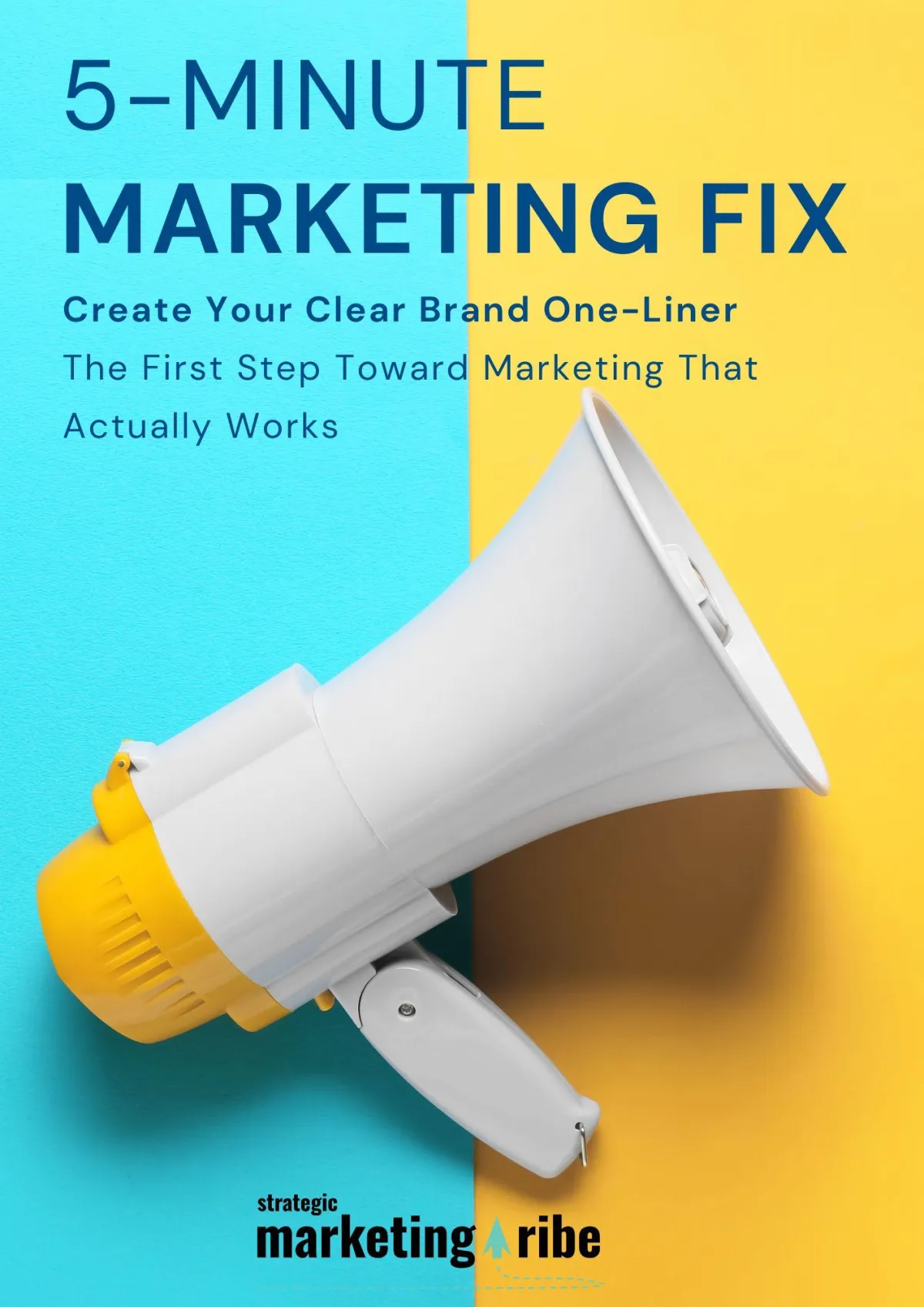
👉 Need help getting your message right? Download the 5 Minute Marketing Fix.
Table of Contents:
AI Bubble Threatens the Whole Economy If It Bursts
AI Spending Is Holding Up the Economy:
Companies Are Riding the AI Hype Wave:
What This Means for Small Business Owners:
So Is It a Bubble or a Bull Run?
1. Don’t overbuild around one tool:
2. Watch how your suppliers and clients are spending:
1. OpenAI’s $27B Loss Could Tank the Whole AI Industry
2. AI Investment Gap Hits $600B—Here’s What That Means for You
3. AI Strategy Risks: What Executives Keep Missing
4. AI Industry’s Profit Problem Just Got Real
5. AI Slop Is Breaking the Internet—Here’s What Small Brands Can Do
Frequently Asked Questions About the AI Bubble and Small Business Risk
1. What is the AI bubble and why does it matter?
2. How is AI spending impacting the economy?
3. Could the AI bubble pop like the dot-com crash?
4. Why are trillion-dollar companies like Microsoft and Nvidia part of the problem?
5. Is there any government regulation to prevent this?
6. Why should small business owners care about an AI crash?
7. How can I protect my business from the risks?
8. Is AI still useful for small business?
AI Spending Is Holding Up the Economy:
You would think consumer spending drives the economy. You buy a fridge. Someone else buys a car. Everyone’s happy. But 2025 had other plans.
Capital spending on AI infrastructure has had a bigger impact on US economic growth this year than all consumer spending put together. That’s not a typo.
This level of spending hasn’t been seen since the dot-com boom. Investor Paul Kedrosky says it’s already exceeded the telecom and internet infrastructure surge that led to the 2000 bubble. And we all know how that ended.
Except this time, it’s worse.
Why? Because this isn’t just funding websites and search engines. It’s propping up everything from cloud computing to data centers to utilities. Entire industries are being built on a technology that hasn’t proven it can deliver consistent financial returns.
Companies Are Riding the AI Hype Wave:
Nine AI companies have now joined the $1 trillion valuation club. Nvidia alone tripled to $4 trillion in under a year. Microsoft, hot on its heels, matched that number recently. And it's not just the big names. Billions are being thrown at startups with no business model beyond “we’re doing AI stuff.”
Here’s where it gets a little weird.
Microsoft just reported that it spent $30 billion in one quarter building out its AI capabilities. That’s not product sales or profit. That’s infrastructure. And who’s buying it? Other AI companies trying to do the same thing.
In short, we’re looking at a feedback loop. AI companies buy AI computing power from other AI companies using investor money raised because AI is hot. And around it goes.
If you’re wondering what happens when that loop breaks, the answer is: probably nothing good.
The ROI Isn’t Clear:
For all the buzz, AI still hasn’t proven it can deliver long-term profits. Chatbots are popular but expensive to run. Users love them, but most aren’t paying. Free usage habits are hard to break. And even enterprise tools are still figuring out how to justify the cost.
Nvidia sells the chips. Microsoft sells the cloud services. But if their customers don’t make money on AI tools, the whole tower starts to wobble.
It’s like selling shovels in a gold rush where the gold turns out to be glitter. Nice margins, until the digging stops.
Salaries, Not Strategy:
Meanwhile, AI executives are acting like it’s 1999. Talent is getting billion-dollar offers. Yes, billion with a B. Not for revenue, not for assets. Just to get someone to change jobs.
This would be fine if everything else was in balance. But when AI salaries make sports contracts look modest, you know the market is tilting.
No One’s Regulating This:
The US government has, so far, decided to sit this one out. According to Futurism, there’s little interest in antitrust or regulation. Which is handy for executives, but risky for everyone else.
If this does turn into a crash, don’t expect much of a safety net.
What This Means for Small Business Owners:
You might be wondering why this matters to you. You’re not building AI chips or buying up server farms. But here’s the thing.
When a massive part of the economy is floating on hype, everyone is affected if that hype deflates. If the bubble pops:
Stock markets tumble
Banks tighten credit
Investors pull out of small businesses
Clients delay projects or cut budgets
Even software tools could get disrupted
Remember how the dot-com crash and 2008 meltdown rippled into every industry? This could be bigger.
So Is It a Bubble or a Bull Run?
Some analysts are still calling this a long-term bull market saying the AI surge could last. They may be right. Maybe AI delivers enough value to justify the costs. Maybe the returns just need time.
But if they’re wrong, we’re looking at the kind of collapse that doesn’t just reset the market. It rewires it.
What You Can Do Right Now:
As a small business owner, you’re not here to predict the economy. But you can do a few smart things:
1. Don’t overbuild around one tool:
Use AI, but don’t depend on it for everything. Trends shift faster than you can say “GPT-6.”
2. Watch how your suppliers and clients are spending:
If they’re betting the farm on AI, keep your backup plans ready.
3. Keep your messaging clear:
In a noisy market, clarity is currency. Confusion is expensive.
And if you want help with that last one, I’ve got something for you.
My free 5 Minute Marketing Fix helps you write one sentence that makes your business instantly clear to the people who matter.
Related Articles:
Here are a few handpicked articles that build on the ideas in this post. Each one offers another angle to help you stay ahead, make smart decisions, and grow without getting caught in the hype.
1. OpenAI’s $27B Loss Could Tank the Whole AI Industry
If the AI bubble bursts, OpenAI’s financial losses might be the first domino. This article breaks down why profitability still matters—and how to spot trouble before it hits.
2. AI Investment Gap Hits $600B—Here’s What That Means for You
Wondering where all the AI money is going? This post explains the growing gap between what’s being spent and what’s actually working.
3. AI Strategy Risks: What Executives Keep Missing
Before you copy what the big players are doing, read this. It lays out what’s going wrong with AI strategies—and how to avoid the same mistakes in your business.
4. AI Industry’s Profit Problem Just Got Real
This article dives into why many AI tools aren’t making money, what that means for users, and what small businesses should watch out for.
5. AI Slop Is Breaking the Internet—Here’s What Small Brands Can Do
If the internet starts collapsing under the weight of AI-generated junk, small brands will feel it first. Here’s how to keep your marketing clear, human, and trustworthy.
Frequently Asked Questions About the AI Bubble and Small Business Risk
1. What is the AI bubble and why does it matter?
The AI bubble refers to the massive amount of money being poured into AI technology, often without clear proof of long-term returns. If the hype doesn’t turn into real profit, the crash could affect the entire economy—including small businesses.
2. How is AI spending impacting the economy?
According to economic research, AI infrastructure spending is now contributing more to US economic growth than all consumer spending combined. That’s an enormous role for a still-unproven sector.
3. Could the AI bubble pop like the dot-com crash?
Yes. The current level of speculative investment is already higher than it was during the dot-com era. If AI companies fail to deliver on expected returns, the collapse could be even bigger.
4. Why are trillion-dollar companies like Microsoft and Nvidia part of the problem?
They’re investing heavily in AI infrastructure and selling tools to other AI companies—but if those customers can’t make money, the entire cycle could break. It’s like building castles out of IOUs.
5. Is there any government regulation to prevent this?
Not really. The US government hasn’t shown much interest in regulating or reining in AI companies, which increases the risk of unchecked expansion and collapse.
6. Why should small business owners care about an AI crash?
If the AI sector crashes, it could tighten credit, stall client projects, raise costs, and disrupt the tools you rely on. Even if you’re not in tech, the ripple effects can still hit hard.
7. How can I protect my business from the risks?
Stay diversified in your tech tools, don’t over-invest in unproven AI solutions, and make sure your marketing message is clear. Clarity builds trust when the market gets noisy.
8. Is AI still useful for small business?
Yes—but with limits. Use it to improve productivity, not to build your entire business around. And always have a plan for what happens if the tool stops working or becomes too expensive.
9. How do I know if a tool is part of the bubble?
If it costs a lot, promises the moon, and doesn’t clearly show results, be cautious. Focus on tools that help you serve your customers better and generate real value.
10. What’s one simple thing I can do right now?
Clarify your messaging so your audience instantly understands what you do and why it matters. 👉Download the 5 Minute Marketing Fix to get started.

Is your Marketing Message so confusing even your own mom doesn’t get it? Let's clarify your message—so everyone wants to work with you!





Created with clarity (and coffee)