
STORY, MEET STRATEGY
Let’s make marketing feel less robotic and more real.
Find resources that bring your message—and your business—to life.

AI Slop Is Killing Trust Online. What Now?
By Vicky Sidler | Published 23 February 2026 at 12:00 GMT+2
There was a time when the internet felt chaotic but at least human. Now it feels chaotic and slightly plastic, like a room full of mannequins who learned how to blink.
According to a recent New York Times Opinion podcast discussion, even experts are struggling to tell what is real and what is AI-generated. When photo editors and digital scholars admit they were fooled by fake images, we should probably sit up straighter in our chairs.
The bigger question is not whether AI can trick us. It clearly can. The real question is what happens to trust when nobody can tell what is real anymore.
TL;DR:
AI-generated slop is flooding social media platforms
Even experts struggle to identify fake images and videos
Social platforms have little financial incentive to slow it down
The more AI content we see, the more distrustful we become
Businesses that prove their humanity will win long-term.
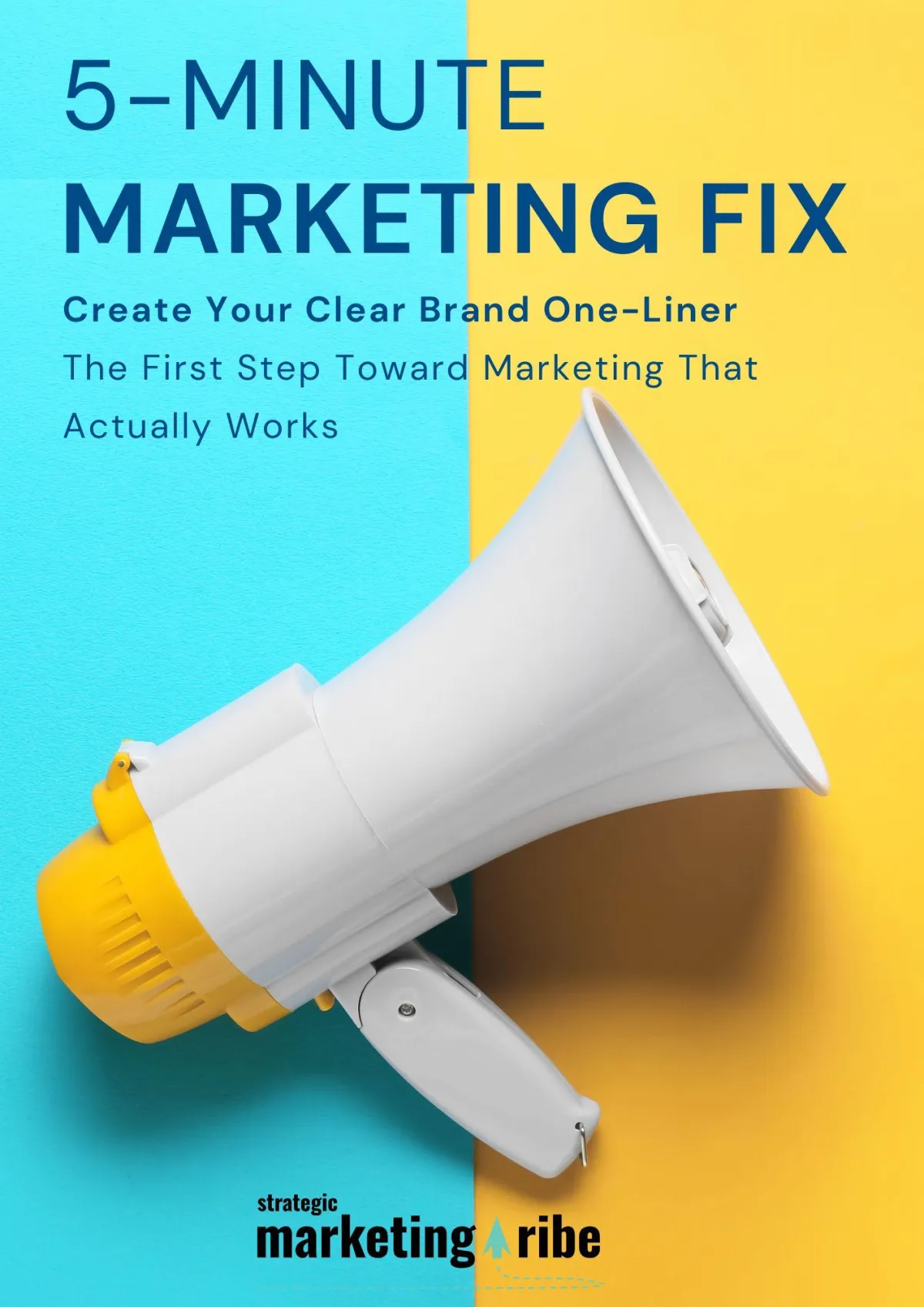
👉 Need help getting your message right? Download the 5-Minute Marketing Fix.
Table of Contents:
AI Slop Is Killing Trust Online. What Now?
Why This Is Bigger Than Fake Photos:
Why Human Proof Matters More Than Ever:
Will People Leave Social Media?
What Small Business Owners Should Do Now:
Frequently Asked Questions About AI Slop and Online Trust
1. What is AI slop and why is everyone talking about it?
2. How can I tell if an image or video is AI generated?
3. Why does AI content feel fake even when it looks real?
4. Is AI slop actually hurting small businesses?
5. Should I stop using AI in my marketing?
6. How can I protect my brand from being associated with AI slop?
7. Why don’t social media platforms just block AI slop?
8. Will people eventually leave social media because of AI content?
9. How do I build trust in a world full of AI content?
10. What is the simplest way to clarify my message right now?
The phrase "AI slop" sounds funny until you realize how accurate it is. It refers to mass-produced AI content designed to grab attention for a few seconds without offering depth, context, or truth. It looks real enough. It feels almost right. But something is slightly off, like a smile that does not reach the eyes.
Why This Is Bigger Than Fake Photos:
In the podcast, both guests described moments where they believed images that turned out to be AI-generated. One trusted the person who shared it. Another trusted her own professional instincts. Both were wrong.
That matters for small business owners because marketing is built on trust. If your audience cannot trust what they see online, they become cautious. When people become cautious, they stop clicking, stop sharing, and stop believing.
And here is the uncomfortable part. Social media platforms are not designed to fix this.
The Incentive Problem:
Tressie McMillan Cottom pointed out something most of us quietly suspect. Platforms are driven by engagement, not truth. If AI images keep people scrolling, reacting, and reposting, then from a business perspective, the system is working.
Engagement simply means attention and interaction. The longer someone stays on a platform, the more ads they see. The more ads they see, the more money the platform makes. Trust is not the primary metric. Time spent is.
For small business owners, this creates a strange environment. You are building a brand on platforms that are flooded with content that may not be real, and the platform itself does not necessarily prioritize helping users sort out the difference.
So what do you do?
The Emotional Test:
One practical insight from the discussion was surprisingly simple. If you enjoy a piece of content too much, interrogate it.
If it makes you feel strongly validated, outraged, or delighted in a way that seems almost too perfect, pause. Ask whether it makes you want to act. Share it. Buy something. Get angry. Those moments are when verification matters most.
As a business owner, this applies in reverse. If your marketing only aims for a quick emotional spike, you risk blending into the slop. If it is designed to wash over someone for eight seconds, they will treat it like everything else that washes over them.
That is not brand building. That is noise.
Why Human Proof Matters More Than Ever:
One of the most interesting trends mentioned was how some large brands now show behind-the-scenes footage of how their ads were made. They highlight real people, real craft, and real process to prove authenticity.
Authenticity in plain English means that something is genuinely what it claims to be. Not staged to look human. Actually human.
For service-based businesses, this is your opportunity. You do not need a behind-the-scenes film crew. You need visible proof of humanity.
That can look like:
Sharing real client stories with context
Explaining how you actually do your work
Showing your thinking, not just your results
Speaking in a voice that sounds like a person, not a press release
As a StoryBrand Certified Guide and Duct Tape Marketing Consultant, I often tell clients that clarity builds trust. Now we can add something else. Humanity builds resilience. When people know who you are and how you think, AI noise becomes less threatening.
Will People Leave Social Media?
Early research mentioned in the discussion suggests that the more AI content people see, the more distrustful they become of social media. Some users are already reducing their scrolling because it no longer feels social.
If that trend grows, platforms may eventually feel economic pressure to distinguish between human and AI content. But that will take time.
In the meantime, your job is not to fix the internet. Your job is to build a brand that feels real in a digital space that increasingly does not.
What Small Business Owners Should Do Now:
First, slow down your own sharing habits. If you cannot verify something quickly, do not attach your brand to it.
Second, focus on depth over volume. AI slop wins on scale because it is cheap and fast. You win on meaning because you are human and specific.
Third, clarify your message. In a noisy environment, confusion feels suspicious. Clear positioning, clear language, and clear outcomes help people decide you are safe to trust.
If you want help doing that, start with the 5-Minute Marketing Fix. It helps you craft one clear sentence that explains what you do and why it matters.
Because in a world where everything looks real and nothing feels certain, being clear and human is no longer optional. It is your competitive advantage.
Related Articles:
1. New research shows major AI models reproducing books almost word for word. Here’s what small business owners need to know.
If AI slop is eroding trust, this article explains the deeper copyright and ethics problem behind it. You will see why careless AI use in your own marketing could damage credibility and expose you to unnecessary risk.
2. Before trusting AI with business advice, ask this question. It could save your reputation, time, and money.
This post gives you a simple decision filter for when AI is helpful and when it is dangerous. It is the practical companion to this article if you want to protect your brand from low quality or misleading AI output.
3. AI generated junk reports have overwhelmed cURL’s bug bounty program. Here’s what small business owners can learn from the chaos.
A real world case study of what happens when automated noise floods a system built for real human input. If you handle leads, support tickets, or online forms, this will help you think ahead.
4. AI is shaping lives in South Africa without public input. Here’s what small businesses need to understand before it affects them too.
This article zooms out from content and looks at policy, power, and who controls AI systems. Read it to understand how AI will shape the rules your business operates under, not just your marketing feed.
5. What is StoryBrand and how does it help small businesses? Here’s the simple 7 part formula to clarify your message and win more customers.
If your response to AI slop is to build a clearer, more human brand, this is your next step. It walks you through the exact framework I use to help service businesses stand out in a noisy digital world.
Frequently Asked Questions About AI Slop and Online Trust
1. What is AI slop and why is everyone talking about it?
AI slop refers to low quality, mass produced AI generated content designed to grab attention quickly without offering depth, context, or originality. People are talking about it because it is flooding social media feeds and making it harder to trust what we see online.
2. How can I tell if an image or video is AI generated?
It is becoming harder to tell just by looking. Instead of relying only on visual clues, check who shared it, whether reputable news sources are reporting it, and whether it makes you feel strongly enough to want to act or share it. If it triggers a big reaction, pause and verify before engaging.
3. Why does AI content feel fake even when it looks real?
AI content can copy the structure of human writing or photography, but it often lacks emotional depth and context. You might recognise the format of a story or image, yet feel oddly disconnected from it. That emotional flatness is often what people describe as the “plastic” feeling of AI slop.
4. Is AI slop actually hurting small businesses?
Yes, indirectly. When audiences become more distrustful of what they see online, they hesitate to click, share, or buy. That scepticism does not just apply to fake content. It affects legitimate brands too, especially those that rely heavily on social media visibility.
5. Should I stop using AI in my marketing?
Not necessarily. AI can be helpful for brainstorming, outlining, or simplifying complex ideas. The risk comes when you rely on it to produce generic content without adding your own expertise, voice, and context. Use AI as a tool, not a replacement for your thinking.
6. How can I protect my brand from being associated with AI slop?
Be careful about what you repost or comment on. Verify news before sharing it under your business name. Focus on creating original content that reflects your real experience, real clients, and real perspective. Consistency and clarity build long term trust.
7. Why don’t social media platforms just block AI slop?
Most platforms are driven by engagement metrics such as time spent and interactions. If AI content keeps users scrolling and reacting, there is limited economic incentive to restrict it. That means the responsibility often falls on users and brands to be more selective.
8. Will people eventually leave social media because of AI content?
Early research suggests that higher exposure to AI generated content increases distrust. Some users are already reducing their time online. Whether this becomes a large scale shift depends on how platforms respond and how much users value authenticity over convenience.
9. How do I build trust in a world full of AI content?
Show your thinking. Share real examples and specific outcomes. Use plain language. Let people see the human behind the brand. Trust grows when people understand how you work and what you stand for, not just what you sell.
10. What is the simplest way to clarify my message right now?
Start with one clear sentence that explains what you do, who you help, and the result you deliver. If you need help shaping that, download the 5 Minute Marketing Fix and use it to refine your core message before creating more content.

Is your Marketing Message so confusing even your own mom doesn’t get it? Let's clarify your message—so everyone wants to work with you!





Created with clarity (and coffee)