
STORY, MEET STRATEGY
Let’s make marketing feel less robotic and more real.
Find resources that bring your message—and your business—to life.
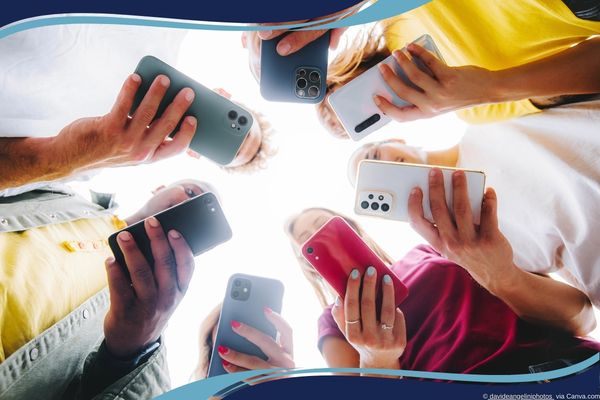
Gen Z Offline Trend: What Small Businesses Should Learn
By Vicky Sidler | Published 19 February 2026 at 12:00 GMT+2
There was a time when the ultimate flex was having thousands of followers and a perfectly curated feed. Now, according to CNBC, the new status symbol might be a lunch date, a vinyl record, and a phone that can barely send a text.
Yes, really.
A growing number of Gen Z and millennials are deleting social media apps, limiting screen time, and in some cases swapping smartphones for flip phones and brick phones. What started as a few detox posts has become what some are calling a quiet revolution.
Before you panic and assume marketing is dead, breathe. Social media is not disappearing. But something important is shifting, and small business owners would be wise to pay attention.
TL;DR
Nearly a third of Gen Z consumers have deleted at least one social media app in the past year
Global daily social media use has dropped by almost 10 percent since 2022
Young users say feeds feel like constant advertising and comparison
Offline activities like lunch dates, vinyl shopping, and in-person events are rising
This is less about quitting the internet and more about reclaiming balance
👉 Need help getting your message right? Download the 5-Minute Marketing Fix.
Table of Contents:
Gen Z Offline Trend: What Small Businesses Should Learn
The Numbers Are Not Imaginary:
Why Young People Are Pulling Back:
What This Means for Small Business Marketing:
1. Stop Acting Like an Algorithm:
2. Build Real-World Touchpoints:
3. Reduce Pressure in Your Messaging:
Offline Is Not Anti-Marketing:
1. Build Brand Loyalty Without the Noise
2. Dead Internet Theory: Are You Marketing to Bots?
3. Referral Marketing Stats 2025 — Why Word-of-Mouth Now Crushes Ads
4. Stop Targeting Everyone: Why Clarity Beats Volume
5. Get Different by Mike Michalowicz: Book Review for Small Business Owners
Frequently Asked Questions About Gen Z Going Offline
1. Are young people really quitting social media in 2026?
2. Why does social media feel more exhausting now than before?
3. Is this offline trend bad news for small businesses?
4. If people are spending less time online, how will customers find my business?
5. Should I stop posting on social media?
6. What does “analog marketing” actually mean for a service business?
7. How can I make my marketing feel less like pressure?
8. Is Gen Z rejecting advertising completely?
9. How do I stand out if everyone else is still chasing trends?
10. What is the first step I should take after reading this article?
The Numbers Are Not Imaginary:
A 2025 Deloitte survey of more than 4,000 people in the UK found that nearly a quarter of consumers had deleted a social media app in the previous 12 months.
For Gen Z, that number rose to almost one in three.
Meanwhile, analysis from the Financial Times and research firm GWI showed that average daily social media use dropped to two hours and 20 minutes by the end of 2024, down almost 10 percent from its 2022 peak.
That is not a collapse. But it is a correction.
And corrections change strategy.
Why Young People Are Pulling Back:
To understand what this means for your business, you need to understand the mood.
Many young adults describe social media as less fun and more exhausting. Feeds feel crowded with influencer promotions, brand ads, artificial intelligence-generated content, and constant lifestyle comparisons. Jason Dorsey from the Center for Generational Kinetics points out that Gen Z is the most advertised-to generation in history. When your feed feels like commercial after commercial, logging off starts to feel like self-defense.
In plain English, people are tired.
Some cite mental health. Others mention loneliness, comparison, and a sense that everything online is curated and slightly fake. A University of Sheffield lecturer described social media identity as an exhausting editing process. That constant performance has a cost.
So what are they doing instead?
They are going analog.
Vinyl records. Physical letters. Lunch dates. Speed dating events. Professional networking in real rooms with real chairs. Some are even experimenting with flip phones that can do little more than call and text.
Offline, it turns out, is becoming cool again.
What This Means for Small Business Marketing:
Now here is the part where you might assume this is bad news. If young people are leaving social platforms, does that mean your Facebook or Instagram strategy is pointless?
Not exactly.
According to GWI analyst Chris Beer, this looks more like a post-pandemic time correction than a total rejection of digital media. People are simply spending more time outside their homes and therefore less time scrolling. Social media is still deeply integrated into shopping, news, and education.
So the internet is not dying. But attention is fragmenting.
As a StoryBrand Certified Guide and Duct Tape Marketing Consultant, I see this as a clarity moment.
When attention drops, noise becomes expensive. So here are three things to keep in mind.
1. Stop Acting Like an Algorithm:
Many business feeds now read like they were written by a machine that studied other machines. Trending sounds. Trending hooks. Trending formats. All chasing reach.
If users are rebelling against algorithmic overload, then businesses that feel human will stand out. That does not mean posting less. It means posting with intention.
Instead of asking, “How do I get more views?” ask, “How do I create something worth stepping offline for?”
2. Build Real-World Touchpoints:
If lunch dates and in-person events are rising, can your business show up physically?
Service-based businesses in particular have an advantage here. Workshops. Meetups. Client appreciation events. Small networking breakfasts. Even handwritten thank you notes.
Analog is not anti-digital. It is pro-relationship.
The businesses that win in this shift will be the ones that blend both worlds gracefully.
3. Reduce Pressure in Your Messaging:
One of the strongest themes in the article is pressure. Pressure to perform. Pressure to buy. Pressure to keep up.
If your marketing feels like shouting, people will scroll past or close the app entirely. Instead, focus on calm clarity.
In StoryBrand terms, that means clearly naming your customer’s problem and positioning yourself as a guide. Not as a loud hero demanding attention.
When the world feels noisy, calm brands feel safe.
Offline Is Not Anti-Marketing:
It is tempting to frame this as young people rejecting advertising altogether. That would be comforting if you dislike marketing. Unfortunately, it is not true.
They are rejecting constant interruption.
They are rejecting endless comparison.
They are rejecting the feeling of being sold to every time they open an app.
What they are not rejecting is value.
If your business solves a real problem and communicates it clearly, people will still find you. They may just find you through a smaller number of platforms, or through a friend, or at a networking event, or through search rather than scrolling.
Which brings us to the real takeaway.
This trend rewards businesses that are clear, consistent, and human.
If your message depends entirely on chasing trends, it will feel outdated the moment the trend shifts. But if your message is rooted in a clear problem and solution, it travels well across platforms and even into real-world conversations.
That is why I always bring clients back to one question.
Can you explain what you do in one sentence that a tired, slightly overwhelmed human can understand?
If not, now is a good time to fix that.
Download the free 5-Minute Marketing Fix. It will help you craft a clear one liner that works whether your customer finds you online, at a coffee shop, or in a record store flipping through vinyl.
Related Articles:
1. Build Brand Loyalty Without the Noise
If this article made you rethink how loud your marketing feels, this post shows how to build loyalty through trust and connection rather than adding to the noise that is driving people offline.
2. Dead Internet Theory: Are You Marketing to Bots?
Young people say feeds feel fake and hollow. This article explores why much of the traffic online is not even human and how to create marketing that cuts through with real presence.
3. Referral Marketing Stats 2025 — Why Word-of-Mouth Now Crushes Ads
If attention is shifting from scrolling to real world conversations, this piece shows the data behind word of mouth and gives practical ways to generate more referrals.
4. Stop Targeting Everyone: Why Clarity Beats Volume
When noise becomes expensive, clarity becomes powerful. This article explains why narrowing your audience and sharpening your message attracts better customers.
5. Get Different by Mike Michalowicz: Book Review for Small Business Owners
If you are tempted to chase every trend for reach, this review breaks down a framework for standing out by being deliberately different and unmistakably human.
Frequently Asked Questions About Gen Z Going Offline
1. Are young people really quitting social media in 2026?
Not entirely, but many are reducing their use or deleting specific apps. Surveys show a noticeable percentage of Gen Z have removed at least one platform, often due to burnout, mental health concerns, or advertising overload. It is more about resetting boundaries than disappearing from the internet completely.
2. Why does social media feel more exhausting now than before?
Many users say feeds are packed with ads, influencer promotions, artificial intelligence generated content, and constant comparison. When every scroll feels like a sales pitch or a performance, people naturally start pulling back to protect their attention and mental space.
3. Is this offline trend bad news for small businesses?
Not necessarily. Social media is still widely used, but attention is more selective. Businesses that rely only on chasing reach may struggle. Those that communicate clearly, build trust, and create real relationships can still grow.
4. If people are spending less time online, how will customers find my business?
Discovery is shifting toward referrals, search engines, in person events, and trusted recommendations. Word of mouth, networking, and strong positioning matter more when scrolling declines. Being clear about what you do helps people talk about you offline.
5. Should I stop posting on social media?
No. Social platforms are still powerful tools. The shift suggests you should post with intention rather than volume. Focus on helpful, human content instead of copying trends that feel generic or overly promotional.
6. What does “analog marketing” actually mean for a service business?
It can mean hosting workshops, attending networking events, sending handwritten notes, or creating real world experiences that deepen relationships. It is not about abandoning digital tools. It is about balancing them with meaningful offline touchpoints.
7. How can I make my marketing feel less like pressure?
Reduce hype and focus on clarity. Clearly explain the problem you solve and who you help. Speak calmly and directly. When your message feels grounded and useful instead of urgent and noisy, people are more likely to trust you.
8. Is Gen Z rejecting advertising completely?
No. They are rejecting constant interruption. If your marketing is relevant, honest, and clearly tied to a real need, it can still resonate. The key difference is that attention must now be earned rather than assumed.
9. How do I stand out if everyone else is still chasing trends?
Start with positioning. Define a specific audience and a specific problem. When your message is focused, it becomes easier to remember and recommend. Being distinct often works better than being everywhere.
10. What is the first step I should take after reading this article?
Clarify your message so it works both online and offline. If someone meets you at a lunch date or networking event, they should instantly understand what you do and why it matters. A simple, sharp one-liner is the foundation for everything else. Download the free5-Minute Marketing Fix for help with that!


Is your Marketing Message so confusing even your own mom doesn’t get it? Let's clarify your message—so everyone wants to work with you!






Created with clarity (and coffee)