

STORY, MEET STRATEGY
Let’s make marketing feel less robotic and more real.
Find resources that bring your message—and your business—to life.
Taylor Swift Deepfake AI Video Sparks Trust Crisis
By Vicky Sidler | Published 21 February 2026 at 12:00 GMT+2
There was a time when seeing a celebrity on video meant something. If Taylor Swift appeared on your screen, you assumed it was, in fact, Taylor Swift. That era may have quietly expired.
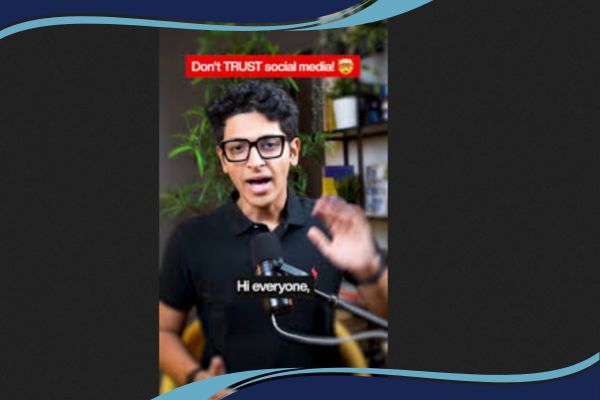
According to Storyboard18, a 23-second AI-generated clip created by YouTuber Ishan Sharma has gone viral on X and Instagram. In it, he morphs into Taylor Swift, Ranveer Singh, Donald Trump, and other public figures with eerie precision. He opens the video by calmly telling viewers that you can no longer trust anything you see on social media. Then he proves it by changing his face, age, gender, and voice in seconds.
At one point, speaking in a voice that sounds like Trump, he claims he is not even recording the video because it is entirely generated by AI.
The caption reads, “We are soo cooked!” The internet response suggests many people agree.
This is not just celebrity entertainment. It is a trust problem.
The comments under the post range from impressed to alarmed. One user wrote that the demo proves why checking sources matters. Another wondered how anyone will separate fake from real in the future. Others warned people to inform their parents because scams are already spreading quickly.
For small business owners, this is not theoretical. It is practical.
TL;DR:
A viral AI video shows a creator morphing into Taylor Swift and other global figures
The deepfake faces and voices look realistic enough to fool most viewers
AI tools now make identity fabrication fast and accessible
Misinformation and scams are becoming harder to detect
Small business owners must actively protect brand trust
👉 Need help getting your message right? Download the 5-Minute Marketing Fix.
Table of Contents:
Taylor Swift Deepfake AI Video Sparks Trust Crisis
What Is a Deepfake in Plain English?
Why This Matters for Your Business:
Practical Steps to Protect Your Brand:
1. Strengthen direct communication
2. Secure your digital accounts
4. Build a consistent brand voice
Guardrails May Come, But Slowly:
The Bigger Lesson for Small Businesses:
1. Deepfake Scams Cost $1.1 Billion on Social Media
2. AI Fraud Crisis Warning—What Small Biz Must Do Now
3. Digital Scams Targeting Women Are Getting Smarter—Here's How to Stay Safe
4. Small Businesses Are Being Targeted—Here’s What Cybersecurity Stats Say in 2025
Frequently Asked Questions About Deepfake AI and Business Trust
1. What is a deepfake AI video in simple terms?
2. How can I tell if a video online is a deepfake?
3. Can someone create a deepfake of me or my business?
4. How are deepfakes used in scams?
5. What should I do if I see a fake video of myself online?
6. How can I protect my small business from deepfake scams?
7. Is video still trustworthy for marketing?
8. Will governments regulate deepfake AI?
9. Can deepfake detection tools reliably spot fake videos?
10. Why does this matter so much for service-based businesses?
What Is a Deepfake in Plain English?
A deepfake is a video or audio clip where artificial intelligence replaces someone’s face or voice with another person’s.
Artificial intelligence, or AI, uses machine learning to study patterns from huge amounts of data. It learns how a face moves, how a voice sounds and how expressions shift. Then it recreates them convincingly.
What once required large budgets and advanced studios can now be done by individual creators using widely available software.
In short, video is no longer automatic proof.
Why This Matters for Your Business:
You might reasonably think you are not famous enough to be impersonated. Fame is not the point. Access and persuasion are.
Imagine a fake video of you asking clients to click a payment link. Imagine a voice note that sounds exactly like you instructing a team member to transfer funds. Imagine a fabricated testimonial using your face to promote a service you have never endorsed.
Deepfakes make fraud more believable.
When trust is the foundation of your service business, that is a serious risk.
As a StoryBrand Certified Guide and Duct Tape Marketing Consultant, I spend most of my time helping business owners clarify their message so clients trust them quickly. The deepfake era adds a second responsibility. You must not only build trust. You must protect it.
The New Marketing Reality:
There are three clear shifts happening.
First, video is no longer unquestionable evidence. Just because someone appears on screen does not mean they said those words.
Second, authority signals can be copied. Familiar faces, recognized voices, and branded backgrounds can all be simulated.
Third, misinformation travels faster than corrections. A fake clip can go viral in hours while the truth tries to catch up politely behind it.
This means your reputation is now partly a cybersecurity issue.
Practical Steps to Protect Your Brand:
Instead of panic, focus on preparation. Here are four ways to start doing that today:
1. Strengthen direct communication
Encourage clients to verify unusual requests through a second channel. If they receive a surprising video or voice message, they should confirm via your official email or phone number listed on your website. This is called multi-channel verification, which simply means double-checking through another trusted method. Banks encourage this all the time. You need to do something similar.
2. Secure your digital accounts
Use strong passwords and enable two-factor authentication on every platform. Two-factor authentication adds an extra security step, usually a code sent to your phone, making it harder for someone to hijack your accounts.
3. Educate your audience
Be proactive. Let customers know how you normally communicate and what you will never do. For example, if you never request urgent payments through social media messages, say so clearly. Again, follow the example of major banks here. Transparency builds credibility.
4. Build a consistent brand voice
This is where marketing becomes protection. When your messaging is clear and consistent, clients recognize your tone and values. A deepfake may copy your face, but it cannot easily replicate years of consistent communication and behavior.
Clarity is not just persuasive. It is defensive.
Guardrails May Come, But Slowly:
The viral video has reignited calls for regulations and detection tools. Governments are discussing watermarking systems and content verification, but policy moves slower than technology.
You cannot wait for regulators to solve your trust problem.
You can strengthen your brand now.
The Bigger Lesson for Small Businesses:
The Taylor Swift deepfake moment is not really about Taylor Swift. It is about the collapse of visual certainty online.
For service based businesses especially, trust is your most valuable asset. In a world where faces and voices can be fabricated, authenticity becomes even more powerful.
Make it easy for clients to recognize the real you. Communicate clearly. Encourage verification. Keep your messaging sharp and simple so no one has to guess.
If you want to tighten up your message so customers understand exactly who you are and what you do, start with one clear sentence.
Download the free 5-Minute Marketing Fix and create a message that is unmistakably yours.
Related Articles:
1. Deepfake Scams Cost $1.1 Billion on Social Media
If the Taylor Swift deepfake felt unsettling, this article shows the financial reality behind it. It moves from viral shock to hard numbers, revealing how deepfake scams are already draining billions through the same platforms your customers use daily.
2. AI Fraud Crisis Warning—What Small Biz Must Do Now
This piece connects celebrity deepfakes to broader AI-driven fraud warnings, including high-profile industry alerts. It builds on the trust protection steps in this article and gives practical guardrails you can apply immediately.
3. Digital Scams Targeting Women Are Getting Smarter—Here's How to Stay Safe
Deepfakes are only one part of a larger scam evolution. This article explores how trust, emotion, and social platforms are being manipulated in very human ways that could affect your clients and team.
4. Small Businesses Are Being Targeted—Here’s What Cybersecurity Stats Say in 2025
If this article made you realize your reputation is now a cybersecurity issue, this one backs that up with current statistics. It provides a data-driven case for the simple security measures that protect your brand.
5. AI, Cybersecurity & Social Media Now Drive Small Business Growth—New 2025 Report Reveals Key Shifts
This final read zooms out from one viral moment and shows the bigger shift happening in small business. It reframes AI and cybersecurity not just as risks, but as strategic tools for building stronger trust and long-term growth.
Frequently Asked Questions About Deepfake AI and Business Trust
1. What is a deepfake AI video in simple terms?
A deepfake AI video is a clip where artificial intelligence replaces someone’s face or voice with another person’s. The result can look and sound real, even though the person never actually said or did those things.
2. How can I tell if a video online is a deepfake?
It is getting harder to spot. Look for small visual glitches around the mouth or eyes, unnatural blinking, strange voice tone shifts, or lighting that does not match the background. Most importantly, verify the source. If the video is not posted on an official account or confirmed by trusted news outlets, treat it cautiously.
3. Can someone create a deepfake of me or my business?
Yes. If there are videos, photos, or voice recordings of you online, AI tools can potentially use them to mimic your appearance or voice. You do not need to be famous. Public content is enough for impersonation attempts.
4. How are deepfakes used in scams?
Scammers may create fake videos or voice notes to request payments, change bank details, or manipulate employees into urgent actions. Because the message appears to come from a trusted person, victims are more likely to comply.
5. What should I do if I see a fake video of myself online?
Document it immediately with screenshots and links. Report it to the platform where it was posted. Inform your audience through your official channels and clearly state that the content is fake. Acting quickly helps limit confusion and protect your reputation.
6. How can I protect my small business from deepfake scams?
Use strong passwords and enable two-factor authentication on all accounts. Train your team to verify unusual requests through a second channel. Make it clear to clients how you normally communicate and what you will never ask them to do.
7. Is video still trustworthy for marketing?
Video is still powerful, but it is no longer automatic proof of authenticity. Trust now depends more on consistency, verified accounts, and clear communication than on visuals alone.
8. Will governments regulate deepfake AI?
Discussions are happening around watermarking and detection tools, but regulation often moves slower than technology. Businesses should not rely on policy changes alone to protect their brand.
9. Can deepfake detection tools reliably spot fake videos?
Some tools can identify manipulated media, but none are perfect. Detection technology is improving, yet creators are also improving their methods. Verification and direct communication remain essential.
10. Why does this matter so much for service-based businesses?
Service businesses rely heavily on personal trust. When faces and voices can be fabricated, maintaining credibility requires stronger messaging, clear verification processes, and consistent communication that clients recognize as genuinely yours.


Is your Marketing Message so confusing even your own mom doesn’t get it? Let's clarify your message—so everyone wants to work with you!






Created with clarity (and coffee)