
StoryBrand Marketing Agency
Is Your Marketing Message So Confusing Even Your Own Mom Doesn’t Get It?
We're an award-winning StoryBrand Marketing Agency that helps Service Businesses clarify their messaging so everyone wants to work with you!
✓ Build trust and authority in your industry
✓ Connect with CLIENTS WHO ACTUALLY GET IT
✓ MARKETING THAT FEELS NATURAL
WATCH THIS VIDEO
If your message isn’t landing—and the right clients aren’t showing up—it’s not your fault. Most service business owners are great at what they do. They just struggle to talk about it clearly.
In this video, I’ll walk you through how we fix that using the StoryBrand Framework, plus how to get started with either DIY or done-for-you options.

WHAT HAPPENS WHEN YOUR MESSAGE ISN’T CLEAR
Can your mom explain what you do?
Can you easily explain what you do?
Can anyone?
If not, that's the problem we fix.
Because when people don’t understand what you do, they move on. You end up working harder just to stay in the game.
You’re always re-explaining yourself
Your website doesn’t convert visitors into clients
Your leads aren’t the right fit
Referrals become scarce
Marketing is frustrating as all hell
But it doesn’t have to be this way. A clear message makes all of that easier. It’s the difference between chasing leads—and attracting the right ones.
You might not believe it yet, but marketing can actually be the opposite of frustrating when you're doing it right.
MAKE YOUR MARKETING Simpler
Whether you want to learn the system or hand it over completely, the goal is the same: clear messaging that brings in better clients with less effort.
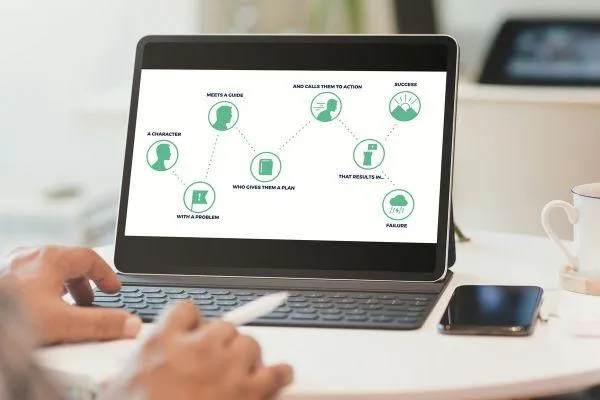
A DIY SYSTEM THAT’S SIMPLE TO FOLLOW

for weekly group coaching, templates, and a proven system that fits seamlessly into your week—without taking over your life.
.

COACHING THAT MEETS YOU WHERE YOU ARE
Want someone to walk you through it? Get 1:1 or team coaching to clarify your message and apply the StoryBrand Framework to your business in real time.
.

DONE-FOR-YOU MARKETING
Too busy to do it yourself? We’ll build your messaging, write your copy, create the assets you need, and handle your StoryBrand marketing—so you can stay focused on running your business.
HI, I'm Vicky Sidler
And I’VE BEEN WHERE YOU ARE

I know how it feels to stare at your marketing and think, “Why isn’t this working?” That's why I created a StoryBrand Marketing Agency.
All in all, your business isn’t just another brick in the wall—it’s something special. Your story matters, and I’m here to help you share it in a way that feels real, connects with people, and gets results.
As a certified StoryBrand Guide, I specialize in turning complicated ideas into clear, compelling messages that resonate with your audience.
With a background in journalism, I’ve spent decades telling stories that matter and crafting content people want to read.
I’ve developed a proven system to help businesses like yours cut through all the AI trash that's out there and build genuine connections with their audience.
Your story isn’t just important—it’s the reason people will choose your business. Let’s make sure it’s heard loud and clear by the people who need it most.
And sorry if I got Pink Floyd stuck in your head just now...
Hear Directly from DONALD MILLER
In this short clip, StoryBrand’s founder Donald Miller explains why clear messaging and a simple marketing plan change everything.
Donald shares why newsletters are back, what a full StoryBrand campaign includes, and how a certified guide helps you focus on what actually works—without wasting money or time.
Watch to see how working with a StoryBrand Certified Guide can make a measurable difference for your business.
EVERYTHING STORYBRAND, ALL IN ONE PLACE
Whether you need help with strategy, websites, content, or SEO, I offer the full range of StoryBrand marketing services—done with you or done for you.
StoryBrand Framework
StoryBrand Wireframe
StoryBrand Websites
StoryBrand SEO
StoryBrand Video
StoryBrand Copywriting
StoryBrand Email Sequences
StoryBrand Marketing Funnels
StoryBrand Workshops
StoryBrand Consulting
StoryBrand PPC
StoryBrand Lead Generation
StoryBrand
Social Media
StoryBrand Strategy
StoryBrand Content Marketing
StoryBrand Local Service
StoryBrand Coaching
MARKETING THAT DOESN’T TAKE OVER YOUR LIFE
Whether you want to build it yourself or hand it off completely, as a StoryBrand Marketing Agency, we’ll give you a clear message and a simple system that actually works.

1
BOOK A COFFEE CHAT
This is a no-pressure, non-sales call where we discuss what’s working, what’s not, and where you want to go.
.
2
CHOOSE YOUR PATH
Get hands-on support through the StoryBrand Course, 1:1 or team coaching, or let me build the entire marketing system for you—messaging, website, emails, and more.
.
.

3
FIX YOUR MARKETING
Walk away with a message that resonates, a plan that’s easy to follow, and marketing that works while you sleep and finally delivers results.
COFFEE’S ON US (OK, NOT REALLY)
But we’re serious about helping you connect with your audience. Let’s grab a coffee (on Zoom) and chat about your marketing goals.
Wondering how to simplify your message? Let’s talk.
Ready to stand out in an AI-saturated world? We’ve got ideas.
Just need clarity? We’ll help you see the big picture.
This isn’t a sales call – just a friendly, low-pressure chat. At the very least, you’ll walk away with some cool ideas you can try on your own.
SCHEDULE YOUR COFFEE CHAT WITH US TODAY
FIXING YOUR MARKETING SHOULDN’T FEEL IMPOSSIBLE
Most small business owners aren’t marketers—they just want to explain what they do in a way that makes people care.
But when the message isn’t clear, everything else gets harder: websites don’t convert, leads go cold, and social posts fall flat.
You might worry that getting it right will take too much time, cost too much money, or feel like just another online course you’ll never finish.
That’s why I offer three simple paths: do-it-together support through the StoryBrand Course, 1:1 and team coaching, or done-for-you services where I build your full funnel myself.
You’ll get clear messaging, practical templates, and real support—so your marketing finally works and your business actually grows.
YOUR QUESTIONS, ANSWERED
We know marketing can feel overwhelming, and you probably have questions. That’s why we’ve put together answers to the things people ask us most.
What makes Strategic Marketing Tribe different from other StoryBrand marketing agencies?
We’re the StoryBrand marketing agency that skips the boring "corporate speak." We blend the power of StoryBrand with strategic marketing solutions to craft content that feels human, genuine, and impossible to ignore.
How can your strategic marketing solutions benefit my business?
Our strategic marketing solutions simplify your message, clarify your brand story, and help you connect with your ideal customers. It’s marketing that makes sense and gets results – no jargon, no gimmicks, just growth.
What is StoryBrand, and why does it matter?
Think of StoryBrand as a cheat sheet for marketing clarity. It helps you explain what you do in a way that makes people stop, listen, and say, “Oh, I get it.” We use it to create marketing that feels human and that your audience will actually enjoy reading.
Do I need to be familiar with StoryBrand to work with you?
Not at all! Whether you’re a StoryBrand superfan (like us!) or have no idea what it is, we’ll walk you through everything. We’re here to make the process simple, clear, and (dare we say) fun.
How do I know if this is right for my business?
If people keep saying “I don’t really get what you do,” or you’re getting the wrong kind of leads, it’s a sign your message needs work. That’s what we fix.
What if I don’t have time to take a course?
The course is built for time-strapped business owners. You get short lessons, plug-and-play templates, and live support so you’re never stuck or overwhelmed.
What’s the difference between the course and the done-for-you service?
The course gives you training, tools, and weekly support so you can do it yourself. The done-for-you option means I build your whole funnel for you.
How long does it take to see results?
Most people see clearer messaging and better engagement within a week of applying the one-liner. Bigger results (like leads and conversions) follow as you apply it across your marketing.
What if I’ve already tried StoryBrand and it didn’t work?
Many people try to apply StoryBrand on their own and miss key parts. This course walks you through it step-by-step, with real examples and live feedback from a Certified Guide.
STORY, MEET STRATEGY
Let’s make marketing feel less robotic and more real. Find resources from a StoryBrand Marketing Agency that bring your message—and your business—to life.

AI Predictions for 2026: Here’s What Chatbots Think Happens Next
By Vicky Sidler | Published 15 January 2026 at 12:00 GMT+2
When the machines start making their own predictions, you know we’ve crossed into new territory.
According to a recent article by Eric Hal Schwartz for TechRadar, ChatGPT, Gemini, and Claude have all weighed in on what 2026 might look like. Not in a flying cars and robot butlers way, but in the small, quiet shifts that change how we work, shop, think, and run a business.
In other words, this isn’t a sci-fi forecast. It’s more of a “why is my calendar suddenly updating itself?” kind of future.
Let’s break down what the machines think is coming—and what it means for small business owners trying to keep up without losing their minds.
TL;DR:
AI will become invisible infrastructure in apps, tools, and websites
Expect smart assistants that act without asking first
Search results will offer answers, not links
Task automation will quietly expand behind the scenes
Decision fatigue may decrease, but so might personal control
👉 Need help getting your message right? Download the 5-Minute Marketing Fix
Table of Contents:
AI Predictions for 2026: Here’s What Chatbots Think Happens Next
ChatGPT Predicts AI That Feels Like a Background App:
Gemini Predicts AI That Acts Without Being Told:
Claude Predicts AI That Hears, Sees, and Interprets Context:
What This Means for Small Business Owners:
Before You Hand It All Over to AI, Think About This:
First, Your Privacy Isn’t Private:
Second, Who’s Responsible When It Breaks?
Your Role Isn’t Going Anywhere:
1. AI Search Is Replacing Google Traffic Faster Than You Think
2. OpenAI’s $27B Loss Could Tank the Whole AI Industry
3. Stop Wasting Money on Google PMax and AI Max
4. Content Marketing Boosts Revenue More Than Ads
5. Marketing Hourglass Explained: A Smarter Way to Grow Your Small Business
Frequently Asked Questions About AI Predictions for 2026
1. Will AI really be running in the background of everything in 2026?
2. What does it mean when AI becomes “invisible”?
3. Is AI going to replace Google search?
4. Will AI be able to make decisions for me?
5. What are the risks of always-on AI tools?
6. How will AI impact my small business in 2026?
7. What should I automate in my business—and what should I keep manual?
8. Can AI tools like ChatGPT or Claude be trusted with private business data?
9. What’s the biggest AI prediction small businesses should care about?
10. Where should I start if I want to prepare my business for this shift?
ChatGPT Predicts AI That Feels Like a Background App:
ChatGPT, ever the helpful assistant, thinks AI will become so seamless in 2026 that most people won’t notice it anymore. Instead of opening a chatbot and typing a request, your apps will simply know what to do. Like a personal assistant that acts before you speak.
You’ll go to check your calendar, and your meetings will already be moved to suit your energy levels. You’ll scroll past a half-written email, only to find it finished in your tone, signed, and ready to go.
Helpful? Definitely. Creepy? Just a little.
The real issue, according to ChatGPT, isn’t capability—it’s consent. When summaries replace full content, and decisions get made without asking you, you’re not just saving time. You’re giving up the chance to notice what’s being left out. A shortcut is only helpful if you agree with where it ends.
Gemini Predicts AI That Acts Without Being Told:
Google’s Gemini paints a more optimistic picture, though it still sounds like a to-do list written by someone who’s already outsourced their to-do list.
Gemini thinks 2026 will be the year of closed-loop automation. That’s a fancy way of saying your software will stop waiting for instructions. It will start observing, deciding, and acting.
Meetings will be attended by AI. Expense reports filed. Follow-ups assigned. Not because you asked, but because the system knew it had to be done.
Search results? Gone. Replaced by direct answers with no citations. Fast, clean, and a little murky.
It’s not all backroom automation, though. Gemini also sees AI stepping into your line of sight—literally—with smart glasses that overlay translations, instructions, or even personalized ads into your world. Not screens. Not apps. Just floating suggestions, right where your eyes are already looking.
The idea is that AI will save you from distractions. But it might also blur the line between your own thoughts and the nudges of a system that never sleeps.
Claude Predicts AI That Hears, Sees, and Interprets Context:
Claude, always the quiet thinker, agrees that AI will be passive and ever-present—but adds a layer of environmental awareness.
Imagine an app that hears your dog barking in the background and schedules a vet checkup. Or one that sees a medicine bottle in your photos and reminds you to refill a prescription. Claude believes AI will act more like a companion that picks up on context and reacts in helpful ways.
It will reschedule appointments across apps, compare your insurance documents, and manage home repairs. Not because you asked, but because it noticed.
Claude also sees AI becoming the tutor you never had. It will adapt to your learning style, your tone of voice, and even your attention span. Education gets more personalised. So does everything else.
The prediction is subtle but powerful. It’s not about flashy new tech. It’s about quiet saturation. By the end of 2026, AI may not wow you—it may simply blend in.
What This Means for Small Business Owners:
If you’re wondering whether this will make running your business easier or more frustrating, the answer is yes.
On one hand, these predictions point to fewer admin tasks. Less repetition. More time to focus on what matters. Your invoicing tool might chase late payments on its own. Your CRM might draft client check-ins. You might even get a gentle reminder to take a break before a migraine forms.
But there’s a flip side. When systems act on your behalf, they’re also deciding what matters. If you don’t understand how a tool works, you can’t guide it. And if everything runs on autopilot, you may only notice mistakes after they happen.
This doesn’t mean you need to unplug everything and start handwriting receipts. But it does mean that in 2026, your job won’t be to use AI. It will be to manage it.
You don’t need to be a tech expert. You just need to know what your tools are doing—and whether you still agree with them.
Before You Hand It All Over to AI, Think About This:
When tools become invisible, so do the risks.
The predictions from ChatGPT, Gemini, and Claude all assume something quietly unsettling—that AI will need near-total access to your apps, messages, photos, tasks, and location to function this seamlessly.
And that’s not just theoretical. If your assistant is going to refill prescriptions based on photos, coordinate meetings across platforms, and listen for the right moment to jump into a Zoom call, it needs to be in everything. Watching, listening, predicting, helping. Or, depending on your mood, creeping.
That level of access means two things.
First, Your Privacy Isn’t Private:
These aren’t just helpful tools. They are owned by companies. Those companies have business models, shareholder pressure, and incentive structures that don’t always put your personal boundaries first.
Every AI decision relies on data. Your data. And every action it takes is a reflection of what it’s learned—sometimes from you directly, and sometimes from a million people who look vaguely like you in a spreadsheet.
If AI is everywhere, then so is the company behind it.
That means your messages, voice notes, calendar preferences, and personal habits aren’t just seen. They’re potentially stored, analyzed, and monetized. Whether that’s for better user experience or just better ad targeting depends entirely on the fine print you didn’t read.
Second, Who’s Responsible When It Breaks?
The more we hand off to automation, the harder it is to spot when something quietly goes wrong.
It’s like your roof. You don’t think about it until the leak appears. You don’t notice the AI booked the wrong flight, reordered 100 rolls of toilet paper, or confirmed a quote that’s $10,000 over budget until you’re cleaning up the mess.
But unlike a broken pipe, the damage here might not be obvious until it’s already affected your client, your finances, or your reputation.
And who takes responsibility? You clicked “accept.” The AI followed protocol. The company? The developer? The algorithm?
Good luck tracing the decision tree once the system is running itself.
This doesn’t mean you should fear the tools. But it does mean you should stay in the loop. Automation is helpful. Abdication is risky.
Your Role Isn’t Going Anywhere:
When people talk about AI, they often ask: “Will it replace me?” That’s the wrong question.
The better question is: “Who’s still making the decisions?”
In 2026, AI won’t feel like something you use. It will feel like something that runs quietly in the background. That’s convenient, yes. But convenience is only useful when it aligns with your goals.
The key is clarity. Know what you want. Know what your tools are doing. And make sure they match.
If your marketing feels like a blur of apps, tools, and half-finished ideas, the solution isn’t more automation. It’s sharper communication.
So get my 5-Minute Marketing Fix and start with one sentence that makes your value clear.
Related Articles:
1. AI Search Is Replacing Google Traffic Faster Than You Think
If your business depends on people finding you through search, you need to understand what happens when AI answers replace Google links. This article shows what’s already changing and how to adapt.
2. OpenAI’s $27B Loss Could Tank the Whole AI Industry
While the bots are confident about their bright future, the finances behind them tell a shakier story. This post gives the business reality check you didn’t know you needed.
3. Stop Wasting Money on Google PMax and AI Max
AI might be smart, but your ad budget still needs supervision. Learn how to avoid handing your marketing spend to a machine that optimises for itself, not your ROI.
4. Content Marketing Boosts Revenue More Than Ads
In an AI-saturated world, strategic content builds trust where automation can’t. This article explains why clear, human messaging still wins when everything else feels artificial.
5. Marketing Hourglass Explained: A Smarter Way to Grow Your Small Business
Before you automate anything, make sure your customer journey is working. This guide shows you how to build the right structure first—so AI doesn’t just scale the wrong things faster.
Frequently Asked Questions About AI Predictions for 2026
1. Will AI really be running in the background of everything in 2026?
Yes. According to ChatGPT, Gemini, and Claude, most AI in 2026 will be embedded inside tools you already use. It won’t be something you open separately. Instead, AI will quietly run behind the scenes—summarizing, suggesting, editing, and automating without needing your input every time.
2. What does it mean when AI becomes “invisible”?
Invisible AI means it works automatically inside apps, browsers, or devices without you doing anything. Think of autocomplete, calendar reminders, or smart email drafts—but across every task and channel. The idea is to reduce friction, but it also makes it harder to know when AI is acting on your behalf.
3. Is AI going to replace Google search?
It’s already happening. Tools like Perplexity and Gemini are moving toward giving direct answers instead of showing links. In 2026, you’ll likely see more of your search questions answered inside results, with no need to click through. That’s good for convenience, but harder for businesses relying on web traffic.
4. Will AI be able to make decisions for me?
Yes, to a point. The predictions suggest AI will reorder supplies, reschedule meetings, file expenses, and manage logistics. It won’t need prompts—it will act based on patterns and permissions. You’ll save time, but you may also lose visibility into how those decisions get made.
5. What are the risks of always-on AI tools?
The two biggest risks are privacy and accountability. If AI tools are constantly watching, listening, and deciding, they’re collecting a lot of personal data. And if something goes wrong—a bad booking, a wrong message, or a missed deadline—it’s not always clear who’s responsible. You? The app? The AI?
6. How will AI impact my small business in 2026?
Expect less manual admin and more automation of recurring tasks. Your email tools, calendar, CRM, and invoicing software will likely have built-in AI that handles small jobs automatically. But you’ll need to keep an eye on accuracy and make sure your tools are working toward your actual business goals.
7. What should I automate in my business—and what should I keep manual?
Automate tasks that are repetitive, low-risk, and easy to verify. Things like follow-up reminders, invoice sending, or rescheduling. Keep strategic decisions, sensitive communication, and customer experience touchpoints manual—or at least supervised—so you don’t lose your voice or damage trust.
8. Can AI tools like ChatGPT or Claude be trusted with private business data?
Only if you’re clear on what data they store, how they use it, and whether they’re sharing it with anyone else. Always check privacy policies, limit what you paste into public tools, and look for enterprise options with better security controls if privacy is a real concern for your business.
9. What’s the biggest AI prediction small businesses should care about?
That AI will become the operating system of daily work—not an optional tool. It’ll be baked into everything. So the real job won’t be learning how to use AI. It’ll be learning how to manage it, guide it, and correct it when it drifts.
10. Where should I start if I want to prepare my business for this shift?
Start with clarity. Know your message, know your processes, and make sure your tools support—not confuse—your goals. Download the5-Minute Marketing Fix to get your messaging right before you hand it off to any AI.

Is your Marketing Message so confusing even your own mom doesn’t get it? Let's clarify your message—so everyone wants to work with you!




Created with clarity (and coffee)