StoryBrand Marketing Agency
Is Your Marketing Message So Confusing Even Your Own Mom Doesn’t Get It?
We're an award-winning StoryBrand Marketing Agency that helps Service Businesses clarify their messaging so everyone wants to work with you!
✓ Build trust and authority in your industry
✓ Connect with CLIENTS WHO ACTUALLY GET IT
✓ MARKETING THAT FEELS NATURAL
WATCH THIS VIDEO
If your message isn’t landing—and the right clients aren’t showing up—it’s not your fault. Most service business owners are great at what they do. They just struggle to talk about it clearly.
In this video, I’ll walk you through how we fix that using the StoryBrand Framework, plus how to get started with either DIY or done-for-you options.

WHAT HAPPENS WHEN YOUR MESSAGE ISN’T CLEAR
Can your mom explain what you do?
Can you easily explain what you do?
Can anyone?
If not, that's the problem we fix.
Because when people don’t understand what you do, they move on. You end up working harder just to stay in the game.
You’re always re-explaining yourself
Your website doesn’t convert visitors into clients
Your leads aren’t the right fit
Referrals become scarce
Marketing is frustrating as all hell
But it doesn’t have to be this way. A clear message makes all of that easier. It’s the difference between chasing leads—and attracting the right ones.
You might not believe it yet, but marketing can actually be the opposite of frustrating when you're doing it right.
MAKE YOUR MARKETING Simpler
Whether you want to learn the system or hand it over completely, the goal is the same: clear messaging that brings in better clients with less effort.

A DIY SYSTEM THAT’S SIMPLE TO FOLLOW

for weekly group coaching, templates, and a proven system that fits seamlessly into your week—without taking over your life.
.

COACHING THAT MEETS YOU WHERE YOU ARE
Want someone to walk you through it? Get 1:1 or team coaching to clarify your message and apply the StoryBrand Framework to your business in real time.
.

DONE-FOR-YOU MARKETING
Too busy to do it yourself? We’ll build your messaging, write your copy, create the assets you need, and handle your StoryBrand marketing—so you can stay focused on running your business.
HI, I'm Vicky Sidler
And I’VE BEEN WHERE YOU ARE

I know how it feels to stare at your marketing and think, “Why isn’t this working?” That's why I created a StoryBrand Marketing Agency.
All in all, your business isn’t just another brick in the wall—it’s something special. Your story matters, and I’m here to help you share it in a way that feels real, connects with people, and gets results.
As a certified StoryBrand Guide, I specialize in turning complicated ideas into clear, compelling messages that resonate with your audience.
With a background in journalism, I’ve spent decades telling stories that matter and crafting content people want to read.
I’ve developed a proven system to help businesses like yours cut through all the AI trash that's out there and build genuine connections with their audience.
Your story isn’t just important—it’s the reason people will choose your business. Let’s make sure it’s heard loud and clear by the people who need it most.
And sorry if I got Pink Floyd stuck in your head just now...
Hear Directly from DONALD MILLER
In this short clip, StoryBrand’s founder Donald Miller explains why clear messaging and a simple marketing plan change everything.
Donald shares why newsletters are back, what a full StoryBrand campaign includes, and how a certified guide helps you focus on what actually works—without wasting money or time.
Watch to see how working with a StoryBrand Certified Guide can make a measurable difference for your business.
EVERYTHING STORYBRAND, ALL IN ONE PLACE
Whether you need help with strategy, websites, content, or SEO, I offer the full range of StoryBrand marketing services—done with you or done for you.
StoryBrand Framework
StoryBrand Wireframe
StoryBrand Websites
StoryBrand SEO
StoryBrand Video
StoryBrand Copywriting
StoryBrand Email Sequences
StoryBrand Marketing Funnels
StoryBrand Workshops
StoryBrand Consulting
StoryBrand PPC
StoryBrand Lead Generation
StoryBrand
Social Media
StoryBrand Strategy
StoryBrand Content Marketing
StoryBrand Local Service
StoryBrand Coaching
MARKETING THAT DOESN’T TAKE OVER YOUR LIFE
Whether you want to build it yourself or hand it off completely, as a StoryBrand Marketing Agency, we’ll give you a clear message and a simple system that actually works.

1
BOOK A COFFEE CHAT
This is a no-pressure, non-sales call where we discuss what’s working, what’s not, and where you want to go.
.
2
CHOOSE YOUR PATH
Get hands-on support through the StoryBrand Course, 1:1 or team coaching, or let me build the entire marketing system for you—messaging, website, emails, and more.
.
.

3
FIX YOUR MARKETING
Walk away with a message that resonates, a plan that’s easy to follow, and marketing that works while you sleep and finally delivers results.
COFFEE’S ON ME (OK, NOT REALLY)
But I'm serious about helping you connect with your audience. Let’s grab a coffee (on Zoom) and chat about your marketing goals.
Wondering how to simplify your message? Let’s talk.
Ready to stand out in an AI-saturated world? I’ve got ideas.
Just need clarity? I’ll help you see the big picture.
This isn’t a sales call—just a friendly, low-pressure chat. At the very least, you’ll walk away with some cool ideas you can try on your own.
SCHEDULE YOUR COFFEE CHAT WITH ME (VICKY) TODAY
FIXING YOUR MARKETING SHOULDN’T FEEL IMPOSSIBLE
Most small business owners aren’t marketers—they just want to explain what they do in a way that makes people care.
But when the message isn’t clear, everything else gets harder: websites don’t convert, leads go cold, and social posts fall flat.
You might worry that getting it right will take too much time, cost too much money, or feel like just another online course you’ll never finish.
That’s why I offer three simple paths: do-it-together support through the StoryBrand Course, 1:1 and team coaching, or done-for-you services where I build your full funnel myself.
You’ll get clear messaging, practical templates, and real support—so your marketing finally works and your business actually grows.
YOUR QUESTIONS, ANSWERED
We know marketing can feel overwhelming, and you probably have questions. That’s why we’ve put together answers to the things people ask us most.
What makes Strategic Marketing Tribe different from other StoryBrand marketing agencies?
We’re the StoryBrand marketing agency that skips the boring "corporate speak." We blend the power of StoryBrand with strategic marketing solutions to craft content that feels human, genuine, and impossible to ignore.
How can your strategic marketing solutions benefit my business?
Our strategic marketing solutions simplify your message, clarify your brand story, and help you connect with your ideal customers. It’s marketing that makes sense and gets results – no jargon, no gimmicks, just growth.
What is StoryBrand, and why does it matter?
Think of StoryBrand as a cheat sheet for marketing clarity. It helps you explain what you do in a way that makes people stop, listen, and say, “Oh, I get it.” We use it to create marketing that feels human and that your audience will actually enjoy reading.
Do I need to be familiar with StoryBrand to work with you?
Not at all! Whether you’re a StoryBrand superfan (like us!) or have no idea what it is, we’ll walk you through everything. We’re here to make the process simple, clear, and (dare we say) fun.
How do I know if this is right for my business?
If people keep saying “I don’t really get what you do,” or you’re getting the wrong kind of leads, it’s a sign your message needs work. That’s what we fix.
What if I don’t have time to take a course?
The course is built for time-strapped business owners. You get short lessons, plug-and-play templates, and live support so you’re never stuck or overwhelmed.
What’s the difference between the course and the done-for-you service?
The course gives you training, tools, and weekly support so you can do it yourself. The done-for-you option means I build your whole funnel for you.
How long does it take to see results?
Most people see clearer messaging and better engagement within a week of applying the one-liner. Bigger results (like leads and conversions) follow as you apply it across your marketing.
What if I’ve already tried StoryBrand and it didn’t work?
Many people try to apply StoryBrand on their own and miss key parts. This course walks you through it step-by-step, with real examples and live feedback from a Certified Guide.
STORY, MEET STRATEGY
Let’s make marketing feel less robotic and more real. Find resources from a StoryBrand Marketing Agency that bring your message—and your business—to life.
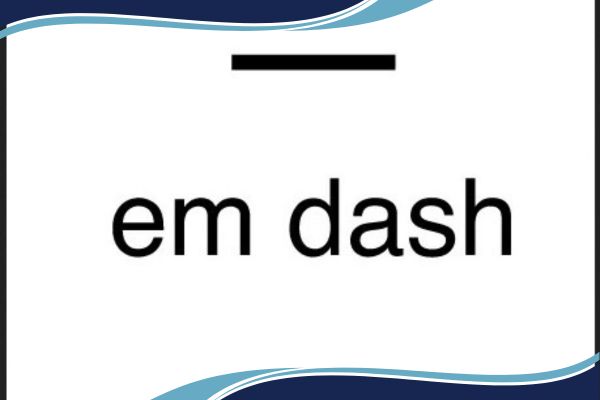
How the Em Dash Became AI’s Tell-Tale Punctuation
By Vicky Sidler | Published 11 December 2025 at 12:00 GMT+2
Some people look at sentence structure the way others look at poker hands. One misplaced comma, and they know you're bluffing. Recently, a new "tell" entered the chat—literally. The em dash.
According to the New York Times Magazine, sharp-eyed readers have started spotting AI-generated writing simply by its love for a long, lonely horizontal line. Not just any line. The em dash. The kind you won’t find near your spacebar. The kind that ChatGPT loves with unshakable loyalty.
And suddenly, a punctuation mark became a red flag.
TL;DR:
AI-generated text often uses em dashes more than humans do
Real humans tend to use hyphens or spaced dashes instead
Readers are starting to catch on and spot AI from punctuation alone
The way your writing looks matters as much as what it says
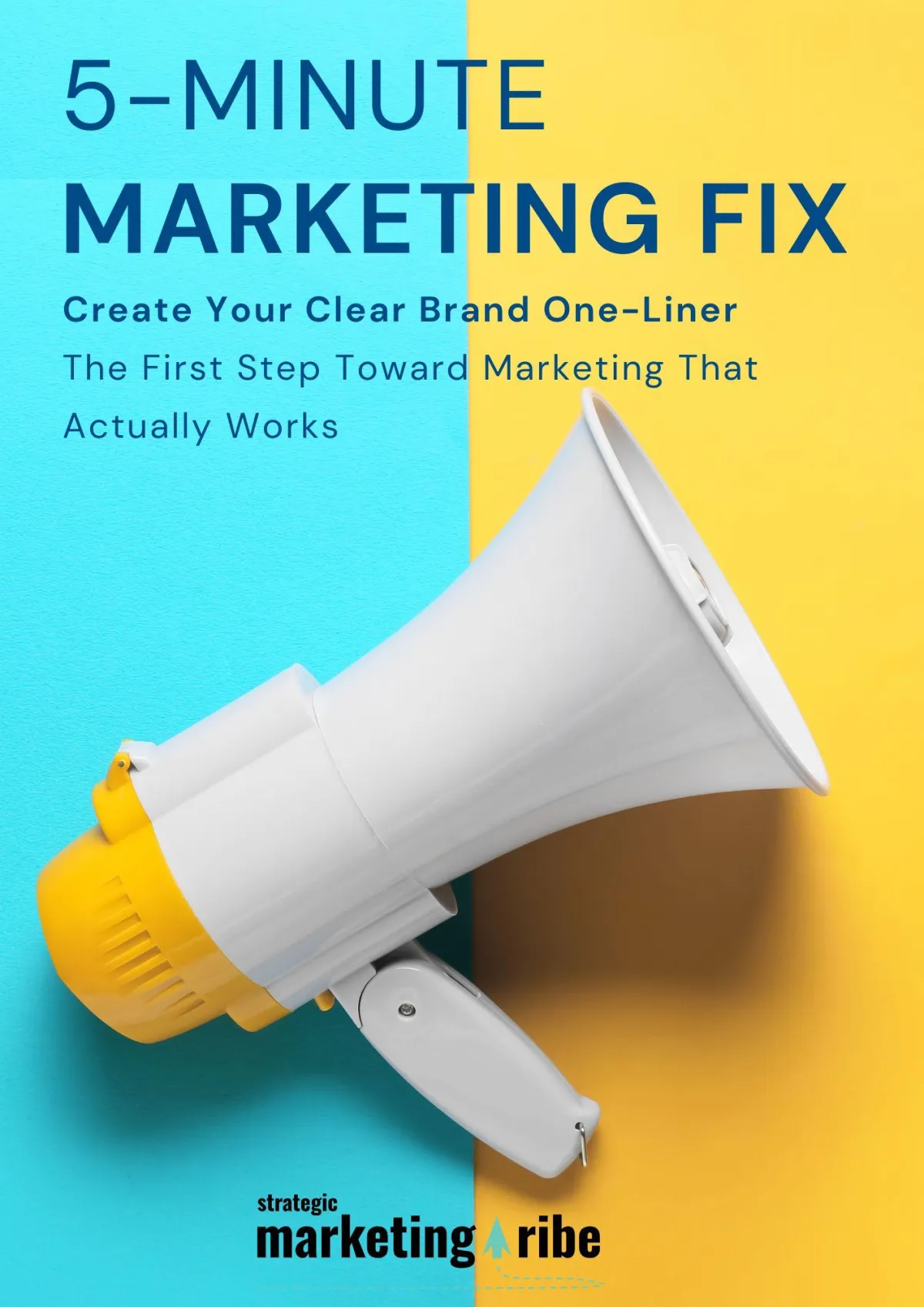
👉 Need help getting your message right? Download the 5 Minute Marketing Fix.
Table of Contents:
How the Em Dash Became AI’s Tell-Tale Punctuation
Why People Think Em Dashes Are “Too Perfect”:
What’s the Big Deal With a Little Dash?
Humans Talk in Messy Sentences. Good Writing Should Too.
Why This Matters for Marketing:
A Personal Note From a Dash Devotee:
1. AI Actually Sucks At Your Job—Just Ask LinkedIn
2. AI Slop Is Breaking the Internet—Here’s What Small Brands Can Do
3. AI Ethics Explained for Small Business Owners
4. Define Your Brand Voice and Build Instant Recognition
5. StoryBrand for Small Business: The Clear Messaging Shortcut
Frequently Asked Questions About Em Dashes, AI, and Content Trust
1. What is an em dash and how is it different from a hyphen?
2. Why do people say the em dash is a giveaway for AI writing?
3. Do real writers use em dashes?
4. Why does using proper punctuation make my writing feel less human?
5. Is it wrong to use em dashes in small business content?
6. Why don’t keyboards include the em dash?
7. What’s the difference between an en dash and an em dash?
8. Can AI-written content be trusted if it uses em dashes?
9. Should I remove em dashes if I’m worried about sounding too AI-generated?
Why People Think Em Dashes Are “Too Perfect”:
Most of us type how we talk. We don’t sit around inserting formal punctuation like we’re editing a 19th-century novel. We slap in a hyphen or two when we’re trying to sound dramatic. We add spaces to help it breathe. We don’t care that it’s technically not correct. We care that it feels right.
AI tools, on the other hand, don’t do “feels right.” They do “typeset textbook” by default.
The em dash it uses is a proper one—no spaces, no mistakes. It’s the kind you’d see in a printed book or a legal document. Which is great, unless you’re trying to write a casual blog post, an email, or a customer service reply. Then it just feels...off.
So when people started noticing these pristine punctuation choices, they got suspicious.
And they were right.
What’s the Big Deal With a Little Dash?
It’s not just about the punctuation mark. It’s about what it signals.
Readers aren’t just reading your words. They’re picking up on your tone, your rhythm, and—apparently—your typographic choices. An unexpected em dash in a casual sentence can feel like someone showed up to a backyard braai wearing a tuxedo. Technically correct. Socially confusing.
This doesn’t mean the em dash is wrong. It means AI uses it so consistently, so cleanly, and so frequently that it no longer reads as human.
That matters if you’re a small business owner trying to sound personal. If your emails or blog posts accidentally feel robotic, even just a little, you lose trust before you’ve even made your point.
Humans Talk in Messy Sentences. Good Writing Should Too.
The real charm of human writing isn’t just the words—it’s the pauses, interruptions, and unfinished thoughts. Think of a voice note from a friend. It meanders, circles back, adds “wait no” halfway through a sentence, and somehow lands on something meaningful.
We don’t speak in colons or semicolons. We speak in “hang on, let me rephrase that.”
That’s why writers like J.D. Salinger used so many dashes. Not to be dramatic. But to capture the way people actually think.
AI doesn’t do that. Not yet. It imitates. And when it imitates too well—like using the em dash perfectly every time—it stops sounding like us.
Why This Matters for Marketing:
Let’s pull this out of the punctuation weeds for a second.
If you’re using AI to help write your marketing content (and you probably should be), this is your friendly nudge to check how it sounds. Not just what it says.
Does the tone match your brand?
Does it sound like something you would actually say?
Does it use punctuation like a person or like a print editor from 1962?
These things might feel small. But when someone lands on your site or opens your newsletter, these are the clues they use to decide if you're real.
Authenticity isn’t just a buzzword. It’s punctuation deep.
What to Do Instead:
This doesn’t mean you should ban the em dash forever. It means you should check your content with a human eye before hitting publish.
Here’s what I recommend:
Read it out loud. If you wouldn’t say it that way in conversation, edit it.
Add some deliberate mess. Short sentences. Long ones. Some with fragments. Some with rhythm. That mix feels more human than perfection.
Use contractions and casual words. You’re not trying to win an award. You’re trying to connect with real people who are probably reading your words on a phone while waiting for coffee.
Keep your voice consistent. If your brand is warm and friendly, don’t let a bot make you sound like a textbook.
Treat AI like a helpful intern. Let it do the heavy lifting, then make sure it doesn’t dress your message in a suit and tie when you meant for jeans and a t-shirt.
A Personal Note From a Dash Devotee:
You’ll notice I use em dashes. And I’m not afraid of them.
I’ve always loved dashes. For a while, I was loyal to the en dash because I thought the em dash looked ugly. Especially without spaces. I used them constantly, but with a sort of typographic shame.
Then Grammarly stepped in.
It kept insisting I was wrong and politely nudged every en dash back to em. I resisted, obviously. I mean, I have a master’s degree in English. I’m not taking punctuation advice from an app that thinks “literally” can mean “figuratively.”
But eventually I googled it. Turns out Grammarly was right. I had been misusing dashes for years. And after a brief period of identity crisis and avoiding dashes altogether out of sheer aesthetic protest, I gave in.
I now use em dashes correctly. And strangely, I’ve started to like how they look. I think ChatGPT’s obsession conditioned me. Em dashes no longer feel like the ugly step-sibling of punctuation.
In fact, I have one in my email signature. Not for style. Just so I don’t have to Google “em dash” every time I want to insert one. Because here’s the real question: why is the correct dash not on our keyboards? We have a backtick key no one uses, but not an em dash?
Anyway, for a moment I did consider swearing off dashes again. The internet was turning on them. Em dashes were being flagged as “too AI” and I didn’t want to sound like a bot.
But then I thought, forget it. I like dashes. I’m not going to let the robots dictate my punctuation choices.
Neither should you.
The Bigger Picture:
This whole em dash conversation is really about one thing: trust. Readers don’t trust what sounds too polished. They trust what sounds true.
So yes, a dash can make a difference.
If you want help making your message clear, relatable, and unmistakably human, start by getting one sentence right. Download my 5-Minute Marketing Fix to help you write one sentence that tells people what you do and why it matters.
Related Articles:
1. AI Actually Sucks At Your Job—Just Ask LinkedIn
If you're second-guessing your tone or tools, this one shows how AI can fumble even simple writing jobs—and what to learn from it.
2. AI Slop Is Breaking the Internet—Here’s What Small Brands Can Do
This one explains why sloppy AI content is everywhere and how to stand out by sounding like a real human.
3. AI Ethics Explained for Small Business Owners
If you’re wondering whether it’s okay to use AI-generated content, this gives you a practical ethics checkpoint before hitting publish.
4. Define Your Brand Voice and Build Instant Recognition
Still figuring out how your business should sound? This helps you clarify your tone and stay consistent—even when using tools like AI.
5. StoryBrand for Small Business: The Clear Messaging Shortcut
If you liked the part about clarity and trust, this article breaks down a proven framework for fixing fuzzy messaging fast.
Frequently Asked Questions About Em Dashes, AI, and Content Trust
1. What is an em dash and how is it different from a hyphen?
An em dash (—) is a long horizontal punctuation mark used to break up a sentence or add emphasis. It’s wider than a hyphen (-) or an en dash (–) and is often used in place of commas, colons, or parentheses.
2. Why do people say the em dash is a giveaway for AI writing?
AI tools like ChatGPT tend to use em dashes frequently and perfectly—without spaces—like a printed book. Most humans use hyphens or spaced-out versions, which makes the AI pattern stand out.
3. Do real writers use em dashes?
Absolutely. Famous authors from Dickens to Salinger used them. They’re a normal part of expressive writing, especially for capturing natural speech patterns.
4. Why does using proper punctuation make my writing feel less human?
Most of us don’t write emails or blog posts like print editors. If your punctuation is too clean, it can feel robotic—especially if you're using AI tools that format perfectly by default.
5. Is it wrong to use em dashes in small business content?
Not at all. The key is tone and context. If you use them naturally and they reflect your voice, keep them. Just don’t let AI over-polish your message into something that sounds cold or mechanical.
6. Why don’t keyboards include the em dash?
Good question. Despite being the correct dash in most cases, em dashes aren’t built into standard keyboards. You have to copy it, use a shortcut, or create a workaround—like adding it to your email signature as a personal cheat sheet.
7. What’s the difference between an en dash and an em dash?
An en dash (–) is shorter and usually used for ranges (like 2001–2025). An em dash (—) is longer and used to separate thoughts or phrases. They’re not interchangeable, even though most people use hyphens instead.
8. Can AI-written content be trusted if it uses em dashes?
The punctuation itself isn’t the problem. It’s a symptom. If the content feels overly polished, unnatural, or emotionally flat, it may signal AI involvement. Always review AI content for tone, clarity, and human connection.
9. Should I remove em dashes if I’m worried about sounding too AI-generated?
Only if they don’t match your normal voice. If you’ve always used dashes (like I do), there’s no need to ditch them. Let your voice be your guide—not the robots.
10. What’s the best way to sound human when using AI tools?
Treat AI like a rough draft assistant. Review everything it writes. Add your personality, adjust your rhythm, and speak like a real person. A little imperfection goes a long way. And yes, sometimes that includes a dash. Or three.

Is your Marketing Message so confusing even your own mom doesn’t get it? Let's clarify your message—so everyone wants to work with you!



Created with clarity (and coffee)