

StoryBrand Marketing Agency for Service-Based Founders | Strategic Marketing Tribe
GET STEADY, PRE-SOLD CLIENTS WITH A FAILURE-PROOF MARKETING SYSTEM
As a StoryBrand marketing agency, we help service-based founders escape feast-or-famine, build trust, and attract right-fit clients before another quarter disappears into random tactics, inconsistent leads, and expensive guesswork.
✓ END FEAST-OR-FAMINE
✓ BUILD A RELIABLE SYSTEM
✓ GET PRE-SOLD CLIENTS
✓ BECOME THE TRUSTED EXPERT
WATCH THIS VIDEO
FEAST‑OR‑FAMINE, ALGORITHMS, AND WHY IT’S NOT YOUR FAULT
Before you blame yourself for inconsistent clients or another dry pipeline, watch this.
In this video, I’ll walk you through:
Why smart, hard‑working experts get trapped on the revenue rollercoaster
How loud charlatans keep winning work
The simple three‑step system we use to help service‑based founders step off the hustle wheel for good


YOU DIDN’T START A BUSINESS TO BECOME YOUR OWN EXHAUSTED MARKETING DEPARTMENT
You became great at your craft, not at churning out endless content, second-guessing your message, and wondering why the internet keeps rewarding louder people with worse ideas. It’s deeply frustrating when finding steady clients feels harder than the work you actually sell.
But as long as you’re relying on random tactics instead of a real system, nothing about this rollercoaster really changes, and next quarter looks a lot like this one.
Without a Failure-Proof Marketing System running in the background, it’s easy to end up:
Riding a feast-or-famine revenue rollercoaster instead of building calm, steady growth.
Wasting hours on random tactics stitched together from internet advice, panic, and one more late-night chat with AI.
Watching less qualified competitors win simply because they sound clearer and show up more consistently.
Burning out trying to keep pace with an algorithm that will never love you back.
And the longer this drags on, the more expensive it gets. You lose time to marketing that goes nowhere, money to tactics that don’t compound, and opportunities to competitors who simply look clearer and more credible.
STOP WORKING FOR YOUR MARKETING AND MAKE IT WORK FOR YOU
When your marketing is built on random acts of visibility, everything feels urgent and fragile. But once you install a Failure-Proof Marketing System, your business gets a lot calmer: your message gets clearer, your lead flow gets steadier, and your growth stops depending on last-minute heroics.
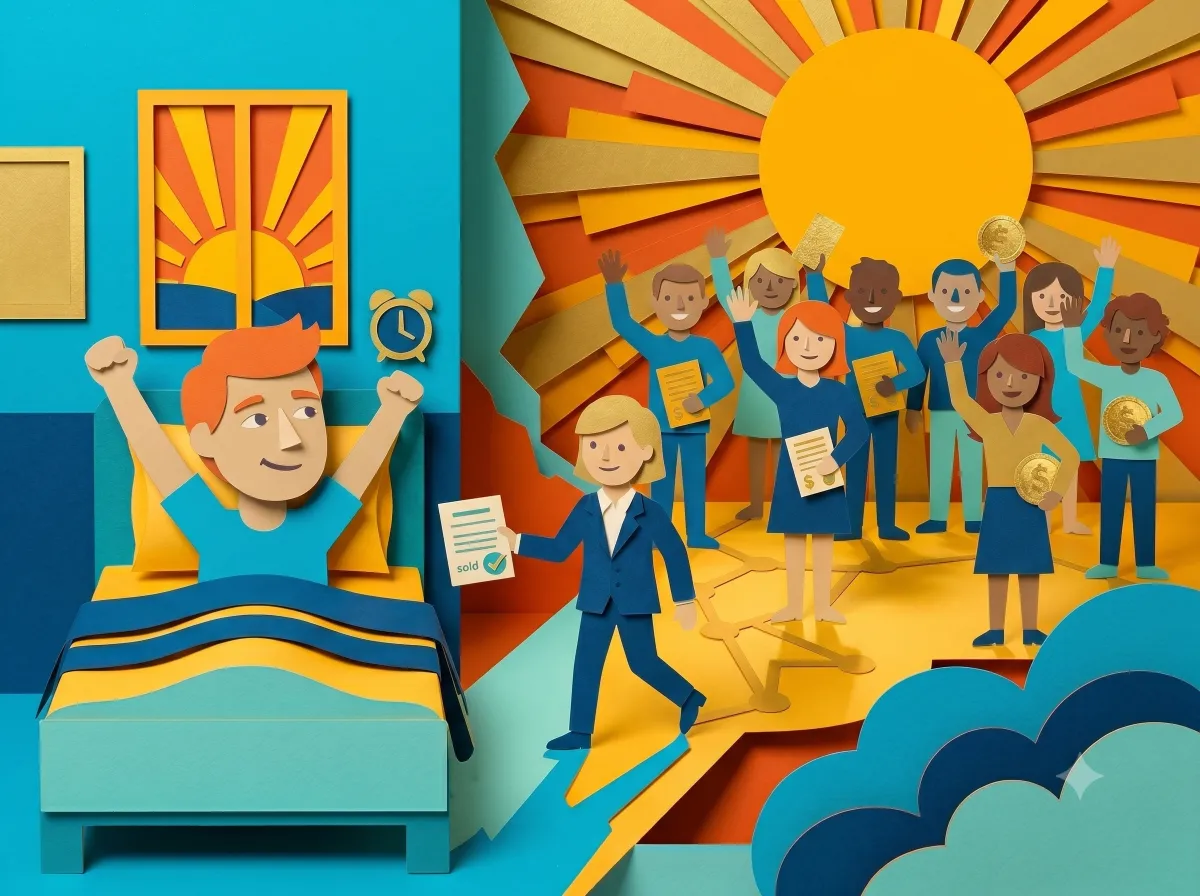
WAKE UP TO PRE-SOLD CLIENTS

No more draining sales calls with people who treat your expertise like a line item to negotiate. Instead of starting every sales conversation from scratch, your marketing does the heavy lifting before the call, so the right prospects arrive already understanding your value and trusting your expertise.
.

WIN BACK YOUR TIME AND SANITY
Stop setting your best hours on fire trying to keep up with every new platform, hack, and content trend. You’ll know exactly which few moves actually grow your business, which means you can ignore the rest without guilt.
.

STAND OUT IN A SEA OF GENERIC AI NOISE
In a market drowning in bland, automated content, a clear and undeniably human message becomes a trust advantage. You’ll attract better-fit clients and earn real authority without sounding like a desperate salesperson or an AI chatbot.

HI, I'm Vicky Sidler,
AND I KNOW HOW EASY IT IS TO END UP MARKETING IN SURVIVAL MODE

I know what it’s like to watch a healthy pipeline dry up while you throw tactic after tactic at the wall, hoping something finally sticks. I also know how demoralizing it is to be excellent at what you do and still feel like the internet is rewarding whoever shouts the loudest or has been around the longest.
We built the Failure-Proof Marketing System because we got tired of guessing too. Since then, as a StoryBrand marketing agency, we’ve spent years helping service-based founders replace chaotic hustle with a strategy that actually holds up, backed by:
Being the only agency in South Africa fully certified in both StoryBrand and Duct Tape Marketing.
Earning the 50Pros Top 10 Global Leader Award.
Helping brilliant experts stop winging it and start marketing with clarity, consistency, and a system they can trust.
You do not need more pressure, more noise, or more advice from people or chatbots who have never had to carry payroll and win clients at the same time. You need a dependable strategy that works as hard as you do.
Hear How a StoryBrand Campaign Fits Into a Failure‑Proof Marketing System
In this short clip, StoryBrand founder Donald Miller explains why a clear message and a simple, focused marketing plan are non‑negotiable if you want steady growth.
You’ll hear him describe what a full StoryBrand campaign includes, why assets like newsletters still matter, and how working with a certified guide helps you stop wasting time and money on the wrong tactics.
Watch this to see how StoryBrand campaigns become one part of a larger Failure‑Proof Marketing System and why partnering with a StoryBrand Certified Guide can make your marketing calmer, clearer, and a lot more effective.
ESCAPE THE HUSTLE WHEEL IN THREE SIMPLE STEPS
You should not need a degree in algorithm appeasement or seventeen software subscriptions to get clients. As a StoryBrand Marketing Agency, we keep this simple on purpose.

1
BOOK A COFFEE CHAT
We’ll have a relaxed, no-pressure conversation about what’s actually happening in your marketing right now and where things are leaking time, money, or momentum.
.

2
BUILD YOUR CUSTOM STRATEGY
We’ll create a simple, step-by-step roadmap that shows you exactly what to do next, what to stop doing, and where you’re currently wasting time, money, or momentum.
.
.

3
ENJOY STEADY, CALM GROWTH
Your marketing starts pulling its weight in the background, bringing in a steadier flow of right-fit, pre-sold clients so you can get back to running the business you meant to build.
COFFEE’S ON US (OK, NOT Literally)
Most discovery calls feel like a polite ambush followed by an awkward pitch for services you do not need. This is not that.
We’ll talk through:
What’s actually happening in your marketing
Where things are getting stuck
What would make the biggest difference fastest
If you’re tired of losing time and money to marketing that still doesn’t bring in the right clients consistently, this is the place to figure out what’s actually going wrong.
YOUR QUESTIONS, ANSWERED
We know marketing can feel overwhelming, and you probably have questions. Here are straight, no-jargon answers to the ones we hear most from service-based founders.
What makes Strategic Marketing Tribe different from other StoryBrand marketing agencies?
We’re a StoryBrand marketing agency that doesn’t stop at a prettier website or a clever tagline. We use StoryBrand as the foundation for a Failure‑Proof Marketing System designed to give you steady, pre‑sold clients, not just “more content.” Our work is human, practical, and built to hold up in the real world, not just in a workshop.
What exactly is a Failure‑Proof Marketing System?
It’s a simple, strategy‑first marketing system that makes it very hard for your business to slip back into feast‑or‑famine. Instead of random tactics, you get a clear message, a focused plan, and a repeatable way to attract, nurture, and convert right‑fit clients without becoming a full‑time marketer.
How can this benefit my business specifically?
We simplify your message, clarify your offers, and build a marketing system that quietly brings in better‑fit leads. That means fewer confusing inquiries, less time wasted on the wrong clients, and a calmer, more predictable pipeline for the work you actually want to do.
Do I need to understand StoryBrand before we start?
Not at all. Whether you’ve read the book three times or never heard of it, we guide you through the parts that matter. You get the benefits of StoryBrand-level clarity without having to become a messaging expert yourself.
Is this just consulting, or do you also implement?
Both. We can create your strategy and hand it off to your team with clear guidance, or we can stay on as your marketing partner to help implement and optimize it. Either way, the goal is the same: a system that works consistently, not a one-off “campaign” that dies after launch.
How do I know if this is right for my business?
If you’re great at what you do, but your marketing feels chaotic, inconsistent, or like it’s attracting the wrong people, this is for you. Service-based founders who are tired of guessing and ready for a clear, reliable system tend to get the most value.
How long does it take to see results?
You’ll feel more clarity almost immediately once we map out your message and plan. Tangible results, better-fit inquiries, easier sales calls, and steadier lead flow typically start to show up as we roll the system out across your website, emails, and key channels over the following weeks and months.
What if I’ve “done marketing” before and it didn’t work?
That’s more common than you think. Most businesses have tried a patchwork of tactics without a clear strategy tying everything together. We’ll look at what you’ve already done, keep what’s working, and plug it into a Failure‑Proof Marketing System so your efforts finally add up instead of cancelling each other out.
YOUR EXPERTISE IS TOO VALUABLE TO BE THE INTERNET'S BEST-KEPT SECRET
If you’re skeptical of marketing agencies, that is fair. Plenty of them will happily hand you a bloated plan, a pile of jargon, and a suggestion that you post on LinkedIn six times a day until your soul leaves your body.
You should not have to choose between frantic DIY marketing and expensive agency work that looks impressive but delivers very little. At Strategic Marketing Tribe, we strip out the bloated nonsense and build a lean, Failure-Proof Marketing System tailored to your actual business, so your marketing becomes clearer, more consistent, and more trustworthy to the people you most want to reach.
That means your message gets sharper, your marketing gets simpler, and your lead generation gets a lot less dramatic. Instead of constantly worrying about where the next client will come from, you get a system that quietly supports steady, predictable growth.
Because if nothing changes, next quarter will likely look a lot like this one: more guesswork, more pressure, and still no calm, dependable client flow. And neither of us wants that for you.
THE FAILURE-PROOF MARKETING SURVIVAL GUIDE
Stop taking marketing advice from aggressively loud influencers, random internet bros, or AI chatbots pretending to have business scars.
This is where service-based founders come to replace chaotic guessing with strategy, clarity, and battle-tested systems that have survived contact with the real world.
Here you’ll find practical, honest resources to help you attract better clients, build trust faster, and keep your pipeline moving without sacrificing your evenings, weekends, or remaining sanity.
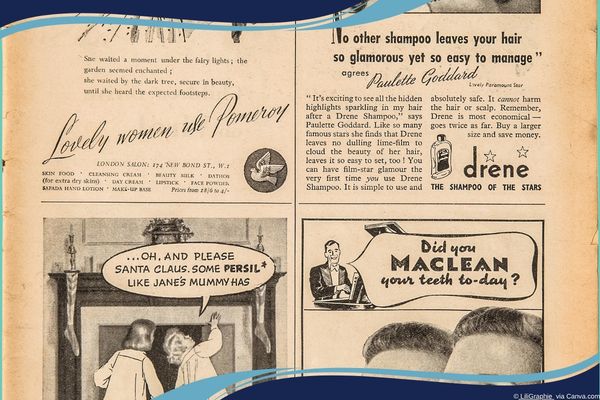
What A 1960s South African Comic Can Teach You About Content Marketing
By Vicky Sidler | Published 16 April 2026 at 12:00 GMT+2
Are we actually getting worse at marketing our businesses? We proudly strut around with our highly expensive smartphones, convinced we have mastered the exact science of digital visual storytelling.
But a massive new digital archiving project by Sabinet and Coherent Digital on Africa Commons just exposed our modern arrogance. They have successfully digitized more than 20,000 pages of rare South African photo-story magazines from the 1960s.
Looking at how these vintage publications practically hypnotized their readers reveals a highly embarrassing truth about our current marketing strategy.
TL;DR:
Over 20,000 pages of rare 1960s South African photo-story magazines have been digitized for global research, preserving a massive piece of popular culture.
Publications like True Africa and She used "cinema on paper" to tell highly engaging, visual stories about workplace conflict, love, and moral courage.
She magazine featured a powerful female superhero in 1964, proving that understanding your audience's hunger for a good story is the ultimate marketing strategy.
👉 If your marketing relies on generic stock photos and boring corporate jargon, you are actively driving your clients away. You must tell a story they actually care about. Download the 5-Minute Marketing Fix to identify exactly where your messaging is quietly costing you sales, so you can hook your audience with undeniable clarity.
Table of Contents:
What A 1960s South African Comic Can Teach You About Content Marketing
Why Is A 1960s Comic Book Better Than Your Instagram Strategy?
How Did A 1964 Magazine Defeat Modern Hollywood?
Why Did We Replace "Cinema On Paper" With Corporate Slop?
1. Why Chatbots Are Now Hallucinating Your Cringeworthy LinkedIn Posts
2. Why People Talking To Their Phones Will Destroy Your SEO
3. Profit First by Mike Michalowicz Summary: Why Your Business Is Broke
4. Exactly How To Calculate When A Robot Will Steal Your Job
5. I Watched the Movie. Perplexity Told Me I Was Wrong. I Almost Believed It.
1. What are photo-story magazines?
2. What is the Africa Commons digitization project?
3. Why is the 1964 publication of "She" magazine historically significant?
4. How does a 1960s magazine relate to modern content marketing?
Why Is A 1960s Comic Book Better Than Your Instagram Strategy?
If you scroll through the average corporate social media feed today, you will find a desolate wasteland of generic stock photos and synergistic buzzwords that absolutely nobody wants to read.
But the publishers of True Africa and She in the 1960s did not have the luxury of an addictive digital algorithm. They had to capture human attention using cheap paper and ink. To do this, they created what historians accurately call "cinema on paper." Using staged photographic sequences accompanied by snappy dialogue and captions, they built a visual narrative that literally forced the reader to turn the page. Each issue ran between forty and seventy pages, exploring highly relatable themes like workplace conflict, social drama, and moral courage.
They kept their audience completely hooked without a single digital trick or automated chatbot. And they somehow managed to break massive cultural barriers that modern media companies still struggle with today.
How Did A 1964 Magazine Defeat Modern Hollywood?
You would probably assume that a publication printed on inexpensive paper during the height of the 1960s would be completely packed with outdated, regressive stereotypes.
You would be completely wrong. The newly digitized collection includes 110 issues of She magazine, printed in 1964. During a time when male action heroes completely dominated the global media landscape, this South African publication featured a female superhero protagonist. They gave women powerful, heroic roles, tackling everyday stories and real social tensions head-on. They understood exactly what their audience was hungry for, and they delivered it through gripping, serialized storytelling.
These fragile magazines were so incredibly loved by the public that researchers are now fighting to preserve them for global study. They survived because they mastered the absolute core of human psychology. But modern businesses have completely abandoned this tactic for something much worse.
Why Did We Replace "Cinema On Paper" With Corporate Slop?
We currently have access to the most advanced digital publishing tools in human history, yet we somehow use them exclusively to bore our potential customers to death.
Instead of telling highly engaging, visual stories that capture social tension or workplace drama, we use artificial intelligence to write bland paragraphs about our "optimized deliverables." We completely forgot how to tell a story. If you are good at what you do but clients are not converting, it is because your messaging is completely devoid of a narrative hook. You are giving them facts, but you are not giving them a hero to root for.
That is exactly why I built the 5-Minute Marketing Fix. It acts as a rapid diagnostic weapon, showing you exactly what is quietly costing you sales. It helps you strip out the generic corporate jargon and replace it with a clear, compelling story framework that actually makes your buyers care about what you are selling.
👉 Stop losing sales. Download the fix now.
Related Articles:
1. Why Chatbots Are Now Hallucinating Your Cringeworthy LinkedIn Posts
If you want to know exactly how far we have fallen from the golden age of storytelling, read this. Discover why modern B2B marketing has devolved into a massive, automated echo chamber where AI models actively scrape and regurgitate the absolute worst corporate jargon on the internet.
2. Why People Talking To Their Phones Will Destroy Your SEO
The 1960s magazines captured attention by mimicking the flow of natural dialogue. This article explains why the rise of voice search is forcing modern businesses to do the exact same thing, and why websites stuffed with robotic keywords are about to become completely invisible.
3. Profit First by Mike Michalowicz Summary: Why Your Business Is Broke
These vintage photo-story magazines were produced on cheap, inexpensive paper to maintain maximum profitability. This summary explains why modern service businesses must adopt that exact same lean, resource-restricted mindset if they want to stop burning cash on useless overhead.
4. Exactly How To Calculate When A Robot Will Steal Your Job
The reason storytelling is so crucial today is because it is the one thing a machine cannot authentically replicate. Discover the brutal mathematical framework used to calculate exactly which parts of your service business are highly exposed to automation, and how to stay relevant.
5. I Watched the Movie. Perplexity Told Me I Was Wrong. I Almost Believed It.
If you stop telling your own brand story, an algorithm will invent a fake one for you. This terrifying piece explores the phenomenon of "AI gaslighting," explaining why chatbots confidently hallucinate false information, and why you must aggressively control your own narrative.
FAQs:
1. What are photo-story magazines?
Popular in South Africa during the mid-twentieth century, photo-story magazines used staged photographic sequences accompanied by dialogue and captions to tell a story. Often described as "cinema on paper," they explored highly relatable themes like romance, workplace conflict, and social drama.
2. What is the Africa Commons digitization project?
Sabinet and Coherent Digital have successfully digitized over 20,000 pages of rare South African photo-story magazines from the 1960s for the Africa Commons platform. This ensures that these fragile, historically significant publications are preserved and made accessible to researchers globally.
3. Why is the 1964 publication of "She" magazine historically significant?
She magazine was highly notable because it featured a female superhero protagonist in 1964. This was a striking departure from the male-dominated action heroes of the period, serving as a rare and early example of women being portrayed in powerful, heroic roles in South African storytelling.
4. How does a 1960s magazine relate to modern content marketing?
These vintage magazines proved that gripping, sequential visual storytelling ("cinema on paper") is the most effective way to hold human attention. Modern businesses often fail because they abandon narrative storytelling in favor of boring, jargon-filled corporate posts that fail to hook the reader.
5. Why is my current marketing failing to convert clients?
If you are highly skilled but clients are not buying, your messaging likely lacks a clear narrative hook. You are probably stating facts instead of telling a story. You must clarify your message and position your customer as the hero to capture their attention and drive sales.


Escape feast‑or‑famine with Failure‑Proof Marketing: a simpler, strategy‑first system that brings you steady, pre‑sold clients without turning you into a full‑time content machine.





Created with clarity (and coffee)