
Real news, real insights – for small businesses who want to understand what’s happening and why it matters.

Why Chatbots Are Now Hallucinating Your Cringeworthy LinkedIn Posts
By Vicky Sidler | Published 13 April 2026 at 12:00 GMT+2
If you have logged into LinkedIn recently, you have probably been subjected to the most insufferable genre of modern literature: the corporate cringe post. You know the exact format. Someone's goldfish tragically passes away, and they somehow use the funeral to teach you seven essential lessons about B2B lead generation. It is exhausting, performative, and completely inescapable.
But according to terrifying new data from the marketing platform Profound (recently reported by Axios) and a highly cynical breakdown by the AI-Ready CMO newsletter, that exact brand of corporate slop is no longer just annoying your former colleagues. It has officially become the primary diet for the world’s most powerful supercomputers.
LinkedIn has quietly become one of the absolute top sources for AI-powered chatbots like ChatGPT, Claude, and Gemini. The machine is actively scraping the "confident redneck" opinions of X, the unfiltered chaos of Reddit, and the sycophantic corporate humblebrags of LinkedIn to answer high-stakes business questions. Before you write another desperate post begging for engagement, we need to look at exactly how Generative Engine Optimization is rewriting the rules of the internet, and how you can exploit this massive structural shift.
TL;DR:
New data reveals that LinkedIn is now the undisputed number one domain cited by AI chatbots in professional and B2B search queries.
Because everyone is already using AI to write their LinkedIn posts, the chatbots are actively scraping their own generated slop, creating a terrifying, automated echo chamber.
Small businesses must stop hunting for exhausting human engagement on social media and start treating their profiles as highly optimized billboards for AI web crawlers.
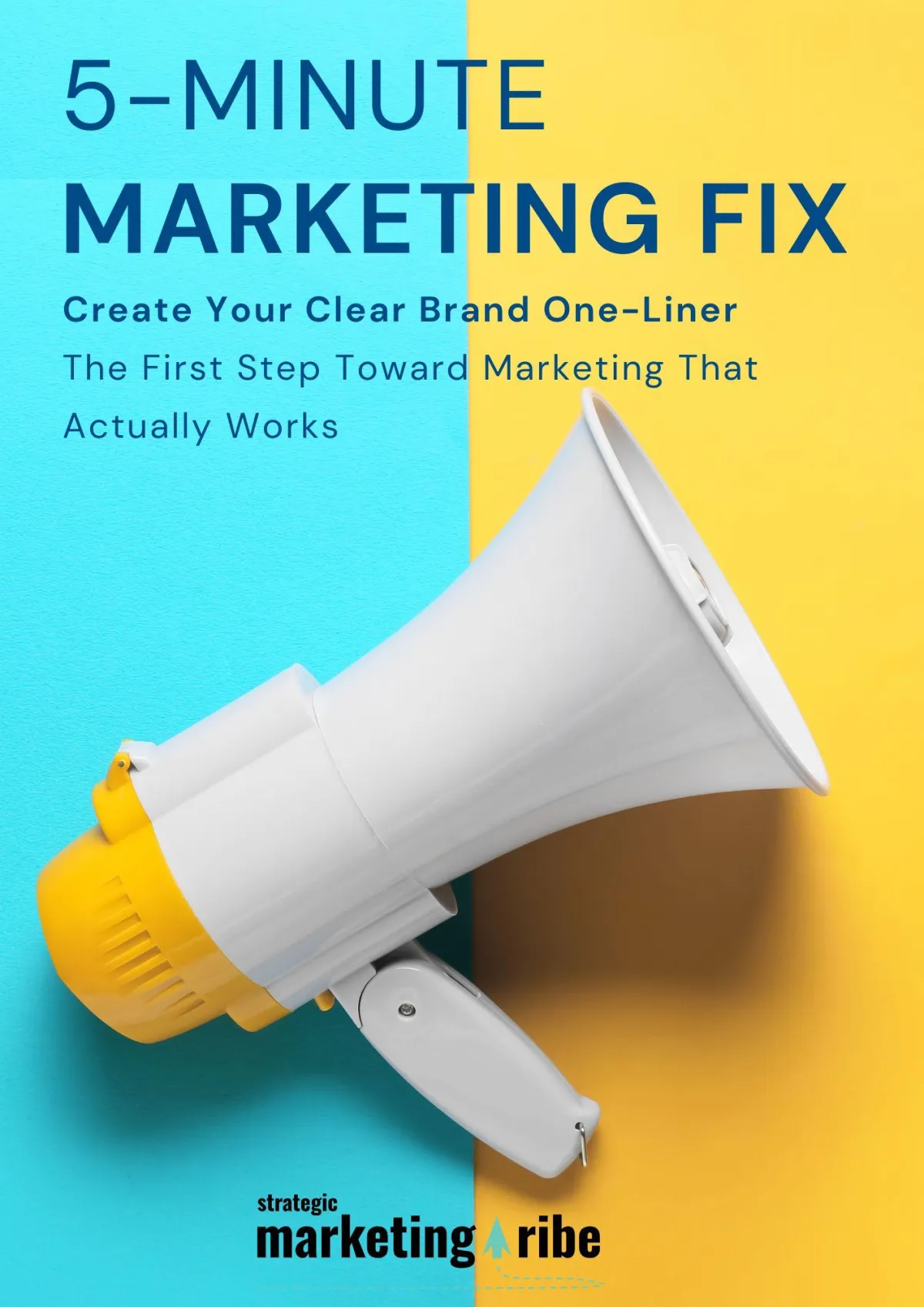
👉 If your LinkedIn profile is filled with the same generic "synergistic" buzzwords as every other desperate consultant, the AI will completely ignore you. Real people trust undeniable clarity. Download the 5-Minute Marketing Fix to strip the corporate cringe out of your messaging so the algorithm actually recognizes you as an industry authority.
Table of Contents:
Why Chatbots Are Now Hallucinating Your Cringeworthy LinkedIn Posts
Why Is The Supercomputer Reading Your Cringe?
Are We Just Watching Robots Talk To Robots?
Who Is Actually Judging Your Profile Now?
How Do You Hijack The Digital Billboard?
1. The AI Literacy Glossary Every Small Business Owner Needs in 2026
2. You Didn't Write That Email. And Everyone Can Tell.
3. Exactly How To Calculate When A Robot Will Steal Your Job
4. I Watched the Movie. Perplexity Told Me I Was Wrong. I Almost Believed It.
5. Why Mark Zuckerberg Is Desperately Trying To Redefine The Word "Addictive"
1. What is Generative Engine Optimization (GEO)?
2. Why is LinkedIn suddenly so important for AI?
3. What is the AI feedback loop on LinkedIn?
4. Should I still try to get high engagement and comments on LinkedIn?
Why Is The Supercomputer Reading Your Cringe?
You might fondly imagine that these trillion-dollar language models are pulling their business intelligence from peer-reviewed economic journals and Ivy League research papers.
They absolutely are not. They are aggressively scraping the bottom of the social media barrel. The data shows that LinkedIn's citation frequency in AI responses completely doubled between November 2025 and February 2026. It is now the number one domain cited in all professional search queries. According to Profound, LinkedIn posts, long-form articles, and newsletters account for a massive 35% of all LinkedIn citations within ChatGPT, while personal profiles are cited 14.5% of the time.
The machine is literally absorbing every generic corporate humblebrag and packaging it as objective truth. Because LLMs need conversational human insights to answer nuanced queries, they are forced to digest the exact "thought leadership" posts that make you want to throw your laptop out a window.
But the most terrifying part of this entire system isn't that the AI is reading your posts. It is that the AI is reading its own.
Are We Just Watching Robots Talk To Robots?
If you want to see a trillion-dollar snake eat its own tail, just look at the current state of a B2B newsfeed.
We all know that an increasing number of professionals are using generative tools to write their daily LinkedIn updates. They ask a chatbot to write a "thought leadership" piece, copy the output, and hit publish without changing a word. But now, that exact same chatbot is crawling LinkedIn, desperately looking for fresh "human" insights to train its next generation of models.
It is scraping the exact corporate slop it wrote yesterday, digesting it, and using it to write tomorrow's answers.
It is a completely automated echo chamber. The machine is actively training itself to sound more like a generic machine. But the most terrifying part isn't that the internet is rapidly filling up with robotic garbage. The real nightmare is what this hallucinating machine is now officially authorized to do to your career.
Who Is Actually Judging Your Profile Now?
For the last decade, we optimized our online presence to impress human recruiters, potential clients, and our overly critical high school rivals.
But human attention is rapidly becoming a secondary metric. We have officially entered the era of Generative Engine Optimization (GEO). As Erin Lanuti, co-founder of LinkedIn intelligence platform Lilypath, accurately points out, professional visibility is no longer about how people present themselves to other people. It is increasingly about how machines interpret them first. If a potential client asks a chatbot for recommendations on B2B consultants, the algorithm is going straight to LinkedIn to decide if you actually exist.
If your profile clarity is terrible, you will be completely overlooked by the machine. The AI is the new gatekeeper, and it does not care about your charming personality; it only cares about structured, authoritative data.
So how do you successfully market yourself to a robot?
How Do You Hijack The Digital Billboard?
The traditional social media playbook demands that you spend hours writing compelling hooks and desperately replying to comments just to trick the algorithm into showing your post to twelve people.
You can officially stop playing that miserable game. As the authors of the AI-Ready CMO newsletter point out, the platform is now entirely too crowded with automated slop to hunt for genuine human engagement. That train has left the station. Instead, you need to completely rethink your distribution and treat your profile like a massive digital billboard designed exclusively for crawling bots.
You do not need thousands of likes from humans who will never buy from you. You just need crystal-clear, highly authoritative data that the AI can easily scrape and confidently cite when a buyer asks a question.
You have to write for the machine without sounding like one. If your profile is currently filled with empty corporate buzzwords, the chatbot will just blend you into the background noise with the rest of the generated slop. Get my 5-Minute Marketing Fix. It is a rapid diagnostic tool that helps you strip out the performative corporate cringe, ensuring that when the AI inevitably scrapes your brand, it surfaces the undeniable, reality-tested human expertise that actually drives revenue.
👉 Stop losing sales. Download the fix now.
Related Articles:
1. The AI Literacy Glossary Every Small Business Owner Needs in 2026
If terms like "Generative Engine Optimization" (GEO) make your head spin, you need this plain-language glossary. It breaks down exactly how Large Language Models scrape platforms like LinkedIn and Reddit to build their answers, allowing you to reverse-engineer the process for your own marketing.
2. You Didn't Write That Email. And Everyone Can Tell.
The reason LinkedIn is currently flooded with unreadable corporate slop is because everyone is using the exact same chatbots to write their posts. This article explores the "uncanny valley" of AI communication and why relying on machines to write your personal brand content actively destroys your credibility.
3. Exactly How To Calculate When A Robot Will Steal Your Job
If the AI is scraping your expertise off LinkedIn to answer user queries for free, you are actively being commoditized. Discover the brutal mathematical framework that reveals how exposed your business is to automation, and how to move up the value chain so clients still pay you for premium execution.
4. I Watched the Movie. Perplexity Told Me I Was Wrong. I Almost Believed It.
If ChatGPT is using Reddit and LinkedIn as its primary sources of truth, it is going to hallucinate wildly. This piece exposes the terrifying reality of "AI gaslighting," proving why you must rigorously question the output of any machine trained on the unfiltered opinions of the internet.
5. Why Mark Zuckerberg Is Desperately Trying To Redefine The Word "Addictive"
Stop hunting for human engagement on platforms designed to exploit human psychology. This article exposes the toxic reality behind social media algorithms, reinforcing why treating LinkedIn as a static, AI-scrapable billboard is a much healthier strategy than trying to go viral.
FAQs:
1. What is Generative Engine Optimization (GEO)?
GEO is the evolution of traditional SEO. Instead of optimizing your content to rank on a Google search results page, GEO involves structuring your content and professional profiles so that AI chatbots (like ChatGPT or Gemini) can easily read, understand, and cite your brand when answering user queries.
2. Why is LinkedIn suddenly so important for AI?
Because AI models need conversational, human-driven insights to answer nuanced B2B questions. Data from Profound shows that LinkedIn is now the number one domain cited in professional AI search queries, with citation frequency doubling between November 2025 and February 2026.
3. What is the AI feedback loop on LinkedIn?
Because a massive number of users now use AI to write their LinkedIn posts, and AI chatbots are currently scraping LinkedIn for data, the machines are literally reading their own generated content. This creates a terrifying feedback loop where the AI trains itself on its own corporate jargon, driving the overall quality of the platform into the ground.
4. Should I still try to get high engagement and comments on LinkedIn?
Industry experts argue that hunting for human engagement is a dying strategy because the platform is flooded with automated "corporate cringe." Instead, businesses should treat their profiles like a "billboard"-optimizing their content to be scraped and cited by AI bots rather than chasing likes.
5. Can AI scrape my private LinkedIn data?
No. LinkedIn officially states that they protect member data from unauthorized scraping, meaning Generative AI search tools can only surface and cite content that users have explicitly chosen to make public on the platform.

Strategic Marketing Tribe helps established service businesses turn underperforming marketing into more predictable growth with the Failure-Proof Marketing System.




Created with clarity (and coffee)