
Real news, real insights – for small businesses who want to understand what’s happening and why it matters.

Exactly How To Calculate When A Robot Will Steal Your Job
By Vicky Sidler | Published 7 April 2026 at 12:00 GMT+2
Every single time I speak at a business event, the professional networking session inevitably devolves into a panicked support group for people who suspect a piece of software is about to destroy their livelihood.
Everyone wants to know the exact date artificial intelligence is going to make them completely obsolete. We all saw the recent Anthropic study showing the theoretical macro impact of AI on massive global industries, but that data feels entirely too abstract. You do not care about the global economy; you care about whether your specific consulting retainer is going to dry up next Tuesday.
According to a brilliant new newsletter by Chris Penn at Trust Insights, you do not have to sit around guessing your exposure to the automated wave. You can actually force the machine to do the math for you. Before you spend another ten hours a week doing highly repetitive administrative work, we need to look at the exact framework that predicts your obsolescence, and how to rapidly evolve your business before a deeply polite chatbot replaces your entire team.
TL;DR:
Artificial intelligence does not steal entire jobs; it steals highly repetitive, painful tasks until a company only needs a fraction of its original workforce to survive.
By auditing your daily tasks using the Trust Insights TRIPS framework, you can calculate exactly how vulnerable your specific role is to being automated.
To survive, you must stop selling a commodity and aggressively move your business up the value chain by offering undeniably human services, experiences, and transformations.
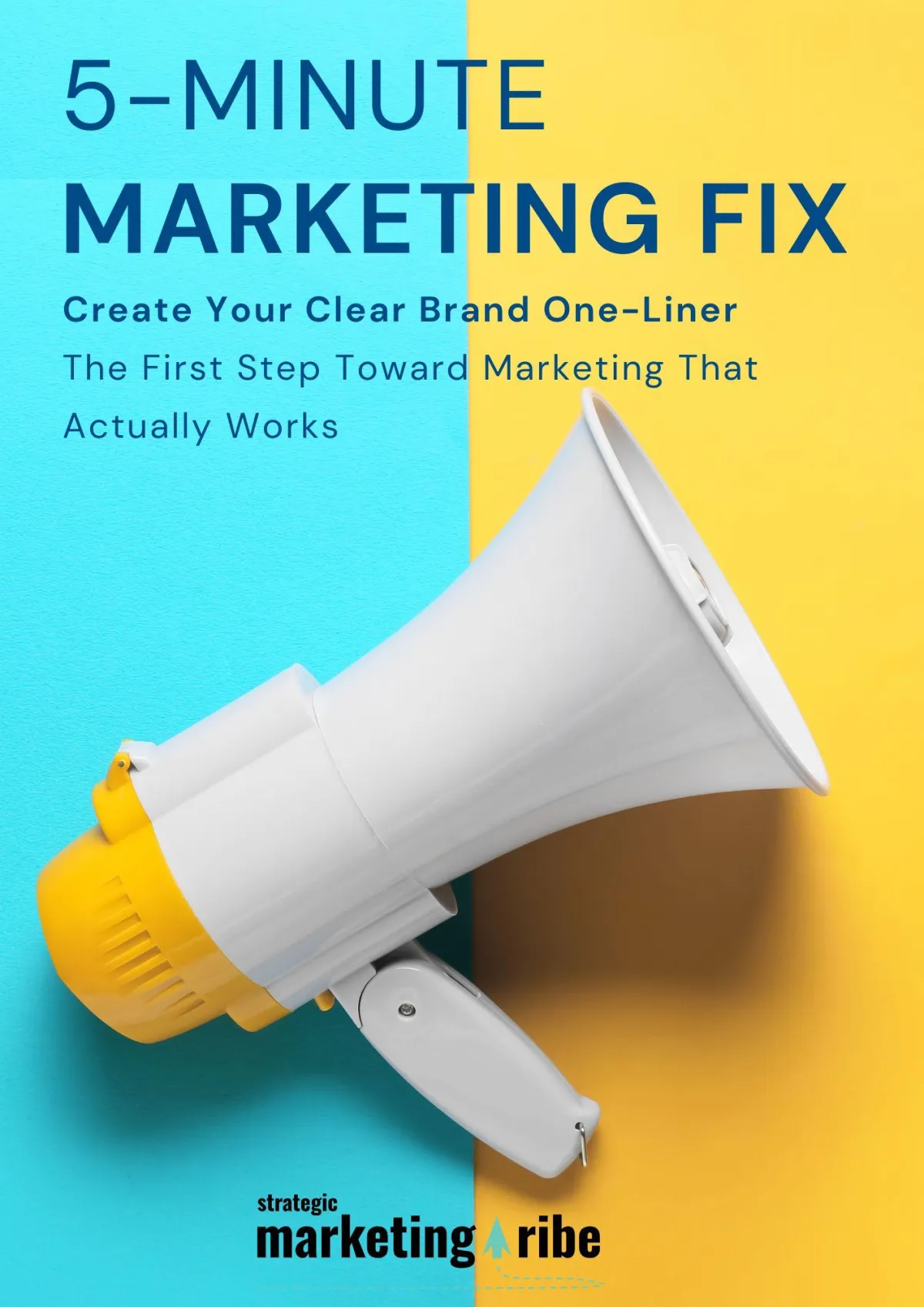
👉 If your marketing sounds like it was written by a generic robot, your clients will assume your services can be replaced by one. Download the 5-Minute Marketing Fix to spot exactly where your messaging sounds like a cheap commodity, so you can replace it with the premium human expertise your buyers actually value.
Table of Contents:
Exactly How To Calculate When A Robot Will Steal Your Job
How Do You Audit Your Own Obsolescence?
What Happens When The Machine Does The Math?
How Do You Survive A Market That Doesn't Need You?
Why Must You Abandon The Commodity Business Immediately?
1. 27 Alarming AI Statistics Every Small Business Owner Needs to Read
2. You Didn't Write That Email. And Everyone Can Tell.
3. The Pumpkin Plan by Mike Michalowicz Summary: Why Hard Work Is Killing Your Business
4. Positioning by Al Ries and Jack Trout Summary: Why Better Never Wins
5. The AI Doom Loop: Why Massive Corporate Layoffs Are Actually Great For You
1. What is the TRIPS framework?
2. How does AI actually cost people their jobs?
3. What is the value chain in business?
How Do You Audit Your Own Obsolescence?
You cannot build a defense strategy if you refuse to look at exactly where the walls of your business are currently crumbling.
To figure out how exposed you are, Chris Penn suggests auditing your daily routine using the Trust Insights TRIPS framework. This framework evaluates your vulnerability based on five highly specific factors. First is Time. The more time a task takes, the better a candidate it is for automation. Next is Repetitiveness. If you are doing the exact same sequence of clicks every single day, the software is already drooling over your job.
Then comes Importance. If a task is economically highly valuable, corporations have a massive financial incentive to automate it to increase their profit margins. The fourth factor is Pain. If a task is completely miserable to perform, adoption of a tool to replace it will skyrocket. Finally, Sufficient Data. If there are thousands of successful examples of a task online, the machine already knows exactly how to do it.
So how do you actually apply this brutal scorecard to your life?
What Happens When The Machine Does The Math?
Once you force an algorithm to ruthlessly evaluate your daily routine, the final score is probably going to make you want to pour a very stiff drink.
Penn recommends grabbing a few job descriptions for your current role, pasting them into your favorite AI tool, and asking the software to break the job down into 100 granular tasks. You then ask the AI to score every single task using the TRIPS framework to determine the mathematical likelihood that a generative model can do it better, faster, and cheaper than you can.
The terrifying reality is that AI does not cost jobs by terminating an entire profession overnight. It costs jobs by aggressively eating away at the underlying tasks. If you have a team of 50 content writers, and a machine suddenly consumes 80% of their daily tasks, you no longer need 50 writers. You just need 10 highly stressed managers to supervise the software.
If you run a service business, you are staring down the exact same barrel. So what do you actually do when the math proves you are exposed?
How Do You Survive A Market That Doesn't Need You?
The classic corporate advice is to "skate to where the puck is going," which is completely useless advice when the puck is a supercomputer evolving at an exponential rate.
If the AI audit reveals that 50% or more of your daily tasks are about to be consumed by software, you only have two options. You can either become the absolute master of the machine, automating your own job so effectively that you become the indispensable expert who runs the systems. Or, you can aggressively pivot your entire career toward the things the machine currently cannot do.
If you choose the latter, you have to understand the value chain.
Knowledge work is currently being completely decimated. Software can write code, generate marketing copy, and paint portraits almost for free. If you are selling a basic knowledge output, you are selling a commodity. And if your customer does not have a strong preference for your specific brand, an AI-generated piece of trash is just as good to them as your expensive human effort.
To survive, you must evolve.
Why Must You Abandon The Commodity Business Immediately?
If anyone can get your exact deliverables for three dollars a month from a chatbot, you have to completely change what you are actually selling them.
You must move up the value chain: from Commodity, to Branded Product, to Service, to Experience, to Transformation. Music is a commodity until a musician builds a massive brand. Then, they wrap that brand into a live service, which becomes a highly emotional experience, which ultimately leads to a personal transformation that fans will happily pay hilarious amounts of money for.
As a service provider, you have to look at the tasks the AI is about to steal and intentionally up-level them. You can use the AI to do the cheap commodity work, but you must charge for the uniquely human strategy, the personalized coaching, and the ultimate transformation you provide to the client.
If your marketing is currently promising generic deliverables instead of a meaningful transformation, you are begging to be replaced by a free software update. You need to immediately differentiate your human value from automated slop. Get my 5-Minute Marketing Fix. It acts as a rapid diagnostic weapon to help you strip the generic commodity language out of your funnels, forcing you to articulate the premium, reality-tested human expertise that a robot could never replicate.
👉 Stop losing sales. Download the fix now.
Related Articles:
1. 27 Alarming AI Statistics Every Small Business Owner Needs to Read
If calculating your own personal risk of obsolescence wasn't terrifying enough, this article provides the hard, macroeconomic data. Discover exactly how many billions of dollars businesses are losing by blindly trusting automated tools, and why human supervision is the only thing keeping the economy afloat.
2. You Didn't Write That Email. And Everyone Can Tell.
When you outsource the "painful" tasks of relationship building to a machine, you actively destroy your business. This post explores the "uncanny valley" of AI communication, proving that the human friction you are trying to automate away is actually the exact thing that builds client trust.
3. The Pumpkin Plan by Mike Michalowicz Summary: Why Hard Work Is Killing Your Business
Moving up the value chain requires extreme focus. You cannot provide a premium, transformative experience if you are bogged down by terrible clients. This summary explains exactly how to prune your worst customers so you can channel all your operational energy into surviving the automated wave.
4. Positioning by Al Ries and Jack Trout Summary: Why Better Never Wins
If you are trying to compete with artificial intelligence by simply being "better" or "faster," you have already lost. This legendary marketing summary explains why expanding your market share requires you to find a highly specific, defensible position in your prospect's mind that a generic robot could never occupy.
5. The AI Doom Loop: Why Massive Corporate Layoffs Are Actually Great For You
While AI is eating the tasks of regular employees, it is also driving massive corporations to economic suicide. This post explains the self-reinforcing "Doom Loop" where giants fire their human workers to fund hallucinating software, and why this structural collapse is your greatest strategic opening.
FAQs:
1. What is the TRIPS framework?
Developed by Trust Insights, the TRIPS framework evaluates how vulnerable a task is to AI automation based on five factors: Time (how long it takes), Repetitiveness (how often it is done), Importance (its economic value), Pain (how miserable it is to do), and Sufficient Data (how many examples exist online).
2. How does AI actually cost people their jobs?
AI rarely eliminates entire professions overnight. Instead, it aggressively consumes the individual tasks that make up a job. If a piece of software can perform 80% of a department's daily tasks, the company will simply lay off the majority of the team and keep a few managers to supervise the machine.
3. What is the value chain in business?
The value chain describes the progression of economic value: Commodity > Branded Product > Service > Experience > Transformation. As AI drives the cost of basic knowledge work (commodities) down to zero, human workers must move up the chain to offer highly subjective, premium experiences and transformations to survive.
4. How can I protect my service business from AI?
You must stop selling generic deliverables that a machine can easily replicate. Instead, use AI to automate your own cheap commodity tasks, and pivot your business model to charge for the uniquely human elements of your work, such as high-level strategy, personalized coaching, and emotional connection.
5. Should I try to learn how to use AI tools?
Yes. If your current role is highly exposed to automation, becoming an early adopter is a massive defensive strategy. By mastering the tools, you can automate your own tasks and transform yourself into the indispensable human expert who manages the systems for your company.

Strategic Marketing Tribe helps established service businesses turn underperforming marketing into more predictable growth with the Failure-Proof Marketing System.





Created with clarity (and coffee)