

Real news, real insights – for small businesses who want to understand what’s happening and why it matters.
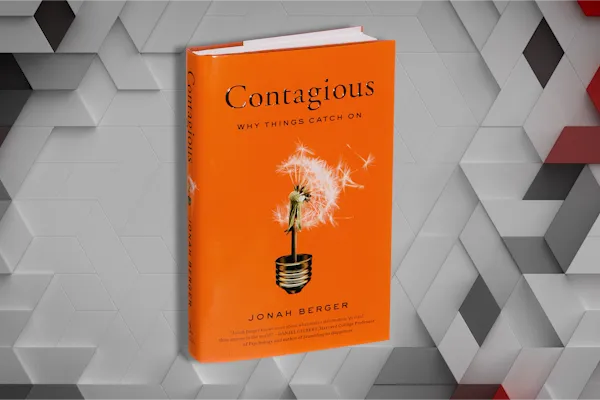
Contagious Why Things Catch On by Jonah Berger Summary
By Vicky Sidler | Published 8 March 2026 at 12:00 GMT+2
We all know that one business owner who genuinely believes paying a teenager on the internet will magically fix their terrible sales numbers.
According to a comprehensive masterclass on Jonah Berger and his book Contagious The Science of Social Transmission, this is a massive delusion. It is officially known as the influencer fallacy.
We spend so much time obsessing over the messenger that we completely ignore the actual message. If you want your business to grow without constantly begging for attention, you have to understand the underlying psychology of why human beings actually share things.
TL;DR:
The influencer fallacy is the mistaken belief that viral marketing depends entirely on a few highly connected individuals.
A successful social epidemic actually depends on the contagiousness of your content, not just the size of your initial audience.
You can engineer organic word of mouth by using six specific psychological drivers known as the STEPPS framework.
👉 Need help getting your message right? Download the 5-Minute Marketing Fix.
Table of Contents:
Contagious Why Things Catch On by Jonah Berger Summary
1. Referral Marketing Stats 2025 Why Word of Mouth Now Crushes Ads
2. Gen Z Offline Trend What Small Businesses Should Learn
3. Content Marketing Strategy Framework Every Small Biz Needs
4. Brand Strategy Framework on One Page Here is How
5. Marketing for Small Business 2026 What Actually Works Now
1. How do I make my small business marketing go viral?
2. Do I need to pay influencers to grow my business?
3. Why do some products get more word of mouth than others?
4. What exactly is social currency in marketing?
5. Should I use sad stories to make people care about my brand?
The Influencer Fallacy:
Understanding how information actually spreads is the first step to protecting your marketing budget. You need to stop buying sparks and start gathering better wood.
The Forest Fire Metaphor:
Traditional marketing assumes that if you just find an influencer with a large enough audience, your product will automatically go viral.
Berger uses a brilliant forest fire metaphor to explain why this is completely wrong:
The Spark: Influencers are just the initial spark.
The Wood: The scale of a social epidemic actually depends entirely on the susceptibility of the wood, which represents your target audience.
The Fire: If your message is dry and highly flammable, even a tiny accidental spark will trigger a massive blaze.
If your message lacks psychological drivers, the largest influencer in the world cannot force it to spread.
The Six Secrets Of Virality:
This organic spread is not just a matter of dumb luck. It is a predictable result of a specific behavioral framework.
You can literally force people to share your content by using these six psychological triggers.
1. Social Currency:
People treat conversations exactly like a bank account. What people share serves as a reflection of their identity and a clear signal of their social status.
Make them look smart. To transform your casual customers into brand advocates, your product must provide them with the conversational capital they need to look superior to their peers.
Break the rules. The Barclay Prime restaurant created an absurd one hundred dollar cheesesteak packed with lobster and truffles. They violated expectations, forcing consumers to share the story just to appear adventurous and sophisticated.
2. Triggers:
Triggers provide the reason for people to keep talking about you over time. They are environmental stimuli that bring a brand to the top of mind.
Frequency beats magic. Disney World is incredibly remarkable, but Cheerios generates higher sustained word of mouth. Breakfast happens every single day, giving Cheerios a massive and frequent environmental trigger.
3. Emotion:
The old marketing logic says that when we care, we share. But the strategic secret lies in physical arousal rather than just positive or negative feelings.
High-arousal emotions like awe, excitement, humor, and anger act as an activation switch that compels people to share.
Content that inspires wonder is actually thirty percent more likely to be shared.
Sadness is a low-arousal emotion that makes people turn inward, resulting in a sixteen percent decrease in sharing probability.
4. Public Visibility:
The principle is incredibly simple. If a behavior is completely private, no one can imitate it. Built to show means built to grow.
Show off your work. Apple famously oriented the glowing logo on their laptops to appear right-side up to the observer instead of the user. This brilliant move turned every single MacBook into a highly visible public signal.
5. Practical Value:
While social currency is entirely self-serving, practical value is beautifully altruistic. People love sharing useful news because of an innate desire to help others.
If you want to offer utility, remember the Rule of 100:
Under one hundred dollars: Use percentage discounts because twenty percent off feels much more significant than five dollars.
Over one hundred dollars: Use absolute dollar amounts because two hundred dollars off feels much larger than twenty percent.
6. Stories
Finally, you must wrap all of this inside a narrative. Stories completely bypass the mental barriers consumers build against traditional advertising.
Build a Trojan Horse. The Blendtec blender company successfully went viral by blending iPhones in a video series. The story was highly entertaining, but you could not possibly retell the joke without mentioning their indestructible product.
Winning The Algorithm Game
As a StoryBrand Certified Guide and Duct Tape Marketing Consultant, I see businesses constantly chasing whatever audio trend is currently popular on social media.
But we are living in an era of algorithmic Darwinism. Platforms actively reward these exact psychological principles by prioritizing saves for practical value and shares for social currency.
If you want support getting your message simple and contagious so you never have to rely on expensive influencers, start right here.
Download my free 5-Minute Marketing Fix and get one clear sentence that describes what your business does and why it matters.
Related Articles:
1. Referral Marketing Stats 2025 Why Word of Mouth Now Crushes Ads
If the psychology of virality makes perfect sense to you, wait until you see the actual financial numbers. This article proves exactly why building a predictable referral engine will always crush an expensive and highly annoying advertising campaign.
2. Gen Z Offline Trend What Small Businesses Should Learn
We just learned that paying internet influencers is mostly a distraction, and this piece proves that younger audiences are actively ignoring them anyway. Discover how to create marketing that people actually talk about in the real world when their screens are finally turned off.
3. Content Marketing Strategy Framework Every Small Biz Needs
Knowing the secret recipe for viral content is completely useless if you never actually bake the cake. This practical guide gives you a concrete framework to schedule those contagious ideas so they do not just die as random internet posts.
4. Brand Strategy Framework on One Page Here is How
Going viral without a clear brand strategy is just generating a lot of loud noise for people who will never actually buy your product. Read this to compress your entire business strategy onto a single page so your highly shareable stories actually build a coherent company.
5. Marketing for Small Business 2026 What Actually Works Now
Now that we have officially debunked the massive influencer fallacy, you probably want to know what marketing tactics are actually working right now. This comprehensive guide zooms out to show you exactly where your new word-of-mouth skills fit into a modern marketing plan that genuinely generates leads.
FAQs
1. How do I make my small business marketing go viral?
You have to stop relying on blind luck and start using the STEPPS framework. You need to build content that contains specific psychological drivers like social currency and practical value. If you engineer your message correctly, people will naturally want to share it with their friends.
2. Do I need to pay influencers to grow my business?
Absolutely not. Relying entirely on hyper connected individuals is a massive trap called the influencer fallacy. If your core message is incredibly boring, the most famous internet celebrity in the world cannot force people to care about it. You need to focus entirely on making your actual message contagious.
3. Why do some products get more word of mouth than others?
Some products naturally create a frequent environmental trigger that brings them to the top of your mind. For example, a Disney vacation is incredibly exciting, but people actually talk about plain old Cheerios much more often. Breakfast happens every single day, so the cereal has a massive and frequent habitat that reminds people to talk about it.
4. What exactly is social currency in marketing?
It is the conversational capital people use to look incredibly smart or cool in front of their friends. People love to share things that make them look like wealthy insiders or sophisticated rule breakers. If your product makes your customers look vastly superior to their peers, they will gladly do all of your marketing for free.
5. Should I use sad stories to make people care about my brand?
The data shows that sadness actually makes people turn inward, resulting in a sixteen percent decrease in sharing. You need to evoke high arousal emotions instead. Content that inspires a deep sense of awe is actually thirty percent more likely to be shared by your audience.


Strategic Marketing Tribe helps established service businesses turn underperforming marketing into more predictable growth with the Failure-Proof Marketing System.






Created with clarity (and coffee)