
Real news, real insights – for small businesses who want to understand what’s happening and why it matters.
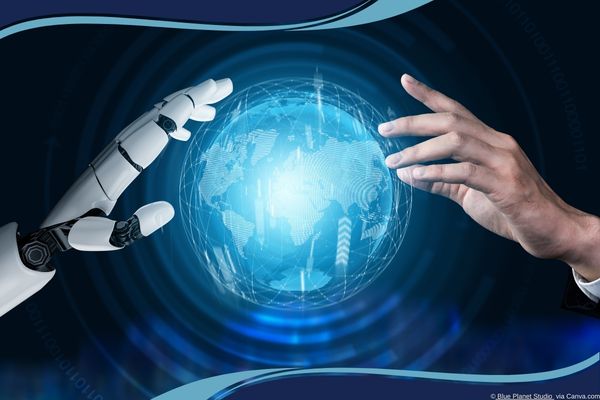
Why Comparing AI To Human Intelligence Is A Massive Mistake
By Vicky Sidler | Published 9 March 2026 at 12:00 GMT+2
Have you ever watched a piece of software write a flawless, three-page consulting proposal in fourteen seconds and felt a cold shiver go down your spine?
We all have. Every time a new digital toy hits the market, service business owners sit at their desks, violently stirring their lukewarm coffee, secretly wondering if a twenty-dollar monthly subscription is about to put them out of work. It feels like the machines are getting smarter every single day while we are just trying to remember where we left our keys.
But what if our terrifying panic is based on one massive, completely ridiculous assumption?
According to Psychology Today, we are entirely misunderstanding what intelligence actually means. Before you close up shop and surrender your clients to a glorified calculator, we need to talk about the broken ruler you are using to measure your own brain.
TL;DR:
We constantly assume robots and human beings share the exact same type of brainpower, which is completely ridiculous.
Human thoughts carry actual real-world consequences, while a machine never loses sleep over making a terrible decision.
You absolutely cannot use one single ruler to accurately measure two entirely different kinds of thinking.
👉 Good at what you do, but clients aren't converting? This free guide shows you what is quietly costing you sales. Download the 5-Minute Marketing Fix.
Table of Contents:
Why Comparing AI To Human Intelligence Is A Massive Mistake
Because You Are Not Actually Competing With A Machine:
We Mistakenly Assume That Output Equals Brain Power:
We Carry The Terrible Burden Of Being Human:
We Keep Forgetting That Being Fast Does Not Mean Being Smart:
Let Us Look At The Calculator Paradox:
There Is A Massive Hidden Value In Your Inefficiency:
Here Is How We Stop Panicking And Change The Ruler:
We Must Drop The Idea Of A Single Line Of Intelligence:
You Have To Lean Into Your Ultimate Service Business Advantage:
1. AI Is Changing Consulting Business Models Fast
2. AI Risks Explained: Why Experts Are Sounding the Alarm
3. Shadow AI Risk Is Growing Fast
4. Massive Microsoft AI Loss: What Small Businesses Should Learn
5. Risks and Artificial Intelligence: What Small Businesses Must Know
1. Will artificial intelligence replace my service business?
2. Why does AI seem so much smarter than we are?
3. What is the main difference between human and machine thinking?
4. Is it a bad thing that humans are less efficient than machines?
Because You Are Not Actually Competing With A Machine:
Have you ever read a perfectly polite email from a chatbot and immediately started updating your resume?
We see a machine instantly write a thoughtful apology to an angry client, and we foolishly assume its brain works exactly like ours. But before you hand over your CEO title to a software program, we need to look at what is actually happening behind the screen.
We Mistakenly Assume That Output Equals Brain Power:
Does spitting out a brilliant paragraph in three seconds actually make something a genius?
Artificial intelligence is currently generating incredibly convincing words and images, which clearly looks like real thinking. In fact, it is usually much better than what most humans can produce before their third cup of coffee.
We desperately try to put human thought and computer code on the exact same scale to see who wins. But being smart involves a lot more than just typing really fast. In fact, real intelligence requires something a machine will never have to deal with.
We Carry The Terrible Burden Of Being Human:
Has a piece of software ever stared at the ceiling at three in the morning panicking about a bad strategic move?
When you tell a client to make a major business decision, you actually have to live with the fallout. When you change your mind about a strategy, that embarrassing mistake becomes a permanent part of your professional reputation.
Human thought unfolds through time and permanently alters who you are. A robot does absolutely none of this.
The machine generates brilliant answers without having any emotional baggage or professional liability whatsoever. It does not carry the regret of yesterday into tomorrow. It talks a great game, but its actual understanding of the real world is incredibly fragile.
So if these machines are so fragile, why are we constantly convinced they are vastly superior to us?
We Keep Forgetting That Being Fast Does Not Mean Being Smart:
What happens when we force a human and a string of computer code to take the exact same intelligence test?
If we stubbornly insist on measuring both of them on the exact same ruler, we are going to get the wrong answer every single time. To prove how ridiculous this comparison is, we just need to look at a tool you already use every single day.
Let Us Look At The Calculator Paradox:
Have you ever suffered a crisis of confidence because a cheap plastic calculator beat you at basic division?
Of course not. A calculator will easily crush you at math, and a navigation app will absolutely beat any delivery driver at finding the quickest route. Yet you do not sit at your desk openly weeping because the calculator is officially smarter than you are. We simply recognize that the tool is built to do one very boring task perfectly.
The trouble begins when this machine optimization creeps into creative and strategic services. Because giving advice feels uniquely human, we assume we are looking at a vastly superior version of ourselves.
But looking like a human is not the same thing as being one. And ironically, the very things that make you feel like a messy human are exactly what make you so valuable.
There Is A Massive Hidden Value In Your Inefficiency:
What if your crushing professional self-doubt is actually your biggest competitive advantage?
The machine looks like a superhero simply because it spits out words incredibly fast. Meanwhile, you look highly inefficient because you constantly hesitate, rethink your strategy, experience panic, and wildly contradict yourself.
However, those exact inefficiencies are what make your brain so distinct and valuable. Your clients do not hire you because you type the fastest. They hire you specifically because you know what it feels like to hesitate, worry, and navigate actual real-world consequences.
Once you realize your flaws are actually your features, it becomes much easier to see the artificial intelligence hype for what it really is.
Here Is How We Stop Panicking And Change The Ruler:
Are we accidentally giving these programs way too much credit for simply being fast?
Our biggest mistake is completely misunderstanding what we are actually comparing. To fix this mistake, we have to throw away the ruler we have been using.
We Must Drop The Idea Of A Single Line Of Intelligence:
What if human intelligence and machine code are not even playing the same game?
Your thinking is entirely shaped by your lived experience and the terrifying prospect of ruining a client project.
Conversely, artificial intelligence just guesses the next logical word based on massive amounts of data. It finds patterns with astonishing speed. Both humans and machines generate language, and both can solve complex problems.
But the way they actually think could not be more different. When we pretend these two very different systems are playing the exact same game, we distort the entire conversation.
So how do you actually use this information to win more clients in a world obsessed with automated content?
You Have To Lean Into Your Ultimate Service Business Advantage:
Why would a client ever pay a premium for your services when a robot can theoretically type out a strategy for free?
Because your clients are buying your humanity. They buy your empathy, your lived experience, and your ability to carry the weight of a difficult decision.
But if your marketing message sounds like it was written by a boring corporate robot, you are forcing your clients to compare you to one. You have to stop hiding behind generic industry jargon and start sounding undeniably human.
If you want support getting your message simple, sharp, and highly personal so your human expertise stands out, download my 5-Minute Marketing Fix.
If you are good at what you do but clients are not converting, this 5-minute fix shows you what is quietly costing you sales.
Related Articles:
1. AI Is Changing Consulting Business Models Fast
Now that you know you are not competing with a robot, discover exactly how consulting is actually changing. Learn how to redesign your pricing and packages around your unique human value instead of racing to automate everything.
2. AI Risks Explained: Why Experts Are Sounding the Alarm
Once you stop panicking about AI stealing your job, you still need to understand the real-world risks of using it. This guide breaks down exactly why outsourcing your professional judgment to a fragile digital system is a terrible idea.
3. Shadow AI Risk Is Growing Fast
What happens when your team or suppliers secretly start using AI behind your back? Find out how to keep your hard-earned reputation safe when people in your business experiment with tools you cannot even see.
4. Massive Microsoft AI Loss: What Small Businesses Should Learn
If you enjoyed the calculator paradox, you will love reading about how even the biggest tech giants make massive, expensive mistakes with AI. Discover why blindly chasing "smart" technology can spectacularly backfire on your own business.
5. Risks and Artificial Intelligence: What Small Businesses Must Know
Stop making fear-driven technology decisions and learn how to use AI responsibly. This cornerstone post maps out the specific legal and reputational risks you face and shows you exactly how to protect your business.
FAQs:
1. Will artificial intelligence replace my service business?
Absolutely not. A machine is incredibly fast at generating words, but optimization is not the same thing as superiority. A calculator is better at math than you are, but you do not worry about it stealing your clients. Your value comes from your lived experience and your ability to take real responsibility for the advice you give.
2. Why does AI seem so much smarter than we are?
Because we are measuring humans and machines on the exact same ruler, which is a huge mistake. When a machine generates highly convincing text, it looks exactly like human thinking. We see the impressive output and completely misclassify what we are comparing.
3. What is the main difference between human and machine thinking?
Human thought is deeply autobiographical and carries actual lived consequences. When you make a decision, you have to live with the aftermath. Artificial intelligence operates without any biography or future consequences. It simply uses statistical inference to guess the right answer.
4. Is it a bad thing that humans are less efficient than machines?
Not at all. The machine appears superhuman because it only cares about measurable outputs. Humans appear inefficient because we hesitate, revise our opinions, and experience crushing doubt. But those exact inefficiencies are what make our advice uniquely valuable and empathetic to our clients.
5. How can I compete with the fast output of a chatbot?
You stop trying to compete on speed and start competing on human connection. A robot can write ten proposals in a minute, but it cannot share a personal story or look a client in the eye. You win by clarifying your message so your very human expertise is obvious to anyone who reads your website.

Is your Marketing Message so confusing even your own mom doesn’t get it? Let's clarify your message—so everyone wants to work with you!






Created with clarity (and coffee)