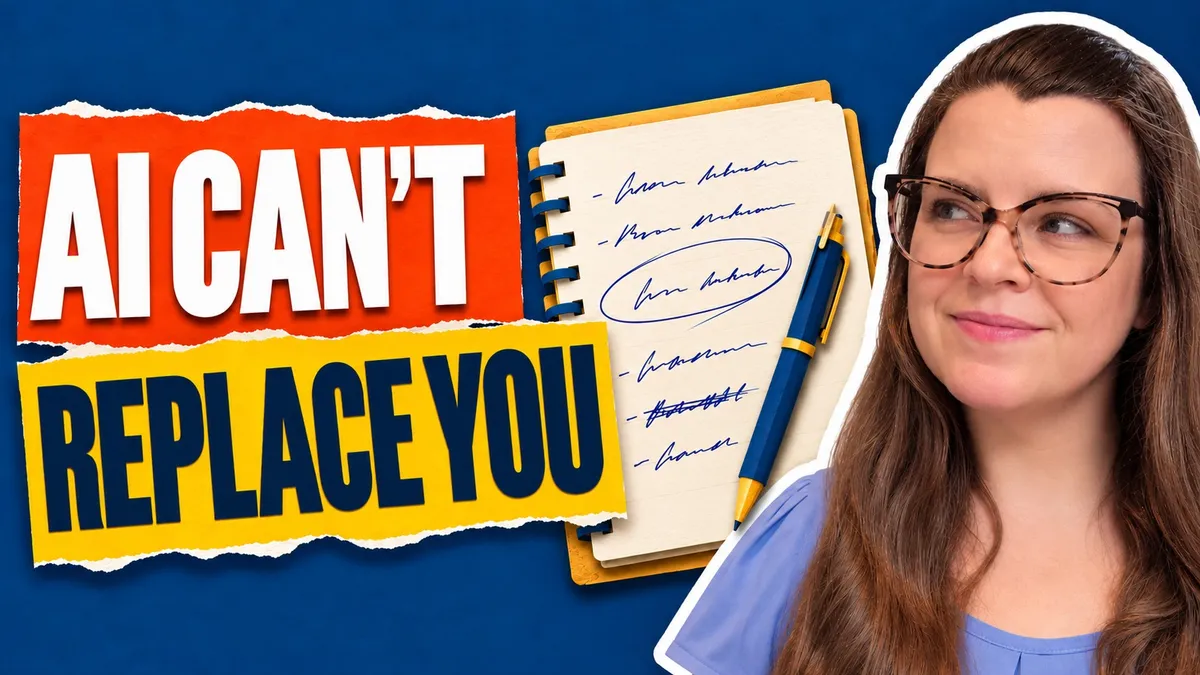
I Stopped Using AI On My Phone, And A Few Weeks Later, I Barely Notice It’s Gone
By Vicky Sidler | Published 28 October 2026 at 12:00 GMT+2
Here’s an interesting test you can run right now. Open your phone settings quickly and check how much time you spend using artificial intelligence apps. On an iPhone, look under Screen Time; on Android, hunt down Digital Wellbeing. If activity tracking is turned on, you can see the exact minutes you spend in individual apps.
Now, ask yourself a slightly less comfortable question: how much of that time was genuinely useful, and how much of it was spent asking a machine to do something you could easily have thought through, researched, or discussed with an actual human?
Your phone cannot give you that breakdown. You have to be completely honest with yourself, which is deeply inconvenient and apparently still not something we can automate.
I am not suggesting every single minute spent using AI is a total waste. I still use it—albeit on my computer only. But before I deleted the apps from my phone, I would have sworn blind that my habits were entirely practical and intentional. Then I removed them and discovered how often my hand reached for a conversation my brain hadn't even consciously decided to have.
In my first article about this experiment, I wrote about how uncomfortable that realization was. I caught myself wanting to vent to an AI chatbot after a particularly brutal day, only to realize I felt genuinely lonely without it. That was the part that actually scared me.
A few weeks later, I have a reassuring update: I have grown quite used to life without AI on my phone, and I barely notice its absence anymore.
Absolutely nothing bad has happened because I stopped carrying a chatbot in my pocket. I am still making decisions, navigating life, and pushing through uncertainty without asking a server farm for its opinion first.
Yet, something genuinely painful did happen during that exact same window. And the way my brain responded to it only became clear to me while putting these thoughts down on paper.
TL;DR
Deleting AI from your phone feels strange at first, but the twitchy reflex to consult a chatbot fades much faster than you expect.
When real-life tragedy strikes, our instincts naturally pull us toward human connection rather than artificial companionship.
Relying too heavily on AI can make our marketing sound generic; true expertise requires sharing messy, lived human experience.
👉 Getting your positioning right is actually only one of ten elements of a Failure-Proof Marketing System. To discover the other nine elements you need to build a pipeline you can trust, download The Failure-Proof Marketing Roadmap.
Table of Contents
I Stopped Using AI On My Phone, And A Few Weeks Later, I Barely Notice It’s Gone
The Reflex Disappeared Much Faster Than I Expected
My Dogs Passed Away, And I Turned to the People Who Love Me.
It Feels New, Even Though It Is How We Lived Very Recently
I Notice Other People’s Phones More Now
The Unexpected Part: I Am Using Less AI for Work Too
Someone Complimented My Writing, And It Actually Felt Like My Compliment.
I Genuinely Think AI Can Make Us More Insecure
You Have Been There; AI Has Not.
Your Clients Don't Want Your Brand of AI Slop
Does Your Marketing Show Any of That?
Think First, Then Decide What Help You Need
What Scared Me Was the Attachment; What Reassured Me Was How Quickly It Faded
1. I Deleted AI From My Phone Permanently, And What Happened Actually Scared Me
2. Stop Asking AI for a Marketing Strategy Until You Watch This
3. Why Your Marketing Isn't Working (And It's Not Because You're Lazy)
4. Why “Everyone” Can’t Be Your Target Audience (A Five-Minute Reality Check)
5. What to Fix First When Your Marketing Stops Working (The Order Matters)
1. Does dropping AI from your phone mean you should never use AI for business?
2. How does overusing AI ruin your content marketing?
3. How can I inject more real human expertise into my marketing?
4. Why do we instinctively reach for AI chatbots when stressed or bored?
5. What is the main benefit of a Failure-Proof Marketing System?
The Reflex Disappeared Much Faster Than I Expected
When I first deleted the apps, I noticed all those tiny little moments when I wanted to use them. A random question would pop into my head, or I would want to think a half-baked idea through, and my thumb would automatically swipe toward the empty space on my screen before I remembered that particular shortcut was gone.
Initially, that felt like a frustrating obstacle. Now, it simply feels completely normal.
I am not spending my days heroically resisting the temptation to reinstall anything. There is no daily psychological warfare happening between my higher self and a download button. I have simply stopped expecting a robot to be available the exact second a stray thought crosses my mind.
That has been a huge relief, because the initial discomfort made the habit feel so deeply ingrained that I thought it was a permanent part of who I was. Something I had started treating as an automatic lifeline turned out to be something I could comfortably drop in a surprisingly short space of time.
I still have questions. I still need information and guidance. I haven't turned into an all-knowing woodland creature who receives business advice from blowing autumn leaves. I am simply getting on with life without treating every minor uncertainty as the grand opening of a chatbot conversation.
The most interesting outcome isn't that I have become some sort of productivity guru. It is how quickly this massive change stopped feeling different at all.
My Dogs Passed Away, And I Turned to the People Who Love Me.
Of course, life doesn't pause just because you are running a personal digital experiment.
Since removing AI from my phone, my fourteen-year-old dog lost her exhausting, brave fight with cancer. A mere three weeks later, her sister passed away unexpectedly as well.
In my original piece, I described wanting to turn to a chatbot after a bad day just to vent. This situation was something infinitely heavier, and yet the thought of processing my grief with a computer program didn't even cross my mind. I am only realizing that now, looking back.
Instead, I naturally sought comfort from my partner, my family, and my close friends. When the crematorium eventually returned their ashes, they included a tiny, thoughtful booklet about processing grief, and I sat down and read actual paper pages. Some old-fashioned reading, side-by-side with genuine comfort from the people who actually love me.
I don't want to turn losing my dogs into a neat, tidy marketing lesson about technology. It really annoys me when people do stuff like that on LinkedIn. It was a heartbreaking loss, not a corporate productivity stunt. Nor am I remotely interested in judging anyone who has found comfort through AI while grieving.
However, it matters deeply to me that when I desperately needed comfort, I reached for real breathing people without having to remind myself to do so. The artificial option I had previously felt drawn toward wasn't something I actively considered and bravely resisted. It simply didn't enter my mind.
The last article described feeling as though I was missing a friend when I couldn't open an app. This time, when something genuinely devastating happened, I turned straight to the people who make up my real, messy life.
That feels like a profoundly meaningful shift.
It Feels New, Even Though It Is How We Lived Very Recently
Reflecting on all of this, there is something slightly comical about describing talking to loved ones and reading a pamphlet as if I have just discovered a revolutionary, avant-garde approach to being human.
This is what normal life was like a mere few years ago. We had nagging questions without instantly opening an AI chat window. We asked actual humans for advice, looked things up in books, read something useful, or sat uncomfortably with a difficult problem until we figured out what we actually thought.
We didn't necessarily enjoy living in that state of uncertainty. But we somehow survived a remarkable amount of it without requiring a personalized response that began with, "It's completely understandable that you're feeling this way."
Perhaps that is precisely why I adapted so quickly to this change. I wasn't learning an entirely foreign way to exist on planet Earth; I was simply returning to the default settings I had used for most of my life.
That is just a stray thought, not a peer-reviewed scientific explanation. I can't guarantee how quickly someone else would adjust or what kind of withdrawal symptoms they might experience. But for me, dropping AI from my phone has started to feel less like a harsh restriction and much more like coming home.
The truly bizarre part is how astonishingly fast "normal" managed to become completely unfamiliar in the first place.
I Notice Other People’s Phones More Now
Now that I am no longer constantly staring at a screen in my pocket, another strange side effect has crept in: I am hyper-aware of how much other people rely on theirs when we are spending time together.
Not everyone, and certainly not all the time. But every now and then, I will be sitting across from someone who is furiously tapping away at their phone, leaving me wondering what on earth I am supposed to do with my hands while they finish. There is only so long you can stare intensely at a houseplant before you start looking like you are casing the joint for a late-night burglary.
Previously, I would have used that awkward gap as an excuse to whip out my own phone and check notifications. Now, I just sit there and notice the waiting.
I am trying very hard not to become insufferably judgmental about it, because my own digital hygiene was atrocious just a few weeks ago—and it’s certainly not even perfect now. I haven't earned a gold star for looking up from a screen. Besides, I have no idea what someone else is dealing with on their end, and using my phone less doesn't grant me the moral high ground to assume the worst.
What it has given me, however, is an uncomfortable mirror. I know intimately what it feels like to wait patiently while someone else's attention is trapped inside a glass rectangle, and I know I have left plenty of people sitting across from me doing that exact same waiting.
That observation isn't exclusively about artificial intelligence. But stepping away from AI meant spending significantly less overall time hypnotized by my phone, and that made the wider reality of modern distraction impossible to ignore.
The Unexpected Part: I Am Using Less AI for Work Too
My initial boundary was simple: "computer for work, brain for living." I ripped the apps off my phone but kept the platform accessible on my desktop computer, where I could use it deliberately for professional tasks.
I certainly didn't plan to scale back my office use as well. Yet, that is precisely what has happened.
I am using AI less and less for work. And when I do open it up, I find myself increasingly annoyed by the actual output. That growing dissatisfaction is making me far less inclined to reach for it the next time a task rolls around.
I can't tell you for certain that the underlying technology has somehow gotten worse—although I swear it feels like it has! But I haven't run tests or anything. What I can tell you is that I have zero patience left to keep wrestling with a tool when it isn't giving me anything genuinely useful in return.
There is a massive chasm between receiving a wall of generated text and actually making real forward progress. A chatbot can effortlessly spit out a perfectly respectable paragraph while leaving you stuck doing all the heavy lifting: explaining why its cheerful draft missed the mark entirely, evaluating another clumsy attempt, and deciding whether it's even worth keeping the cycle going.
Sometimes that back-and-forth helps untangle a knot. But often, I realize I am spending twenty minutes negotiating with a server farm when I could have just written the damn thing myself and gone to lunch.
The question I find myself asking isn't, "Can AI do this task?" It is, "Am I actually happier with the final work or the process of creating it because I let a machine help?"
When the honest answer is no, I am becoming much happier just closing the tab and getting back to work.
👉 If you are tired of wrestling with generic tools and want a proven system that connects your marketing directly to paying clients, download The Failure-Proof Marketing Roadmap.
Someone Complimented My Writing, And It Actually Felt Like My Compliment.
The payoff for all this friction came into sharp focus just recently.
A couple of people complimented me on something they had read that I had written entirely without AI assistance. And I was pretty darn pleased with myself, let me tell you. Not simply because they enjoyed the piece, but because it was truly me they were responding to: my unfiltered thoughts, my quirky choice of words, my particular way of explaining a messy concept.
I honestly don't think I would have felt nearly that proud if a machine had co-authored the text. I might have been mildly glad that the piece performed well in the algorithm, but that is a hollow feeling compared to knowing a human appreciated something I had actually worked out how to articulate on my own.
It would be a bit like someone coming over to my house and enthusiastically complimenting me on how efficiently my rooftop solar panels convert sunlight into electricity. Lovely gesture, thank you very much, but I can't take much personal credit for it. I am not up on the roof personally shaking hands with incoming photons; expensive equipment is just doing what it was engineered to do.
That doesn't make solar power any less useful. It just means the system's performance isn't a reflection of my personal skill.
For me, there is a very similar distinction when it comes to writing and marketing. Getting a functional piece of content published into the world is one kind of satisfaction. Having someone deeply connect with the way you think and express your unique worldview is an entirely different level of reward. When I write things myself, I get to enjoy both.
I am not suggesting that using AI for a minor piece of administrative work completely ruins your creative contribution. There is a wide ocean between getting a bit of structural help organizing your scattered thoughts and having a server farm generate the core ideas and sentences for you. But I know that whenever I have entirely outsourced the writing process, any compliments wouldn’t feel entirely mine to accept.
What genuinely surprised me was how much I missed having zero reservations about my own work. Someone liked something I had put out into the world, and I could simply feel proud of it without mentally adding an asterisk or a hidden disclaimer.
I had spent all my time paying attention to whether AI made my workflow faster or easier. I had given almost zero thought to whether letting a machine take the wheel made the work feel nearly as rewarding.
I Genuinely Think AI Can Make Us More Insecure
That realization points to a larger, more unsettling trend that goes far beyond my own writing desk.
This is just my personal interpretation of what I've observed, not a sweeping psychological diagnosis of everyone who uses a chatbot. But I genuinely believe that leaning too heavily on AI can make us deeply insecure when we start treating it as the ultimate authority on our own inner thoughts.
There is something faintly sad about repeatedly asking a machine whether your business idea is any good, whether your email wording is polite enough, whether your strategic decision makes sense, and whether you've understood a market trend properly. Even when the machine replies with enthusiastic reassurance, you have still outsourced your self-trust to an algorithm.
It is easy to look at AI's lightning-fast, impeccably polished output and start feeling as though your own slower, messier human thinking is somehow second-rate.
But I refuse to confuse how quickly a server can generate autocomplete text with how much authority it deserves over my professional judgment. Nor do I want to become so hopelessly addicted to having my thinking pre-checked that I completely forget I was born fully capable of thinking for myself.
That is why this entire phone experiment has been so strangely liberating. I haven't stopped needing advice or making mistakes. I've simply been reminded that I am allowed to decide when advice is actually necessary, rather than summoning a digital oracle by default every time a minor question pops into my head.
And if you run an established service business, I think this distinction deserves your absolute attention. Because you possess a powerful commercial advantage that no AI model can ever manufacture for itself: hard-won, lived expertise.
You Have Been There; AI Has Not.
Think about it.
You have sat across a boardroom table in a client meeting where the client's stated problem turned out to be a massive red herring hiding the real operational disaster underneath. You have made a bold professional recommendation, watched it play out in the messy real world, and lived with the financial consequences. You know precisely which warning signs to look for during a discovery call because you once failed to spot them three years ago and paid the price.
That isn't a tidy list of bullet points a chatbot can scrape off a blog. That is earned, scar-tissue knowledge.
An AI system can easily stitch together a very convincing paragraph about your industry. But it didn't acquire your first-hand battle scars while doing so.
An accountant who has guided stressed business owners through terrifying cash-flow crunches brings far more to the table than a generic list of tax tips; they bring the calm intuition born from surviving past panics. A specialist consultant who has watched a textbook-perfect strategy implode under real operating conditions has something valuable to teach. A service-business founder who hears the exact same confused objection from prospects week after week has pure gold sitting right there in their daily operations.
That doesn't make human intuition infallible. Experience can sometimes be misinterpreted, and our gut feelings still require rigorous commercial testing. But it does mean you should stop assuming that a polished, confident answer generated by AI is automatically more valuable than the unique perspective you earned through actual work.
I said this in my previous article, but it bears repeating here: if you’re ever worried about making mistakes, remember that AI makes far more obvious mistakes all the time. At least you are able to learn from yours. And that’s exactly where that precious, valuable lived experience comes from!
You don't need to know more than an advanced language model about every random topic on earth to have something profoundly important to say about the work you actually do every single day.
Your Clients Don't Want Your Brand of AI Slop
And this brings us directly to how your prospective clients feel about all of this.
You see, your clients have almost certainly already tried using AI themselves before they ever reached out to you. Or, at the very least, they know they could use it if they wanted to.
If they wanted a generic, cookie-cutter checklist or a polite summary of basic industry principles, they don't need to pay your professional rates. They can prompt a chatbot for free in three seconds.
In fact, business owners are currently dealing with a massive wave of exhaustion known as AI fatigue (those are the exact words someone used in a coffee chat with me recently). They are drowning in generic, automated noise, robotic emails, and synthetic thought-leadership posts.
They are not coming to you because they think you are somehow better at prompting an algorithm than they are. They are coming to you because they are looking for advice from a real human being who possesses actual, lived experience.
A painful personal example comes to mind from a few months ago. I needed to draft a very delicate email to a contractor—a sensitive situation that required a high degree of tact and emotional intelligence. I could easily have asked AI to draft it, but I didn't. I deliberately chose to reach out and pay an HR specialist for human guidance because I wanted someone who actually cared, and I wanted the recipient to know enough thought had gone into it.
Imagine my utter disappointment when the HR specialist sent back a response that was blatantly, unmistakably AI-generated.
It felt crushing. I had specifically paid a human because I wanted human empathy and judgment. Instead, I got a boilerplate prompt output, and I found myself sitting there wondering what on earth I was paying for since I could have generated that exact same fluff myself in my pajamas.
Your business is almost certainly built on trust. And you never, ever want to make your clients or prospects feel that hollow disappointment.
When people hire a trusted professional, they want to know there is a living, breathing human at the other end who has actually walked the path, made the mistakes, and figured out what works. If your marketing just spits back automated advice wrapped in a professional bow, you aren't offering expertise—you're just contributing to the noise.
Does Your Marketing Show Any of That?
Which brings us right back to the core frustration of the service businesses I work with.
You may already be paying an external agency to write articles, a social media manager to keep your feeds active, and another specialist to run your paid traffic. The content machine is humming, your editorial calendar is completely full, and your providers always show up with neat reports.
Yet, does any of that work give prospective clients a genuine sense of your hard-earned expertise? Or does it simply give your business enough filler content to keep up appearances?
You can easily publish a perfectly competent article listing "Five Ways to Improve Cash Flow" without showing a single reader how your specific firm actually thinks. You can pack a month's worth of social media graphics into a scheduler without sharing one hard-earned lesson you picked up from helping a real client solve a real crisis. There might not be a single factual error in the text, but there is also nothing anchoring it to the reality of your business.
Run a quick audit right now: look at your last three published articles or social posts. Can you point to a single sharp observation, a real-world example, or a contrarian opinion that came directly from your personal experience? Could a prospective client actually learn how you approach their unique problem by reading them? Or could a completely different firm in your city swap out your company logo for theirs without changing a single sentence?
Writing things yourself doesn't automatically guarantee brilliance, just like using AI doesn't automatically guarantee garbage. The single deciding factor is whether there is meaningful, lived expertise driving the work in the first place.
If your current marketing could comfortably belong to almost any competitor in your market, don't start by looking for a clever new prompt. Start by mining the raw conversations happening inside your business: the questions your clients keep asking over and over, the expensive mistake you help them dodge, or the common industry advice you actively challenge because you know it leads to a dead end.
Those messy, human insights are the exact raw materials we need when we sit down to build a real marketing system—not another layer of generic AI-generated sentences about your industry.
Think First, Then Decide What Help You Need
Let me be entirely clear: I still use artificial intelligence. I am not trying to establish some impossibly pure, luddite standard where every comma you write must be hand-carved by candlelight.
This is simply about whether a tool is genuinely serving you, rather than proving you've never accepted digital assistance. I want to choose my help deliberately, without blindly assuming that every piece of professional communication must begin with typing a prompt into a box.
If you want a practical way to apply this inside your own business starting today, try this exercise before planning your next article or social post: write down one single thing a client recently misunderstood, one tough decision you helped them navigate, or one piece of lazy industry advice you completely disagree with. Explain why it matters using your own untidy, conversational words.
Then, and only then, decide what kind of outside assistance would actually improve it. Perhaps you need external data to double-check a claim, someone to help structure the narrative arc, or an editor to tighten up the grammar. AI might even play a helpful supporting role in that specific editing phase.
However, always start with a spark you actually noticed in the real world, rather than asking a server farm to invent your point of view from scratch.
At Strategic Marketing Tribe, this philosophy is foundational to how we operate. We refuse to start our engagements by blindly filling a content calendar with tactical noise. We want to know what you see that your competitors completely miss, where your operational approach actually differs, and what your buyers desperately need to understand before they can appreciate the true value of your service.
Tools can help us communicate those insights efficiently to the world. But they should never replace the hard, rewarding effort of discovering them in the first place.
What Scared Me Was the Attachment; What Reassured Me Was How Quickly It Faded
My first experiment was all about discovering that my relationship with artificial intelligence wasn't nearly as intentional and controlled as I had casually assumed. This update is about realizing that I could completely change that dynamic without making my daily life harder or less productive in any meaningful way.
I am still making tough decisions and getting through my workweek just fine. I am using AI far less because I've lost patience with uninspired outputs. I have thoroughly enjoyed the simple, uncomplicated pride of watching people appreciate something I wrestled into existence entirely on my own.
And when I lost my beloved dogs, I instinctively turned for comfort to my partner, my family, and my friends without ever pausing to consult a chatbot.
None of this has made profound grief feel easy, nor has it magically stripped away the normal complexities of running a growing business. It has simply served as a quiet, powerful reminder that I am fully capable of navigating both ordinary daily uncertainties and genuine human pain without needing an interactive chatbot permanently parked in my pocket.
A few weeks ago, removing that digital crutch felt like a daunting, high-stakes experiment. Today, I barely give it a second thought. Perhaps that is the most comforting takeaway of all: not turning into a completely different person, but simply remembering that I was already equipped to be this one all along.
👉 Stop relying on digital crutches and automated noise. Download The Failure-Proof Marketing Roadmap to discover the ten core elements that build a predictable, trust-based pipeline around your actual human expertise.
Related Articles
1. I Deleted AI From My Phone Permanently, And What Happened Actually Scared Me
If you missed the start of this digital experiment, catch up on why pulling the plug on pocket-sized chatbots exposed a startling emotional dependency.
2. Stop Asking AI for a Marketing Strategy Until You Watch This
If you are still tempted to outsource your core brand messaging to a probability machine, this article explains why automated slop destroys differentiation.
3. Why Your Marketing Isn't Working (And It's Not Because You're Lazy)
If your content is going out consistently but your pipeline is dead, discover why you have an architectural expertise gap rather than a hustle problem.
4. Why “Everyone” Can’t Be Your Target Audience (A Five-Minute Reality Check)
If you are struggling to stand out in a sea of generic competitors, this practical reality check shows you how to anchor your marketing in earned experience.
5. What to Fix First When Your Marketing Stops Working (The Order Matters)
If you are ready to strip away tactical busywork and build a real, human-centered marketing foundation, start following this exact sequence of leverage.
FAQs
1. Does dropping AI from your phone mean you should never use AI for business?
Not at all. Keeping AI on your desktop for deliberate, task-oriented support (like data organization or research) is a great tool, provided it doesn't replace your core thinking.
2. How does overusing AI ruin your content marketing?
When you let AI generate your core viewpoints and writing from scratch, your content loses its unique edge, sounding identical to every other generic competitor online.
3. How can I inject more real human expertise into my marketing?
Start by documenting actual client conversations: common objections, surprising mistakes you help them avoid, and contrarian industry views you hold based on hard experience.
4. Why do we instinctively reach for AI chatbots when stressed or bored?
AI offers instant, non-judgmental validation and zero friction, making it an easy emotional crutch when we want to bypass the discomfort of sitting with our own thoughts.
5. What is the main benefit of a Failure-Proof Marketing System?
A Failure-Proof system aligns your real human expertise, clear positioning, and audience education into a unified engine that attracts right-fit clients predictably.