

StoryBrand South Africa Certified Guide & Coach | Duct Tape Marketing Consultant

About Vicky Sidler
Marketing News Reporter & Industry Journalist

Vicky Sidler is an experienced marketing industry journalist and strategist with more than 15 years in journalism, content strategy, and digital marketing. As a Marketing News Reporter for Strategic Marketing Tribe, she covers breaking developments, trends, and insights that shape the marketing world—from AI in advertising to the latest in customer experience strategy.
Vicky is an award-winning StoryBrand Certified Guide and Duct Tape Marketing Certified Strategist, combining two of the most effective marketing frameworks to help small businesses simplify their message and build marketing systems that work. Her journalism background ensures every piece she writes is fact-checked, insightful, and practical.
Her articles regularly analyze key marketing trends, platform updates, and case studies—offering small business owners, marketers, and industry professionals clear, actionable takeaways. She specializes in topics such as:
Digital marketing strategy
Content marketing and brand storytelling
Marketing technology and automation
AI’s impact on marketing
StoryBrand and Duct Tape Marketing best practices
Education & Credentials
BA in Journalism & English, University of Johannesburg
StoryBrand Certified Guide
StoryBrand Certified Coach
Duct Tape Marketing Certified Strategist
Over 20 years in journalism and marketing communications
Founder & CEO of Strategic Marketing Tribe
Winner of 50Pros Top 10 Global Leader award




Contact
Recent Work
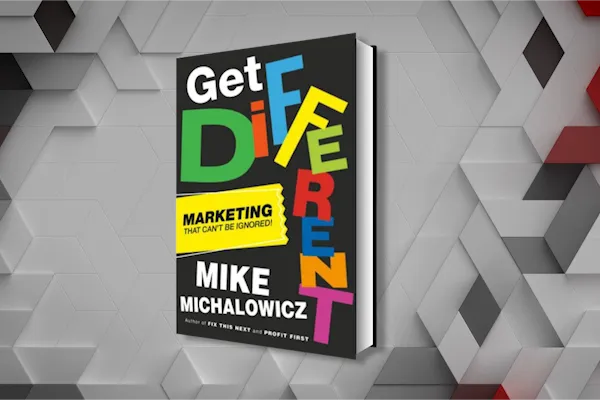
Get Different by Mike Michalowicz Summary: Book Review for Small Business
By Vicky Sidler | Published 25 January 2026 at 12:00 GMT+2
Most small businesses don’t fail because they’re bad. They fail because no one knows they exist. Mike Michalowicz’s book Get Different is his way of shaking us out of that slow, polite fade into obscurity.
If you’ve ever wondered why your competitors keep getting the clients you should have, or why your carefully written emails feel like they vanish into a black hole, this book offers an answer. The problem isn’t your product or your price. It’s that your audience doesn’t even notice you long enough to care.
And Get Different doesn’t whisper this truth softly into your ear. It waves a red flag and shouts it across a crowded room.
TL;DR:
People don’t ignore you because you’re bad at business. They ignore you because your marketing looks like everything else.
Your brain filters out predictable marketing the same way it filters out background noise.
The DAD Framework (Differentiate, Attract, Direct) gives you a practical way to stand out.
You’ll need to experiment and be okay with trying things that might fail before they work.
👉 Need help getting your message right? Download the 5-Minute Marketing Fix.
Table of Contents:
Get Different by Mike Michalowicz Summary: Book Review for Small Business
Why Most Marketing Gets Ignored (Even If It's Technically Good):
The DAD Framework—What It Is and Why It Works:
1. Differentiate—What Makes You Weird Makes You Work:
2. Attract—Speak to What They Actually Care About:
Related Business Books & Articles:
1. Building a StoryBrand 2.0 By Donald Miller: Why It Still Works for Small Business
2. Ideal Client Profile: The Marketing Shortcut Small Businesses Miss
3. Duct Tape Marketing by John Jantsch: What It Gets Right About Small Business
4. Brand Guidelines for Small Businesses
5. The 1-Page Marketing Plan by Allan Dib Actually Works
Frequently Asked Questions About Get Different by Mike Michalowicz
1. What is the DAD framework in Get Different?
2. How can small businesses stand out in a crowded market?
3. What does Mike Michalowicz mean by “better is not better, different is better”?
4. How do I come up with a “different” marketing idea?
5. What is the “Target One Hundred” strategy?
6. How is this different from StoryBrand or other frameworks?
7. Is Get Different only for product businesses?
8. What kind of experiments does the book recommend?
9. Can this approach work if I have a very traditional industry?
10. How do I know if my “different” idea is actually working?
Why Most Marketing Gets Ignored (Even If It's Technically Good):
Michalowicz introduces the Reticular Activating System (RAS), which sounds like something from a 90s sci-fi movie but is actually part of your brain that decides what to notice and what to ignore.
It filters out everything that looks expected, average, or safe. And since most small business marketing follows the same tired template, it gets tossed out with the mental junk mail. That’s why being “better” isn’t enough. If your website is just a slightly shinier version of your competitor’s site, you still get ignored.
To fix this, you don’t need to be outrageous. You need to be different enough to interrupt someone’s autopilot. That’s what this book is about—learning how to stand out in a way that doesn’t just feel different to you, but registers as different to your audience.
The DAD Framework—What It Is and Why It Works:
The book’s central framework is DAD:
Differentiate
Attract
Direct
It’s simple, but don’t confuse that with easy. Most people skip the hard parts and then blame the method. Michalowicz doesn't give you permission to stay comfortable. He gives you permission to get noticed—and that comes with some discomfort.
1. Differentiate—What Makes You Weird Makes You Work:
This phase is about more than slapping a quirky font on your business card or adding a fun fact to your LinkedIn bio. Michalowicz is clear: your job is to actively not look like everyone else in your industry.
And that starts by identifying what "everyone else" is actually doing.
The book suggests you scan the competitive landscape, figure out what the norm is, and then go the other way. If everyone’s using calm, professional blue in their branding, maybe you show up in hot pink. If every accountant is promoting accuracy and trust, you highlight speed and humor.
You’re not being different for the sake of it. You’re breaking the pattern your customer’s brain has learned to ignore.
Michalowicz also recommends borrowing tactics from other industries. This is his version of “R&D”—not research and development, but Rip Off and Duplicate. Take an idea that works in restaurants, fitness, or e-commerce, and apply it to your field. Just change the context.
It’s also about finding your est. Not the best. Your “weirdest,” “fastest,” “boldest,” or “only-est.” It’s the thing that sets you apart—not your generic promises, but something specific enough to stick in someone’s head.
Example: Saying “we help small businesses grow” is forgettable. Saying “we help you go from ‘not even your mom understands what you do’ to ‘everyone wants to work with you’” creates a mental image. It also opens a conversation.
2. Attract—Speak to What They Actually Care About:
Once you’ve captured attention, the goal is to keep it long enough to create interest. Here, Michalowicz says your message has to speak directly to your customer’s real-world problem.
That means no jargon. No vague value propositions. No “solutions tailored to your needs.” You’re not pitching to a boardroom. You’re talking to a human who is probably tired, busy, and slightly skeptical.
This is where the idea of a nemesis comes in.
Your nemesis is not your competition. It’s the real enemy your customer is trying to escape. For a personal trainer, it might be “couch culture” or “false fitness promises.” For a digital agency, it might be “marketing fluff” or “overpriced consultants.”
You don’t need a villain. You need a cause.
This lets you frame your mission as a movement instead of a transaction. You’re not just offering a service. You’re helping someone win a fight they already care about. That’s magnetic.
Michalowicz also pushes for specificity with something called the “Target One Hundred.” Instead of trying to appeal to everyone, you pick 100 dream clients and build your messaging for them. This constraint forces you to focus. When you do, your message sharpens, and you stop wasting time trying to please people who will never buy from you anyway.
3. Direct—Don’t Be Coy:
Now we’re at the part most business owners stumble over: the call to action.
Michalowicz says if your message stops at “learn more,” you’ve already lost.
The goal here is to be crystal clear about what you want people to do next—and to make that action easy.
Don’t ask for a 60-minute call to “explore synergies.” Ask them to download a guide, book a 15-minute consult, or answer a single question. Make it feel helpful, not heavy.
And remember, the call to action must align with the level of trust you’ve earned. If they just met you, don’t propose. Ask them to coffee.
What the Book Gets Right:
The tone is smart, funny, and refreshingly honest. It doesn’t waste your time trying to sound clever. It just tells you what works and why.
The real value is in the mindset shift. You stop asking, “How do I market like other successful businesses?” and start asking, “How do I make sure my prospects even notice me in the first place?”
The focus on small tests over perfect plans is also practical. Most of us don’t have time or budget for six-month campaigns. We can, however, send a postcard to 50 people and see what happens.
And most importantly, the book makes being different feel doable. Not easy. But possible.
Where It Might Fall Short:
Some of the examples feel a bit too neat. Real-life marketing experiments are often messier than the case studies suggest.
Also, not every business owner will instantly know what their “different” should be. That process takes time. If you’re new or pivoting, you may need to try a few wrong versions before the right one clicks.
The book sometimes assumes you’re already creatively inclined or that you have someone on your team who is. If your default mode is cautious and reserved, this may feel overwhelming at first.
Read It. Then Use It.
Get Different is the kind of book you can finish in a weekend and apply on Monday. It doesn’t overpromise. It doesn’t hide behind complicated diagrams. It just gives you permission to stop blending in.
It’s especially useful for small business owners who are tired of writing content that gets ignored, posting graphics no one clicks on, and wondering why their website feels invisible.
If you’re ready to be noticed—for the right reasons—this is a solid starting point.
And if you want help creating that “different” without the stress of figuring it all out alone, get my 5-Minute Marketing Fix. It will help you write one clear sentence that instantly resonates with your target audience.
Related Business Books & Articles:
1. Building a StoryBrand 2.0 By Donald Miller: Why It Still Works for Small Business
Get Different is all about getting attention. StoryBrand helps you keep it. Once your weird, wonderful marketing has grabbed their brain, this framework helps you clarify your message so they actually understand what you offer.
2. Ideal Client Profile: The Marketing Shortcut Small Businesses Miss
You can’t market “differently” to everyone. This article helps you identify your “Target 100” with practical steps for defining the dream clients worth standing out for.
3. Duct Tape Marketing by John Jantsch: What It Gets Right About Small Business
While Michalowicz gives you tools to disrupt, Jantsch gives you a system to deliver. This post shows how to turn curiosity into long-term customer journeys.
4. Brand Guidelines for Small Businesses
Once you’ve chosen your “different,” you need to repeat it often enough to be remembered. This guide helps you define your brand voice and visual identity so your experiments don’t look like random acts of marketing.
5. The 1-Page Marketing Plan by Allan Dib Actually Works
Michalowicz helps you generate bold ideas. Dib helps you decide if they’re worth repeating. Read this to measure your creative efforts with actual results.
Frequently Asked Questions About Get Different by Mike Michalowicz
1. What is the DAD framework in Get Different?
The DAD framework stands for Differentiate, Attract, Direct. It’s a simple system that helps small business owners create marketing that stands out, grabs attention, and guides customers to take action. It’s designed to work without needing a big budget or a marketing degree.
2. How can small businesses stand out in a crowded market?
According to Get Different, you need to break the pattern. If your competitors are all doing the same thing, do the opposite. Use surprising visuals, bold messaging, or creative offers to interrupt your audience’s mental autopilot. Safe marketing blends in. Different marketing gets noticed.
3. What does Mike Michalowicz mean by “better is not better, different is better”?
He means that even if your product or service is technically better than the competition, no one will care if they don’t notice you. Being different grabs attention. Only after you stand out can people judge whether you're better. Visibility first, comparison second.
4. How do I come up with a “different” marketing idea?
Start by studying your industry’s norms—what colors, words, channels, or styles do most people use? Then intentionally step outside that pattern. Michalowicz also recommends borrowing ideas from unrelated industries through what he calls “R&D” (Rip Off and Duplicate). Look for inspiration in places your competitors aren’t even thinking about.
5. What is the “Target One Hundred” strategy?
It’s the idea of identifying 100 dream clients you’d love to work with. Instead of marketing to everyone, you craft specific campaigns for that focused list. This helps you be more strategic, personal, and memorable—especially when your message is designed to stand out.
6. How is this different from StoryBrand or other frameworks?
StoryBrand focuses on message clarity—making sure people understand what you offer. Get Different focuses on visibility—making sure people actually notice you in the first place. They work well together: one helps you interrupt the scroll, the other helps you convert that attention into action.
7. Is Get Different only for product businesses?
No. The ideas apply to service businesses, consultants, creatives, tradespeople, and any entrepreneur who needs to attract clients. Many of the examples in the book come from small business owners who don’t have marketing teams and are trying to figure things out on their own.
8. What kind of experiments does the book recommend?
Small ones. Send a quirky postcard. Add sticky notes to your brochure. Change your subject line. Try something your competitors would never do. The point is not to launch a giant campaign—it’s to test quickly, learn fast, and adjust based on what gets results.
9. Can this approach work if I have a very traditional industry?
Yes—but it may take more courage. Standing out in a conservative field can feel risky, but that’s also where differentiation has the biggest payoff. You don’t have to be outrageous. You just have to be unlike everyone else your prospects are used to ignoring.
10. How do I know if my “different” idea is actually working?
Track response. Are people clicking, replying, booking, or engaging? If not, tweak and try again. The book encourages rapid experimentation instead of guessing. You’re not committing to one idea forever. You’re learning what works in your market—and what doesn’t.


Is your Marketing Message so confusing even your own mom doesn’t get it? Let's clarify your message—so everyone wants to work with you!



Created with clarity (and coffee)
Mail
WhatsApp
LinkedIn
Website