

Real news, real insights – for small businesses who want to understand what’s happening and why it matters.
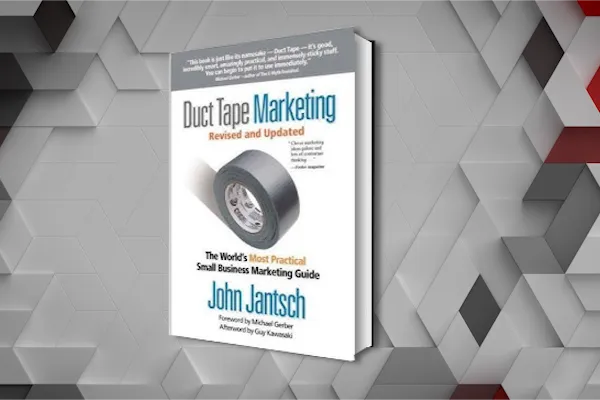
Duct Tape Marketing by John Jantsch Review: What It Gets Right About Small Business
By Vicky Sidler | Published 18 January 2026 at 12:00 GMT+2
There comes a moment in every small business where the optimism wears off. The website is live. The logo exists. The social media accounts have been created with good intentions and a password you no longer remember. Yet the phone is not ringing in the calm, predictable way you were promised it would.
Marketing, at this stage, starts to feel less like strategy and more like superstition. You try things because someone else tried them. You post because you feel guilty when you do not. You spend money because not spending money feels like standing still. Somewhere in the middle of this, you start to suspect that the problem is not effort. It is structure.
This is where Duct Tape Marketing by John Jantsch quietly enters the room, clears its throat, and suggests that perhaps the issue is not your motivation, your creativity, or your willingness to hustle.
Perhaps the issue is that you never built a system.
According to Jantsch, most small business marketing does not fail because owners are lazy or uninformed. It fails because it is improvised.
TL;DR:
Jantsch insists strategy must come before tactics (and he’s right).
He built a full system for small business marketing based on repeatable steps.
The Marketing Hourglass is a better model than the sales funnel.
Ideal client targeting, messaging, and content all work together—not in silos.
Most advice sounds clever. This stuff actually helps you grow.
👉 Need help getting your message right? Download the 5-Minute Marketing Fix.
Table of Contents:
Duct Tape Marketing by John Jantsch Review: What It Gets Right About Small Business
This Is Not a Marketing Book for Optimists:
Systems Beat Talent, Energy, and Good Intentions:
The Marketing Hourglass and Why Funnels Miss the Point:
Why Trust Does Most of the Heavy Lifting:
Ideal Clients Are a Filtering Tool, Not a Limitation:
Your Website Is Part of the System, Not a Trophy:
Content Is How You Prove You Know What You Are Doing:
Referrals Are Designed, Not Hoped For:
Related Business Books & Articles:
1. Ideal Client Profile: The Marketing Shortcut Small Businesses Miss
2. 10 Best Content Types for Small Business Marketing
3. Content Marketing Boosts Revenue More Than Ads
4. Brand Guidelines for Small Business
5. OpenAI's $27B Loss Could Tank the Whole AI Industry
Frequently Asked Questions About Duct Tape Marketing
1. What is Duct Tape Marketing and how does it work?
2. What is the Marketing Hourglass and why is it better than a funnel?
3. Who should read Duct Tape Marketing?
4. How do I define my ideal client like Jantsch suggests?
5. What’s the difference between a core message and a tagline?
6. Do I really need to create content if I’m not a writer?
7. How can I get more referrals using this system?
8. Can I use the Duct Tape Marketing system without hiring a marketing agency?
9. What tools do I need to implement Duct Tape Marketing?
10. Where should I start if I want to apply this to my own business?
This Is Not a Marketing Book for Optimists:
Duct Tape Marketing is not the book you read when you want to feel inspired. It is the book you read when you are tired of guessing. Jantsch does not promise explosive growth or viral success. He promises something far less glamorous and far more useful.
He promises a way to stop winging it.
The central idea is simple and almost uncomfortable in its practicality. Marketing should be a system, not a series of hopeful experiments. If you treat marketing like a slot machine, pulling levers and waiting for luck, you will eventually run out of coins.
If you treat it like an operating system, it quietly keeps working whether you are paying attention or not.
This philosophy alone explains why the book has endured while trend-based marketing advice expires faster than yogurt left in a hot car.
Systems Beat Talent, Energy, and Good Intentions:
One of the strongest throughlines in the book is the idea that systems outperform enthusiasm over time. Motivation fades. Energy dips. Good intentions are easily distracted by urgent emails and client work.
A system does not care how you feel.
Jantsch’s approach borrows heavily from the idea that predictable input produces predictable output. If you consistently show up in the right places, with the right message, for the right people, results stop being mysterious. They become measurable.
This is deeply reassuring for small business owners who are good at what they do but tired of feeling bad at marketing.
The Marketing Hourglass and Why Funnels Miss the Point:
Instead of the traditional funnel, Jantsch introduces the Marketing Hourglass. This is not a clever rename. It is a fundamental shift in thinking.
Funnels treat customers as something to be pushed toward a purchase. The hourglass treats them as people who move at their own pace and need different things at different stages.
The stages are Know, Like, Trust, Try, Buy, Repeat, and Refer.
Know: “Who are you?” Build awareness with search-friendly blog posts, social media, and helpful guides.
Like: “Do I like your style?” Share stories, behind-the-scenes moments, and newsletters that show personality.
Trust: “Can you deliver?” Use case studies, testimonials, and proof of results.
Try: “What’s the risk?” Offer a free audit, mini-project, or downloadable resource that proves value.
Buy: “Is this right for me?” Make purchasing easy, reassure them, and deliver early wins.
Repeat: “Should I stay?” Keep in touch, add value, and make them feel seen.
Refer: “Who else needs this?” Encourage happy customers to spread the word with referral rewards or simple share options.
What matters here is not the list itself, but the order. Buying comes late. Trust comes early. Referrals are not an afterthought. They are the end goal.
This framework quietly dismantles the idea that marketing’s primary job is persuasion. Its real job is reassurance.
Why Trust Does Most of the Heavy Lifting:
Small business owners often believe they need better ads, better copy, or better platforms. Jantsch would argue that most of them need better trust signals.
Trust is built slowly and lost quickly. It comes from consistency, clarity, proof, and patience.
Reviews matter.
Case studies matter.
Educational content matters.
Showing up repeatedly without shouting matters.
This is where marketing starts to feel boring. That is also where it starts to work.
As someone who works daily with StoryBrand frameworks, I see this constantly. The moment a business stops trying to impress and starts trying to be understood, everything becomes easier.
Ideal Clients Are a Filtering Tool, Not a Limitation:
One of the most confronting parts of Duct Tape Marketing is the insistence on defining an ideal client in uncomfortable detail. Not demographics alone, but behaviors, priorities, frustrations, and buying patterns.
Many business owners resist this because it feels risky. Saying no to potential customers feels counterintuitive when revenue matters.
But vague targeting costs more in the long run. It produces vague messaging, weak content, and clients who were never a good fit in the first place.
Clarity here is not exclusion. It is efficiency.
Your Website Is Part of the System, Not a Trophy:
Jantsch treats websites as functional assets, not digital brochures. A website that looks nice but does nothing is not helping you. It should guide visitors, answer questions, reduce friction, and support trust.
This includes load speed, mobile usability, clear calls to action, and content that matches where the visitor is in the hourglass.
A good website does not shout. It explains.
Content Is How You Prove You Know What You Are Doing:
Content is positioned as the quiet engine behind the system. Not content for the sake of posting, but content designed to answer real questions at real stages of the buyer journey:
Educational blog posts.
Simple guides.
Case studies.
Explanations in plain English.
This is where many businesses give up too early. Content works slowly. It compounds quietly. It does not reward impatience.
But over time, it builds authority without demanding attention.
Referrals Are Designed, Not Hoped For:
Perhaps the most underrated part of Jantsch’s philosophy is his focus on referrals. Not as luck, but as design.
Satisfied clients need prompts, systems, reminders, and reasons.
Referrals are easier when your service is consistent, your messaging is clear, and your process is memorable enough to explain to someone else. In that sense, referrals are not a separate tactic. They are a result.
Why This Book Still Matters:
Duct Tape Marketing matters because it respects the reality of small business life. It does not assume unlimited time, unlimited budget, or unlimited patience.
It assumes you are busy. It assumes you are capable. It assumes you want something that works even when you are tired.
The book will not make you feel clever. It will make you feel organized.
And in small business, that is often the bigger win.
If you want to start applying this thinking without overhauling your entire business, begin with clarity. One sentence. One clear explanation of what you do and who it is for.
That is exactly what the 5-Minute Marketing Fix is designed to help with.
Related Business Books & Articles:
1. Ideal Client Profile: The Marketing Shortcut Small Businesses Miss
If Duct Tape Marketing convinced you that “everyone” isn’t a real audience, this post shows you exactly how to define who your marketing should actually speak to.
2. 10 Best Content Types for Small Business Marketing
Jantsch made the case for content that builds trust. This article gives you the formats—case studies, explainer guides, and more—that make the hourglass work in practice.
3. Content Marketing Boosts Revenue More Than Ads
Think ads are the fast track? This post shows the long game wins every time—and backs it up with real numbers and small business examples.
4. Brand Guidelines for Small Business
A “Talking Logo” is a great start. But if you want people to remember your business, this post helps you build a consistent voice, tone, and brand personality around it.
5. OpenAI's $27B Loss Could Tank the Whole AI Industry
This cautionary tale reinforces the book’s point about building on fundamentals, not fads. If you’re tempted to chase the next shiny marketing tool, read this first.
Frequently Asked Questions About Duct Tape Marketing
1. What is Duct Tape Marketing and how does it work?
Duct Tape Marketing is a practical marketing system created by John Jantsch for small businesses. It focuses on repeatable strategies instead of random tactics. You build trust with your audience using a seven-stage framework called the Marketing Hourglass.
2. What is the Marketing Hourglass and why is it better than a funnel?
The Marketing Hourglass has seven steps: Know, Like, Trust, Try, Buy, Repeat, and Refer. Unlike a funnel, which ends at the sale, the hourglass continues after purchase and helps you keep customers longer and generate referrals.
3. Who should read Duct Tape Marketing?
If you run a small business and feel like your marketing is scattered or not working, this book is for you. It’s especially useful if you want a system that works in the background without constant guesswork.
4. How do I define my ideal client like Jantsch suggests?
Start by thinking about your best current or past clients. What industry are they in? What do they value? What problems do they need solved? Be as specific as possible. The more focused your profile, the easier it is to create content and offers that actually convert.
5. What’s the difference between a core message and a tagline?
A tagline is short and catchy. A core message (or “Talking Logo”) clearly explains what you do and why it matters. It should be easy for a customer to repeat after hearing it once and should focus on solving a problem.
6. Do I really need to create content if I’m not a writer?
Yes, but it doesn’t have to be fancy. Content builds trust and helps people move through the hourglass. Start small with FAQs, explainer guides, or simple case studies. The goal is to answer real questions your ideal clients are already asking.
7. How can I get more referrals using this system?
Referrals don’t just happen. Jantsch recommends making your service easy to talk about, asking for referrals directly, offering small incentives, and partnering with other businesses who serve the same audience but don’t compete with you.
8. Can I use the Duct Tape Marketing system without hiring a marketing agency?
Yes. That’s the point. The system is designed to be used by real business owners, not marketing teams. If you’re willing to be consistent and follow the steps, you can apply it on your own or with a small team.
9. What tools do I need to implement Duct Tape Marketing?
You’ll need a functional website, a way to collect leads (like a form or download), a content plan, and a simple CRM or spreadsheet to track leads and referrals. Most of the tools are either free or low-cost.
10. Where should I start if I want to apply this to my own business?
Start with one clear message that explains what you do, who it’s for, and why it matters. You can use the5-Minute Marketing Fix to create that sentence. Once you have your message, map your customer journey using the hourglass.


Strategic Marketing Tribe helps established service businesses turn underperforming marketing into more predictable growth with the Failure-Proof Marketing System.






Created with clarity (and coffee)