
StoryBrand South Africa Certified Guide & Coach | Duct Tape Marketing Consultant

About Vicky Sidler
Marketing News Reporter & Industry Journalist
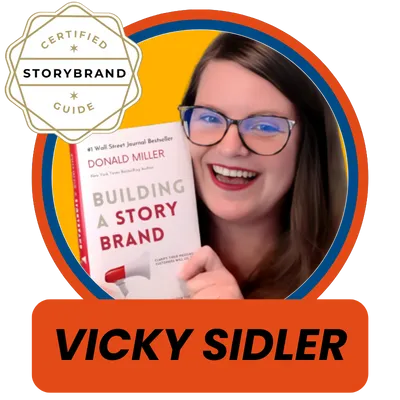
Vicky Sidler is an experienced marketing industry journalist and strategist with more than 15 years in journalism, content strategy, and digital marketing. As a Marketing News Reporter for Strategic Marketing Tribe, she covers breaking developments, trends, and insights that shape the marketing world—from AI in advertising to the latest in customer experience strategy.
Vicky is an award-winning StoryBrand Certified Guide and Duct Tape Marketing Certified Strategist, combining two of the most effective marketing frameworks to help small businesses simplify their message and build marketing systems that work. Her journalism background ensures every piece she writes is fact-checked, insightful, and practical.
Her articles regularly analyze key marketing trends, platform updates, and case studies—offering small business owners, marketers, and industry professionals clear, actionable takeaways. She specializes in topics such as:
Digital marketing strategy
Content marketing and brand storytelling
Marketing technology and automation
AI’s impact on marketing
StoryBrand and Duct Tape Marketing best practices
Education & Credentials
BA in Journalism & English, University of Johannesburg
StoryBrand Certified Guide
StoryBrand Certified Coach
Duct Tape Marketing Certified Strategist
Over 20 years in journalism and marketing communications
Founder & CEO of Strategic Marketing Tribe
Winner of 50Pros Top 10 Global Leader award


Contact
Recent Work
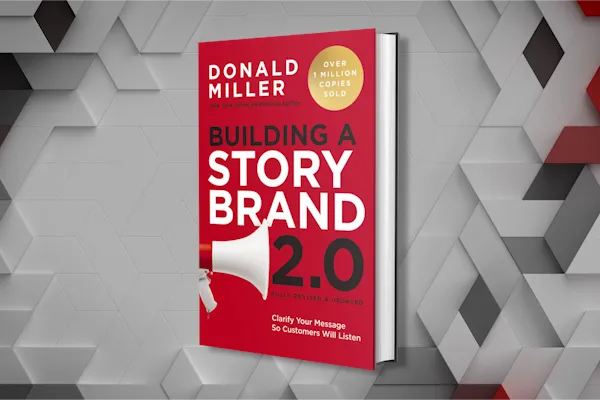
Building a StoryBrand 2.0 By Donald Miller Summary: Why It Still Works for Small Business
By Vicky Sidler | Published 11 January 2026 at 12:00 GMT+2
If your idea of marketing is shouting about how long you’ve been in business and praying someone clicks the Contact button, you’re not alone. Most small business owners think they're explaining themselves clearly. What they're actually doing is describing their grandfather's career arc at a cocktail party and watching their listener politely glance toward the bacon-wrapped snacks.
Donald Miller has built a small empire off this problem. Building a StoryBrand 2.0 is his updated guide to fixing it. And no, it’s not just a repackaged motivational poster. It’s a practical, slightly obsessive framework for turning your business message into something people can actually understand—and act on.
The core idea? Customers don’t buy the best products. They buy the ones they can understand the fastest.
So if you’re wondering why your fancy website isn’t converting and your emails are being ignored harder than a gym membership in February, this book explains why. Spoiler: it’s not the font.
TL;DR:
StoryBrand helps you stop talking about yourself and start helping customers solve problems
You are not the hero. Your customer is. You are the guide.
The book gives a seven-step framework to clarify your message
When applied consistently, it makes marketing easier and sales more natural
It works across websites, social media, emails, and sales pitches
👉 Need help getting your message right? Download the 5-Minute Marketing Fix.
Table of Contents:
Building a StoryBrand 2.0 By Donald Miller Summary: Why It Still Works for Small Business
Customers Are Cavemen with Credit Cards:
The StoryBrand Framework—Still the Same, Now with More Meat:
1. A Character (That’s Your Customer, Not You):
6. That Helps Them Avoid Failure:
Related Business Books & Articles:
1. StoryBrand for Small Business: The Clear Messaging Shortcut
2. Map Content to the Customer Journey for Better Results
3. Simple Strategies to Develop Your Small Business’s Marketing Hourglass
4. Define Your Brand Voice and Build Instant Recognition
5. 5 Core Elements of Effective Branding Every Small Business Needs
6. Why You Can’t Trust ChatGPT, Perplexity or Other AI For Legal Advice
Frequently Asked Questions About StoryBrand 2.0
1. What is StoryBrand and why does it matter for small business owners?
2. What’s different in StoryBrand 2.0?
3. How does StoryBrand actually help my marketing?
4. Isn’t this just for big brands?
5. How do I know if I’m doing it wrong right now?
6. Do I need a writer to use StoryBrand?
7. What’s the “Controlling Idea” and how do I use it?
8. Does StoryBrand work with AI tools like ChatGPT?
Customers Are Cavemen with Credit Cards:
Let’s start with the basics. Your customer’s brain is doing two things at all times:
Trying to survive and thrive
Trying to conserve calories
That’s it. Everything else is window dressing.
So when you talk about your custom onboarding process, your vertical-specific CRM features, or the fact that you won “Best Mid-Sized Business Under 40 Staff” three years ago, your customer’s brain goes cold. Why? Because none of that helps them survive. And it takes too much brainpower to decode.
Miller puts it this way: every time you share information, it’s like handing someone an eight-pound bowling ball. One is fine. Two is okay. But by the third ball—especially if it’s covered in slippery technical jargon—they drop everything and move toward the bacon-wrapped dates. Because bacon = survival. You = effort.
Your job is not to impress people. It’s to make your message so simple their brain doesn’t have to lift anything.
The StoryBrand Framework Summary—Still the Same, Now with More Meat:
The SB7 Framework hasn’t changed in shape, but the 2.0 version adds a lot of color. Think of it like buying the same IKEA shelving unit, but this time they included a screwdriver that actually works.
Here’s the refreshed breakdown:
1. A Character (That’s Your Customer, Not You):
They want one thing. Not five. Not “options.” Just one clear desire. If you’re trying to cover multiple offers in one sentence, you're not doing story—you’re doing verbal gymnastics.
2. Has a Problem:
This is where customers feel seen—or bored.
There’s a villain (e.g. “Overpriced consultants”), an external problem (e.g. “We can’t keep up with demand”), an internal problem (e.g. “I feel like I’m failing”), and a philosophical problem (e.g. “It shouldn’t be this hard to grow”).
If you only talk about surface-level issues, your customer’s heart stays cold. You have to name the internal pain. That’s the part that buys.
3. And Meets a Guide:
That’s you. But don’t pull out a megaphone. The guide isn’t flashy. The guide is the calm one in the room who’s been through this before.
To be a good guide:
Show empathy (e.g. “We know how frustrating that is”)
Show authority (e.g. “We’ve helped over 200 businesses solve this exact problem”)
If you lead with awards and buzzwords, you sound like you’re still auditioning for the hero role. You’re not. You’re the person with the map.
4. Who Gives Them a Plan:
Customers do not trust ambiguity. Give them steps. Like:
Schedule a call
Get a custom plan
Grow your business
Also, include an agreement plan—your promise not to waste their time, confuse them further, or vanish after the invoice.
5. And Calls Them to Action:
No one clicks a grey button that says “Learn More.”
Direct CTAs are non-negotiable. They should be everywhere. If you don’t feel slightly embarrassed by how many times your site says “Book a Call,” you probably haven’t said it enough.
And for those not ready to commit, use a transitional CTA. Free guide. Webinar. Quiz. Anything that lets them tiptoe toward you without committing to dinner.
6. That Helps Them Avoid Failure:
Add stakes. Just enough to matter, not enough to cause a panic attack.
If they don’t hire you, what happens? Continued chaos? More wasted spend? Another year of pointless marketing? Say it out loud.
7. And Ends in Success:
Don’t say “achieve your goals.” That’s not a success. That’s a vague brochure.
Say, “Get your evenings back.” “Double your revenue without doubling your hours.” “Wake up without 87 unread emails and an ulcer forming.”
Let them picture the win.
What’s New in StoryBrand 2.0—A Summary:
Besides Miller’s upgraded haircut? Quite a bit, actually.
The Controlling Idea:
This replaces the old “company culture” filler. It’s one line that acts as your brand’s internal compass.
Example: “Marketing should be simple so you can get back to running your business.”
If your newsletter doesn’t support that idea, it shouldn’t be sent. It’s the “why this matters” behind every tweet, headline, and sales pitch.
The Marketing Roadmap:
This used to be in a separate book. Now it’s part of the main event.
You’ll learn how to build:
A strong one-liner
A homepage that sells
A lead magnet that actually gets downloaded
A nurture email sequence
A sales email sequence
It’s no longer just a messaging system. It’s the blueprint for your entire marketing funnel.
StoryBrand and AI
Yes, there’s a nod to AI. But don’t get excited.
Miller says AI can be helpful—but only if your inputs are clear. Think of StoryBrand as the world’s best AI prompt. Feed the framework into ChatGPT, and it’ll finally spit out something better than “In today’s ever-changing digital landscape.”
So… Does It Still Work?
Yes. Painfully well.
It works because people are still people. They still want to survive and thrive. They still don’t want to think harder than necessary. They still tune out when things feel irrelevant or confusing. And they still click when something feels obvious and useful.
StoryBrand 2.0 doesn't give you new tricks. It gives you guardrails. So your message doesn’t drive off a cliff the second you open your mouth.
What to Do Next:
If this all sounds like a lot, start small. Rewrite your website header. Craft a real one-liner. Add a clear CTA.
If you're too close to your own brand to see straight, no problem. Start here by downloading my 5-Minute Marketing Fix.
It’ll help you write one clear sentence that explains what you do and why it matters.
Less thinking. More clicking. More bacon-wrapped dates. That’s the goal.
Related Business Books & Articles:
1. StoryBrand for Small Business: The Clear Messaging Shortcut
If you’re still not sure how StoryBrand fits into your daily marketing, this guide breaks it down step-by-step for small business owners.
2. Map Content to the Customer Journey for Better Results
Once your message is clear, the next step is to align your content with how your customers actually buy. This article explains how.
3. Simple Strategies to Develop Your Small Business’s Marketing Hourglass
This one helps you turn your StoryBrand messaging into a full marketing system that builds trust from first click to repeat sale.
4. Define Your Brand Voice and Build Instant Recognition
Now that your message is simple, make sure it always sounds like you. This post helps you lock in a voice customers remember.
5. 5 Core Elements of Effective Branding Every Small Business Needs
Messaging is only one part of branding. This article covers the other pieces that make customers trust you faster.
6. Why You Can’t Trust ChatGPT, Perplexity or Other AI For Legal Advice
This piece shows why clarity matters more than confidence—especially when AI tools start sounding smarter than they are.
Frequently Asked Questions About StoryBrand 2.0
1. What is StoryBrand and why does it matter for small business owners?
StoryBrand is a messaging framework created by Donald Miller that helps businesses clarify what they offer. It uses a simple story structure to explain how you help customers survive, thrive, and avoid confusion.
2. What’s different in StoryBrand 2.0?
The 2.0 update adds more depth to the original framework. It introduces the "Controlling Idea" to unify your brand message, integrates a full marketing roadmap, and shows how to use StoryBrand alongside tools like AI.
3. How does StoryBrand actually help my marketing?
It makes your messaging simpler, clearer, and focused on the customer. That means your website, emails, and sales copy all work better—because customers understand what you do and how to buy.
4. Isn’t this just for big brands?
Nope. StoryBrand is especially useful for small businesses that don’t have big marketing teams. It gives you structure without needing a huge budget.
5. How do I know if I’m doing it wrong right now?
If your homepage doesn’t explain what you offer in 5 seconds, or if people ask “So what do you actually do?”—your message needs work.
6. Do I need a writer to use StoryBrand?
Not necessarily. The framework gives you enough structure to write your own message. But if you’re stuck, a StoryBrand Certified Guide (hi) can help you sharpen and apply it.
7. What’s the “Controlling Idea” and how do I use it?
It’s a single sentence that anchors everything you say. It captures what you offer and why it matters. You use it to filter all your marketing—if it doesn’t align, you scrap it.
8. Does StoryBrand work with AI tools like ChatGPT?
Yes. In fact, it helps AI work better. When you feed your AI assistant a structured StoryBrand prompt, the results are sharper, clearer, and more useful.
9. What should I do first after reading the book?
Start by writing your BrandScript. Then build a clear one-liner and fix the top of your homepage. Add a lead magnet and start collecting emails. Keep going from there.
10. Is there a shortcut to get started quickly?
Yes. 👉Download the 5 Minute Marketing Fix and use it to write one sentence that helps customers say, “I need that.”


Is your Marketing Message so confusing even your own mom doesn’t get it? Let's clarify your message—so everyone wants to work with you!



Created with clarity (and coffee)
Mail
WhatsApp
LinkedIn
Website