
STORY, MEET STRATEGY
Let’s make marketing feel less robotic and more real.
Find resources that bring your message—and your business—to life.

Business Intelligence for Small Business Without the BS
By Vicky Sidler | Published 5 January 2026 at 12:00 GMT+2
Most small business owners already use business intelligence. They just do not call it that.
If you have ever looked at your bank balance, noticed Tuesdays feel quiet, or wondered why one service sells better than another, you are already listening to what your business is telling you. Business Intelligence, or BI, is simply the grown-up corporate name for that habit.
The problem is that BI has been wrapped in layers of jargon, dashboards, and expensive software demos that make it feel like something reserved for big tech companies with data teams and unlimited budgets. That misunderstanding keeps many small business owners guessing instead of deciding with confidence.
According to recent analysis across SME-focused research, BI is not about code or complexity. It is about turning everyday business information into actions you can actually take.
TL;DR:
Business intelligence is just listening to what your business data is already saying
You do not need expensive tools or technical skills to start
A simple four-step loop beats complex reports every time
The goal is action, not perfect data
Start with one clear question that affects revenue
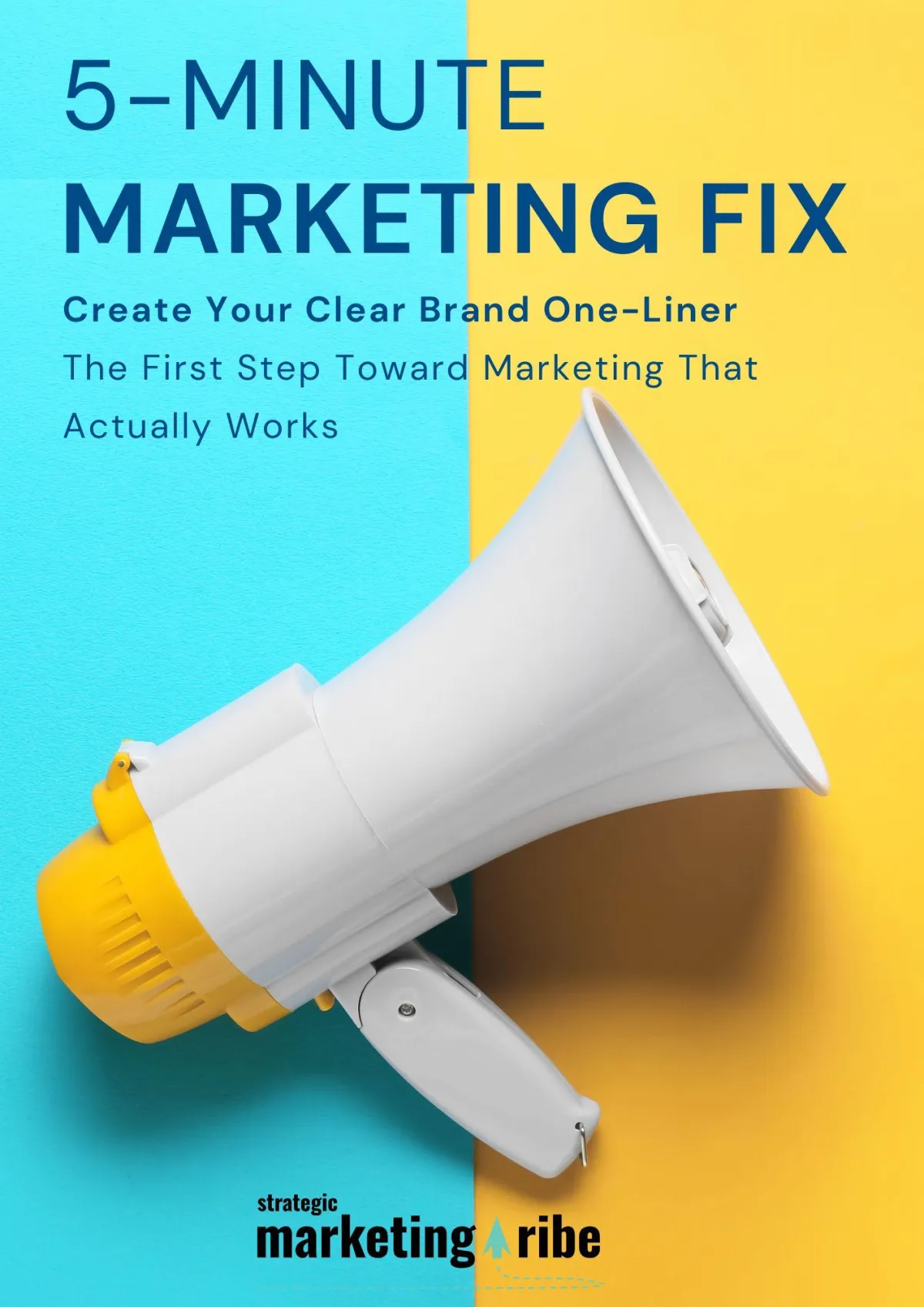
Need help getting your message right? Download the 5-Minute Marketing Fix.
Table of Contents:
Business Intelligence for Small Business Without the BS
Business Intelligence Without the BS:
The Small Business BI Life Cycle:
Step One—Ask One Specific Question:
Step Two—Gather and Clean the Ingredients:
Step Three—Cook and Plate the Meal:
Real-World BI Moments That Actually Matter:
Tools That Will Not Break the Bank:
Common Mistakes That Waste Time:
Where Marketing and BI Overlap:
Start Today With One Question:
1. Ideal Client Profile The Marketing Shortcut Small Businesses Miss
2. Marketing Hourglass Explained A Smarter Way to Grow
3. Performance Marketing Isnt Real and Never Was
4. Content Marketing Boosts Revenue More Than Ads
5. Influencer Marketing ROI in 2025 Why Its Still Winning
Frequently Asked Questions About Business Intelligence for Small Business
1. What is business intelligence in simple terms?
2. Do small businesses really need business intelligence?
3. Is business intelligence the same as data analytics?
4. What is the easiest way to start using business intelligence?
5. What tools do I need for business intelligence as a beginner?
6. How much does business intelligence cost for small businesses?
7. What are common mistakes small businesses make with business intelligence?
8. How does business intelligence help with marketing decisions?
Business Intelligence Without the BS:
Let us simplify this properly.
Business intelligence means taking raw information like receipts, spreadsheets, bookings, emails, and sales records, then turning that information into better decisions.
Think of your business like a car. You would never drive without a speedometer or fuel gauge. Yet many business owners make decisions without any dashboard at all. They rely on gut feelings, assumptions, and vague impressions.
BI is your dashboard. It does not tell you how to drive. It simply shows you what is happening so you can make smarter choices.
The Small Business BI Life Cycle:
Large enterprises love seven-step frameworks. But small businesses need something that fits between client work and dinner.
So, here is the practical four-step BI loop that actually works for service-based businesses.
Step One—Ask One Specific Question:
Every BI project should start with a question, not with data.
Avoid vague goals like wanting more insights. Instead, ask questions that affect money, time, or retention.
Examples include which service has the highest profit margin or why clients leave after three months.
Clarity here matters. If the question is fuzzy, the answers will be useless.
Step Two—Gather and Clean the Ingredients:
Once you have a question, you gather only the data needed to answer it.
This might include sales spreadsheets, booking records, email lists, or invoices. Before analyzing anything, you clean it.
That means fixing obvious typos, removing duplicates, and checking that dates and amounts make sense. Bad data leads to bad conclusions in the same way spoiled ingredients ruin dinner.
This step sounds boring, but it saves you from trusting nonsense later.
Step Three—Cook and Plate the Meal:
Staring at rows of numbers rarely helps anyone.
This is where simple charts earn their keep. A basic bar chart or line graph can show trends your brain would miss in a spreadsheet.
Free tools like Google Looker Studio or basic pivot tables in Microsoft Excel or Google Sheets are more than enough for most small businesses.
The goal is not beauty. The goal is clarity. Is something increasing, decreasing, or staying flat?
Step Four—Take Action:
This is where most BI efforts quietly die.
If the chart shows Tuesdays are slow, you do something about Tuesdays. If it shows a service performs poorly, you rethink that service.
No action means no intelligence. It is just reporting.
Real-World BI Moments That Actually Matter:
A neighborhood coffee shop noticed that a large portion of customers buying lattes also bought blueberry muffins, usually before 10 in the morning.
The owner bundled the two items as a morning deal. Average order value increased without changing foot traffic.
A service consultant realized clients who did not receive a weekly progress update were far more likely to cancel after the second month.
They automated a short weekly email explaining what had been done. Retention improved with almost no extra effort.
That is BI in action. Simple observation followed by deliberate change.
Tools That Will Not Break the Bank:
Most small businesses already own the tools they need.
Spreadsheets remain the most powerful BI platform available to nontechnical users. When used well, they answer real questions quickly.
If you want visual dashboards, Google Looker Studio connects easily to spreadsheets and analytics platforms at no cost.
For businesses already using Microsoft or Zoho systems, tools like Microsoft Power BI or Zoho Analytics can be useful upgrades, but they come with learning curves. Start simple before upgrading.
Common Mistakes That Waste Time:
The biggest mistake is collecting too much data and doing nothing with it. Likes, clicks, views, and impressions do not matter unless they connect to revenue or retention.
Another common issue is siloed data. Sales live in one system, finance in another, and client notes in someone’s inbox. Even monthly manual consolidation into one spreadsheet can unlock better decisions.
Where Marketing and BI Overlap:
As a StoryBrand Certified Guide and Duct Tape Marketing Consultant, I see this daily. Business owners struggle with messaging because they are not listening to their data.
Your top customers already tell you who you serve best. Your best converting pages already show what messaging works. BI simply helps you notice those patterns.
Clarity in marketing starts with clarity in data.
Start Today With One Question:
Do not buy software yet. Do not book a demo.
Open a blank spreadsheet and answer one question today. Who are your top ten customers by revenue this year?
Then do something with that insight. Send a personal thank you. Ask what made them choose you. That is business intelligence in its most useful form.
If you want help turning clarity into a clear message customers understand instantly, download the free 5-Minute Marketing Fix. It will help you write one clear sentence that resonates strongly with your ideal customer.
Related Articles:
1. Ideal Client Profile The Marketing Shortcut Small Businesses Miss
You just identified your top customers using data. This article shows how to turn that list into a clear Ideal Client Profile so your marketing attracts more of the right people, not just more traffic.
2. Marketing Hourglass Explained A Smarter Way to Grow
Your BI loop helps with day to day decisions. The Marketing Hourglass zooms out and shows where customers drop off across the full journey, helping you spot hidden revenue leaks.
3. Performance Marketing Isnt Real and Never Was
This is a deeper dive into which numbers actually matter. It helps you separate activity metrics from business outcomes so your dashboard does not lie to you.
4. Content Marketing Boosts Revenue More Than Ads
If you are asking data questions that affect money, this article shows how content marketing changes acquisition costs and long term ROI using real numbers.
5. Influencer Marketing ROI in 2025 Why Its Still Winning
This is a clean example of BI in action. One clear question, clear data, and a simple yes or no decision that removes guesswork from spend choices.
Frequently Asked Questions About Business Intelligence for Small Business
1. What is business intelligence in simple terms?
Business intelligence means using the information your business already has to make better decisions. It turns sales, costs, and customer behavior into clear signals instead of guesswork.
2. Do small businesses really need business intelligence?
Yes, but not in a complicated way. Even very small businesses benefit from understanding which customers are profitable, which services sell best, and where money is being lost.
3. Is business intelligence the same as data analytics?
They are closely related. Data analytics focuses on analyzing numbers, while business intelligence focuses on using those insights to guide decisions and actions in the business.
4. What is the easiest way to start using business intelligence?
Start with one question that affects revenue or retention. Pull the data into a spreadsheet, clean it, and look for a simple pattern you can act on immediately.
5. What tools do I need for business intelligence as a beginner?
Most beginners only need Google Sheets or Excel. If you want dashboards, free tools like Google Looker Studio are more than enough for most small businesses.
6. How much does business intelligence cost for small businesses?
It can cost nothing at all. Many small businesses start using BI with tools they already pay for and only upgrade once they clearly see the value.
7. What are common mistakes small businesses make with business intelligence?
The biggest mistakes are tracking too many metrics, relying on vanity numbers, and not taking action after seeing the data. Intelligence only matters when it leads to decisions.
8. How does business intelligence help with marketing decisions?
It shows which messages attract the right customers, which channels drive real revenue, and where people drop off. This helps you simplify marketing instead of adding more noise.


Is your Marketing Message so confusing even your own mom doesn’t get it? Let's clarify your message—so everyone wants to work with you!






Created with clarity (and coffee)