
STORY, MEET STRATEGY
Let’s make marketing feel less robotic and more real.
Find resources that bring your message—and your business—to life.

Marketing Confidence 2026: Why Most Teams Feel Lost
By Vicky Sidler | Published 23 January 2026 at 12:00 GMT+2
Every January, marketing gets the spotlight. Not because anyone suddenly loves it, but because there’s a quiet, collective hope that this year—finally—the budget will match the effort, the tools will make sense, and the results will stop feeling like a game of darts played in the dark.
According to a recent Duct Tape Marketing podcast episode, most small business owners are asking a different question in 2026. Not “How do we do more marketing?” But, “Is what we’re doing even working?”
That’s not a crisis. That’s the beginning of clarity.
TL;DR:
Many small businesses are active in marketing but lack a clear direction
Effort is high, but results are inconsistent and hard to trace back to a strategy
A marketing operating system connects your message, tools, team, and decisions
Confidence comes from structure, not guesswork
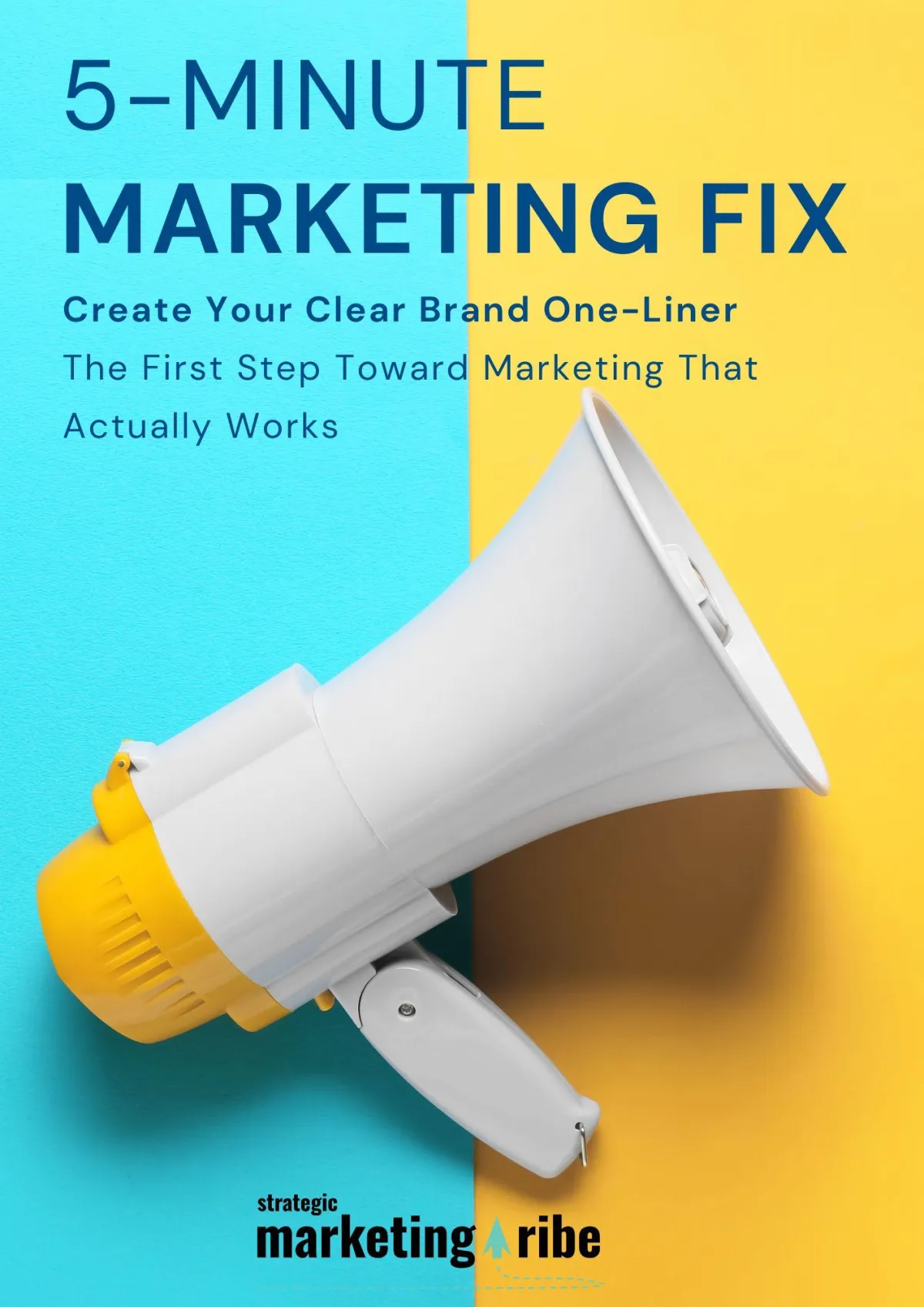
👉 Need help getting your message right? Download the 5-Minute Marketing Fix.
Table of Contents:
Marketing Confidence 2026: Why Most Teams Feel Lost
What “Trying Everything” Looks Like in Real Life:
What Confidence in Marketing Actually Looks Like:
What Is a Marketing Operating System?
How to Build Confidence in 2026:
1. Anchor Marketing to Business Direction:
3. Map the Whole Customer Experience:
4. Use Tools to Support the System:
Three Quick Questions to Test Your Marketing Confidence:
Get Started with One Simple Step:
1. Building a StoryBrand 2.0 By Donald Miller Review
2. Marketing Strategy vs Tactics: Why One Builds Trust and the Other Leads to Price Wars
3. Stop Targeting Everyone: Why Clarity Beats Volume
4. Define Your Brand Voice and Build Instant Recognition
5. StoryBrand Certified Guide Directory Explained for Small Business Owners
Frequently Asked Questions About Marketing Confidence and Strategy
1. How do I know if my marketing is actually working?
2. What is a marketing operating system for small business?
3. Why does my marketing feel busy but ineffective?
4. How do I stop changing my marketing message all the time?
5. What should I do if my main lead source stops working?
6. Is AI enough to run my small business marketing?
7. How do I create marketing clarity for my team?
8. Can I build a marketing strategy without hiring a full-time marketer?
9. What’s the fastest way to improve my marketing results?
10. Where can I get help creating a clear message for my business?
What “Trying Everything” Looks Like in Real Life:
You’re sending regular emails, posting on LinkedIn, updating your website, and tweaking your SEO settings like a responsible digital adult. The tools are in play, the activity is consistent, and technically, everything should be working.
But the results tell a different story. One month shows promise, the next flattens out, and no one can quite explain why. The wins feel random, the patterns are murky, and repeating past successes starts to feel like guesswork.
So you pivot. You test out a different social scheduling tool, try a shiny new AI writing app, and rewrite your call-to-action for the fifth time this quarter—just in case that was the issue.
This isn’t a lack of effort. It’s what happens when the path forward is unclear.
And while there’s nothing wrong with adjusting course, doing it constantly, without a reliable framework, slowly shifts your team from strategic to reactive.
Low Confidence Has a Price:
Let’s call it the marketing treadmill.
You move. You sweat. But you’re not getting anywhere new. And eventually, you start to doubt the machine.
That’s the problem business owners are running into now. The work is happening. The people are capable. But because the foundation is shaky, no one trusts the path.
So what happens next?
Budgets get spent without a clear return
Teams change direction too early or abandon ideas that needed more time
Everyone stays busy, but few feel confident about what the work is building toward
Confidence, it turns out, is not a mood. It’s a system.
What Confidence in Marketing Actually Looks Like:
Confidence shows up in small, boring ways that save teams from wasting energy.
It looks like this:
Your message doesn’t change every time a new platform shows up
Everyone on your team knows how to explain what you do and why it matters
You can trace a marketing decision back to a business goal
You know when to repeat something because you know why it worked in the first place
Confident teams are not frantically brainstorming their next campaign in a panic because engagement dropped on Instagram. They are calmly executing a plan they trust.
What Is a Marketing Operating System?
A marketing operating system isn’t a magic phrase. It’s just the name for a structure that connects your message, tools, processes, and people so things stop falling through the cracks.
It means your business has a consistent way to:
Make decisions
Measure what matters
Stay aligned with actual goals
Adapt without starting from scratch each time something changes
It’s not a piece of software. It’s a way of thinking, a set of habits, and a structure you can rely on when the trends shift or the algorithm misbehaves.
And once it’s in place, it gives something rare in marketing. Calm.
How to Build Confidence in 2026:
Let’s get practical. Here’s how smart small businesses are building their marketing confidence this year:
1. Anchor Marketing to Business Direction:
Marketing is not a department. It’s a function that exists to move your business forward.
If a tactic doesn’t support your real goals, it’s a distraction.
So before you sign up for another shiny platform or schedule another campaign, ask:
“Does this help us grow in the direction we’ve chosen?”
2. Stabilize Your Message:
If your team rewrites your brand statement every time you launch a new offer or log into TikTok, something is off.
Your message should be clear, consistent, and flexible enough to show up across platforms without losing its meaning.
Write it. Test it. Then stick with it.
3. Map the Whole Customer Experience:
Marketing doesn’t end at the sale.
Customer onboarding, service, retention, and referrals are all part of your marketing system.
If you’re only focusing on lead generation, you’re ignoring the parts of the business that keep people loyal and willing to recommend you.
Create structure beyond the sale. That’s where the compounding results live.
4. Use Tools to Support the System:
AI and automation are fantastic, but only if they plug into something that already works.
If the tool is driving the process instead of supporting it, you’re not automating—you’re guessing faster.
Choose tools that reinforce your system, not ones that replace thinking altogether.
Three Quick Questions to Test Your Marketing Confidence:
Before the year gets away from you, ask yourself and your team:
Can we explain, in one clear sentence, why a customer should choose us—and would everyone say the same thing?
Do we have a repeatable way to attract leads, convert them, and keep them coming back?
If one of our top lead sources vanished tomorrow, do we know how we’d replace it?
If you can say yes to most of these, congratulations. You’re already running a confident marketing system.
If not, you’re not alone. And you’re not failing. You’re simply operating without a framework.
The fix is not more effort. It’s more clarity.
And that’s something you can build.
Get Started with One Simple Step:
If your team keeps second-guessing your marketing, or if the work feels hard to connect back to results, it might be time for a reset.
Start with your message.
When your message is clear, everything else becomes easier to build around it.
Get my 5-Minute Marketing Fix to create one sentence that explains what you do and why it matters.
Related Articles:
1. Building a StoryBrand 2.0 By Donald Miller Review
If your message keeps shifting, this review explains exactly how to lock it down using the updated StoryBrand framework.
2. Marketing Strategy vs Tactics: Why One Builds Trust and the Other Leads to Price Wars
This deep dive into strategy vs. tactics helps clarify why some teams spin in circles while others move forward with confidence.
3. Stop Targeting Everyone: Why Clarity Beats Volume
Confident marketing starts with focus. This post shows how choosing a specific audience makes everything else easier.
4. Define Your Brand Voice and Build Instant Recognition
If your team keeps rewriting what you say, this article helps you set a consistent voice that sticks across every platform.
5. StoryBrand Certified Guide Directory Explained for Small Business Owners
Ready to fix the system but need help? This piece explains how to find a StoryBrand pro who can help you do it right.
Frequently Asked Questions About Marketing Confidence and Strategy
1. How do I know if my marketing is actually working?
Look at whether your marketing activities are consistently creating leads, sales, and retention—not just short spikes. If you can trace results back to specific efforts, that’s a sign of a working system. If not, you may be reacting instead of following a strategy.
2. What is a marketing operating system for small business?
It’s the structure behind your marketing. It connects your strategy, tools, message, and processes so that your team knows what to do, why they’re doing it, and how to repeat it. It’s how you move from guessing to knowing.
3. Why does my marketing feel busy but ineffective?
This usually means you’re doing a lot of tactics—posting, emailing, testing tools—but without a clear plan tying it all together. When strategy is missing, effort increases but results stay random.
4. How do I stop changing my marketing message all the time?
Start with a one-liner that explains what you do and why it matters. Then build your brand message around it. Your message should be stable even if the platforms change. The 5 Minute Marketing Fix can help.
5. What should I do if my main lead source stops working?
If you have a marketing operating system, you’ll already know which levers to pull next. If not, it’s time to build a plan that includes multiple lead sources and a clear process for attracting and converting new business.
6. Is AI enough to run my small business marketing?
AI is helpful, but only when it supports a clear strategy. It shouldn’t replace thinking, planning, or direction. Use AI to save time on tasks, not to decide what your marketing should say or do.
7. How do I create marketing clarity for my team?
Start by aligning everyone on the same message. Then document your strategy, workflows, and decision-making process. Confidence comes when your team knows what to repeat and why.
8. Can I build a marketing strategy without hiring a full-time marketer?
Yes. You can start with a clear framework like StoryBrand or Duct Tape Marketing, build your message, map your customer journey, and use tools to support execution. Hiring a guide can help, but the first step is clarity.
9. What’s the fastest way to improve my marketing results?
Stop guessing. Choose one target audience, clarify your message, and make sure your website, emails, and content all say the same thing. Consistency beats cleverness.
10. Where can I get help creating a clear message for my business?
Download the free5-Minute Marketing Fix. It helps you create one simple sentence that explains what you do and why it matters—a key step in building marketing confidence.

Is your Marketing Message so confusing even your own mom doesn’t get it? Let's clarify your message—so everyone wants to work with you!






Created with clarity (and coffee)