STORY, MEET STRATEGY
Let’s make marketing feel less robotic and more real.
Find resources that bring your message—and your business—to life.
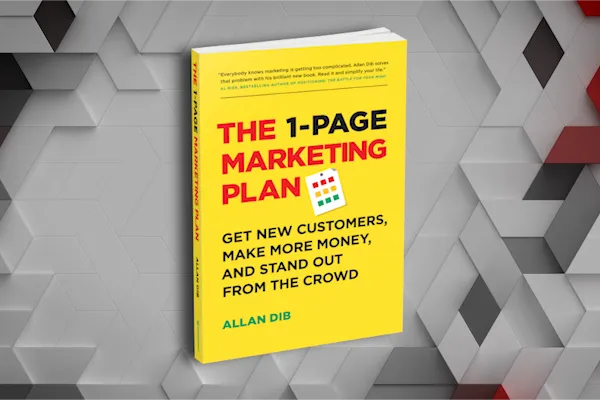
The 1-Page Marketing Plan by Allan Dib Summary: Why This Actually Works
By Vicky Sidler | Published 1 February 2026 2026 at 12:00 GMT+2
Some business books are useful. Some are just expensive doorstops that say “strategy” a lot. Then there’s The 1-Page Marketing Plan by Allan Dib, which does something rare. It explains marketing to people who don’t like marketing, in plain language, without insulting their intelligence or trying to sell them a ten-week mastermind.
If you’ve ever felt like everyone else understands how to get customers and you’re still out here yelling into the void, this book is your translation guide. It’s short, sharp, and designed for small business owners who would rather get results than join a marketing book club.
It also happens to be one of the only marketing books you can summarize on an A4 printout and stick to your office wall without feeling like you’ve joined a cult.
TL;DR:
Most small business marketing is messy and unmeasured
Allan Dib offers a 9-box system that clarifies what to do and in what order
The book focuses on direct response and measurable outcomes, not branding fluff
You’ll leave with a plan you can actually use—without needing a team of specialists
👉 Need help getting your message right? Download the 5-Minute Marketing Fix.
Table of Contents:
The 1-Page Marketing Plan by Allan Dib Summary: Why This Actually Works
7. Deliver a Great Experience:
The Philosophy Behind the Plan:
What Small Business Owners Should Actually Take From This:
Related Business Books & Articles:
1. Building a StoryBrand 2.0 By Donald Miller: Why It Still Works for Small Business
2. Duct Tape Marketing by John Jantsch: What It Gets Right About Small Business
3. Ideal Client Profile: The Marketing Shortcut Small Businesses Miss
4. Marketing Hourglass Explained: A Smarter Way to Grow Your Business
5. Core Elements of Effective Branding Every Small Business Needs
Frequently Asked Questions About The 1-Page Marketing Plan
1. What is The 1-Page Marketing Plan by Allan Dib?
2. Is The 1-Page Marketing Plan actually useful for small businesses?
3. How do I use The 1-Page Marketing Plan in my business?
4. What are the 9 boxes in The 1-Page Marketing Plan?
5. Do I need marketing experience to use this book?
6. What’s the difference between this and other marketing books?
7. Can I use this plan alongside StoryBrand or Duct Tape Marketing?
8. Is there a free template for The 1-Page Marketing Plan?
Why We Needed This Book:
Dib didn’t invent marketing. What he did was organize it in a way that stops people from quitting halfway through. That might sound like faint praise, but for most small business owners, finishing anything that isn’t urgent is already a miracle.
Before this book, marketing plans came in two formats:
73-slide PowerPoints with acronyms that only exist to justify someone’s consulting fee
Crumpled napkins with the words, “Get more clients?” written in bleeding fineliner
Dib’s plan is neither. It’s one page, nine boxes, and just enough pressure to make you think before you post another “We’re here for all your [vague service] needs” social update.
What Makes It Work:
The book is built on a 3x3 grid. Each square is a clear step in your customer’s journey: Before, During, and After. Most businesses obsess over the “During” (the sales bit) and ignore the Before and After like they’re optional extras. This, Dib argues, is a rookie mistake. It’s like only focusing on the proposal and ignoring the dating and the marriage.
The nine boxes are deceptively simple. That’s the trick. You look at them and think, “Well, of course I know who my ideal customer is.” Then you try to fill in Box 1 and realize you’ve been targeting “people with money and a pulse.” It’s humbling.
Let’s walk through what each phase actually looks like when you stop pretending and start filling in the plan.
Phase 1—The “Before” Phase:
This is where most small businesses waste their budget. They run Facebook ads with no targeting, offer nothing specific, and then wonder why no one clicks. It’s the marketing version of sending out party invites that say, “Come whenever. Bring whoever. Maybe wear pants.”
Dib forces you to get clear—painfully clear—on who you’re speaking to, what you’re saying, and where you’re saying it.
1. Target Market:
Stop marketing to everyone. Everyone isn’t listening. You’re not a national bank. You’re a roofer in East London or a family lawyer in Houston. Pick a niche that has a real problem and is willing to pay to fix it.
2. Message:
Forget “quality service” and “great customer care.” That’s the default setting. Instead, answer this: what urgent, expensive, or annoying problem do you solve? The more specific the pain, the more effective the message. And no, “we’re the best” is not a USP. That’s a resume lie.
3. Media:
Don’t pick platforms based on what you enjoy using. Pick based on where your customers already are. If they’re on LinkedIn, go there. If they’re reading trade magazines, advertise there. If they’re driving past your shop, a decent sign might outperform a Google ad.
Phase 2—The “During” Phase:
Now people know you exist. The goal is to make buying feel like a sensible next step, not a leap of faith.
4. Capture Leads:
Dib is obsessed with lead magnets, and rightly so. Offer something useful in exchange for an email address. A checklist. A guide. A quiz. A calculator. Make it specific. Make it easy to consume. No one wants a 90-page whitepaper. They want an answer to the thing they googled at 2am.
5. Nurture Leads:
Only 3% of people are ready to buy now. The rest need reminding, educating, or convincing. That’s where your email sequence comes in. Not sales spam, but helpful, short messages that build trust. This is marketing as relationship-building, not harassment.
6. Sales Conversion:
Make buying easy: short forms, clear prices, and fast responses. Offer a low-risk way in—a trial, a consultation, or a small purchase. Then show people why it’s worth going further. If you’re only closing 1 in 20 leads, the problem is probably your process, not your price.
Phase 3—The “After” Phase:
Most businesses treat this part like an afterthought. The sale is made, the invoice is sent, and the relationship is quietly buried under admin. Dib says this is where the real profit lives.
7. Deliver a Great Experience:
Make working with you feel better than expected. Think faster responses, clearer answers, and a small surprise along the way. The goal isn’t to delight everyone. The goal is to remove friction and occasionally impress. That’s enough to stand out.
8. Increase Lifetime Value:
Raise your prices. Offer add-ons. Build a membership. Don’t just chase new customers—go deeper with the ones you already have. They trust you. That trust is worth more than another cold ad click.
9. Orchestrate Referrals:
Referrals don’t happen by accident. Ask for them. Incentivize them. Make it easy for people to talk about you. Don’t just hope your clients are out there evangelizing. Give them a reason. And maybe a referral link.
The Philosophy Behind the Plan:
The real genius of the book isn’t the boxes. It’s the attitude. Dib’s entire pitch is this: most small business marketing is reactive, random, and reliant on hope. He replaces that with process.
You don’t need to be a marketing expert. You need a system. This one works because it’s built on first principles. Know who you’re talking to. Say something worth hearing. Follow up. Offer something valuable. Make it easy to buy. Deliver well. Ask for referrals.
Repeat.
What Small Business Owners Should Actually Take From This:
This book won’t write your ads for you or magically fix a bad business model. What it will do is give you the clearest, most actionable structure for small business marketing that I’ve seen outside of Building a StoryBrand or Duct Tape Marketing. It’s the sort of book you can reread annually and still find yourself nodding like, “Ah, yes. That again.”
If you’ve been stuck spinning your wheels, rewriting your About page for the fifth time, or Googling “best CRM for small business” like that’s the problem—this is your sign to stop.
Start here.
Use my 5-Minute Marketing Fix and get your message right first. It will help you fill out Box #2 (the “Message” box) of your 1-Page Marketing Plan.
Related Business Books & Articles:
1. Building a StoryBrand 2.0 By Donald Miller: Why It Still Works for Small Business
Dib’s message box tells you what you need. StoryBrand shows you how to write it so people actually pay attention and respond.
2. Duct Tape Marketing by John Jantsch: What It Gets Right About Small Business
If Dib’s nine boxes gave you structure, this review ties them into a broader system that helps you build trust at every stage of the customer journey.
3. Ideal Client Profile: The Marketing Shortcut Small Businesses Miss
Box 1 of the 1-Page Plan starts with target market clarity. This post helps you get there faster with specific examples and questions.
4. Marketing Hourglass Explained: A Smarter Way to Grow Your Business
Still unsure how to deliver value after the sale? This article breaks down Dib’s often-neglected “After” phase in more detail with proven steps.
5. Core Elements of Effective Branding Every Small Business Needs
Your message and media won’t work if your branding looks half-baked. Use this post to polish what people see when Dib’s plan brings them your way.
Frequently Asked Questions About The 1-Page Marketing Plan
1. What is The 1-Page Marketing Plan by Allan Dib?
It’s a small business marketing book that replaces complicated marketing strategies with a clear, one-page template made up of nine boxes. Each box covers a key area of the customer journey, from attracting leads to keeping them coming back.
2. Is The 1-Page Marketing Plan actually useful for small businesses?
Yes. It’s one of the few marketing books that was written specifically for time-strapped small business owners. It focuses on practical, measurable steps rather than vague brand-building advice.
3. How do I use The 1-Page Marketing Plan in my business?
You start by filling out each of the nine boxes with real information about your target market, message, media channels, lead magnets, follow-ups, and so on. Then you use the plan as a filter for your decisions—if a tactic doesn’t support one of the boxes, you skip it.
4. What are the 9 boxes in The 1-Page Marketing Plan?
The boxes are split into three phases:
Before: Target Market, Message, Media
During: Lead Capture, Lead Nurture, Sales Conversion
After: Delivering a Great Experience, Increasing Customer Value, Generating Referrals
Each one represents a part of the journey from stranger to loyal customer.
5. Do I need marketing experience to use this book?
No. The whole point is that you don’t. Dib writes clearly and avoids jargon. You’ll still need to do the work, but you won’t need a marketing degree to understand what’s expected.
6. What’s the difference between this and other marketing books?
Most marketing books are either academic or written for big brands. This one is written for real people running real businesses—people who need leads, sales, and customer retention, not brand awareness or market share.
7. Can I use this plan alongside StoryBrand or Duct Tape Marketing?
Definitely. If anything, they complement each other. StoryBrand helps with the messaging in Box 2. Duct Tape Marketing adds depth to the customer journey and long-term trust-building. If you already use either framework, this book will fill in the gaps.
8. Is there a free template for The 1-Page Marketing Plan?
Yes. You can download the canvas from the official Successwise website or create your own version using a 3x3 grid. The book walks you through exactly what to put in each square.
9. What if I don’t know my target market yet?
Start with Box 1. Then read our article on Ideal Client Profiles. Getting specific is uncomfortable at first, but it's the foundation for everything else in the plan.
10. What should I do after I fill out the 1-page plan?
Start implementing it one step at a time. Don’t wait for perfection. Launch a lead magnet. Set up an email sequence. Refine your sales process. Your page is the plan. Execution is what turns it into results.

Is your Marketing Message so confusing even your own mom doesn’t get it? Let's clarify your message—so everyone wants to work with you!





Created with clarity (and coffee)