
STORY, MEET STRATEGY
Let’s make marketing feel less robotic and more real.
Find resources that bring your message—and your business—to life.
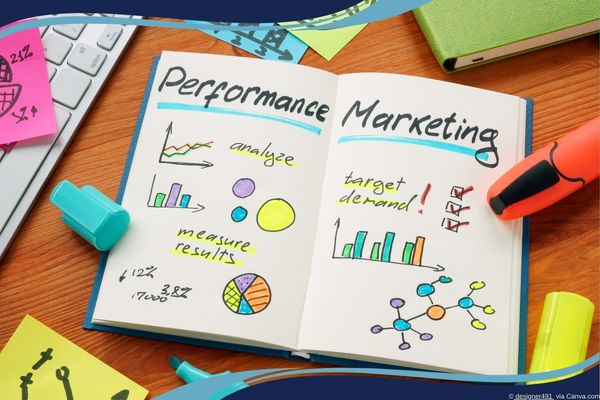
Performance Marketing Isn’t Real and Never Was
By Vicky Sidler | Published 24 December 2025 at 12:00 GMT+2
Tomorrow is Christmas. But if I could unwrap just one gift a little early, I’d wish for two words to disappear forever.
Performance. Marketing.
It sounds harmless. Sensible, even. Who doesn’t want marketing that performs? But as Thomas Barta wrote in Marketing Week, those two words have done real damage. Not to bots or billionaires, but to regular business owners who are just trying to spend their money wisely and see a return.
Let’s unpack why this phrase keeps showing up in job ads and boardrooms—and what it’s quietly ruining.
TL;DR:
It suggests some marketing performs and some doesn’t, which isn’t true
It overemphasizes clicks and short-term wins instead of real business growth
It encourages bad habits and budget loops that are hard to break
It makes brand building look like a luxury instead of a necessity
👉 Need help getting your message right? Download the 5 Minute Marketing Fix
Table of Contents:
Performance Marketing Isn’t Real and Never Was
Where Did ‘Performance Marketing’ Even Come From?
Most ‘Performance’ Metrics Are Just Vanity Numbers:
It Trains Leaders to Think Too Small:
What You Should Focus On Instead:
1. Content Marketing Boosts Revenue More Than Ads
2. Content Marketing Strategy Framework Every Small Biz Needs
3. Ideal Client Profile: The Marketing Shortcut Small Businesses Miss
4. Core Elements of Effective Branding Every Small Business Needs
5. OpenAI’s $27B Loss Could Tank the Whole AI Industry
Frequently Asked Questions About Performance Marketing
1. What is performance marketing, exactly?
2. Why is the term ‘performance marketing’ misleading?
3. Does performance marketing really get better results?
4. How does performance marketing affect long-term brand growth?
5. Is performance marketing the same as digital marketing?
6. Why do companies still invest in performance marketing?
7. What should small businesses focus on instead?
8. How can I tell if my marketing is really working?
9. Is there a place for performance marketing in my strategy?
10. Where can I start if I want to improve my overall marketing?
Where Did ‘Performance Marketing’ Even Come From?
Nobody’s quite sure. Some say Google. Others point to digital agencies. But like most marketing buzzwords, it crept in quietly, then stuck like glitter to a carpet.
Originally, the term meant you only paid when something happened. A click. A lead. A sale. Sounds practical. Like ordering food and paying after it arrives. But if that’s ‘performance dining’, then this must be ‘performance advertising’. And the name starts to sound like a gimmick.
The problem is the word performance. Once you use it, you imply that everything else is not performing. If some marketing is called performance, does that make the rest non-performance? Lazy marketing? Window shopping?
That thinking isn’t just wrong—it’s damaging.
Most ‘Performance’ Metrics Are Just Vanity Numbers:
Clicks. Impressions. CTRs. They sound precise. But look closer, and the numbers are more fluff than fact.
Bots can inflate clicks. Campaigns often get credited for actions they didn’t cause. And the traffic you think you’re paying for? Sometimes it never even shows up on your website.
It’s not that digital channels are useless. They’re powerful. But performance marketing, as a concept, gives the illusion that it’s more scientific than it really is.
It Trains Leaders to Think Too Small:
If you’ve ever sat in a meeting where the CFO wants to “just boost conversions this quarter,” you’ve felt the pressure of short-term thinking. Performance marketing promises quick wins. That’s part of the appeal.
Spend a bit. See a spike. Show a graph. Feel good.
But that thinking is like drinking energy drinks instead of eating meals. Eventually, the crash hits.
Real marketing works on two tracks:
The short term (getting attention, generating leads)
The long term (building trust, reputation, loyalty)
If you only chase the short term, you train your team—and your budget—to treat marketing like a vending machine. Push a button, get a click. But what happens when the clicks stop working?
The Brand Gets Left Behind:
Every marketing textbook (and most university lectures) says brand building matters. And every smart marketer agrees.
So why does it keep getting cut from the budget?
Because performance marketing sounds like the safe bet. It’s packaged as easy, controllable, and “measurable.” Which makes it appealing to people who don’t know what marketing really does.
As a StoryBrand Certified Guide and Duct Tape Marketing Consultant, I’ve seen the damage up close. Businesses over-optimize for clicks and forget to build trust. They run ads but never clarify their message. Then they wonder why leads bounce or go cold.
Here’s the truth: clicks don’t build brands. Clarity does.
The Math Doesn’t Even Work:
Thomas Barta cited a stat from the American Association of Advertisers: only 25% of digital ad spend reaches the intended audience. The other 75%? Lost to fraud, poor targeting, or just plain waste.
So much for ‘performance.’
Even when tracking is done well, most buying journeys don’t follow a clean path. Someone sees an ad, forgets about it, searches later, clicks a different ad, and then finally buys after seeing a review. Attribution gets messy.
But performance marketing acts like it’s all traceable. Like we can just follow the clicks from start to finish. That’s not how real buying behavior works. Especially not for services, where trust takes time.
It Creates a Vicious Cycle:
Once businesses get hooked on performance marketing, it’s hard to stop. Budgets get locked into digital. Results start to drop. So they spend more. Chase more clicks. Ignore the brand.
It’s the marketing version of gambling to win back your losses.
Meanwhile, Google and Meta use the money to run their own offline ads. On billboards. In train stations. In airports.
Which raises the question: if performance marketing is so great, why are the biggest platforms using traditional ads to market it?
Because deep down, they know what every real marketer knows.
Brand still wins.
What You Should Focus On Instead:
Instead of chasing ‘performance,’ go back to basics:
Clarify your message so people understand what you do in one sentence
Create content that builds trust, not just traffic
Track real outcomes, not vanity metrics
Invest in long-term relationships, not just short-term conversions
Marketing that works is simple. Not easy. But simple. It tells the right story, to the right people, in the right way.
And it doesn’t need to be wrapped in shiny buzzwords to perform.
Want a clearer way to explain what your business does? Download my 5-Minute Marketing Fix and get one sharp sentence that helps you stand out, connect with customers, and grow with confidence.
Related Articles:
1. Content Marketing Boosts Revenue More Than Ads
If performance marketing is the sugar rush, content marketing is the steady diet that fuels real growth. This article shows how long-term content outperforms ads in both cost and conversion.
2. Content Marketing Strategy Framework Every Small Biz Needs
You just read how attribution is messy. This post gives you a practical way to map your content to each step of the actual customer journey, not the made-up one in ad reports.
3. Ideal Client Profile: The Marketing Shortcut Small Businesses Miss
Three out of four ad dollars are wasted. This article helps you fix that by defining exactly who you should target, so you stop paying to talk to people who were never going to buy.
4. Core Elements of Effective Branding Every Small Business Needs
Performance marketing makes branding look optional. This article breaks down the 5 must-have elements of a brand, so you stop treating it like fluff and start treating it like strategy.
5. OpenAI’s $27B Loss Could Tank the Whole AI Industry
Just like performance marketing, AI has a hype problem. If you liked the part about questioning buzzwords, this one digs into how the economics of AI don’t always add up either.
Frequently Asked Questions About Performance Marketing
1. What is performance marketing, exactly?
Performance marketing is a type of advertising where you only pay when a specific result happens, like a click, lead, or sale. It sounds efficient, but it often overpromises and oversimplifies how real customers behave.
2. Why is the term ‘performance marketing’ misleading?
Because it implies that other types of marketing don’t perform. In reality, all marketing is meant to drive results. Labelling some of it “performance” creates false hierarchies and confuses decision-makers.
3. Does performance marketing really get better results?
Not always. Many performance metrics like click-through rates are vanity numbers. They don’t always lead to actual sales, and bots can inflate results. It’s possible to spend money and see “good” metrics that mean nothing in real terms.
4. How does performance marketing affect long-term brand growth?
It usually hurts it. Because it focuses on quick wins, it can pull budget away from brand-building efforts. That leads to weak customer trust and poor loyalty, which are harder to measure but essential for growth.
5. Is performance marketing the same as digital marketing?
No. Digital marketing includes everything from websites to email to social media. Performance marketing is just a slice of that world, usually referring to ads that are paid for based on actions (like clicks or conversions).
6. Why do companies still invest in performance marketing?
Because it looks measurable and safe on paper. CFOs and busy executives love numbers they can track. But those numbers don’t always show the full picture. It feels controllable, even when it isn’t.
7. What should small businesses focus on instead?
Start with clarity. Get your message right. Build a strong brand. Create helpful content. Track meaningful results like leads, sales, and customer retention—not just clicks.
8. How can I tell if my marketing is really working?
Look beyond the ad platform reports. Are new customers showing up? Are they the right kind? Do they come back? Tools like Google Analytics can help, but real performance shows up in your bottom line, not just your dashboard.
9. Is there a place for performance marketing in my strategy?
Yes, but only as one part of a bigger system. It can support short-term goals, but it shouldn’t replace long-term strategy. Think of it like seasoning—not the whole meal.
10. Where can I start if I want to improve my overall marketing?
Get your message clear first. If people don’t understand what you do, no ad will fix that. Start with the5-Minute Marketing Fix and build from there.

Is your Marketing Message so confusing even your own mom doesn’t get it? Let's clarify your message—so everyone wants to work with you!






Created with clarity (and coffee)