STORY, MEET STRATEGY

Let’s make marketing feel less robotic and more real.

Find resources that bring your message—and your business—to life.

Marketing Made Simple by Donald Miller: Summary For Small Businesses

Marketing Made Simple by Donald Miller: Summary For Small Businesses

February 22, 202610 min read
Custom HTML/CSS/JAVASCRIPT

By Vicky Sidler | Published 22 February 2026 at 12:00 GMT+2

If you have ever looked at your sales numbers and thought, “We are good at what we do, so why is growth so unpredictable?” you are in familiar territory. In Marketing Made Simple, Donald Miller argues that the problem is rarely your product. It is your message.

According to Miller, most businesses do not struggle because they lack talent or quality. They struggle because their communication creates friction. In a world where attention is scarce, clarity is not a branding preference. It is a competitive advantage.

Here is what that means in practical terms for small service-based businesses.


TL;DR:

  • Customers ignore confusing marketing to conserve mental energy

  • Clear messaging moves buyers from curiosity to commitment

  • A strong one-liner positions your business in seconds

  • Your website must clearly explain what you offer and what to do next

  • A lead generator builds trust before asking for money

  • Email keeps your business top of mind until the buying moment

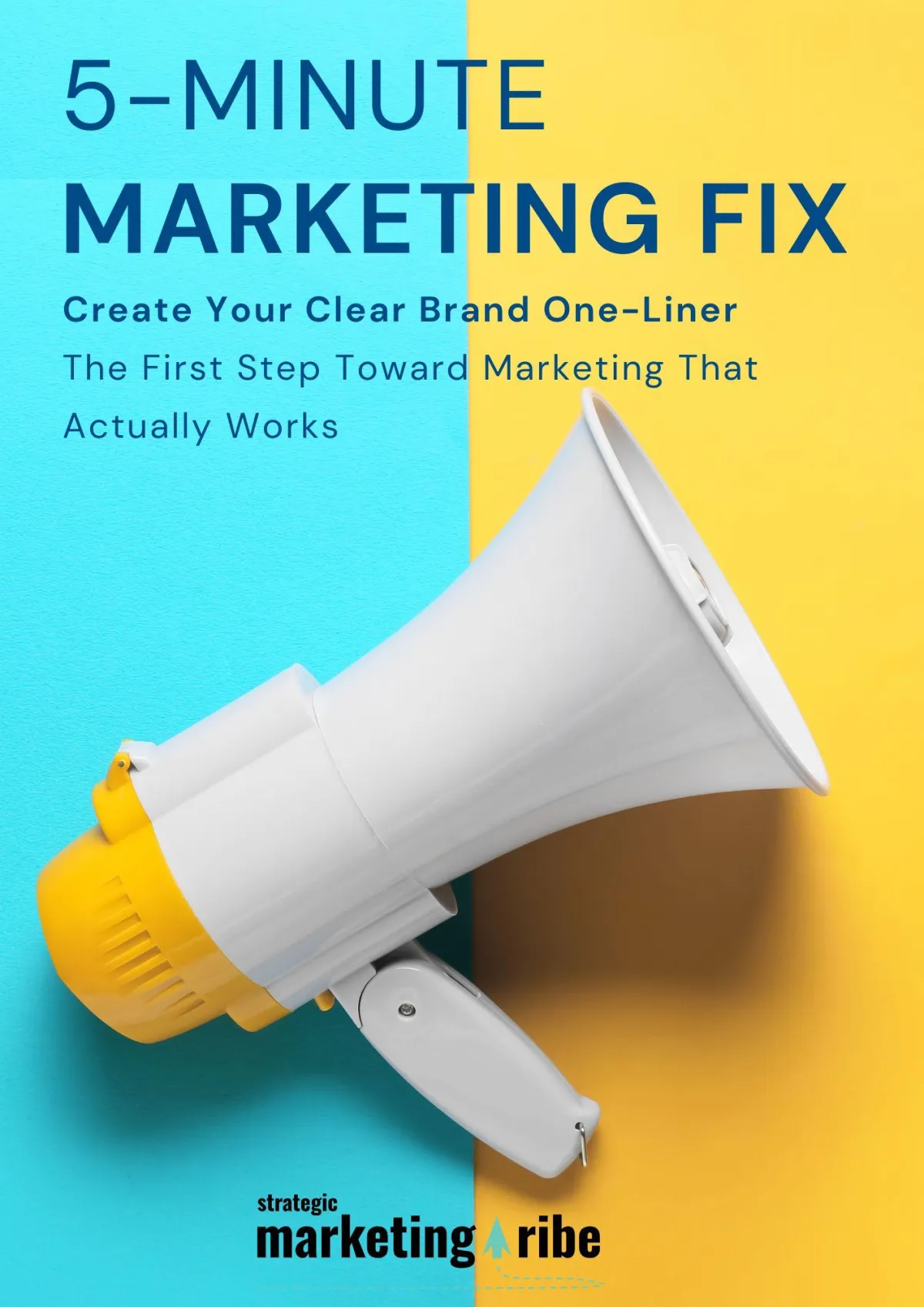
👉 Need help getting your message right? Download the 5-Minute Marketing Fix.


Table of Contents:


Your Customer’s Brain Is Filtering You:

Miller begins with biology, not branding.

The human brain is wired to conserve calories. It scans constantly for information that helps survival and filters out anything that feels confusing or irrelevant. If your website or pitch makes someone work to understand you, their brain quietly categorizes you as noise.

He breaks the customer journey into three stages.

1. Curiosity

This is the snap judgement moment. Within seconds, a prospect asks, “Can this help me?” If your headline does not clearly describe the problem you solve, you are mentally discarded.

For small businesses, this means leading with the pain you remove. Not your origin story. Not your awards. Not your internal language.

2. Enlightenment

If curiosity is triggered, the customer is willing to learn more. Now you must explain how your service works in simple terms. Confusion at this stage feels risky, and people do not move forward when they feel unsure.

A clear process builds confidence.

3. Commitment

Only after clarity and trust does the buyer weigh cost against value. This is where you invite them to act. A clear call to action such as "Book a Call" works better than vague phrases like "Learn More."

Marketing fails when we skip these stages or rush commitment before clarity.

The One-Liner That Anchors Everything:

One of the most practical tools in the book is the one-liner. Think of it as your strategic elevator pitch.

It follows a three-part structure.

  1. State the problem

  2. Present your solution and include your company name

  3. Describe the positive outcome

For example, instead of saying, “We offer comprehensive consulting solutions,” you might say, “Many small business owners feel overwhelmed by inconsistent marketing. At Strategic Marketing Tribe, we build simple sales funnels so your marketing works in the background.”

Notice who the hero is. The customer.

As a StoryBrand Certified Guide and Duct Tape Marketing Consultant, I have seen this single sentence reshape entire websites. When the one liner is clear, everything else becomes easier to write.

Miller recommends placing your one-liner in:

  • Email signatures

  • Social media bios

  • The first sentence of your About page

  • Business cards

  • Physical retail spaces

Repetition is not repetitive. It is strategic.

Your Website Is a Sales Tool:

Miller introduces what he calls the Grunt Test. Within five seconds of landing on your homepage, a visitor should know:

  • What you offer

  • How it makes their life better

  • What they need to do next

If that is not obvious, you are leaking revenue.

A strong homepage typically includes:

  • A clear header with a direct call to action

  • A section outlining the cost of doing nothing

  • A list of specific benefits

  • Proof of authority through testimonials or results

  • A simple three step plan to work with you

  • Clear pricing tiers to reduce decision paralysis

Most small business websites fail because they read like biographies. High-converting websites read like invitations into a story where the customer wins.

The Lead Generator Builds Trust First:

Not everyone who visits your site is ready to buy. That does not mean they are not interested.

A lead generator is a valuable resource offered in exchange for an email address. It could be a checklist, guide, webinar, or short video series. The key is relevance and real value.

A strong lead generator should:

  • Position you as the guide

  • Solve a small piece of the problem

  • Be clearly connected to your paid offer

  • Feel worth the exchange of an email address

When someone experiences a small win with your free resource, buying later feels safer.

Email Is Your Growth Engine:

Once someone joins your list, email keeps you top of mind.

Miller separates email into two categories.

Nurture emails provide ongoing value. They answer questions and reinforce your expertise.

Sales emails are structured sequences designed to move someone toward a decision. A six-email sequence typically includes:

  • Delivering the promised resource

  • Revisiting the problem and presenting your solution

  • Sharing a testimonial

  • Addressing a common objection

  • Offering a new perspective

  • Making a direct ask

The postscript at the end of each email is powerful because many readers jump straight to it. Use it to restate your core message and invitation.

Execution Creates Predictable Growth:

The framework is simple. That is its strength.

Businesses that fully implement clear messaging, structured websites, focused lead generators, and consistent email campaigns see measurable improvements in conversions and revenue. Businesses that half implement see half results.

If you want predictable growth, start with clarity. Refine your one-liner. Adjust your homepage header. Build a focused lead generator. Then support it with consistent email.

Marketing becomes manageable when it is structured and customer-centered.

If you want a fast starting point, download the 5-Minute Marketing Fix. It will help you write one clear sentence that anchors your entire sales funnel.

👉 Download it free here.

Clarity is not flashy, but it is reliable. And for small businesses, reliable growth beats marketing guesswork every time.


Related Articles:

1. What Is StoryBrand? The 7-Part Marketing Framework Explained

If Marketing Made Simple showed you how to build the funnel, this article explains the seven StoryBrand elements that shape the message inside it. It will help you position your customer as the hero and your business as the guide so your one-liner, homepage, and emails stay aligned.

2. Building a StoryBrand 2.0 By Donald Miller Summary: Why It Still Works For Small Businesses

This companion summary goes deeper into the narrative framework behind your website copy, lead generators, and email sequences. It connects updated StoryBrand thinking to real small business challenges so your funnel feels sharper and more relevant.

3. StoryBrand Marketing Works Everywhere. Here's Proof.

The article you just read focuses on structure. This one shows how that same clear message extends into social media, video scripts, sales pages, and testimonials. It gives practical examples of how to execute StoryBrand across all your marketing assets.

4. Marketing Hourglass Explained: A Smarter Way to Grow Your Small Business

Marketing Made Simple moves people from curiosity to commitment. The Marketing Hourglass expands that into a full customer journey so you can design what happens after the sale, including repeat business and referrals.

5. The Complete Guide to Strategic Marketing

Once you understand the funnel, this guide zooms out and shows how StoryBrand, strategy, and simple systems fit together into a full marketing engine. It helps you move from scattered tactics to a coherent, repeatable growth plan.


Frequently Asked Questions About Marketing Made Simple by Donald Miller

1. What is Marketing Made Simple by Donald Miller about?

Marketing Made Simple is a practical guide to building a clear sales funnel. Donald Miller explains how to move customers from curiosity to commitment using simple messaging, structured websites, lead generators, and email sequences. The focus is on clarity and predictable growth rather than creative branding.


2. Is Marketing Made Simple only for big companies?

No. The framework is especially useful for small service-based businesses because it simplifies marketing into repeatable steps. You do not need a large team or budget. You need clear messaging and consistent execution.


3. What is the difference between StoryBrand and Marketing Made Simple?

StoryBrand is the messaging framework that clarifies what you say. Marketing Made Simple builds the sales funnel that delivers that message through your website, lead generator, and email campaigns. StoryBrand shapes the words. Marketing Made Simple structures the system.


4. How do I write a one-liner for my small business?

Start with three parts.

  • Identify the main problem your customer faces

  • Present your solution and include your company name

  • Describe the positive outcome they experience

Keep it simple and focused on one core problem. If you confuse people, they will move on.


5. What is the Grunt Test on a website?

The Grunt Test means your homepage should instantly answer three questions.

  • What do you offer?

  • How will it make my life better?

  • What do I need to do next?

If visitors cannot answer those within a few seconds, your message likely needs tightening.


6. Do I really need a lead generator?

If most visitors are not ready to buy immediately, then yes. A lead generator gives them value in exchange for their email address. It builds trust and keeps you connected until they are ready to make a decision.


7. How many marketing touchpoints does it take before someone buys?

It often takes multiple meaningful interactions before someone feels ready to commit. That might include visiting your website, reading emails, seeing social posts, or watching a video. Consistency matters more than intensity.


8. How long should a sales email sequence be?

A simple six-email sequence works well for many small businesses. It should deliver the promised resource, revisit the problem, share proof, overcome objections, introduce a new perspective, and make a clear offer. The goal is clarity and confidence, not pressure.


9. Can I implement Marketing Made Simple on my own?

Yes, but it requires focus. Start with your one-liner and homepage header before moving to lead generators and email campaigns. If you try to rebuild everything at once, you may stall. Small, structured steps work best.


10. What is the fastest way to apply this framework today?

Clarify your one-sentence explanation of what you do and who you help. That single sentence anchors your website, emails, and sales conversations. If you want help crafting it, download the5-Minute Marketing Fix and start there.

blog author image

Vicky Sidler

Vicky Sidler is a seasoned journalist and StoryBrand Certified Guide with a knack for turning marketing confusion into crystal-clear messaging that actually works. Armed with years of experience and an almost suspiciously large collection of pens, she creates stories that connect on a human level.

Back to Blog
Strategic Marketing Tribe Logo

Is your Marketing Message so confusing even your own mom doesn’t get it? Let's clarify your message—so everyone wants to work with you!

StoryBrand Certified Guide Logo
Duct Tape Marketing Consultant Logo
50Pros Top 10 Global Leader Award
Woman Owned Business Logo

Created with clarity (and coffee)

© 2026 Strategic Marketing Tribe. All rights reserved.

Privacy Policy | Terms of Service | Sitemap