
Real news, real insights – for small businesses who want to understand what’s happening and why it matters.

What Is StoryBrand? The 7-Part Marketing Framework Explained
By Vicky Sidler | Published 27 January 2026 at 12:00 GMT+2
There is a special place in marketing hell for websites that say things like "We’re a full-service solution-focused innovation-driven team of experts with decades of award-winning synergy." No one has ever bought anything because of the word synergy. And yet, that kind of self-important fluff is everywhere.
That’s exactly the problem StoryBrand solves.
Created by Donald Miller, StoryBrand is a framework that stops the rambling and gets to the point—by putting your customer (not your business) at the centre of the story.
The idea is simple. People don’t read websites or brochures like textbooks. They read them like stories. And if they can’t figure out the plot in five seconds, they leave.
StoryBrand fixes that with seven clear building blocks that make your message stick.
The framework first appeared in Miller’s 2017 book Building a StoryBrand, and got a full refresh in 2025 with Building a StoryBrand 2.0. Since then, it’s been used by brands big and small to write websites, sales emails, social media, and ads that don’t sound like they were written by a boardroom.
Let’s break it down.
TL;DR:
StoryBrand helps you clarify your message so your customer understands it fast
The customer is the hero, not your business
It’s built around seven story elements: hero, problem, guide, plan, action, success, and failure
You can write your own BrandScript for free using the tool at mystorybrand.com
It works best when you deeply understand your customer’s problem
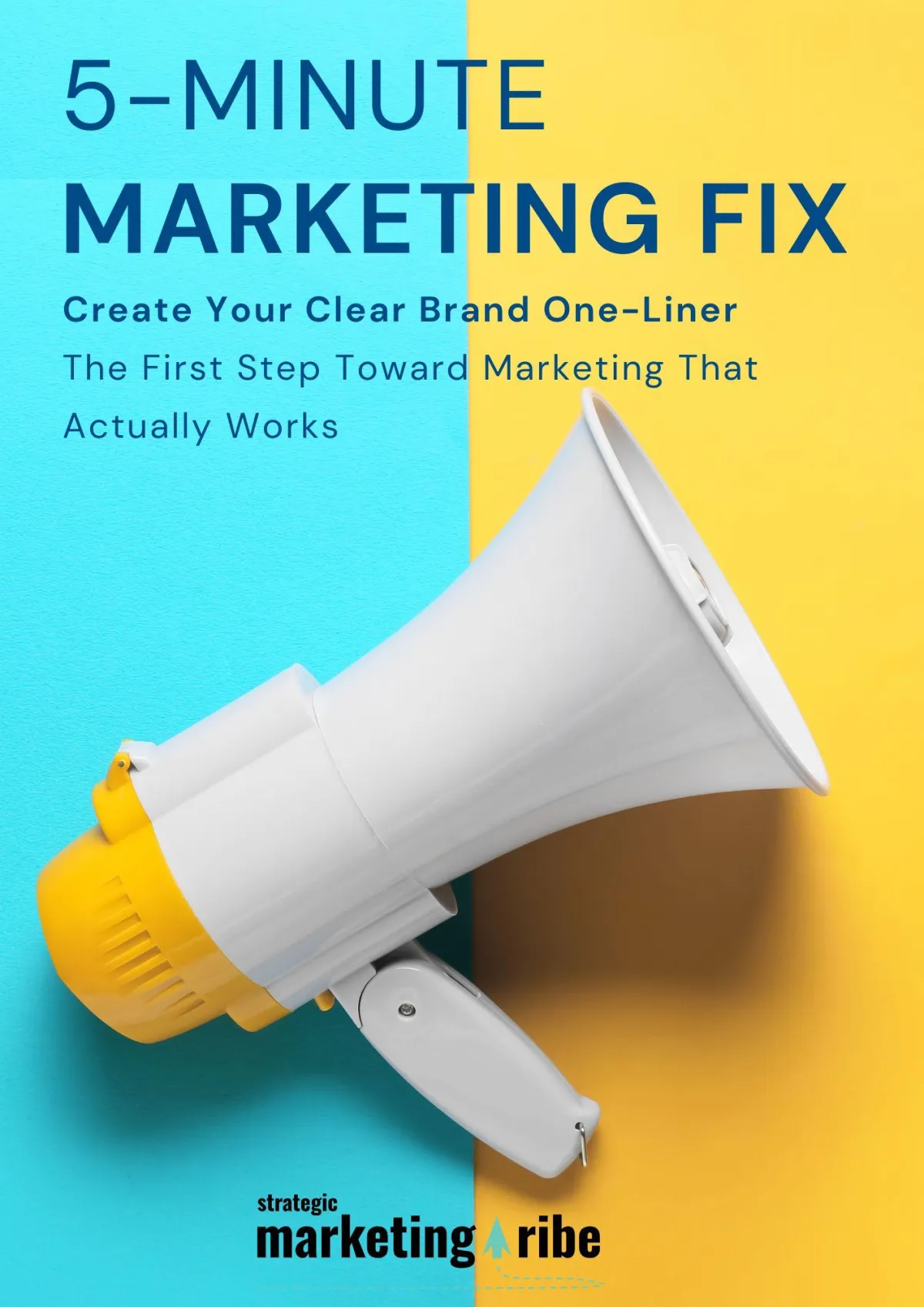
👉 Need help getting your message right? Download the 5 Minute Marketing Fix.
Table of Contents:
What Is StoryBrand? The 7-Part Marketing Framework Explained
7. And Helps Them Avoid Failure:
Where StoryBrand Fits (and Where It Doesn’t):
StoryBrand Isn’t Just Simpler. It’s Smarter.
1. Building a StoryBrand 2.0 By Donald Miller Review
2. Duct Tape Marketing by John Jantsch Review
3. Marketing Strategy vs Tactics: Why One Builds Trust and the Other Kills Profit
4. Ideal Client Profile: The Marketing Shortcut Small Businesses Miss
5. Marketing for Small Business 2026: What Actually Works Now
Frequently Asked Questions About the StoryBrand Framework
1. What is the StoryBrand framework in simple terms?
2. Who created the StoryBrand framework?
3. How do I use StoryBrand for my website?
4. What are the 7 elements of StoryBrand?
5. Do I need to hire a StoryBrand Certified Guide?
6. Is StoryBrand just for websites?
7. What is a BrandScript and how do I write one?
8. How is StoryBrand different from traditional marketing?
Why Most Marketing Talks Too Much (and Says Too Little):
Business owners, bless them, often fall into the trap of thinking they need to prove their worth through a checklist of credentials and company history. What they don’t realise is that their customer is not reading their homepage like a hiring manager. They’re scanning it with the same mental energy they use to skip ads on YouTube. And if that customer doesn’t see themselves in the first few lines, they’ll be gone before you can say “award-winning.”
StoryBrand fixes this by asking you to stop talking about yourself for just long enough to notice the person on the other side of the screen. The framework teaches that your business is not the hero of the story. Your customer is. You’re just the guide. Think Yoda, not Luke.
The 7 Elements of StoryBrand:
The framework is built around a structure you’ve seen before, whether you realised it or not. It mirrors the classic storytelling arc, the one used in books, films, and myths for centuries. The hero wants something, faces a problem, meets a guide, gets a plan, takes action, avoids failure, and reaches success.
It’s simple. It’s logical. And most importantly, it works.
1. A Character:
The story starts with a person who wants something. That person is your customer. You’re not writing for “target markets” or “user segments.” You’re writing for someone who wants to solve a specific problem without feeling like they’re being sold a timeshare.
2. Has a Problem:
Your customer isn’t just dealing with a surface-level inconvenience. There’s the external issue (something broken), the internal frustration (why it matters emotionally), and the philosophical dilemma (why it feels unfair). Most businesses only talk about the first. StoryBrand encourages you to go deeper.
3. And Meets a Guide:
You show up not as a hero but as someone who’s seen this before and knows how to help. But showing up isn’t enough. You also have to prove two things: that you care and that you know what you’re doing. Too much of either and you sound either overly friendly or weirdly robotic.
4. Who Gives Them a Plan:
Now that you have their attention, you need to show them a way forward. This could be as simple as “Book a call, get a quote, start saving.” The point is to make the next step feel like something even a sleep-deprived parent or overworked manager could do in under five minutes.
5. And Calls Them to Action:
Here’s where most people mumble. You have to ask for the sale. Not hint at it. Not bury it in a paragraph of “feel free to reach out if...” You need a direct invitation and a softer one for those still warming up. Both are useful. Neither should be optional.
6. That Ends in Success:
Describe the better future. Paint the picture. What will their life or business look like after working with you? Be specific. No one dreams of “enhanced workflow solutions.” They want to go home on time and stop explaining things twice.
7. And Helps Them Avoid Failure:
This part isn’t about fear-mongering. It’s about showing the cost of doing nothing. People don’t take action unless there’s something to lose. Whether it’s wasted money, missed opportunities, or more of the same old stress, it’s your job to name the risk and give them a way out.
What Is a BrandScript?
A BrandScript is the tool that ties all of this together. It’s a one-page document that maps out your customer’s story using the seven elements above. You can build one for free at StoryBrand.ai, which means you don’t need to hire a team of consultants or attend a weekend retreat in order to start making sense.
Once you’ve written your BrandScript, it becomes the foundation for everything—your website, emails, lead magnets, landing pages, and even how you introduce yourself at networking events that probably should’ve been emails.
Why StoryBrand Works:
Humans process stories better than facts. That’s not just a theory. It’s cognitive science. When you hear a good story, your brain releases dopamine. When you hear someone describe their services with a 12-point bullet list, your brain politely checks out.
StoryBrand works because it uses that narrative wiring to help your customer see themselves in your business. It also aligns beautifully with how people search online. No one Googles for “full-stack solution providers.” They search for “why my website isn’t getting leads.”
In fact, a Forrester study showed that companies who communicate clearly around customer problems grow nearly twice as fast. Which makes sense, because if you sound useful, people tend to remember you.
Where StoryBrand Fits (and Where It Doesn’t):
StoryBrand is brilliant for businesses with a clear problem-solution model. If your offer is a tangled mess of options, decisions, and buyer committees, you may need to adapt the approach.
It also assumes you’ve taken the time to understand your audience. If your customer research is based mostly on hunches and hope, the framework won’t save you.
StoryBrand Isn’t Just Simpler. It’s Smarter.
As a StoryBrand Certified Guide, I’ve seen this framework untangle some of the most chaotic marketing messages out there. But the real reason I use it with clients is because it removes guesswork. When your message is clear, you stop second-guessing every headline and start creating things that actually work.
The better your message, the easier everything else becomes.
If you’re ready to sharpen your message into one clear sentence that makes your business easier to understand and buy from, start with the 5-Minute Marketing Fix.
Related Articles:
1. Building a StoryBrand 2.0 By Donald Miller Review
If the current article gave you the foundation, this one shows you what’s new in the updated 2.0 version—and how to apply it across your whole marketing funnel, not just your message.
2. Duct Tape Marketing by John Jantsch Review
StoryBrand tells you what to say. Duct Tape Marketing shows you how to build a system around it. This article explains how both work together across the full customer journey.
3. Marketing Strategy vs Tactics: Why One Builds Trust and the Other Kills Profit
Messaging is just one piece. This article explains why tactics without strategy can kill your margins—and how StoryBrand fits into a smarter, trust-building approach.
4. Ideal Client Profile: The Marketing Shortcut Small Businesses Miss
You’ve made your customer the hero—but which customer? This post shows you how to define your Ideal Client Profile so your StoryBrand message hits the right target.
5. Marketing for Small Business 2026: What Actually Works Now
Once your message is clear, where do you use it? This article breaks down which channels are working best in 2026 and how to apply StoryBrand messaging across all of them.
Frequently Asked Questions About the StoryBrand Framework
1. What is the StoryBrand framework in simple terms?
StoryBrand is a 7-part messaging formula that helps businesses talk about what they do in a way customers understand quickly. It positions the customer as the hero and your business as the guide who helps them solve a problem.
2. Who created the StoryBrand framework?
StoryBrand was created by Donald Miller, a former author turned business strategist. He introduced the framework in his 2017 book Building a StoryBrand, with a full update released in StoryBrand 2.0 in 2025.
3. How do I use StoryBrand for my website?
Start by writing a BrandScript using the free tool at mystorybrand.com. Then structure your homepage around that story: a clear headline, the problem, your solution, a simple plan, and a call to action.
4. What are the 7 elements of StoryBrand?
The elements are:
A character (your customer)
Has a problem
Meets a guide (your business)
Who gives them a plan
And calls them to action
That ends in success
And helps them avoid failure
5. Do I need to hire a StoryBrand Certified Guide?
Not necessarily. You can apply the framework yourself using free tools. But if you want expert help writing messaging that works across your whole funnel, a Certified Guide can help you do it faster and more effectively.
6. Is StoryBrand just for websites?
No. StoryBrand works across all channels—email campaigns, lead magnets, social media, sales decks, videos, even networking introductions. Anywhere you talk about what you do, StoryBrand can help you say it better.
7. What is a BrandScript and how do I write one?
A BrandScript is a one-page document that captures your customer's story using the 7 elements. You can write one for free at mystorybrand.com and use it to guide all your marketing content.
8. How is StoryBrand different from traditional marketing?
Traditional marketing talks about the business. StoryBrand flips that. It talks about the customer’s problem and shows how your business helps solve it. This makes your message clearer, faster, and more engaging.
9. Can I use StoryBrand for B2B marketing?
Yes, though you may need to adapt it slightly for complex sales cycles or multiple decision-makers. The key is still the same: clarify the problem, simplify the message, and guide the customer through the decision.
10. Why is StoryBrand so popular with small businesses?
Because it works. Small businesses don’t have time or budget to waste. StoryBrand helps them communicate clearly, build trust quickly, and convert leads without confusing jargon or salesy fluff.

Strategic Marketing Tribe helps established service businesses turn underperforming marketing into more predictable growth with the Failure-Proof Marketing System.





Created with clarity (and coffee)