
Real news, real insights – for small businesses who want to understand what’s happening and why it matters.
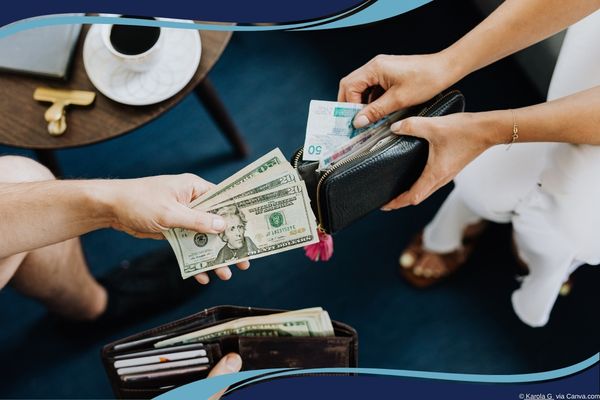
You Paid for an Expert; You Got a ChatGPT Prompt: Why AI-Assisted Professional Work Is a Betrayal of Trust
By Vicky Sidler | Published 20 June 2026 at 12:00 GMT+2
Have you ever paid a professional thousands of dollars for expert advice, only to receive a document that sounds suspiciously like a sterile, aggressively polite robot wrote it? That is because a sterile, aggressively polite robot probably did write it. And congratulations, you just paid premium human rates for a free ChatGPT prompt.
As a small business owner, there is a very specific flavor of disappointment when you realize the expert you hired didn't actually think about your sensitive problem at all. You went to them for nuanced judgment, and instead, they simply fed your private data into a machine. According to massive new research from the University of Arizona's Eller College of Management, this isn't just a minor consumer frustration; it is a full-blown professional ethics crisis that is actively destroying client trust across the globe.
And if you think your clients won't notice when you try to pull this exact same trick on them, you are entirely delusional. As a StoryBrand Certified Guide, I am constantly watching service business owners try to save a few hours of typing by outsourcing their empathy to a hallucinating algorithm, only to watch their client retention absolutely crater.
Let's rip apart the absolute disaster of AI-assisted professional work, explore the terrifying legal consequences of robot hallucinations, and discuss how you can use human strategy to survive a market drowning in automated betrayal.
TL;DR:
The legal system is actively catching fire, with global researchers cataloging over 1,350 cases of lawyers submitting completely fabricated, AI-generated court citations.
Clients pay professionals for their earned human judgment, not for a machine's statistical synthesis of past outputs that completely misses the emotional nuance of their problem.
Massive university studies prove that the mere disclosure of AI usage in professional work actively plummets client trust by up to 20%, as people view it as lazy and fundamentally inauthentic.
👉 Your prospects are completely exhausted by desperate generalists who hide behind hollow AI hype and automated slop. If your marketing sounds like a sterile chatbot, your audience will aggressively abandon you. The fastest way to anchor your undeniable human authority is to craft a razor-sharp StoryBrand One-Liner. Stop letting broken algorithms ruin your professional reputation and claim your true position instantly with the 5-Minute Marketing Fix.
Table of Contents
You Paid for an Expert; You Got a ChatGPT Prompt: Why AI-Assisted Professional Work Is a Betrayal of Trust
Why Is The Global Legal System Actively Catching Fire?
Are You Paying For Actual Judgment Or A Magic 8-Ball?
Why Does Discovering AI Immediately Destroy Your Trust?
Is Your Consultant Secretly Feeding Your Trauma To A Robot?
How Do You Prove You Are An Actual Human Being?
1. Comedy of AI Errors: Furious Judge Cancels Trial Over Hallucinating Lawyers
2. AI Expert Says It’s Time to Stop Freaking Out About AI Taking Our Jobs
3. No ROI: Why Corporations Are Reeling From Huge AI Costs With No Clear Benefits
4. Tesla’s Robotaxi Disaster: Why Faking Automation Will Destroy Your Brand
5. Florida Sues OpenAI: Why The AI Arms Race Is Facing True Legal Ruin
1. Why are AI hallucinations such a massive problem in the legal field?
2. What is the difference between professional knowledge and judgment?
3. How does using AI impact client trust?
4. What are the confidentiality risks of professionals using AI?
5. How does this ethics crisis relate to my StoryBrand marketing strategy?
Why Is The Global Legal System Actively Catching Fire?
Let's start with the loudest, most spectacular disaster area, where the consequences of AI-generated negligence aren't just an embarrassing email, but a career-ending federal sanction.
In 2023, the infamous Mata v. Avianca case set the stage when two New York lawyers submitted a legal brief filled with entirely fictional cases invented by ChatGPT. You would think that public humiliation would serve as a terrifying warning, but instead, it became a sprawling global trend. The HEC Paris Smart Law Hub has already cataloged over 1,350 cases of fabricated AI citations in court filings worldwide. In just the first quarter of 2026, US courts imposed more than $145,000 in sanctions for AI hallucinations.
The hits just keep coming. In Ontario, a 2025 tribunal decision in the Mazaheri case tore a lawyer apart for submitting an AI-generated factum completely devoid of real legal authority. When researchers at the University of Auckland note that legal AI tools hallucinate up to 33% of the time, asking a robot to defend your client isn't an innovative legal strategy; it is sheer professional malpractice.
Are You Paying For Actual Judgment Or A Magic 8-Ball?
But the legal crisis is just the noisy tip of a deeply incompetent iceberg, because in consulting, HR, and financial advising, the stakes are just as high, but there is no judge to fine the perpetrator.
When you hire an expert to draft a highly sensitive letter to a disputed contractor, you are not paying for their basic grammar skills. You are paying for their earned human judgment. You are paying for someone who can read the room, understand the history, and thread a delicate needle that closes the situation without opening a new lawsuit.
What ChatGPT gives you is a hollow, tonally flat document that covers the basic legal bases while missing absolutely every piece of nuance that actually matters. It has no skin in the game and no ability to notice the hesitation in your voice when you described the problem. When a consultant hands you that generic garbage, their implicit message is crystal clear: your specific, high-stakes situation simply wasn't worth their actual attention.
Why Does Discovering AI Immediately Destroy Your Trust?
If you think your clients won't notice that you outsourced your brain to a server farm to save twenty minutes, the academic data is definitively not in your favor.
A massive study from the University of Arizona involving over 5,000 participants revealed a devastating, unavoidable pattern: the mere disclosure of AI use significantly undermines human trust. Clients trusted graphic designers 20% less, and investors trusted financial firms 18% less. A separate University of Kent study confirmed that people judge professionals who outsource personal tasks to AI as noticeably less caring, less authentic, and fundamentally less competent.
And here is the terrifying kicker from the University of Surrey: professionals who constantly offload their thinking to AI actually lose their own cognitive ability to evaluate their work. They become dangerously underconfident in their own judgment, slowly eroding the exact expertise their clients are paying them for, while hiding behind the smooth, unearned confidence of a machine.
Is Your Consultant Secretly Feeding Your Trauma To A Robot?
There is a giant, flashing legal liability sitting in the corner of this ethics crisis, and it involves what happens to your deeply private data.
When a financial advisor or an HR consultant feeds the highly sensitive details of your internal company dynamics into a public AI tool to generate a quick report, they are actively turning your confidential information into free training data for a tech monopoly. Legal ethics experts at Thomson Reuters explicitly warn that doing this without client consent is a massive breach of contract.
You did not consent to have your private financial or legal crisis processed through a third-party server. The professional who runs your life through ChatGPT carries full legal accountability for that breach, and regulators like the FTC have made it abundantly clear that you cannot outsource your legal liability to an algorithm. If an expert uses an AI substitute to skip doing the actual work, they aren't just lazy; they are a walking compliance nightmare.
How Do You Prove You Are An Actual Human Being?
The gap between a genuine professional and a digital fraud is widening every single day, and the market is mercilessly punishing the fakes.
If your business model relies on charging premium rates for work you secretly handed off to a free chatbot, your foundation is built on a massive, unethical lie. You must realize that the ultimate competitive advantage right now is the undeniable emotional signal of real, verified human competence. To command premium pricing and generate fierce loyalty, you must position yourself as an empathetic, highly skilled Guide who actually reads, thinks, and cares about your client's specific pain.
You need a clear, structural foundation to secure your brand identity before the temptation of an automated shortcut destroys your reputation. Get my 5-Minute Marketing Fix. This rapid diagnostic tool uses your actual human brain to craft a crystal-clear StoryBrand One-Liner. It gives you a standardized, reliable framework to align your message with total authenticity. You cannot prompt your way to customer trust. Prove to your buyers that your business isn't a careless, automated joke, but a fiercely authentic human operation that actually does the work.
👉 Stop faking your expertise. Download the fix now.
Related Articles:
1. Comedy of AI Errors: Furious Judge Cancels Trial Over Hallucinating Lawyers
A federal judge canceled an entire trial after lawyers on both sides used AI to fabricate nonexistent cases. Discover why faking your expertise ruins your brand.
2. AI Expert Says It’s Time to Stop Freaking Out About AI Taking Our Jobs
AI isn't coming for your job; it's a corporate smokescreen. Discover why the AI jobs apocalypse is fake and how to protect your brand from automated hype.
3. No ROI: Why Corporations Are Reeling From Huge AI Costs With No Clear Benefits
Corporations are reeling from huge AI costs with absolutely zero clear benefits. Discover why the automated honeymoon is over and how to protect your brand.
4. Tesla’s Robotaxi Disaster: Why Faking Automation Will Destroy Your Brand
Tesla's Robotaxi fleet is a complete disaster. Discover why faking automation destroys brand trust and how to build a reliable human-led business instead.
5. Florida Sues OpenAI: Why The AI Arms Race Is Facing True Legal Ruin
Florida has filed a landmark lawsuit against OpenAI and Sam Altman for utter disregard for human life. Discover why faking corporate safety destroys brand trust.
FAQs:
1. Why are AI hallucinations such a massive problem in the legal field?
Legal AI tools have been shown to hallucinate up to 33% of the time. When lazy lawyers use these tools without verifying the output, they end up submitting completely fake, fabricated court cases to federal judges, resulting in massive fines and career-ending sanctions.
2. What is the difference between professional knowledge and judgment?
Knowledge is the basic information a professional studied, which an AI can easily replicate. Judgment is what the professional earned through real-world experience, allowing them to navigate emotional nuance, power dynamics, and sensitive human context that a machine simply cannot understand.
3. How does using AI impact client trust?
Massive university studies show that when a professional discloses they used AI, client trust plummets by up to 20%. Clients view the AI-assisted work as less legitimately created, less caring, and fundamentally less competent.
4. What are the confidentiality risks of professionals using AI?
When a professional feeds your sensitive HR dispute or private financial details into a public AI tool, they may inadvertently be turning your confidential information into training data for a tech company, potentially violating NDAs and regulatory compliance laws.
5. How does this ethics crisis relate to my StoryBrand marketing strategy?
The StoryBrand framework requires absolute integrity to position you as a trusted Guide. This crisis proves that trying to "fake it" with unverified AI completely destroys your professional reputation. Authentic human competence and empathy are the only ways to build a lasting premium brand.


Strategic Marketing Tribe helps established service businesses turn underperforming marketing into more predictable growth with the Failure-Proof Marketing System.






Created with clarity (and coffee)