
Real news, real insights – for small businesses who want to understand what’s happening and why it matters.
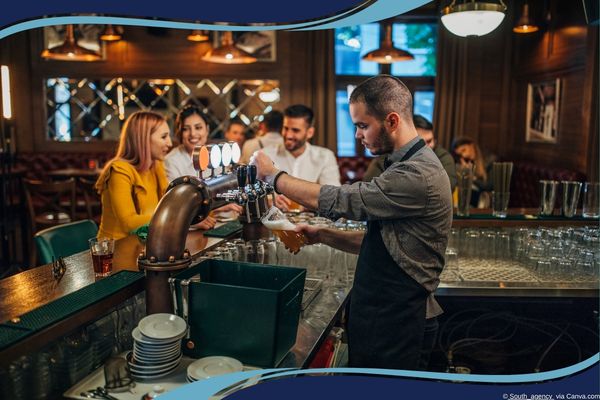
Why AI Calling Your Local Pub Is A Marketing Nightmare
By Vicky Sidler | Published 24 April 2026 at 12:00 GMT+2
Are you completely exhausted by the fact that you can no longer trust a single voice on the telephone? If you think deploying a highly deceptive AI voice bot to handle your customer service is a clever "growth hack," you are actively participating in the death of human trust.
According to a deeply dystopian new article in Fortune, an AI startup founder named Matt Cortland was recently annoyed that he paid €7.80 for a pint of Guinness in Dublin. To solve this incredibly minor personal inconvenience, he built an AI voice agent named "Rachel" using ElevenLabs, gave it a convincing Northern Irish accent, and unleashed it to call 3,000 independent pubs across Ireland to interrogate them about their beer prices. He then used Claude to compile the data into the "Guinndex."
The tech press is currently celebrating this as a quirky, innovative triumph of artificial intelligence solving everyday problems. But if you are trying to build a business that relies on authentic human connection, this story should terrify you. Before you replace your receptionist with a hallucinating deepfake, we need to look at exactly why weaponizing human empathy against your own customers is the fastest way to destroy your brand.
TL;DR:
A tech founder used an incredibly realistic AI voice clone to call 3,000 Irish pubs, completely deceiving bartenders into thinking they were talking to a real human.
The data shows that humans are actively wasting time showing genuine empathy and kindness to these robots, entirely unaware that they are being manipulated by a corporate algorithm.
In a world drowning in fake, automated AI slop, deploying deceptive technology to trick your customers instantly turns your brand into the untrustworthy Villain.
👉 If your marketing relies on tricking people into thinking a robot is actually a human being, your strategy is completely broken. You cannot survive a digital landscape filled with deepfakes by building more deepfakes. Download the 5-Minute Marketing Fix to strip the deceptive, robotic slop out of your messaging so you can stand out as an undeniably human Guide.
Table of Contents:
Why AI Calling Your Local Pub Is A Marketing Nightmare
Why Is A Robot Interrogating Bartenders?
Why Is Deception Being Celebrated As A Feature?
How Do You Survive The Deepfake Era?
1. Why Anthropic's 'Undercover AI' Is A StoryBrand Nightmare
2. Why Instagram Is Reading Your DMs (And Destroying Your Brand Trust)
3. How AI Is Secretly Deleting Your Work Friends
4. Can We Please Stop Putting AI In Everything?
5. You Didn't Write That Email. And Everyone Can Tell.
2. How did the AI voice agent trick people?
3. Why is using deceptive AI dangerous for marketing?
4. Are customers actually talking to AI voice agents longer?
Why Is A Robot Interrogating Bartenders?
The pub is historically one of the last remaining sanctuaries for genuine, unscripted human connection, which makes it the perfect target for Silicon Valley to utterly ruin.
Cortland's AI, "Rachel," was specifically designed to sound conversational, complete with regional inflections. And it worked perfectly. The Fortune article casually notes that most of the pub owners on the other end of the line had absolutely no idea they were communicating with an AI. They thought they were talking to a prospective customer. Cortland proudly admits that people take 14% more time to chat with these AI agents than human representatives, often sharing personal details they would normally skip.
Let’s be brutally clear about what is actually happening here: tech companies are actively exploiting human politeness. They are programming machines to sound vulnerable or conversational specifically so that real humans will waste their incredibly limited time and energy engaging with software. This isn't innovation; it is emotional theft.
Why Is Deception Being Celebrated As A Feature?
If you read the transcripts of these AI calls, they are incredibly heartbreaking.
In one instance, a bartender in Kilkenny told the robotic voice, "Listen, they’re normally €6.20, but if you can’t afford one, we’ll buy you one. We’ll look after you." A real human being, working a demanding service job, offered genuine kindness and charity to a string of computer code simply because the code was programmed to sound like a human in need.
In the StoryBrand framework, your brand must act as the honest, transparent Guide. Your entire goal is to build deep, empathetic trust with the Hero. When you deploy deceptive voice agents or undercover chatbots, you are actively manipulating the Hero's empathy for your own selfish data collection. The moment your customer realizes they just offered a free beer—or their time, or their personal data—to a robot, you permanently become the Villain. You do not recover from that level of betrayal.
How Do You Survive The Deepfake Era?
We are aggressively moving into a reality where consumers will assume that every email, every chat box, and every phone call is a highly sophisticated deepfake trying to scam them.
When trust drops to absolute zero, humanity becomes the ultimate premium product. The businesses that survive this coming wave of automated AI slop will not be the ones with the smartest voice clones; they will be the ones who are fiercely, undeniably human. You must refuse to play the tech industry's deceptive games.
Stop automating your voice. Stop trying to scale the unscalable. You need an urgent, necessary weapon to survive a digital landscape drowning in fake interactions. Get my 5-Minute Marketing Fix. It acts as a rapid diagnostic tool to help you strip away the robotic gimmicks and the manipulative automation, allowing you to build a clear, authentic, and undeniably human brand message that actually earns trust and drives revenue.
👉 Stop losing sales. Download the fix now.
Related Articles:
1. Why Anthropic's 'Undercover AI' Is A StoryBrand Nightmare
The Guinness AI caller is just the beginning. Discover how major tech giants like Anthropic are officially building "Undercover mode" features into their code, explicitly commanding their AI to lie about its identity to your customers.
2. Why Instagram Is Reading Your DMs (And Destroying Your Brand Trust)
If you think tricking bartenders is bad, wait until you see what Meta is doing with your data. Learn why forcing your clients to communicate on platforms that actively spy on them instantly destroys your authority as a trusted Guide.
3. How AI Is Secretly Deleting Your Work Friends
We are replacing our bartenders, our coworkers, and our friends with highly agreeable robots. Explore the terrifying societal shift toward the "accidental village," and why frictionless efficiency is actively driving corporate burnout.
4. Can We Please Stop Putting AI In Everything?
Consumers are completely exhausted by the tech industry's obsession with jamming AI into everything from cars to phone calls. Read the brutal statistics proving why slapping the "AI-powered" label on your business actively reduces purchase intent.
5. You Didn't Write That Email. And Everyone Can Tell.
If you rely on automated voice calls to handle your customer service, you are probably letting an algorithm write your emails, too. Explore the "uncanny valley" of AI communication and why generic messaging ruins professional relationships.
FAQs:
1. What is the "Guinndex"?
The Guinndex is an AI-generated consumer price index created by Matt Cortland. To find the average cost of a pint of Guinness in Ireland, Cortland used an AI voice agent to automatically call 3,000 independent pubs and interrogate the bartenders about their pricing.
2. How did the AI voice agent trick people?
Cortland used the platform ElevenLabs to create a voice clone named "Rachel" with a convincing Northern Irish accent. The AI was programmed to speak conversationally, resulting in pub owners having no idea they were talking to a machine.
3. Why is using deceptive AI dangerous for marketing?
In the StoryBrand framework, your brand must build trust by acting as an honest Guide. Deploying an AI that actively lies about being human violates that trust. When a customer discovers they were manipulated by software, your brand is permanently viewed as the Villain.
4. Are customers actually talking to AI voice agents longer?
Yes, but not for a good reason. Data shows that people take 14% more time to chat with AI agents and share more personal details, entirely because the AI exploits human politeness and empathy. Consumers are tricked into wasting their time on a machine.
5. How can my business stand out against AI automation?
In a digital landscape completely flooded with automated, generic AI slop, the only way to stand out is to be fiercely and undeniably human. You must reject deceptive automation and focus on transparent, authentic, and highly empathetic communication with your customers.


Strategic Marketing Tribe helps established service businesses turn underperforming marketing into more predictable growth with the Failure-Proof Marketing System.






Created with clarity (and coffee)